








Women entrepreneurs in Ghana are being encouraged to explore new financing opportunities in the capital market as sustainable bonds emerge as an alternative to traditional bank lending.
According to insights reviewed by the Accra Street Journal (ASJ), the introduction of sustainable financing instruments on the Ghana Fixed Income Market (GFIM) is creating new pathways for women-led businesses to raise long-term capital, expand operations and create jobs.

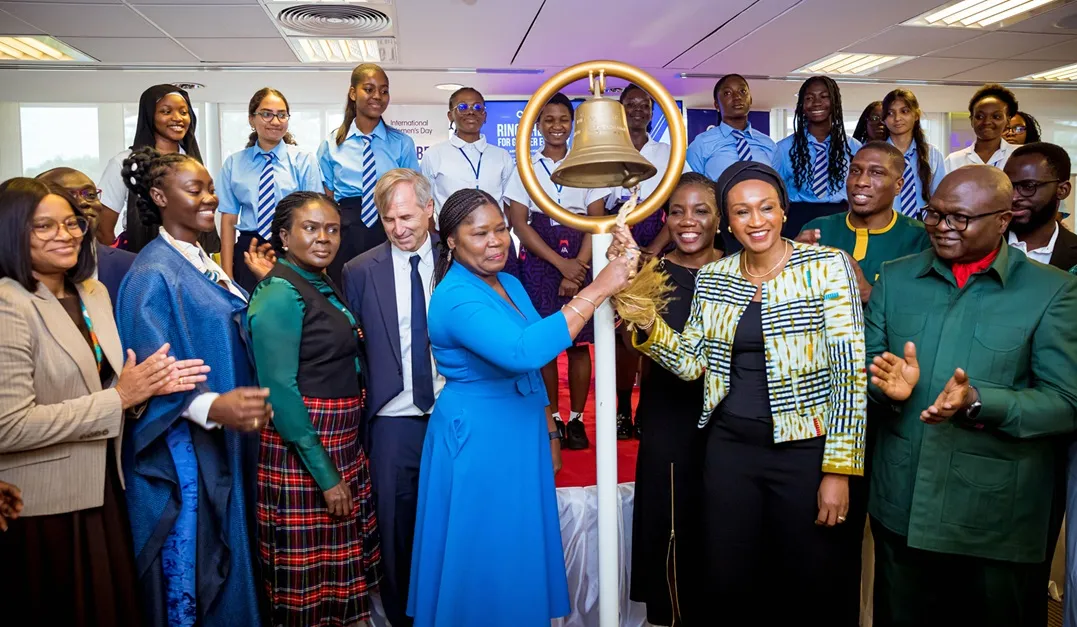
The call was made during the “Ring the Bell for Gender Equality” ceremony organised by the Ghana Stock Exchange (GSE) in collaboration with the International Finance Corporation (IFC) to mark International Women’s Day.
📢 GET A DETAILED ARTICLES + JOBS
Join ASJ's WhatsApp Channel and never miss a post or opportunity.

Sustainable Bonds Expand Financing Options
According to Nathalie Akon, Division Director for West Africa Gulf of Guinea at the International Finance Corporation, sustainable bonds offer businesses and investors new tools to mobilise capital for development-focused projects.
The Ghana Fixed Income Market now recognises several sustainable financial instruments, including:

-
Social bonds
-
Gender bonds
-
Sustainability-linked bonds
These instruments are designed to finance projects that support economic growth, climate action, social inclusion and sustainable development.
For the Accra Street Journal, the development represents an important step in aligning Ghana’s capital markets with global trends in sustainable finance.
Unlocking Finance for Women Entrepreneurs
Access to finance remains one of the biggest challenges facing women-led enterprises across Africa.
Ms. Akon emphasised that when women entrepreneurs gain access to affordable and long-term capital, they are better positioned to:
-
Expand business operations
-
Formalise their enterprises
-
Invest in innovation
-
Create employment opportunities
She noted that expanding financial inclusion for women is critical to unlocking the continent’s economic potential.
Despite the challenges, Africa already leads the world in women’s entrepreneurship, while female representation on corporate boards across the continent stands at around 25%.
IFC Expands Support for Women-Owned Businesses
The International Finance Corporation has increased its financial support for women-owned businesses across Africa as part of efforts to close the gender financing gap.
As of the 2025 financial year, the institution had committed approximately $1 billion to support women entrepreneurs on the continent.
Much of this support is delivered through programmes such as She Wins Africa, which combines financing with advisory services to strengthen women-led enterprises.

The programme focuses on helping businesses become investment-ready, improving access to capital while also promoting responsible lending practices among financial institutions.
Capital Markets as a Tool for Gender Equality
Officials at the Ghana Stock Exchange say capital markets can play a major role in advancing women’s economic empowerment.
Diana Okine, Head of Strategy and International Relations at the Ghana Stock Exchange, noted that financial markets influence economic opportunity and corporate behaviour.
She explained that stock exchanges globally are increasingly promoting gender equality through initiatives such as the “Ring the Bell for Gender Equality” campaign.
Launched in 2015 by the World Federation of Exchanges in partnership with global organisations including UN Women and the United Nations Global Compact, the initiative encourages financial institutions to promote women’s economic participation.
More than 114 stock exchanges worldwide now participate in the programme.
The Economic Case for Gender Inclusion
According to research from the World Bank Group, women globally hold only about 64% of the legal rights afforded to men, highlighting the persistent barriers that limit women’s participation in economic activity.
Financial inclusion therefore remains a key factor in addressing gender inequality.
For the Accra Street Journal, expanding access to capital markets could help transform the growth prospects of women-led businesses in Ghana.
When women entrepreneurs gain the resources to scale their businesses, the benefits extend beyond individual enterprises.
Stronger women-led businesses can contribute to job creation, innovation, household income growth and broader economic development.

Building a More Inclusive Financial System
Stakeholders say achieving these goals will require continued collaboration among financial institutions, regulators and investors.
Institutions such as the Securities and Exchange Commission, development partners and the private sector are expected to play a role in expanding financing opportunities for women entrepreneurs.
For Ghana’s financial markets, sustainable bonds may represent a powerful new tool to support inclusive growth and gender equality, while strengthening the country’s capital markets as a source of long-term financing for development.
Source: Accra Street Journal
Last Updated on March 11, 2026 by Samuel Kwame Boadu
Disclaimer: Some content on Accra Street Journal may be aggregated, summarized, or edited from third-party sources for informational purposes. Images and media are used under fair use or royalty-free licenses. Accra Street Journal is a subsidiary of SamBoad Publishing Hub under SamBoad Business Group Ltd, registered in Ghana since 2014.
For concerns or inquiries, please visit our Privacy Policy or Contact Page.

Samuel Kwame Boadu is a Ghanaian media entrepreneur and storyteller with a passion for amplifying urban voices and uncovering everyday truths. He is the Editor-in-Chief and Founder of Accra Street Journal, a dynamic digital platform dedicated to capturing the pulse of Ghana’s capital—its people, culture, challenges, business, sports and innovations.