









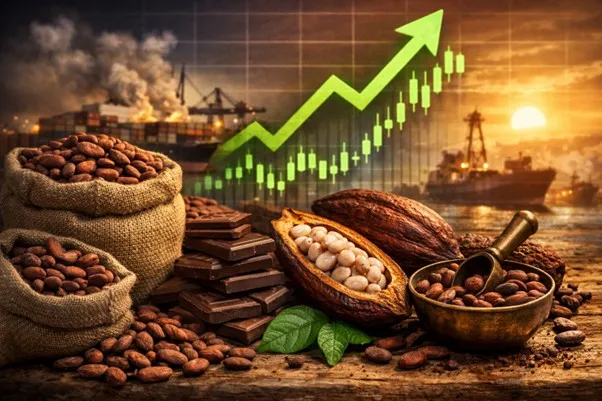
Global cocoa markets are showing early signs of recovery after a turbulent period that rattled producers and traders across the supply chain. Prices for cocoa—the commodity often referred to as “brown gold”—have rebounded above $3,429 per ton, offering a measure of relief following a sharp downturn just weeks earlier.
For major producing countries such as Ghana and Côte d’Ivoire, the price rebound is being closely monitored, as cocoa exports remain a critical pillar of national revenue and rural livelihoods.

According to market analysts, the latest rally suggests the market may have reached a short-term price floor, though uncertainty continues to shape the outlook for the global cocoa industry.
📢 GET A DETAILED ARTICLES + JOBS
Join ASJ's WhatsApp Channel and never miss a post or opportunity.

A Sharp Fall Before the Rebound
Only two weeks before the latest rally, cocoa prices had dropped significantly, falling to around $2,900 per ton amid expectations of improved harvests and a potential global surplus.
The sudden decline triggered concern across the cocoa sector, particularly in West Africa where millions of farmers depend on the crop for income.

Despite the recent recovery, current prices remain well below the historic highs seen during the global cocoa supply crisis of early 2024, when cocoa futures surged to nearly $12,000 per ton—one of the highest levels ever recorded in commodity markets.
For the Accra Street Journal, the sharp swings in cocoa prices highlight the fragile balance between supply, demand and speculation in global agricultural markets.
Demand Returns to the Market
One of the primary drivers of the recent price recovery has been renewed demand from major chocolate manufacturers and cocoa grinders.
Following the earlier price slump, many buyers who had delayed purchases re-entered the market to secure contracts at lower prices.
This wave of demand—sometimes described by analysts as “panic buying”—helped push prices upward within a short period.
As manufacturers moved quickly to lock in supply, the sudden spike in buying activity tightened the market and accelerated the price rebound.
Supply Concerns Persist
At the same time, new projections suggest that the expected global cocoa surplus may be smaller than originally forecast.
Analysts at Rabobank have indicated that lingering supply constraints could continue to limit global output during the 2025/2026 cocoa season.
The two largest cocoa producers in the world—Ghana and Côte d’Ivoire—continue to face challenges including:

-
Climate variability affecting crop yields
-
Disease pressures on cocoa trees
-
Smuggling and supply chain disruptions
These structural issues mean that global supply may remain tighter than previously anticipated.
Logistics and Geopolitics Add Pressure
Logistics disruptions are also playing a significant role in cocoa price movements.
Port arrival data from Côte d’Ivoire indicates that cocoa shipments have slowed compared with the previous season, contributing to concerns about supply availability in international markets.
At the same time, global shipping costs have increased due to geopolitical tensions affecting major maritime trade routes.
One area of concern is the Strait of Hormuz, a key global shipping corridor where geopolitical tensions have driven up freight insurance and transport costs.
Higher shipping costs ultimately feed into commodity pricing, pushing cocoa prices upward as exporters and traders factor in increased logistics expenses.
Speculators Return to the Market
Another factor influencing the rebound is the return of speculative activity in commodity markets.
Investors and hedge funds are once again positioning themselves in cocoa futures markets, betting on potential future shortages.
While speculative activity can improve market liquidity, it can also increase price volatility, making long-term planning difficult for producers and exporters.
For cocoa-dependent economies, such volatility can complicate government pricing policies and farmer income stability.
Impact on Farmers and Producer Nations
The cocoa price slump earlier in the year forced governments in both Ghana and Côte d’Ivoire to reduce official producer prices, aligning them with global market conditions.

These reductions had significant consequences for rural communities, where cocoa income supports millions of households.
Although the rebound above $3,429 offers some optimism, the sector is still adjusting to a new price environment that is far below the extraordinary highs recorded during the previous cocoa boom.
For Ghana in particular, cocoa exports remain one of the country’s largest sources of foreign exchange.
Institutions such as Ghana Cocoa Board continue to monitor global price trends closely as they shape policies affecting farmers and export revenues.
A Market in Transition
Industry analysts believe the cocoa market is currently moving through a transition phase.
The severe supply shortages that drove record prices in 2024 are gradually easing, but the market has not yet reached full stability.
Instead, cocoa prices are being influenced by a combination of:
For stakeholders across the cocoa value chain—from farmers to exporters and chocolate manufacturers—the coming months will likely remain volatile.
Outlook for the Global Cocoa Industry
Despite the uncertainty, the recent rebound provides a reminder of how quickly commodity markets can shift.
If demand remains strong and supply challenges persist, cocoa prices could continue to stabilise at higher levels.
However, analysts warn that the industry must prepare for ongoing volatility as global production patterns, climate risks and geopolitical tensions reshape the cocoa economy.
For the Accra Street Journal, the latest rally underscores the enduring importance of cocoa not only as a global commodity but also as a critical economic lifeline for West Africa’s agricultural sector.
Source: Accra Street Journal
Last Updated on March 12, 2026 by Samuel Kwame Boadu
Disclaimer: Some content on Accra Street Journal may be aggregated, summarized, or edited from third-party sources for informational purposes. Images and media are used under fair use or royalty-free licenses. Accra Street Journal is a subsidiary of SamBoad Publishing Hub under SamBoad Business Group Ltd, registered in Ghana since 2014.
For concerns or inquiries, please visit our Privacy Policy or Contact Page.

Samuel Kwame Boadu is a Ghanaian media entrepreneur and storyteller with a passion for amplifying urban voices and uncovering everyday truths. He is the Editor-in-Chief and Founder of Accra Street Journal, a dynamic digital platform dedicated to capturing the pulse of Ghana’s capital—its people, culture, challenges, business, sports and innovations.