








13 min read
Introduction
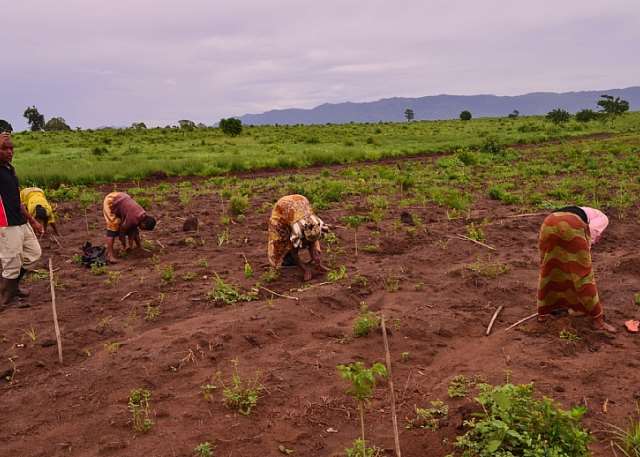
Ghana’s agriculture sector is often described in terms of what it lacks. Not enough irrigation. Not enough storage. Not enough processing. But look at the companies actually doing the work, and a different picture emerges. There are cashew processors earning tens of millions in foreign exchange. There are agritech startups connecting farmers to finance and markets with nothing more than a mobile phone. There are poultry farms, oil palm plantations, and food manufacturers building businesses that employ thousands and feed millions.
The government has noticed. The New Economy Programme, announced in November 2026, allocates $3 billion to commercial agriculture—the largest single allocation under the $10 billion plan . That money is meant to flow to the businesses that can turn raw crops into finished products, create jobs, and reduce Ghana’s dependence on food imports.
Key Takeaways
- Commissioned in November 2026, the cashew factory has a processing capacity of 100 metric tonnes per day, is expected to create 1,500 direct jobs and 3,000 indirect jobs, and targets $40 million in annual foreign exchange earnings.
- In September 2026, the International Finance Corporation (IFC) announced a partnership with Complete Farmer expected to reach 240,000 farmers by 2030, alongside a $2.4 million convertible loan to scale input financing and agronomy services .
- The IFC's partnership with Absa Bank Ghana will enable up to $200 million in financing to Licensed Buying Companies for cocoa purchases, sustaining market access for over 139,000 smallholder farmers .
This article profiles the companies leading this transformation. It covers the large agribusinesses generating revenue and exports, the agritech startups bringing digital tools to smallholder farmers, and the food processors adding value to what Ghana grows. It also looks at the investment and policy environment shaping their prospects.
The Large Agribusinesses
Ghana’s agribusiness landscape includes companies operating at scale across crops, livestock, and processing. Revenue data for private companies is often limited, but publicly available estimates and funding records give a sense of who the major players are.
Mim Cashew is ranked among Ghana’s top agriculture companies by revenue, with estimates placing it at around $63 million . The company operates in the cashew value chain, a sector the government is pushing to process locally rather than export raw. Cashew has become one of Ghana’s priority tree crops, alongside cocoa, shea, oil palm, coconut, mango, and rubber.
Tropo Farms, based in Dzorwulu, Accra, is a major player in aquaculture and livestock, with estimated revenue of $38.2 million and a workforce of around 694 . Fish farming is a growing segment in Ghana, driven by demand for tilapia and catfish. Companies like Tropo Farms help reduce the country’s reliance on imported fish.
Jei River Farms and Norpalm Ghana are among the other large crop-focused operations appearing in company rankings, with estimated revenues in the $50–70 million range . Norpalm operates in the oil palm sector, a tree crop with significant potential for local processing and export.
OLAM Agri represents a different model: a global commodity trader that has evolved into a major agro-processor in Ghana. In March 2026, President Mahama commissioned OLAM’s pasta manufacturing facility at Kpone-Tema. The company has operated in Ghana for 32 years and employs over 4,500 Ghanaians directly and indirectly. The pasta plant is designed to reduce imports of processed food and qualifies for incentives under the government’s 24-hour economy initiative . OLAM’s presence shows how international agribusinesses can contribute to local value addition when the policy environment encourages it.
Nadkansco Processing Ltd., a Free Zones enterprise in Techiman, represents the new wave of local processing. Commissioned in November 2026, the cashew factory has a processing capacity of 100 metric tonnes per day, is expected to create 1,500 direct jobs and 3,000 indirect jobs, and targets $40 million in annual foreign exchange earnings. The company has already trained 1,247 farmers and operates an outgrower scheme to secure raw material supply . It is exactly the kind of business the government says it wants: local, value-adding, export-oriented, and linked to smallholder farmers.
The Agritech Startups
Ghana’s agritech ecosystem is small but growing. According to StartupBlink, Ghana ranks 46th globally and second in Western Africa for agtech, making it a relatively strong part of the country’s startup scene. Agritech startups have raised $28.2 million in tracked funding, with three companies accounting for the entire total .

Complete Farmer is the most funded, having raised $19.2 million. Its digital platform connects farmers with buyers, financial institutions, input suppliers, and agricultural service providers. The company operates across eight regions in Ghana with eight fulfilment centres, serves over 72,000 farmers, and has a presence in Togo. In September 2026, the International Finance Corporation (IFC) announced a partnership with Complete Farmer expected to reach 240,000 farmers by 2030, alongside a $2.4 million convertible loan to scale input financing and agronomy services . Complete Farmer’s model is built on the idea that farmers with commercial potential are held back by access to finance, not ability.
Farmerline has raised $8.7 million and focuses on information access, record-keeping, and communication for farmers. The company offers input financing through organised groups, climate-smart farming education, logistics services, and access to high-quality inputs, while connecting farmers to agribusinesses and international markets. Farmerline’s approach recognises that smallholder farmers need more than seeds and fertiliser; they need data, market linkages, and the kind of support that turns farming into a business.

Wami Agro partners with smallholder farmers to grow, aggregate, and sell produce. The company aggregates rice, maize, soya bean, and cassava from over 10,000 farmers and sells to poultry farmers, FMCGs, distributors, and food service businesses in Ghana. Wami’s model is aggregation at scale, linking fragmented smallholder production to larger buyers who need consistent supply.
Other agritech ventures include Trotro Tractor, a platform connecting farmers with tractor operators, and Agro Innova, which uses digital technologies to solve agricultural challenges . The ecosystem also benefits from competitions like the Kosmos Innovation Center’s AgriTech Challenge, which awarded $100,000 in seed funding to ten winning teams in 2026, and the UK-Ghana Chamber of Commerce’s Grand Challenge Pitch, which supports innovators in areas like post-harvest loss reduction and food preservation .
The Food Processors and Value Adders
Ghana’s biggest agricultural opportunity is not growing more. It is processing more of what it already grows. Several companies are leading on this front.
Maphlix Trust Ghana Limited, founded in 2013, is an integrated agribusiness operating across orange-fleshed sweet potato, cassava, vegetables, fruits, and starch value chains. The company holds Global GAP certification and FDA approval, and earns 70–95% of its agro-production revenue from exports to the UK, Germany, France, the Netherlands, and the Czech Republic. It has over 1,200 active out-growers and is seeking $7.5 million to expand processing capacity, including a sweet potato puree plant and increased gari production . Maphlix represents the export-oriented, certification-compliant model that Ghana needs more of.
Nadkansco, as noted, is processing cashew locally rather than exporting raw nuts . This is significant because raw cashew exports have historically captured little value for Ghana. Processing at home means jobs, foreign exchange, and linkages to local farmers.
OLAM Agri’s pasta facility is another example. Ghana is one of Africa’s largest pasta consumers, largely because of waakye, which is often served with spaghetti or talia. By producing pasta locally, OLAM reduces import dependence and captures value that previously went abroad .
The government’s Feed the Industry programme, mentioned by the Trade Minister at the Nadkansco commissioning, is meant to strengthen links between farmers and processors, ensuring that factories have reliable access to raw materials . If it works, it could reduce the supply bottlenecks that have plagued agro-processing in Ghana.
The Investment and Policy Environment
The companies profiled here operate within a policy environment that is becoming more supportive, though challenges remain.
The $3 billion allocation to commercial agriculture under the New Economy Programme is the biggest signal. It is meant to fund production targets, extension services, farm-to-market systems, anchor farms, and organised outgrower schemes . The Agribusiness Market Ecosystem Alliance (AMEA) Ghana has called for business development services—advisory, training, financial management, market linkages—to be integrated into the programme, arguing that the businesses receiving investment need capacity building to use it effectively .
The Tree Crops Development Authority (TCDA) is driving a parallel push. The TCDP, a $200 million World Bank-supported programme, includes a $51.35 million grant facility to support farmer-based organisations, cooperatives, agribusinesses, and research institutions. It aims to reach 50,000 smallholder farmers, with at least 40% women, and create over 20,000 jobs . TCDA has also approved a “Legacy Project” to establish 16,000 hectares of tree crop enclaves across all 16 regions, focusing on cashew, oil palm, coconut, shea, mango, and rubber .

Access to finance remains a challenge, but progress is being made. The IFC’s partnership with Absa Bank Ghana will enable up to $200 million in financing to Licensed Buying Companies for cocoa purchases, sustaining market access for over 139,000 smallholder farmers . The IFC-Complete Farmer partnership is targeting 240,000 farmers by 2030 . These are significant numbers, though they represent a fraction of Ghana’s farming population.
Business development services are also receiving attention. AMEA Ghana estimates that more than 23,000 active cooperatives, about 10,000 farmer-based organisations, and a significant proportion of Ghana’s 1.7 million MSMEs operate within or around agriculture. Many of these need support in governance, business planning, record-keeping, and market linkages to become competitive and sustainable .
Challenges
The obstacles facing agribusiness in Ghana are well documented and stubborn.
Access to finance is the most frequently cited. Banks see agriculture as risky. Smallholder farmers and small agribusinesses often cannot provide the collateral or formal records that lenders require. The IFC and Absa partnerships are addressing this for cocoa and for Complete Farmer’s network, but the majority of farmers remain underserved.
Infrastructure remains a constraint. Roads to farming areas are often poor. Electricity is unreliable in rural areas. Storage facilities are inadequate, leading to post-harvest losses. The TCDP and the government’s infrastructure plans acknowledge these gaps, but fixing them takes time and money.
Market access is another challenge. Smallholder farmers often sell at the farm gate to middlemen because they lack transport, storage, or direct links to buyers. Aggregators like Wami Agro and platforms like Complete Farmer are trying to change this, but they reach only a fraction of the farming population.
Climate change is making farming riskier. Erratic rainfall, drought, and flooding affect yields. Climate-smart agriculture is becoming essential, and organisations like Farmerline are integrating it into their services, but adoption is uneven.
Skills and capacity are limiting factors at every level. Farmers need training in modern techniques. Agribusinesses need managers with financial and operational skills. The AMEA call for business development services reflects this gap .
Why It Matters to Ordinary Ghanaians
Agribusiness is not just about companies making money. It affects what people eat and what they pay.
Food prices and availability. When local processing increases, food is less vulnerable to import costs and exchange rate movements. A pasta factory in Tema means pasta prices are less exposed to the cedi’s value. A cashew processor in Techiman means more of the value from Ghana’s cashew crop stays in the country.
Jobs. Agribusiness creates jobs at multiple levels: on farms, in processing plants, in logistics, in sales. Nadkansco alone expects to create 1,500 direct jobs . OLAM employs over 4,500 directly and indirectly . The agritech startups employ smaller numbers but create new kinds of jobs—data analysts, field officers, software developers—that did not exist in agriculture a decade ago.
Farmer incomes. When farmers have reliable buyers, access to inputs, and training, their yields and incomes improve. The outgrower models used by Nadkansco and Maphlix, and the aggregation models of Wami Agro and Complete Farmer, are designed to link farmers to markets in ways that benefit both sides.
Reducing imports. Ghana spends billions on food imports. Every locally processed product that replaces an import keeps money in the economy. Pasta, cashew, poultry, rice—these are all sectors where local production and processing can reduce the import bill.
Future Outlook
The direction is clear: more investment, more processing, more technology. The question is whether the growth will reach the farmers who need it most.
If current trends continue, agritech will expand, reaching more farmers with finance and market linkages. Processing capacity will grow, especially in tree crops and staples. Government programmes will fund infrastructure and grants, though execution will be uneven. Some agribusinesses will scale; others will fail.
The risks are significant. If the $3 billion commercial agriculture allocation is poorly managed, it will not translate into real capacity. If infrastructure does not improve, post-harvest losses will continue. If climate shocks hit, vulnerable farmers will suffer.
The most likely scenario is gradual progress. The companies profiled here are building real businesses with real revenue and real jobs. They are not waiting for government to solve every problem. But they operate in an environment where the basics—finance, roads, power, storage—are still not reliable enough to unlock the sector’s full potential.
The wild card is the private sector’s ability to scale. If companies like Complete Farmer, Nadkansco, and Maphlix can prove their models and attract more capital, they could transform value chains faster than government programmes can. The IFC’s partnership with Complete Farmer is a vote of confidence. More will follow if the results are there.
Quick Facts
Topic: Leading Agriculture and Agribusiness Companies in Ghana
Top Agribusinesses (by estimated revenue): Mim Cashew (~$63M), Jei River Farms (~$52M), Tropo Farms (~$38M)
**Most Funded Agritech:** Complete Farmer ($19.2M), Farmerline ($8.7M), Wami Agro ($258K)
Key Processing Investment: OLAM Agri pasta facility (Kpone-Tema, commissioned March 2026)
Key Export Processor: Nadkansco cashew factory (Techiman, 100 MT/day, $40M forex target)
**Government Commitment:** $3 billion for commercial agriculture under New Economy Programme
Tree Crop Grants: $51.35 million grant facility under TCDP
Key Challenge: Access to finance, infrastructure, market linkages
Key Opportunity: Local processing, agritech, export diversification
FAQ Section
1. What are the largest agriculture companies in Ghana?
Based on available revenue estimates, companies like Mim Cashew, Jei River Farms, Norpalm Ghana, and Tropo Farms are among the largest. Revenue data for private companies is limited, so these figures are estimates .
2. Which agritech startups are leading in Ghana?
Complete Farmer, Farmerline, and Wami Agro are the most prominent and funded agritech startups. Complete Farmer leads with $19.2 million raised, followed by Farmerline with $8.7 million .
3. What does Complete Farmer do?
Complete Farmer operates a digital agriculture platform that connects farmers with buyers, financial institutions, input suppliers, and service providers. It serves over 72,000 farmers and has a partnership with the IFC expected to reach 240,000 farmers by 2030 .
4. What is Nadkansco and what does it process?
Nadkansco Processing Ltd. is a cashew processing factory in Techiman, commissioned in November 2026. It processes 100 metric tonnes of raw cashew per day, targets $40 million in annual forex earnings, and is expected to create 1,500 direct jobs .
5. What is OLAM Agri’s role in Ghana?
OLAM Agri has operated in Ghana for 32 years and employs over 4,500 Ghanaians. It commissioned a pasta manufacturing facility in Kpone-Tema in March 2026 to reduce Ghana’s dependence on imported pasta .
6. How much is the government investing in agriculture?
The New Economy Programme allocates $3 billion to commercial agriculture, the largest single allocation under the $10 billion plan. Additionally, the Tree Crop Diversification Project includes a $51.35 million grant facility .
7. What are the biggest challenges facing agribusiness in Ghana?
Access to finance, poor infrastructure (roads, storage, electricity), limited market linkages for smallholders, climate change impacts, and skills gaps in business management .
8. How does agribusiness affect ordinary Ghanaians?
It affects food prices and availability, creates jobs on farms and in processing, supports farmer incomes, and reduces dependence on imported food products.
9. What is the Tree Crops Development Authority doing?
TCDA regulates and promotes six tree crops: cashew, shea, mango, coconut, rubber, and oil palm. It is implementing the $200 million TCDP and has approved a Legacy Project to establish 16,000 hectares of tree crop enclaves across all regions .
10. Are there opportunities for young people in agribusiness?
Yes. Agritech startups, food processing, and agribusiness services offer career paths beyond farming. The Kosmos Innovation Center and other programmes provide training and seed funding for young agripreneurs
Source: Accra Street Journal
Last Updated on November 25, 2026 by Samuel Kwame Boadu
Disclaimer: Some content on Accra Street Journal may be aggregated, summarized, or edited from third-party sources for informational purposes. Images and media are used under fair use or royalty-free licenses. Accra Street Journal is a subsidiary of SamBoad Publishing Hub under SamBoad Business Group Ltd, registered in Ghana since 2014.
For concerns or inquiries, please visit our Privacy Policy or Contact Page.

Samuel Kwame Boadu is a Ghanaian media entrepreneur and storyteller with a passion for amplifying urban voices and uncovering everyday truths. He is the Editor-in-Chief and Founder of Accra Street Journal, a dynamic digital platform dedicated to capturing the pulse of Ghana’s capital—its people, culture, challenges, business, sports and innovations.
Use the following reference when citing or referencing this article.
Your feedback helps us improve our journalism.
Report an Error
Help us maintain accuracy. Let our editorial team know if you spot an issue in this article.
Report a problem with this article