


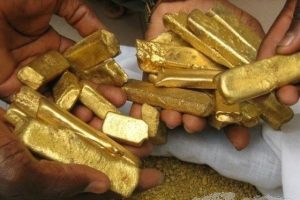


Ivory Coast, the world’s top cocoa producer, is pushing aggressively into gold mining, signaling a new phase of economic diversification beyond its agricultural backbone. The government has granted 11 new exploration permits to local and international companies, marking a deliberate effort to transform the West African nation into a regional mining hub.
The announcement was made in Abidjan by government spokesperson Amadou Coulibaly following a cabinet meeting. The permits cover gold, cobalt, copper, and other strategic minerals, with validity periods of four years.

A Stable Haven for Investors
At a time when West Africa is experiencing political volatility — with Mali, Burkina Faso, and Niger tightening state control over mining assets under military regimes — Ivory Coast’s relative stability is becoming a competitive advantage.
📢 GET A DETAILED ARTICLES + JOBS
Join ASJ's WhatsApp Channel and never miss a post or opportunity.

Analysts suggest that the country’s democratic continuity and investor-friendly approach make it increasingly attractive for global mining giants seeking long-term certainty.
“Stability is the new commodity in West Africa,” one mining consultant observed. “Ivory Coast is marketing itself as both resource-rich and politically dependable, a combination investors value.”
Expanding Gold Exploration
Eight of the newly issued permits focus on gold exploration. Awardees include Resolute Exploration Côte d’Ivoire, developer of the Doropo gold project in the north, and Tieto Minéral, which operates the Abujar gold mine west of Abidjan.
The remaining three permits were granted for chrome, manganese, nickel, cobalt, and copper exploration — minerals that are increasingly in demand due to global clean energy transitions.
The strategy is already bearing fruit. National gold production has climbed from just 10 tonnes in 2012 to 58 tonnes in 2024, with output projected to reach 62 tonnes in 2025. By 2030, the government aims to boost production further to 100 tonnes annually.
This growth would elevate Ivory Coast into the top tier of African gold producers, joining the ranks of Ghana, South Africa, Mali, and Sudan.
Diversification Beyond Cocoa
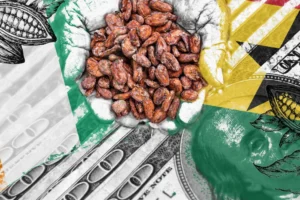
For decades, cocoa has defined the Ivorian economy, providing livelihoods for millions and accounting for about 40% of export earnings. But the risks are mounting. Global price fluctuations, climate shocks, and international pressure for more local processing have exposed the limits of over-reliance on the crop.
“Cocoa will always be central to our economy, but diversification is no longer optional — it is essential,” Mines Minister Mamadou Sangafowa Coulibaly told Reuters last year.
Mining is emerging as one of the key pillars of that diversification. In addition to gold, the country has been exploring oil, gas, and strategic minerals critical to electric vehicle and battery production.
A Continental Trend
Ivory Coast’s mining ambitions echo broader moves across Africa, where resource-rich countries are rethinking their commodity dependence.
-
Ghana, the continent’s top gold producer, has tightened fiscal frameworks to secure greater state revenues.
-
Nigeria is scaling up its solid minerals industry to reduce reliance on crude oil exports.
-
South Africa continues to balance its mature mining sector with regulatory reforms to attract capital.
By joining this wave, Ivory Coast is sending a clear message: it does not intend to remain solely the “world’s cocoa basket” but is positioning itself as a heavyweight in Africa’s mineral economy.
Looking Ahead
Major projects like Endeavour Mining’s Lafigué mine and Resolute’s Doropo project are expected to anchor the sector’s expansion over the next five years. If the government’s 2030 target is met, gold revenues could rival — or even surpass — cocoa in importance to the Ivorian economy.
For global investors weighing African opportunities, Ivory Coast’s combination of resources, stability, and growth strategy presents a rare equation. And for Ivorians, the mining push may redefine the country’s economic identity, signaling a future where gold and cocoa carry equal weight.
For a deeper editorial analysis of Ivory Coast’s diversification strategy, read the full report on Accra Street Journal’s Brand Focus Africa
FAQs
Why is Ivory Coast expanding its mining sector?
To diversify its economy beyond cocoa, which accounts for 40% of exports but faces volatility from price swings and climate pressures.
How many new mining permits were issued?
The government granted 11 new exploration permits — eight for gold and three for cobalt, copper, and other minerals.
What is the country’s gold production target?
Ivory Coast aims to boost annual gold production from 62 tonnes in 2025 to 100 tonnes by 2030.
Which companies are involved in the new projects?
International firms such as Resolute Exploration Côte d’Ivoire and Tieto Minéral are among the key players.
How does Ivory Coast compare to its neighbors?
Unlike Mali, Niger, and Burkina Faso — now under military rule — Ivory Coast’s political stability makes it more attractive to foreign investors.
Source: Accra Street Journal
Last Updated on March 9, 2026 by Samuel Kwame Boadu
Disclaimer: Some content on Accra Street Journal may be aggregated, summarized, or edited from third-party sources for informational purposes. Images and media are used under fair use or royalty-free licenses. Accra Street Journal is a subsidiary of SamBoad Publishing Hub under SamBoad Business Group Ltd, registered in Ghana since 2014.
For concerns or inquiries, please visit our Privacy Policy or Contact Page.

Samuel Kwame Boadu is a Ghanaian media entrepreneur and storyteller with a passion for amplifying urban voices and uncovering everyday truths. He is the Editor-in-Chief and Founder of Accra Street Journal, a dynamic digital platform dedicated to capturing the pulse of Ghana’s capital—its people, culture, challenges, business, sports and innovations.