








Introduction
In recent years, the bustling technology ecosystem in Ghana’s capital, Accra, has begun to pivot decisively toward artificial intelligence (AI). As startups mature, global tech players invest locally, and a generation of digital natives embrace data-driven business models, the question is not whether Accra will be part of this wave — but how deeply and how fast.
This article by Accra Street Journal examines the current state of AI-enabled startups in Accra, the accelerating enablers such as talent and infrastructure, the key sectors where breakthroughs may happen, and the obstacles that must be navigated for meaningful progress.

Setting the Scene: Why AI Now in Accra?
Accra’s startup ecosystem has steadily grown, propelled by tech hubs like Meltwater Entrepreneurial School of Technology (MEST), co-working spaces, and a rising cohort of founders building apps and platforms for local and regional markets.
Yet, until recently, very few ventures in Ghana were built explicitly around AI or machine learning. That is now starting to change.
📢 GET A DETAILED ARTICLES + JOBS
Join ASJ's WhatsApp Channel and never miss a post or opportunity.

Several recent developments underpin this shift:
-
Tech giants investing locally: For example, Google opened its AI Community Centre in Accra and announced a $37 million funding package to support AI research and startups in Africa.
-
Growing local talent: Ghana launched training programmes such as the AI Africa Labs, which graduated 250 “Platinum AI Trainers” in Accra.
-
Startup-events and communities: Meet-ups like the “AI Summit Accra” or the “AI Ignite Pitch Battle” demonstrate increasing local traction and ecosystem maturity.
Put together, these point to a maturing local ecosystem ready to commercialize more complex tech solutions — not just mobile apps or simple software but full-stack AI tools.

Key Sectors for AI-Driven Innovation in Accra
As startups in Accra adopt AI, certain sectors stand out for strong potential based on local market needs and Ghana’s comparative advantages.
1. AgriTech and Food Systems
Agriculture remains central to Ghana’s economy, but productivity and value-chain challenges persist. AI offers tools for yield forecasting, pest detection, supply-chain optimisation and farm-to-market traceability. For instance, Google’s funding includes a segment dedicated to “food-system AI”. Startups that integrate remote sensing, satellite imagery, and machine learning into AgriTech (for smallholder farmers) may find a strong local footing.
2. Education and Language AI
Ghana’s multilingual context and education-system demands present opportunities for AI. Research such as “Glocalizing Generative AI in Education for the Global South” explores tools built for Ghanaian languages and curricula. Startups can build localised generative AI, tutoring systems, or language-adapted tools for schools — a niche often underserved globally.
3. FinTech and InsurTech
Accra has a strong fintech base (see firms like Mazzuma). AI can power credit-scoring, fraud detection, agent network optimisation, and mobile-first insurance. As financial inclusion expands, AI-driven underwriting or micro-insurance products can become differentiators.
4. Smart City / Urban Tech
As Accra seeks to become a “smart city”, AI-enabled systems may address traffic flows, waste-management, energy optimisation and citizen services. With infrastructure upgrades underway, startups that plug into urban-data layers can leverage this shift.
5. HealthTech
AI-based diagnostics, image-analysis, and remote monitoring remain nascent in Ghana but hold promise. With global interest and local demand, HealthTech startups in Accra might build on AI tools adapted for local disease burdens and settings.
What’s Next for Accra’s AI Startup Ecosystem
Several trends appear likely to shape how AI & startups evolve in Accra over the coming years:
-
From prototype to deployment: Many local teams are moving beyond proof-of-concept to live pilots and deployment of AI solutions in real settings. Training programmes and hackathons support this shift.
-
Local data & context-adaptation: African start-ups that prioritise local languages, cultural contexts and datasets will have an edge. Efforts like the “Amplify Initiative” using Ghanaian data for AI models illustrate this.
-
Hybrid business models: AI startups may adopt hybrid models combining services (training, data-annotation), platforms (SaaS), and partnerships with governments/NGOs.
-
Increased funding and global linkages: With global players investing (e.g., Google’s funding), Accra’s startups may access more capital, but they will also need to meet more demanding benchmarks for scale, governance and impact.
-
Regulatory & ethical systems: As AI becomes more embedded, frameworks for data protection, ethical AI, local language rights and algorithmic transparency will become more important. Ghanaian policy-makers are showing indications of this.
-
Talent retention and upskilling: One of the major challenges for AI-startups is talent. With training programmes, community meet-ups (e.g., the “Global AI Accra” chapter) and hackathons, the talent pipeline is improving.
Challenges That Must Be Addressed
Despite the momentum, there are significant hurdles that Accra’s AI and startup ecosystem must overcome:
-
Data infrastructure and compute resources: AI models require data and compute. Many Ghanaian startups face constraints in access to high-quality labelled data, cloud credits, or local data storage.
-
Funding gap for scale: While seed funding may be available, many AI startups struggle to raise Series A or scale-stage investment. A Reddit contributor observed:
“Finding investors has been the most difficult challenge. Most local investors are primarily interested in real estate.”
-
Market readiness and monetisation: Many AI solutions are built in demo mode but lack viable business models or paying customers in the Ghanaian context.
-
Regulatory and ethical frameworks: Without policies for privacy, data-protection, algorithmic fairness and localisation, there is a risk that AI solutions may under-serve or mis-serve local communities.
-
Talent competition and brain-drain: Even as local training grows, many developers and researchers are hired abroad. Retaining talent in Ghana requires both opportunity and rewarding work.
-
Infrastructure divides: Outside of major centres like Accra, digital connectivity, data access and computer literacy may lag — limiting the reach of AI solutions to more rural areas.
What This Means for Founders, Investors & Ecosystem Builders
For founders in Accra:

-
Focus on problem-validation in Ghanaian or African contexts — don’t simply import global models.
-
Build minimum-viable AI solutions that solve clear local pain points (e.g., crop disease detection, SME cash-flow analytics, language-adapted tutoring).
-
Partner with local organisations (universities, hubs, government) to access data, pilots and domain knowledge.
-
Be mindful of data-rights, privacy, and localisation (i.e., local languages, cultural context).
-
Prepare for scale, even early — including infrastructure, monetisation model and capacity to serve growing users.
For investors and ecosystem builders in Accra:
-
Allocate funding to AI-driven startups, not just “tech” in general.
-
Support bridging across talent, data, compute credits, mentorship and global linkages.
-
Promote policy frameworks that encourage responsible AI, local-language datasets and data sovereignty.
-
Recognise that AI solutions may need longer gestation than typical apps — and understand the metrics for success (impact, data-ownership, scalability).
For the broader ecosystem:
-
Events, hackathons, datathons (e.g., Ghana’s AI4Startups) build community and pipelines.
-
Maintain public-private dialogue so that startups, government and academia can align on AI for social good (health, agriculture, education).
-
Celebrating local success stories builds visibility and confidence in the ecosystem.
Conclusion From ASJ
Accra’s startup ecosystem is at an inflection point. With increased investment in AI, talent development efforts, global partnerships and a rising cohort of African-founded companies, the city is positioned to become a meaningful hub for applied AI in Africa.
That said, the journey will require more than ambition. It requires data, local context, funding, regulatory support and thoughtful scaling. If Ghana and Accra get these right, what’s next isn’t just another tech story — it’s a chance to build AI that works for Africa, by Africa.
FAQs
1. What are some AI-driven startups in Accra today?
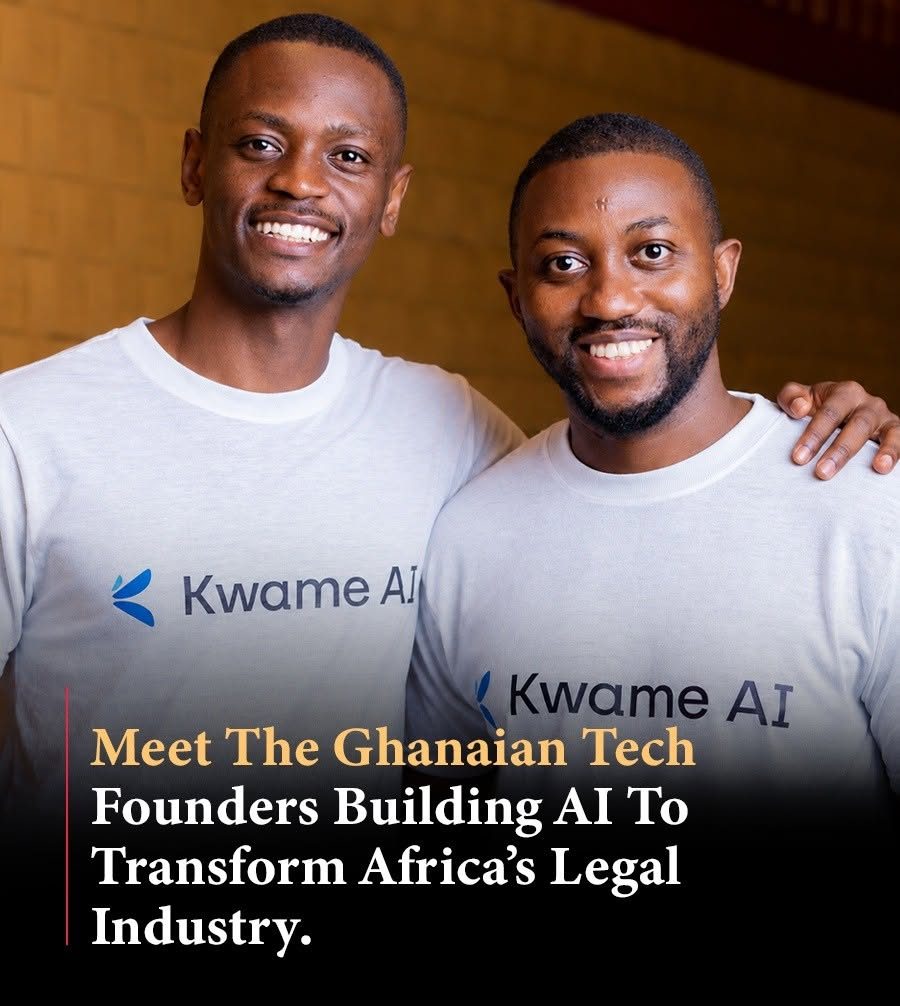
One example is Kwame AI — an Accra-based company founded in 2022 that provides personal AI assistants for learners and knowledge-workers.
2. What major investments are being made into AI in Accra?
Google announced a $37 million package for AI research and startup support in Africa, centred on its new AI Community Centre in Accra.
3. Which sectors are most likely to see AI startup growth in Accra?
Strong potential exists in agriculture (AgriTech), education (local language AI and tutoring), fintech/insurtech (analytics and automation), and urban/smart-city tech.
4. What challenges do AI startups in Ghana face?
Key challenges include access to high-quality data, infrastructure (compute and cloud resources), scaling and funding, regulatory frameworks, and talent retention.
5. How can someone get involved in the AI ecosystem in Accra?
Joining local meet-ups (e.g., Global AI Accra), attending events like hackathons and startup mixers, enrolling in AI training programmes, and building small projects focused on local problems are good starting points
Source: Accra Street Journal
Last Updated on March 14, 2026 by Samuel Kwame Boadu
Disclaimer: Some content on Accra Street Journal may be aggregated, summarized, or edited from third-party sources for informational purposes. Images and media are used under fair use or royalty-free licenses. Accra Street Journal is a subsidiary of SamBoad Publishing Hub under SamBoad Business Group Ltd, registered in Ghana since 2014.
For concerns or inquiries, please visit our Privacy Policy or Contact Page.

Samuel Kwame Boadu is a Ghanaian media entrepreneur and storyteller with a passion for amplifying urban voices and uncovering everyday truths. He is the Editor-in-Chief and Founder of Accra Street Journal, a dynamic digital platform dedicated to capturing the pulse of Ghana’s capital—its people, culture, challenges, business, sports and innovations.