









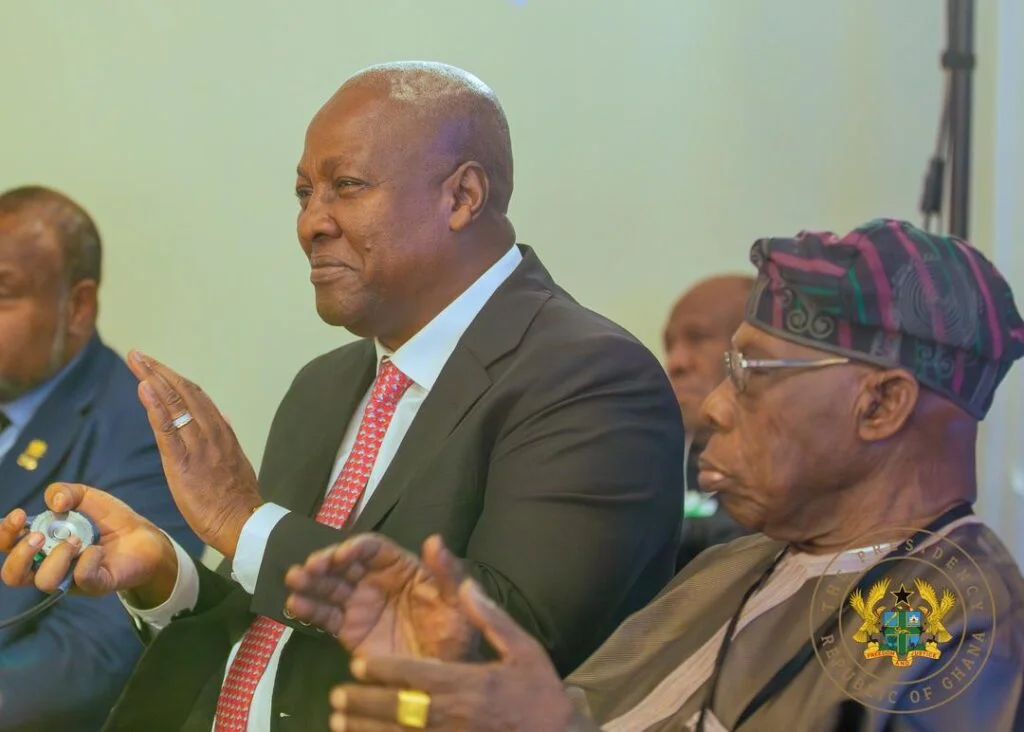

Ghana is making a deliberate and strategic attempt to redefine the role of health in national development. Under President John Dramani Mahama’s Accra Reset initiative, the country is no longer treating healthcare solely as a social obligation, but as a productive economic sector capable of driving industrialisation, job creation, and export growth.

This shift represents a break from decades of dependency on imported medicines, vaccines, and medical technologies. Instead, Ghana is positioning itself as a future pharmaceutical and biotechnology hub for Africa, with implications that extend far beyond public health.
From Social Spending to Strategic Industry
Health as an Engine of Growth
President Mahama’s framing of health as a pillar of economic sovereignty marks an important conceptual shift. Rather than viewing healthcare expenditure as a fiscal burden, the Accra Reset treats pharmaceutical production, biotechnology, and vaccine manufacturing as value-creating industries.
📢 GET A DETAILED ARTICLES + JOBS
Join ASJ's WhatsApp Channel and never miss a post or opportunity.
“What if we produced our own vaccines and our own medicines with our own technology?” the President asked, underscoring a vision rooted in practicality rather than symbolism.
This approach aligns with global lessons from the COVID-19 pandemic, which exposed the vulnerabilities of countries without domestic manufacturing capacity for essential health products.
Pharmaceutical Manufacturing and Sovereignty
Reducing Dependency, Building Resilience
Africa imports the overwhelming majority of its medicines and active pharmaceutical ingredients. Ghana’s push to localise production directly addresses this structural weakness.
The economic implications are significant
-
Reduced import bills and foreign exchange pressure
-
Lower exposure to global supply chain disruptions
-
Improved medicine availability and affordability
-
Stronger regulatory and quality-control ecosystems
Local vaccine and drug manufacturing also strengthens national security, ensuring that public health responses are not constrained by global market shortages.
Why International Partners Are Paying Attention
Ghana as a Gateway Market
Countries like India, with deep pharmaceutical expertise, are already signalling interest in Ghana’s strategy. This is not accidental. Ghana offers:
-
Political stability
-
Strong investor protection frameworks
-
Access to ECOWAS markets
-
Growing regulatory credibility
Foreign Affairs Minister Samuel Okudzeto Ablakwa’s emphasis on Ghana’s rising global stature reflects a broader diplomatic push to turn health cooperation into economic partnership.
Rather than aid-driven health support, Ghana is seeking co-investment, co-manufacturing, and technology transfer.
Early Signals of Progress
From Vision to Execution
The Accra Reset is not being positioned as a policy declaration. Technology transfer agreements and early-stage local production of vaccines and health products suggest that implementation has already begun.
This matters because
-
Industrial credibility depends on execution
-
Investors respond to proof, not promises
-
Skills development follows real production
As local capacity grows, Ghana can evolve from serving domestic demand to supplying regional export markets, particularly within West Africa.
Jobs, Skills, and Spillover Effects
Beyond the Factory Floor
A thriving pharmaceutical and biotech sector does more than produce medicines. It creates demand for:
-
Scientists and engineers
-
Regulatory professionals
-
Cold-chain logistics providers
-
Research institutions
-
Quality assurance and compliance services
These spillovers help diversify the economy and create high-skilled employment, particularly for young professionals.
The Strategic Bet
Health Sovereignty as Economic Strategy
Ghana’s bet on health sovereignty is ultimately a bet on long-term structural transformation. By treating pharmaceutical and biotechnology production as core industrial assets, the country is aligning public health goals with economic resilience.
This is a departure from dependency-driven development toward production-based self-reliance, measured not in speeches, but in:
-
Medicines produced
-
Skills transferred
-
Exports generated
Conclusion: A Reset That Could Redefine Development
If sustained, Ghana’s pharmaceutical push under the Accra Reset could become one of the most consequential development strategies in recent history. It addresses public health vulnerabilities, builds industrial capacity, and positions the country within a fast-growing global health economy.
The real test will be consistency—policy stability, regulatory discipline, and sustained investment. But the direction is clear: Ghana is no longer asking how to import health solutions. It is asking how to produce them, scale them, and export them.
That is not just health policy. It is economic strategy.
Source: Accra Street Journal
Last Updated on March 14, 2026 by Samuel Kwame Boadu
Disclaimer: Some content on Accra Street Journal may be aggregated, summarized, or edited from third-party sources for informational purposes. Images and media are used under fair use or royalty-free licenses. Accra Street Journal is a subsidiary of SamBoad Publishing Hub under SamBoad Business Group Ltd, registered in Ghana since 2014.
For concerns or inquiries, please visit our Privacy Policy or Contact Page.

Samuel Kwame Boadu is a Ghanaian media entrepreneur and storyteller with a passion for amplifying urban voices and uncovering everyday truths. He is the Editor-in-Chief and Founder of Accra Street Journal, a dynamic digital platform dedicated to capturing the pulse of Ghana’s capital—its people, culture, challenges, business, sports and innovations.