








7 min read
Introduction: A Shift in How Business Is Conducted
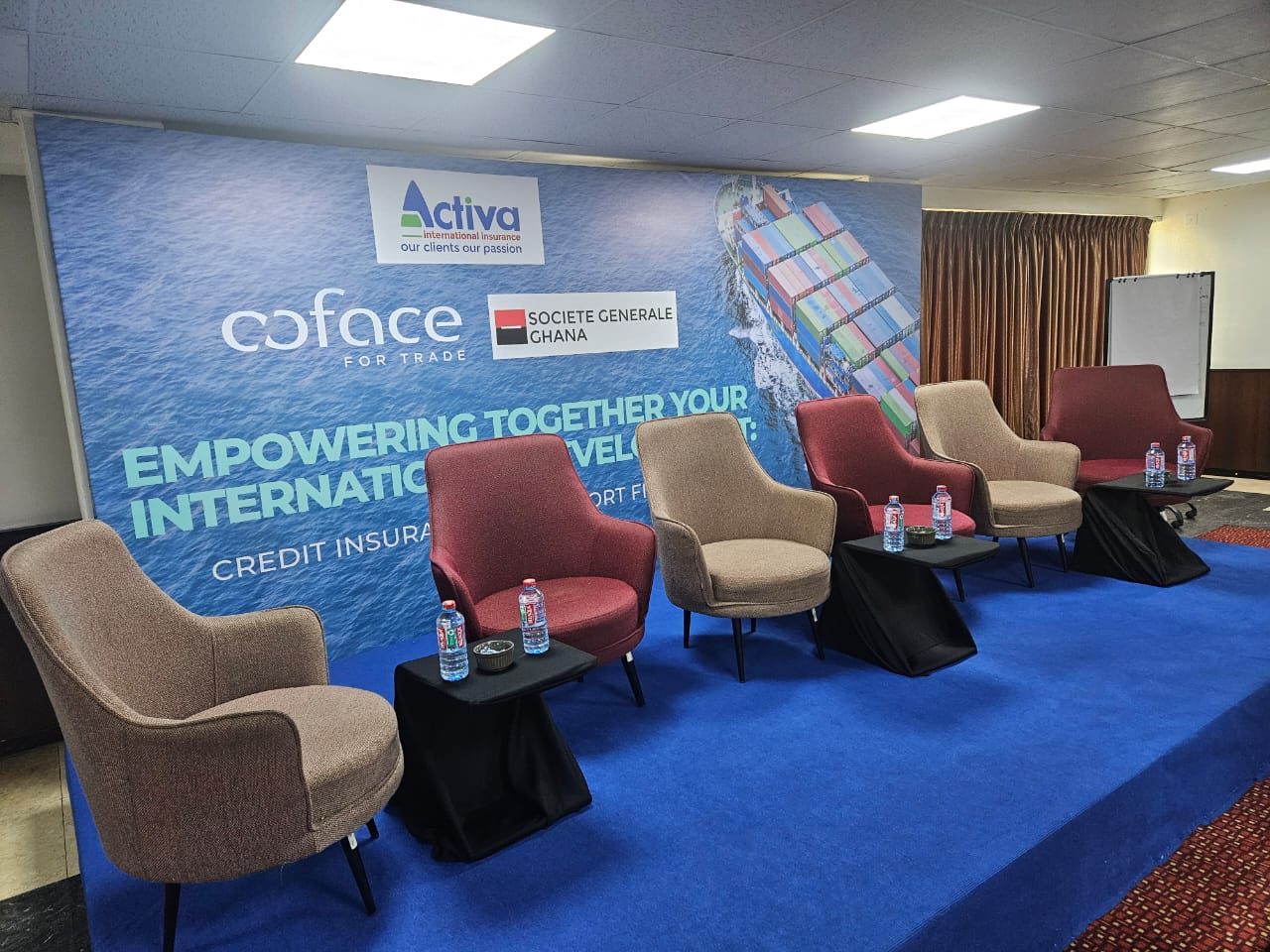
There are industry events one attends out of routine—and then there are those that quietly signal a shift in how business may be conducted going forward. The recent engagement organised by Coface and Activa International Insurance Ghana belonged firmly to the latter category.
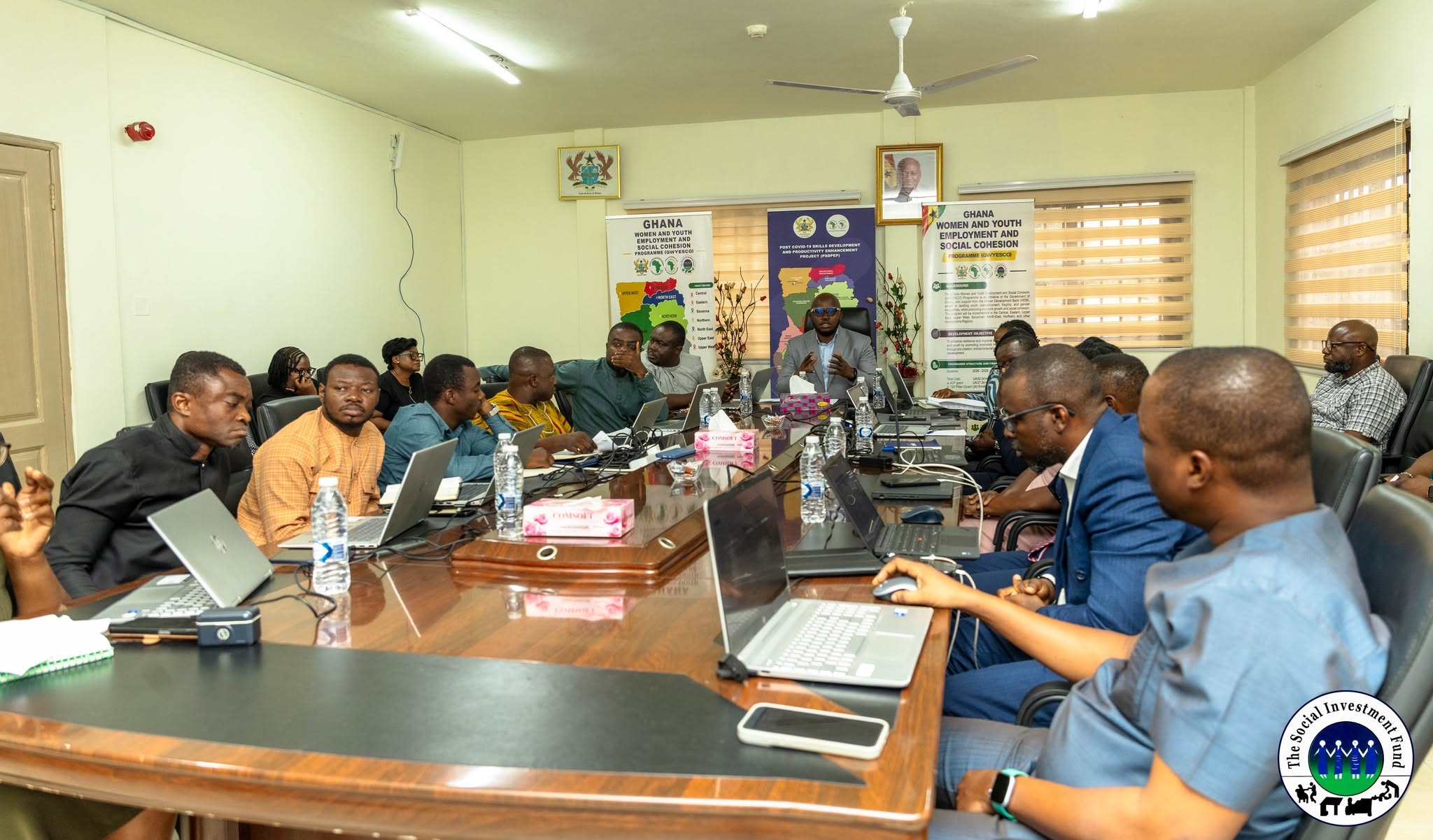
Held under the theme “Empowering Together Your International Development,” the meeting brought together over 100 stakeholders across Ghana’s trade ecosystem—brokers, exporters, importers, and financial institutions—for what evolved into a critical conversation on credit insurance and access to finance .
Key Takeaways
- Coface provides credit insurance and risk management solutions, along with global intelligence systems for buyer risk assessment and real-time payment behaviour tracking.
- Activa International Insurance Ghana partners with Coface to offer credit insurance solutions locally, helping businesses build credibility, ensure compliance, and position for growth.
- Coface's global intelligence systems provide buyer risk assessments and real-time payment data, allowing businesses to make informed credit decisions before risk materializes.
The event, supported by Société Générale Ghana and the Ghana Export Promotion Authority, with participation from the Cocoa Marketing Company and Federated Commodities PLC, moved beyond theory into the practical realities shaping Ghanaian trade .
Reframing Insurance: From Protection to Financial Leverage
A defining perspective came from Hicham Kabli, Commercial Director for Coface Maghreb, West and Central Africa, who challenged the traditional view of insurance.
Credit insurance, he explained, is no longer just about safeguarding against loss—it is a strategic financial tool. Businesses can leverage it to:
-
Secure cash flow
-
Optimize receivables management
-
Unlock easier access to financing
He distilled its core value into three pillars: risk prevention, collection of unpaid invoices, and indemnification—a framework that directly addresses one of the biggest constraints in Ghanaian trade: uncertainty.
Supporting this, Henri Joel Kamga highlighted Coface’s operational reach across West and Central Africa, particularly in helping businesses navigate cross-border risk using structured data and market intelligence.
Data, Intelligence, and the Business of Trust
Beyond insurance cover, Coface’s strength lies in information.
In response to a question on how the company supports clients with data, Kabli pointed to Coface’s global intelligence systems—ranging from buyer risk assessments to real-time payment behaviour tracking.
In markets where reliable commercial data is limited, this capability becomes critical. It allows businesses not just to insure transactions, but to make informed credit decisions before risk materializes.

Where Theory Meets Practice: Real-World Validation
Real-world validation came from the panel discussion.
Hajia Maria Adamu-Zibo of Federated Commodities Plc shared firsthand experience working with both Activa Insurance and Coface, underscoring how credit insurance enables continuity and strengthens trade relationships.

The session itself was expertly moderated by Linda Adu, who ensured the discussion remained both engaging and grounded in practical realities.
The Banker’s Perspective: Risk Reduced, Not Removed
From the financial sector, Gabriel Siaw, Head of Large Local Corporates at Société Générale Ghana, offered a necessary reality check.
While Coface-backed transactions can improve access to funding and accelerate financing processes, they do not eliminate the need for due diligence.
The banking logic was clear: Credit insurance is a risk mitigant—not a substitute for credit assessment. Banks still require:
-
Strong financial records
-
Credible counterparties
-
Well-structured transactions
However, a notable shift is emerging. Businesses backed by credit insurance tend to enjoy stronger, longer-term banking relationships, driven by trust and reduced uncertainty—often leading to continuous business with institutions like Société Générale.
Activa’s Role: Bridging Confidence, Compliance, and Growth
For Activa International Insurance Ghana, the engagement was as much about trust as it was about technical solutions.
Emmanuel Twumasi, Chief Technical Officer, highlighted how structured insurance solutions can enhance credibility and support compliance—particularly with evolving regulatory requirements such as marine insurance for imports.
At the leadership level, Managing Director Salifu Abubakari emphasized how insurance can strengthen businesses, build brand confidence, and position companies for both local and international growth.
Equally important was the presence of Deputy Managing Director Genevieve Tachie, whose instrumental role in bringing the event to fruition reflects the growing strategic direction within Activa to deepen market engagement and industry collaboration.
The Policy and Commodity Context
Adding a broader economic lens, Dr. Wisdom Kofi Dogbey spoke to Ghana’s export landscape—particularly cocoa.

His remarks highlighted ongoing efforts to stabilise the sector, improve market access, and strengthen value chains. Yet, even within structured sectors, access to finance remains a persistent challenge.
Without effective risk-sharing mechanisms, trade growth remains constrained.
So Why the Slow Uptake?
Despite the clarity of benefits, adoption of credit insurance—especially among SMEs—remains limited.
The barriers are familiar:
-
Low awareness of credit insurance as a strategic tool
-
Cost sensitivity among smaller businesses
-
A largely informal business culture where trust-based trading still dominates
More fundamentally, many SMEs are yet to transition from trust-based trading to structure-based trading, where systems, data, and risk-sharing frameworks drive growth.
| Barrier | Impact |
|---|---|
| Low awareness | SMEs unaware of credit insurance benefits |
| Cost sensitivity | Perception that premiums outweigh potential benefits |
| Informal business culture | Reliance on personal relationships rather than structured credit |
| Limited data availability | Difficulty assessing buyer creditworthiness |
A Shift Worth Watching
What Coface and Activa have done is not to introduce a new concept, but to reposition an underutilized one.
The framework is clear:
-
Insurance reduces uncertainty
-
Data improves decision-making
-
Banks provide liquidity
The opportunity lies in connecting these elements effectively.
Key Takeaways
| Stakeholder | Role in Trade Ecosystem | Benefit from Credit Insurance |
|---|---|---|
| Exporters | Sell goods to international buyers | Protection against non-payment; improved cash flow |
| Importers | Purchase goods from foreign suppliers | Supplier confidence; better credit terms |
| Banks | Provide financing for trade transactions | Reduced risk exposure; stronger borrower relationships |
| Insurers (Coface/Activa) | Assess and insure credit risk | Facilitate trade by sharing risk |
| SMEs | Drive economic growth but face financing gaps | Unlock access to working capital |
My Final Reflection
As I left the engagement, one thought lingered: Ghana does not lack opportunity—it often lacks the structures that make opportunity bankable.
What Coface and Activa International Insurance Ghana have introduced is a framework where:
-
Risk is shared
-
Information is strengthened
-
Trust is institutionalized
And in trade, properly structured trust is everything.
For Ghanaian businesses—particularly SMEs—the path to growth lies not in avoiding risk, but in managing it intelligently. Credit insurance, backed by robust data and banking partnerships, offers a practical pathway to do exactly that.
The question now is not whether the framework works. It does. The question is how quickly Ghanaian businesses will adopt it—and how quickly banks, insurers, and policymakers will work together to make it accessible to all.
Frequently Asked Questions (FAQs)
1. What is credit insurance?
Credit insurance protects businesses against non-payment of commercial debt. It covers risks such as protracted default, insolvency, and political risk in international trade transactions.
2. How does credit insurance help Ghanaian exporters?
It protects exporters against buyer non-payment, improves cash flow, and can unlock easier access to financing from banks.
3. Why is credit insurance adoption low among Ghanaian SMEs?
Key barriers include low awareness, cost sensitivity, and an informal business culture that relies on trust-based rather than structure-based trading.
4. Does credit insurance guarantee bank financing?
No. Credit insurance is a risk mitigant, not a substitute for credit assessment. Banks still require strong financial records and credible counterparties.
5. What is Coface’s role in Ghana?
Coface provides credit insurance and risk management solutions, along with global intelligence systems for buyer risk assessment and real-time payment behaviour tracking.
6. What role does Activa Insurance play?
Activa International Insurance Ghana partners with Coface to offer credit insurance solutions locally, helping businesses build credibility, ensure compliance, and position for growth.
7. How can data improve trade decisions?
Coface’s global intelligence systems provide buyer risk assessments and real-time payment data, allowing businesses to make informed credit decisions before risk materializes.
8. Which institutions supported the event?
Société Générale Ghana and the Ghana Export Promotion Authority supported the event, with participation from the Cocoa Marketing Company and Federated Commodities PLC.
9. What is the key barrier to trade growth in Ghana?
Without effective risk-sharing mechanisms, trade growth remains constrained. Credit insurance helps address this by reducing uncertainty for both buyers and sellers.
10. What is the future outlook for credit insurance in Ghana?
If awareness increases and banks, insurers, and policymakers collaborate, credit insurance could become a standard tool for SME financing and trade growth
Source: Accra Street Journal | Samuel Kwame Boadu
Last Updated on April 9, 2026 by Samuel Kwame Boadu
Disclaimer: Some content on Accra Street Journal may be aggregated, summarized, or edited from third-party sources for informational purposes. Images and media are used under fair use or royalty-free licenses. Accra Street Journal is a subsidiary of SamBoad Publishing Hub under SamBoad Business Group Ltd, registered in Ghana since 2014.
For concerns or inquiries, please visit our Privacy Policy or Contact Page.

Samuel Kwame Boadu is a Ghanaian media entrepreneur and storyteller with a passion for amplifying urban voices and uncovering everyday truths. He is the Editor-in-Chief and Founder of Accra Street Journal, a dynamic digital platform dedicated to capturing the pulse of Ghana’s capital—its people, culture, challenges, business, sports and innovations.
Use the following reference when citing or referencing this article.
Your feedback helps us improve our journalism.
Report an Error
Help us maintain accuracy. Let our editorial team know if you spot an issue in this article.
Report a problem with this article