Accra — Ghana’s regulatory and corporate landscape saw two significant developments this week, with the Association of Ghana Industries throwing its weight behind the Ghana Revenue Authority’s controversial Publican AI platform for port valuations, while MTN MobileMoney moved to restrict approximately 9,000 agent accounts for compliance and rule breaches.
The contrasting developments—one involving industry backing for a contested technology, the other involving enforcement action against non-compliant agents—highlight the dual pressures facing Ghana’s digital and trade infrastructure. On one hand, authorities are pushing for modernisation and efficiency at the ports. On the other, they are cracking down on breaches in the rapidly growing mobile money ecosystem.

Here is a detailed Accra Street Journal breakdown of the key regulatory and corporate developments.
📢 GET A DETAILED ARTICLES + JOBS
Join ASJ's WhatsApp Channel and never miss a post or opportunity.

Port Technology: AGI Officially Backs Publican AI Platform
The Association of Ghana Industries (AGI), the country’s largest private sector umbrella organisation, has officially backed the Ghana Revenue Authority’s (GRA) implementation of the Publican AI platform for port valuations, despite ongoing resistance from some trading groups and freight forwarders.
The endorsement is significant because the AGI represents a broad cross-section of Ghanaian industry, including manufacturers, processors, and importers who rely on the ports for raw materials, machinery, and finished goods. The association’s support provides political cover for the GRA to continue implementing the system even as freight forwarders remain on strike.

What Is Publican AI?
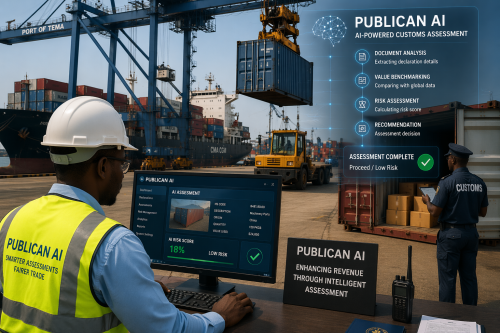
Publican AI is an automated valuation system that uses artificial intelligence to assess duties on imported goods. The system is designed to replace manual valuation methods, which have been criticised for being slow, inconsistent, and susceptible to manipulation.
The platform works by:
-
Analysing import declarations and supporting documents
-
Comparing declared values against a database of historical transactions and market prices
-
Flagging declarations that appear undervalued or misdescribed
-
Generating automated duty assessments for low-risk shipments
-
Referring high-risk shipments for physical inspection
The GRA has argued that Publican AI will improve revenue collection, reduce evasion, and speed up clearance times by automating routine valuations.
The Freight Forwarders’ Strike
Despite the AGI’s endorsement, Publican AI remains controversial. Freight forwarders have been on strike for weeks, protesting that the system leads to excessive and arbitrary duties. Traders claim that the AI assessments are often higher than the actual market values of imported goods, increasing their costs and reducing their competitiveness.
The strike has paralysed clearing activities at the ports, with containers stuck and businesses unable to receive shipments. The economic impact has been significant, particularly for manufacturers who rely on just-in-time delivery of raw materials and spare parts.
Why AGI Supports Publican AI
The AGI’s backing of Publican AI reflects its members’ frustrations with the existing manual valuation system. According to the association, the previous system was plagued by:
-
Inconsistency: Different valuers often reached different conclusions on identical shipments, creating uncertainty for importers.
-
Delays: Manual valuations took days or even weeks, causing costly delays at the port.
-
Discretion and corruption: The manual system gave individual valuers significant discretion, creating opportunities for bribery and rent-seeking.
-
Revenue leakage: Undervaluation was widespread, depriving the government of legitimate duty revenue.
The AGI believes that an automated, AI-driven system will be more consistent, transparent, and efficient—even if it requires an adjustment period and some initial friction.
The association has called on its members to comply with the new system while continuing to engage with the GRA on technical refinements. It has also urged the government to address the concerns of freight forwarders through dialogue rather than confrontation.
What Happens Next
The GRA has shown no indication of backing down from Publican AI. With the AGI’s backing, the authority has stronger political support to continue implementation.

However, the freight forwarders’ strike remains unresolved. The government has attempted to negotiate, but no breakthrough has been announced. The longer the strike continues, the greater the economic damage.
Possible outcomes include:
-
Government concessions: The GRA may agree to adjustments to the Publican AI algorithm or to a period of parallel running with the old system.
-
Freight forwarder return to work: The striking workers may return without concessions if the economic pressure on them becomes too great.
-
Government intervention: The government could invoke essential service provisions to force an end to the strike.
For now, the standoff continues, with the AGI’s endorsement adding a new dimension to the debate.
Fintech Crackdown: MTN MobileMoney Restricts 9,000 Agent Accounts
In a separate development, MTN MobileMoney has restricted approximately 9,000 agent accounts recently due to compliance and rule breaches, according to statements from the company.
The action represents a significant enforcement move by Ghana’s largest mobile money operator, reflecting increased regulatory scrutiny of the fintech sector and the company’s own efforts to strengthen its compliance systems.
Scope of the Restrictions
The 9,000 agent accounts represent a meaningful portion of MTN MoMo’s agent network, though the company has not disclosed the exact percentage. The restrictions were applied to agents found to have violated the company’s terms of service or regulatory requirements.
Common breaches that can trigger restrictions include:
-
Exceeding transaction limits: Agents processing transactions above permitted thresholds.
-
Incomplete or inaccurate registration: Agents failing to properly register customers with valid identification.
-
Suspicious transaction patterns: Unusual volumes or patterns that suggest money laundering, fraud, or other illicit activity.
-
Unapproved agents: Individuals operating as agents without proper authorisation.
-
Pricing violations: Agents charging fees above the permitted rates.
Regulatory Context
The Bank of Ghana has been tightening oversight of the mobile money ecosystem, which has grown rapidly over the past decade. Mobile money accounts now outnumber traditional bank accounts in Ghana, and transaction volumes run into the billions of cedis annually.
The central bank’s concerns include:
-
Anti-money laundering and counter-financing of terrorism (AML/CFT): Mobile money can be used to move funds anonymously, making it attractive for illicit purposes.
-
Consumer protection: Customers need assurance that their funds are safe and that they have recourse if something goes wrong.
-
Financial stability: The mobile money system is now systemically important; a major failure could have broader financial consequences.
-
Tax compliance: Mobile money transactions can be used to evade taxes if not properly monitored.
The Bank of Ghana has issued directives requiring mobile money operators to strengthen their know-your-customer (KYC) procedures, monitor transactions for suspicious activity, and take enforcement action against non-compliant agents.
MTN’s Compliance Efforts
MTN MobileMoney has been investing in its compliance systems, including:

-
Automated transaction monitoring: Algorithms that flag unusual patterns for review.
-
Agent training programmes: Educating agents on their obligations under the law and the company’s terms of service.
-
Enhanced KYC procedures: Requiring more documentation for agent registration and high-value transactions.
-
Regular audits: Reviewing agent operations for compliance.
The restriction of 9,000 agent accounts is the visible result of these efforts. By taking enforcement action, MTN is signalling to its agent network that non-compliance has consequences.
Impact on Agents and Customers
For the affected agents, the restrictions mean they can no longer process mobile money transactions. For some, this may represent a significant loss of income. For customers who relied on those agents, the restrictions may mean longer walks to find an active agent or reduced service availability.
However, MTN has stated that the restrictions are targeted at genuine rule-breakers, not at compliant agents. The company has also indicated that restricted agents may be reinstated if they address the underlying compliance issues.
Industry Implications
MTN’s action is likely to be followed by similar enforcement from other mobile money operators, including Vodafone Cash and AirtelTigo Money (now part of Telecel). The Bank of Ghana has been pressuring all operators to strengthen their compliance systems.
The crackdown reflects a maturing of Ghana’s fintech sector. In the early days, rapid growth was the priority. Now, with the system mature and systemically important, compliance and risk management are taking centre stage.
Looking Ahead
The Bank of Ghana is expected to continue its scrutiny of the mobile money ecosystem. Potential future measures include:
-
Lower transaction limits: Reducing the maximum transaction value to limit risk.
-
Stricter agent registration: Requiring more documentation and background checks.
-
Increased reporting requirements: Operators may need to submit more frequent and detailed reports to the central bank.
-
Shared agent database: A central registry of agents to prevent banned agents from simply switching operators.
For MTN and other operators, the challenge is to balance growth and customer convenience with compliance and risk management. Restricting 9,000 agents is a significant action, but it is unlikely to be the last.
Interconnections: How the Pieces Fit Together
While the two developments are in different sectors—port technology and fintech—they share common themes.
Technology adoption: Both involve the adoption or enforcement of technology-driven systems. Publican AI automates port valuations. MTN’s compliance systems use automated transaction monitoring. In both cases, technology is being used to improve efficiency, reduce discretion, and enforce rules.
Resistance and enforcement: Both have faced resistance. Freight forwarders are striking against Publican AI. Some mobile money agents have resisted compliance requirements. In both cases, authorities are pushing forward despite the resistance.
Regulatory modernisation: Both reflect broader efforts to modernise Ghana’s regulatory infrastructure. The GRA wants more efficient, transparent port valuations. The Bank of Ghana wants a safer, more compliant mobile money ecosystem.
Economic impact: Both have real economic consequences. Port delays from the freight forwarders’ strike disrupt supply chains. Restricted mobile money agents reduce financial access for customers.
Outlook From ASJ
The coming weeks and months will determine how these situations evolve.
Publican AI: The GRA has the AGI’s backing but still faces a freight forwarders’ strike. Resolution will require either government concessions or a return to work by the strikers. The economic cost of continued disruption will mount with each passing day.
MTN MoMo restrictions: MTN will continue to enforce compliance, potentially restricting additional agents. Other operators will likely follow suit. The Bank of Ghana will monitor the situation closely and may impose additional requirements.
For businesses and consumers, the developments are a reminder that regulatory modernisation is often disruptive. New systems require adjustment. Enforcement actions create friction. But the alternative—inefficient ports and unregulated fintech—carries its own risks.
The challenge for policymakers is to manage the transition, minimising disruption while achieving the long-term benefits of modernisation.
Frequently Asked Questions (FAQs)
1. What is the Publican AI platform, and why is it controversial?
Publican AI is an automated valuation system used by the Ghana Revenue Authority to assess duties on imported goods. It uses artificial intelligence to compare declared values against databases of historical transactions and market prices. The system is controversial because some trading groups and freight forwarders claim it leads to excessive and arbitrary duties, increasing costs for importers. The GRA argues it improves revenue collection, reduces evasion, and speeds up clearance.
2. Why has the Association of Ghana Industries backed Publican AI?
The AGI has backed Publican AI because its members have experienced longstanding frustrations with the manual valuation system, including inconsistency, delays, discretion, and corruption. The association believes an automated, AI-driven system will be more consistent, transparent, and efficient, even if it requires an adjustment period. The AGI has called on its members to comply while continuing to engage with the GRA on technical refinements.
3. How many MTN MobileMoney agent accounts were restricted, and why?
MTN MobileMoney restricted approximately 9,000 agent accounts due to compliance and rule breaches. Common breaches include exceeding transaction limits, incomplete or inaccurate customer registration, suspicious transaction patterns, operating without proper authorisation, and charging fees above permitted rates. The action reflects increased regulatory scrutiny from the Bank of Ghana and MTN’s own efforts to strengthen its compliance systems.
4. What is the Bank of Ghana’s role in mobile money regulation?
The Bank of Ghana is the central bank and primary regulator of the financial sector, including mobile money. The bank has issued directives requiring mobile money operators to strengthen know-your-customer procedures, monitor transactions for suspicious activity, and take enforcement action against non-compliant agents. The central bank’s concerns include anti-money laundering, consumer protection, financial stability, and tax compliance.
5. Can restricted MTN MoMo agents be reinstated?
MTN has indicated that restricted agents may be reinstated if they address the underlying compliance issues. The specific reinstatement process has not been publicly detailed, but it would likely involve corrective actions, additional training, and verification by MTN that the agent is now in compliance with all requirements.
6. How do these developments affect businesses and consumers?
The Publican AI dispute and freight forwarders’ strike have disrupted port clearing activities, causing delays and increased costs for businesses that rely on imports. The MTN MoMo agent restrictions may reduce service availability for some customers, particularly in areas where restricted agents were the only nearby option. However, both developments are aimed at long-term improvements: more efficient port valuations and a safer, more compliant mobile money ecosystem.
Source: Accra Street Journal
Last Updated on April 20, 2026 by Samuel Kwame Boadu
Disclaimer: Some content on Accra Street Journal may be aggregated, summarized, or edited from third-party sources for informational purposes. Images and media are used under fair use or royalty-free licenses. Accra Street Journal is a subsidiary of SamBoad Publishing Hub under SamBoad Business Group Ltd, registered in Ghana since 2014.
For concerns or inquiries, please visit our Privacy Policy or Contact Page.

Samuel Kwame Boadu is a Ghanaian media entrepreneur and storyteller with a passion for amplifying urban voices and uncovering everyday truths. He is the Editor-in-Chief and Founder of Accra Street Journal, a dynamic digital platform dedicated to capturing the pulse of Ghana’s capital—its people, culture, challenges, business, sports and innovations.