Introduction: The Arithmetic of Survival
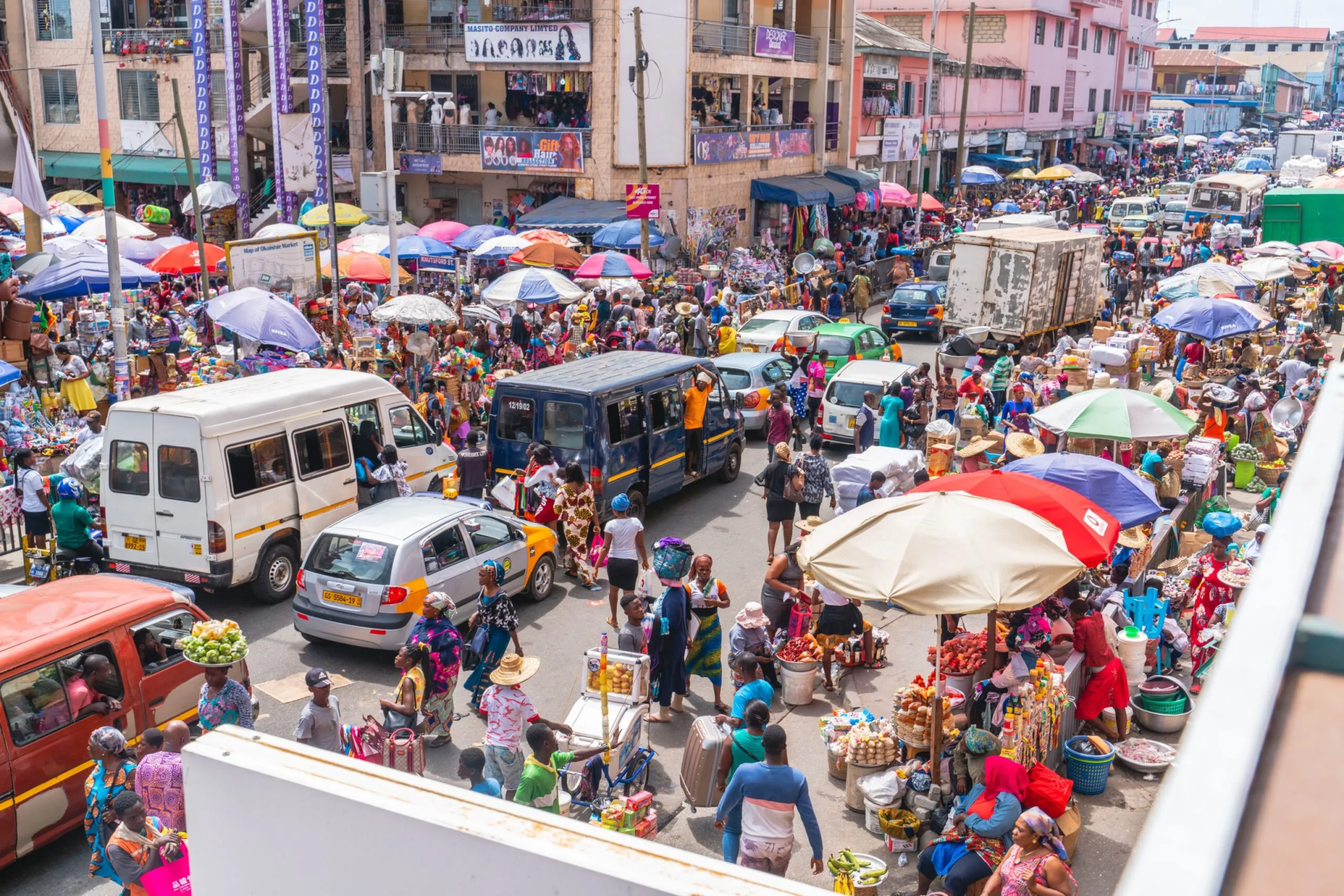
There is a quiet arithmetic to survival. It does not make dramatic headlines. It happens instead at the market stall, at the landlord’s door, at the end of the month when the salary notification arrives, and the mental calculation begins—and fails.
In March 2026, Ghana’s headline inflation fell to 3.2 per cent, the lowest since the 2021 rebasing of the Consumer Price Index . The 91-day Treasury bill rate has dropped to 4.78 per cent. The cedi has appreciated by over 40 per cent in the past year. By almost any macroeconomic measure, the country has turned a corner from the crisis years of 2022–2023.

Yet, for the family in Nima, the trader in Makola, the young professional commuting from Kasoa to Accra, these statistics do not match the reality at the market. Petrol has crossed GH¢13.30 per litre; diesel sells at GH¢17.10. A one-bedroom apartment in Accra costs about GH¢2,200 per month, while the average monthly salary sits at approximately GH¢2,579 . Landlords routinely demand one to two years of rent upfront—a sum exceeding a full year’s salary for many workers .
📢 GET A DETAILED ARTICLES + JOBS
Join ASJ's WhatsApp Channel and never miss a post or opportunity.

This is the paradox of Ghana’s economy in 2026: falling inflation does not mean falling prices. It means prices are rising more slowly. And for ordinary Ghanaians, the difference is academic. What matters is that the cost of living remains stubbornly high, and the gap between wages and survival continues to widen.
This Accra Street Journal article breaks down the real cost of staying alive in Ghana in 2026—from housing, food, and transport to healthcare, education, and utilities—examining what the official statistics conceal and what ordinary people actually pay.

Housing: The Largest Expense
Housing is by far the biggest financial burden for most Ghanaians. The national average monthly rent for a one-bedroom apartment in Accra sits at approximately GH¢2,200 . But this average masks extreme variation:
| Neighbourhood | Monthly Rent (GH¢) | Upfront Payment |
|---|---|---|
| Airport Residential | ~10,000 | 1–2 years |
| Cantonments | ~1,200–1,500 (USD) | 1–2 years |
| Labone | 3,000–6,000 | 1–2 years |
| East Legon | 2,500–3,500 | 1–2 years |
| Spintex Road | 1,500–3,000 | 1–2 years |
| Dzorwulu | 2,500–4,500 | 1–2 years |
| Adenta/Madina | 750–1,500 | 1–2 years |
| Tema (Communities 1–25) | 500–800 | 1–2 years |
The biggest challenge for renters is not the monthly rate but the advance payment. While the Rent Act of 1963 technically discourages excessive demands, the market norm remains one to two years’ rent upfront . For a mid-range one-bedroom costing GH¢2,200 per month, a two-year advance means you need GH¢52,800 before you even unpack a single box—a sum that exceeds the annual salary of many mid-level public servants.
Beyond rent itself, tenants must also account for:
-
Agency fees: Typically 10 per cent of annual rent
-
Service charges: GH¢1,200–3,600 per year in gated communities
-
Utilities: Water and electricity are rarely included
For many Ghanaians, the arithmetic simply does not work. A mid-level public servant asked to pay two years upfront on a modest Accra flat faces a demand exceeding a full year of gross salary. A generation of professionals now commutes three to five hours daily because they cannot afford to live near where they work.
Food and Everyday Essentials
While headline inflation has fallen, the cost of specific food items tells a different story. In March 2026, the Ghana Statistical Service reported that five items—charcoal, green plantain, smoked herring, senior secondary school fees, and onions—accounted for about 61.5 per cent of total inflation . This concentration means that while the average Ghanaian may feel relief in some categories, households that rely heavily on these specific goods are still facing significant cost pressures.
Among the fastest-rising items:
| Item | Year-on-Year Inflation |
|---|---|
| Ginger | 61% |
| Green Plantain | 59% |
| Charcoal | 53% |
| Cashew | 47% |
| Palm Fruits | 39.6% |
Yet even as some prices soar, others have fallen sharply. Garden eggs recorded a 60.3 per cent decline, fried fish fell 50.1 per cent, and pawpaw dropped 49.6 per cent . This divergence means that while the average Ghanaian may feel relief in some categories, households that rely on specific essential goods are still facing significant hardship.
The Government Statistician noted that housing and utilities were the largest drivers of inflation, contributing 40.6 per cent of the total, reflecting rising costs of rent and energy, while education saw rising costs with inflation of 8.1 per cent .
Transport: The Rising Cost of Movement
For millions of Ghanaians, transport is not a luxury—it is the thread that connects them to work, school, markets, and healthcare. When transport costs rise, the cost of almost everything else rises with it.

Effective April 8, 2026, VIP Jeoun Transport implemented nationwide fare increases :
| Route | New Fare (GH¢) |
|---|---|
| Accra–Kumasi | 150 |
| Accra–Sunyani | 200 |
| Accra–Techiman | 200 |
| Accra–Tamale | 360 |
| Accra–Bolgatanga | 410 |
| Accra–Wa | 390 |
| Accra–Bawku | 430 |
These increases add to growing concerns among commuters over rising transport costs across the country. The increases were driven by rising fuel costs, with petrol at a minimum of GH¢13.30 per litre and diesel at GH¢17.10 per litre under the National Petroleum Authority’s new price floor.
For daily commuters, the arithmetic is brutal. A worker travelling from Kasoa to Accra central might spend GH¢20–30 daily on transport. Over a 22-day working month, that is GH¢440–660—nearly 20 per cent of the average monthly salary of GH¢2,579.
Utilities: Electricity and Water
Effective April 1, 2026, the Public Utilities Regulatory Commission (PURC) announced reductions in electricity and water tariffs :
| Customer Category | Consumption Band | New Rate (GH¢/kWh) | Reduction |
|---|---|---|---|
| Residential (Lifeline) | 0–30 kWh | 0.8690 | 1.66% |
| Residential | 0–300 kWh | 1.9688 | 1.66% |
| Non-Residential | 0–300 kWh | 1.7775 | 1.66% |
| Non-Residential | 301+ kWh | 2.1649 | 3.63% |
| Special Load (High Voltage) | All | 1.8212 | 15.43% |
For water, residential lifeline consumers (0–5 cubic metres) will pay GH¢5.93 per cubic metre, down from GH¢6.12 .
While these reductions are welcome, they follow years of cumulative increases. The average residential customer still pays nearly GH¢2 per kilowatt-hour—a rate that, combined with rising consumption (particularly from air conditioners and other cooling appliances), can quickly drive monthly bills to GH¢500–1,000 or more.
Healthcare: The Cost of Staying Well
Ghana’s healthcare system operates on a two-tier model: the National Health Insurance Scheme (NHIS) and out-of-pocket payments for those without coverage or for services not covered.
As of April 2026, NHIS coverage had increased from about 57 per cent to 66 per cent within a year . The government has allocated GH¢11 billion to the NHIS in the 2026 budget, and the free primary healthcare programme—launched on April 15, 2026—is expected to cost approximately GH¢1.2 billion annually .
The free primary healthcare programme covers treatment for conditions such as malaria, diarrhoea, and respiratory infections, as well as preventive and promotive services delivered by community health volunteers . However, patients referred from primary healthcare facilities to regional or teaching hospitals will not receive free treatment at those higher-level facilities under the new arrangement.
For those without NHIS coverage or seeking services outside the scheme, costs can be prohibitive:
-
Private hospital consultation: GH¢150–400
-
Specialist consultation: GH¢300–800
-
Malaria treatment (uncomplicated): GH¢100–300
-
Basic health insurance (private): GH¢500–1,500 annually
Education: The Cost of Opportunity
Education is one of the largest expenses for families with children. The March 2026 inflation data showed that education costs rose 8.1 per cent, with senior secondary school fees among the top five contributors to overall inflation .

| Education Level | Annual Cost (GH¢) | Notes |
|---|---|---|
| Public basic school | 500–1,500 | Uniforms, books, PTA dues |
| Private basic school | 3,000–15,000 | Varies widely by location and quality |
| Public secondary school | 1,500–4,000 | Boarding fees, uniforms, books |
| Private secondary school | 8,000–30,000 | Excluding international schools |
| Public university | 4,000–8,000 per semester | Legon, KNUST, UCC, etc. |
| Private university | 15,000–40,000+ per semester | Ashesi, etc. |
For a family with two children in private secondary school, education alone can consume GH¢16,000–60,000 annually—far beyond the reach of most households.
Wages: The Struggle to Keep Up
The average monthly salary in Ghana is approximately GH¢2,579 (roughly $210), with entry-level civil servants earning between GH¢2,200 and GH¢3,200 .
For 2026, the government approved a 9 per cent salary increase for all public sector workers under the Single Spine Salary Structure, and the national daily minimum wage was raised by 9 per cent to GH¢21.77 . While welcome, this increase does little to close the gap between wages and the cost of living.
A mid-level public servant earning GH¢3,500 per month faces rent of GH¢2,200 (63 per cent of salary) before food, transport, utilities, healthcare, or education. Even with a 9 per cent increase, the arithmetic of survival remains brutal.
The Secretary-General of the Trades Union Congress (TUC), Joshua Ansah, acknowledged the sacrifices made by workers in accepting the 9 per cent increase but urged government to avoid introducing new taxes or tariff adjustments that could cancel out the gains workers stand to receive .
Summary Table: Monthly Survival Budget for a Single Person in Accra
| Category | Low Budget (GH¢) | Mid-Range (GH¢) | High-End (GH¢) |
|---|---|---|---|
| Rent (1-bedroom) | 750–1,500 | 2,500–4,500 | 8,000–15,000 |
| Utilities (electricity, water) | 400–600 | 600–900 | 900–1,500 |
| Food | 600–1,000 | 1,000–1,500 | 1,500–2,500 |
| Transport | 300–500 | 500–800 | 800–1,500 |
| Healthcare (NHIS + out-of-pocket) | 100–200 | 200–400 | 400–800 |
| Mobile/Internet | 100–150 | 150–250 | 250–400 |
| Miscellaneous | 200–400 | 400–800 | 800–1,500 |
| Total | GH¢2,450–4,350 | GH¢5,350–8,150 | GH¢12,150–22,800 |
Note: These figures exclude the upfront rent advance payments that most landlords require.
Frequently Asked Questions (FAQs)
1. What is the average monthly salary in Ghana?
The average monthly salary is approximately GH¢2,579 (roughly $210). Entry-level civil servants earn between GH¢2,200 and GH¢3,200 .
2. What is the minimum wage in Ghana for 2026?
The national daily minimum wage is GH¢21.77, effective January 1, 2026 .
3. How much does it cost to rent a one-bedroom apartment in Accra?
The city-wide average is approximately GH¢2,200 per month, but prices range from GH¢450 in peripheral areas to over GH¢16,500 in luxury central developments. Most landlords require one to two years’ rent upfront .
4. Has inflation made life more expensive in Ghana?
While headline inflation has fallen to 3.2 per cent (the lowest since 2021), prices remain high. Services inflation surged to 7.2 per cent in March, nearly doubling from 3.7 per cent in February, driven by rising costs of rent, utilities, and education .
5. What is the cost of electricity in Ghana?
Residential customers consuming 0–300 kWh pay 196.88 pesewas per kWh (approximately GH¢1.97 per unit). Lifeline customers (0–30 kWh) pay 86.90 pesewas per kWh .
6. Has the government increased public sector salaries for 2026?
Yes. The government approved a 9 per cent salary increase for all public sector workers under the Single Spine Salary Structure for the 2026 fiscal year .
7. What is the free primary healthcare programme?
Launched on April 15, 2026, the programme covers treatment for conditions such as malaria, diarrhoea, and respiratory infections, as well as preventive services. It is expected to cost approximately GH¢1.2 billion annually .
8. How much does it cost to travel from Accra to Kumasi by bus?
VIP Jeoun Transport now charges GH¢150 for the Accra–Kumasi route, following a nationwide fare increase effective April 8, 2026 .
9. Why are prices still high even though inflation has dropped?
Falling inflation means prices are rising more slowly, not falling. The general price level remains higher than before the crisis. Additionally, services inflation (education, rent, utilities) has surged, offsetting declines in goods prices .
10. What is the biggest expense for most Ghanaians?
Housing is by far the largest expense. For a one-bedroom apartment in Accra, rent alone can consume 50–80 per cent of an average salary, before accounting for the crippling upfront advance payments of one to two years .
Conclusion: The Gap Between Statistics and Survival
There is a quiet arithmetic to suffering. It does not make front pages. It does not generate dramatic headlines that bring in international cameras or set Parliament alight. It happens instead at the market stall, at the landlord’s door, at the end of the month when the salary notification arrives, and the mental calculation begins—and fails.
Ghana has achieved something remarkable: inflation has fallen from 23.1 per cent to 3.2 per cent in just one year. The cedi has stabilised. The economy is on a stronger footing. The government has increased wages and launched a free primary healthcare programme .
But the work of making that stability mean something to the nurse in Tamale, the graduate in Kumasi, and the family in Nima is the harder, more human work ahead.
Prices remain high. Rents are punishing. Transport costs eat into household budgets. A one-bedroom apartment in Accra costs GH¢2,200 on average, while the average salary is GH¢2,579 . A two-year rent advance demands GH¢52,800—a sum exceeding a full year’s salary for many workers. A 9 per cent wage increase, while welcome, does not close this gap .
For the family living on the minimum wage of GH¢21.77 per day, the arithmetic is even starker. That is approximately GH¢650 per month. Rent in even the most affordable parts of Accra starts at GH¢750. The numbers simply do not add up.
The exchange rate is the number the world watches closely. What it conceals is the daily life Ghanaians actually live. The stability of 2025 has been earned. Now comes the harder work of making it matter.
Source: Accra Street Journal
Last Updated on April 20, 2026 by Samuel Kwame Boadu
Disclaimer: Some content on Accra Street Journal may be aggregated, summarized, or edited from third-party sources for informational purposes. Images and media are used under fair use or royalty-free licenses. Accra Street Journal is a subsidiary of SamBoad Publishing Hub under SamBoad Business Group Ltd, registered in Ghana since 2014.
For concerns or inquiries, please visit our Privacy Policy or Contact Page.

Samuel Kwame Boadu is a Ghanaian media entrepreneur and storyteller with a passion for amplifying urban voices and uncovering everyday truths. He is the Editor-in-Chief and Founder of Accra Street Journal, a dynamic digital platform dedicated to capturing the pulse of Ghana’s capital—its people, culture, challenges, business, sports and innovations.