




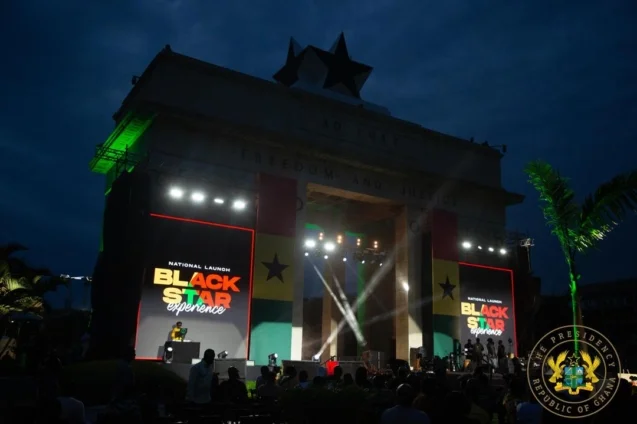
From a Time Out global ranking to a presidential policy agenda—how Accra became a 24-hour city in the making
Executive Introduction
In September 2024, a surprising announcement caught the attention of Accra’s business community and government planners alike. Time Out magazine, a global authority on urban culture, had ranked Accra among the world’s top ten cities for nightlife. The Ghanaian capital placed 10th globally, with a 66 percent quality score and a 36 percent affordability rating, praised for its lively bars in Osu and all-night beach parties at Labadi Beach.

The recognition was not an accident. It was an early signal of a deeper structural shift—one that the government has since formalised into a national policy agenda.
📢 GET A DETAILED ARTICLES + JOBS
Join ASJ's WhatsApp Channel and never miss a post or opportunity.

Just months after the Time Out ranking, President John Dramani Mahama’s administration launched the 24-Hour Economy and Accelerated Export Development Programme , a multi-billion-cedi initiative designed to extend productive hours across manufacturing, services, tourism, and trade . With an estimated investment potential exceeding US$4 billion , the programme represents one of the most ambitious attempts in recent decades to re-engineer Ghana’s economic architecture .
This ASJ report examines why Accra’s night economy is growing, tracing the convergence of cultural momentum, government policy, infrastructure investment, and shifting consumer behaviour. We draw on official government announcements, tourism data, investment projections, and critical analysis of the implementation challenges that will determine whether this night-time transformation delivers on its promise.

Part 1: The Recognition—Accra’s Global Nightlife Standing
The Time Out ranking was not the cause of Accra’s night-time vibrancy. It was a reflection of trends already underway.
What the Ranking Said
| Metric | Accra’s Score |
|---|---|
| Global Rank | 10th |
| Quality Score | 66% |
| Affordability Rating | 36% |
The magazine highlighted Osu’s lively bars and Labadi Beach’s all-night parties as defining features of Accra’s nightlife scene. Importantly, it noted a post-pandemic shift toward outdoor events —rooftop bars, open-air concerts, live DJ sets, and art festivals .
This shift toward experiential, outdoor nightlife created the cultural foundation upon which government policy could build. The demand was already there. What was needed was infrastructure, security, and regulatory support to scale it.
Accra as the Anchor for a National Agenda
Deputy CEO of Operations at the Ghana Tourism Development Company (GTDC), Felicity Nelson, positioned Accra By Night as more than a local tour: “It is a cultural celebration of who we are as Ghanaians when the sun goes down” .
The phrase is significant. It frames night-time activity not as a social luxury but as a cultural export—something that defines Ghanaian identity and attracts visitors.
Part 2: The Policy Engine—The 24-Hour Economy Programme
The Mahama administration’s 24-Hour Economy Programme is the most significant government intervention in night-time economic activity in Ghana’s history.
The Scale of Ambition
Announced in mid-2025, the programme is built on three pillars:
| Pillar | Focus |
|---|---|
| Production Transformation | Manufacturing, agro-processing, industry |
| Supply Chain and Market Efficiency | Logistics, distribution, export facilitation |
| Human Capital Development | Skills training, workforce readiness for shift work |
Presidential Advisor on the 24-Hour Economy, Augustus Goosie Obuodum Tanoh, revealed that the programme currently includes 50 commercial, institutional, and social projects available for investment, with the potential to attract over US$4 billion in capital .
President Mahama framed the initiative philosophically: “We’re not attempting to fix everything at a go, but strategically building a productive and inclusive economy” . The programme is described as a “philosophy of national self-reliance” rather than merely a policy shift .

The Financial Infrastructure
To support the transition, the programme is developing “bankable projects with profitable returns for investors” . Strategic collaboration with financial institutions will facilitate on-lending to Small and Medium-sized Enterprises (SMEs) in sectors including manufacturing, agro-processing, health, transport, retail, and tourism .
Specialised lending products are being designed to address challenges faced by businesses transitioning to extended hours—increased working capital requirements and equipment upgrades .
The Urban-Rural Balance Crucially
Tanoh emphasised that the programme would not be confined to urban centres . Implementation will be nationwide, with a “grassroots approach” requiring local community buy-in. A national mobilisation strategy will include public education campaigns, community consultations, and feedback mechanisms .
For Accra, this means the night economy is not an isolated phenomenon. It is the urban anchor of a national strategy—the place where new models are piloted, infrastructure is densest, and consumer demand is strongest.
The DVLA Proof of Concept
The Driver and Vehicle Licensing Authority (DVLA) provides an early indicator of what 24-hour operations can achieve. The Authority launched its 24-hour service on May 7, 2025, dividing workers into three shifts: 6am-2pm, 2pm-10pm, and 10pm-6am .
Director Julius Neequaye Kotey reported that the shift to round-the-clock operations increased revenue by 30-50 percent compared to 2024 levels at pilot sites . The Authority has recruited 396 contract staff to support night operations, provides a coaster bus to transport night-shift workers, and has stationed armed police at key locations for security .
The lesson for the broader night economy: when night operations are properly resourced and secured, they generate measurable economic returns.
Part 3: The Infrastructure—Markets, Lighting, Security, and Sanitation
For night-time commerce to thrive, infrastructure must support it. The government has announced several initiatives designed to create an enabling environment for round-the-clock activity.
The 24-Hour Model Market Initiative
In November 2025, Local Government Minister Ahmed Ibrahim announced that the government would build modern 24-hour markets across Ghana .
Key features of the model markets:
| Feature | Purpose |
|---|---|
| Cold storage units | Reduce post-harvest losses; enable fresh food trading at night |
| Digital payment infrastructure | Cashless transactions, improved security |
| Security posts and lighting | Ensure safety for traders and customers |
| Childcare centres | Support workers with caregiving responsibilities |
| Fire posts | Emergency response capacity |
| Sanitation systems | Continuous waste management |
The Minister described the initiative as a “bold and transformative step” towards re-engineering Ghana’s market infrastructure . The markets are designed to:
-
Ease overcrowding in daytime markets (such as Makola)
-
Allow traders to expand operations and access new customer segments
-
Improve incomes for micro, small, and medium enterprises (MSMEs)
-
Create jobs, especially for women and youth
-
Improve local government revenue generation
Over 85 percent of Ghana’s businesses fall within the SME category, and the 24-hour market model is explicitly designed to serve this segment .
The markets form part of a broader ecosystem under the Build24, Fund24, and Connect24 components of the programme, designed to ensure sustainable infrastructure, financing access, and integration into national logistics systems .
The Minister stressed that the initiative is “not a pilot but a national rollout, symbolising government’s unwavering commitment to inclusive growth and economic transformation” .
The Security and Lighting Gaps
However, critical analysis has identified gaps that could undermine these infrastructure investments. A journalist who tested night-time conditions at the main Ashaiman station at midnight found the station almost closing, with only one vehicle left to load .
A bus conductor praised the idea of a 24-hour economy, noting “there’s security here. We’ll be safe over here, if it is rolled out” . But the sparse transport options exposed a gap in the rollout—if workers cannot get home safely and affordably after night shifts, night operations will struggle to attract staff.
The Local Government Minister has directed MMDCEs to facilitate permits for night-time commerce and ensure security and sanitation . But as one policy analysis noted, “without empowered, capable, and accountable local governance, the 24-hour economy will encounter the same structural weaknesses that have undermined previous national initiatives” .
Part 4: The Tourism Anchor—Accra By Night
The most visible and commercially successful night economy initiative to date is Accra By Night, the open-top double-decker bus tour launched by the GTDC in April 2025 .
The Numbers That Prove Demand
| Metric | Value |
|---|---|
| Launch date | April 2025 |
| Passengers in first eight months | 740+ |
| Initial frequency | Monthly (last Friday) |
| Current frequency (high season) | Multiple weekly tours |
| Anniversary celebration | April 24, 2026 |
| Corporate edition | Available for institutional clients |
Sources: The High Street Business
Initially scheduled as a monthly experience, overwhelming demand pushed GTDC to expand the offering. By late 2025, the tour ran almost every Friday, and in April 2026 alone, the team conducted three tours before the anniversary edition .
What the Tour Offers
The double-decker bus takes passengers through Accra’s night-time landscape, with stops at partner venues including:
-
Osu Night Market — street food, local crafts, vibrant atmosphere
-
KNMP — cultural and entertainment venue
-
Despite Auto Museum — unique night-time museum experience
-
Republic Bar — Osu’s iconic nightlife destination
-
Alley Bar — popular lounge and social spot
The experience is positioned as “more than typical sightseeing” . Marketing and Tour Officer Chantal Amewou-Attisso explained: “The main idea is to provide an experiential opportunity” for both Ghanaians and non-Ghanaians.
For daytime workers, the evening tours offer accessibility: “For someone visiting Accra who lacks time during the day, this person can now tour in the evening” when traffic is lighter and the atmosphere more serene .
The Influencer Marketing Strategy
Before the anniversary tour on April 24, 2026, GTDC hosted over 40 social media influencers. Their posts generated significant interest and demand, demonstrating the power of digital marketing in driving night-time tourism .
The Future: Beyond Accra
GTDC plans to extend the night tourism experience beyond the capital to promote nationwide tourism . If successful, this would distribute the economic benefits of night-time activity beyond Accra’s central districts.
Part 5: The Festival Economy—Akwaaba and the Black Star Experience
Beyond recurring tours, major festivals are anchoring Accra’s night-time calendar and creating concentrated economic activity around specific dates.
Akwaaba Festival 2026
The fifth edition of the Akwaaba Festival, launched in February 2026, is positioned as a driver of tourism, youth employment, and national branding aligned with Ghana’s independence celebrations .
Key activities:
| Activity | Description |
|---|---|
| Vibe Fair | Open-air market featuring Ghanaian and Africa-inspired brands (fashion, food, beauty, crafts) |
| Akwaaba Concert | National Theatre forecourt |
| Two-day open mic event | Collaboration with MUSIGA, musicians from all 16 regions |
| Tribal fashion parade | Cultural showcase |
| Cultural dance showcases | Traditional and contemporary performances |
Alignment with National Policy
Dr Geoffrey Tamakloe, Director of Tourism at the Ministry of Tourism, Culture and Creative Arts, stated that this year’s edition aligns with two government initiatives: the Black Star Experience and the 24-Hour Economy .
“The Black Star Experience is Ghana’s bold invitation to the world to engage with our heritage, our resilience and our creativity. By linking Akwaaba Festival to this platform, we strengthen our international partnerships, attract global visitors and create opportunities for cultural exchange that benefit our youth and creative entrepreneurs.”
Importantly, the platform is designed to allow “vendors, performers and service providers to operate in a more dynamic environment, generating continuous business and employment through nightlife, festivals and tourism activity” .
For young people, this means “more platforms to showcase their talent, more jobs in hospitality and entertainment, and more innovation in digital and creative industries .
Rev. Thomas Yawson’s Challenge to Musicians
The First Vice President of the Musicians Union of Ghana (MUSIGA) challenged artistes to use the festival as a stepping stone, urging performers to “invest in creativity and use the platform to sharpen their skills” .
Part 6: The Critics’ View—Why Success Is Not Guaranteed
For all the ambition, experienced policy observers have raised serious concerns about implementation.
The Local Governance Gap
Broadcast Journalist Samuel Ackom published a detailed analysis warning that the 24-hour economy “risks becoming yet another well-intentioned vision that falters at the point of delivery – unless local governance, particularly the MMDAs, is radically strengthened” .
Drawing on lessons from One-District-One-Factory (1D1F) and One-Village-One-Dam (1V1D) , Ackom noted recurring patterns:
-
National initiatives frequently bypass or underfund the very institutions meant to anchor them at the grassroots
-
Many factories built under 1D1F have been abandoned or operate far below capacity
-
Dams built under 1V1D have silted up, failed to retain water, or created new hazards
-
Inadequate ongoing maintenance, weak local coordination, and political interference are consistent failure drivers
The 24-hour economy would amplify these problems: Night operations demand even greater local vigilance on security, power stability, and worker welfare.
The Revenue and Capacity Constraints
Metropolitan, Municipal, and District Assemblies remain “chronically under-resourced, overly dependent on the District Assemblies Common Fund and central transfers, and hampered by limited internally generated funds” .
Many assemblies struggle with:
-
Inadequate staffing and technical expertise
-
Weak revenue collection systems
-
Political interference that prioritises patronage over performance
-
MMDCEs who “often owe greater allegiance to the centre than to their constituents”
The Implementation Risks
Ackom’s analysis identified specific risks for the 24-hour economy:
| Risk | Description |
|---|---|
| Coordination failure | Policy designed in Accra, but execution required in districts |
| Elite capture | Local benefits accrue to connected individuals, not communities |
| Citizen disengagement | Without local ownership, initiatives lose popular support |
| Policy fatigue | Repeated failures erode public trust in national programmes |
Pathways to Success
Ackom argued that genuine fiscal decentralisation is essential—assemblies should be granted expanded revenue-raising powers, including the ability to levy targeted night-time economy fees .
Targeted capacity building must equip assemblies for the unique demands of night-time regulation: traffic management for shift workers, security coordination, and waste collection schedules aligned with continuous production .
Finally, the 24-Hour Economy Authority must embed local assemblies as genuine partners by mandating district-level task forces with real decision-making authority and dedicated budgets .
Part 7: The Security, Safety, and Transportation Imperatives
Three practical enablers—security, worker safety, and night-time transport—will determine whether Accra’s night economy scales beyond niche experiences.
Security: The Non-Negotiable Foundation
The Local Government Minister has directed MMDCEs to ensure security for night markets . The DVLA model—armed police at night operations—provides a template .
But community-level security cooperation is equally important. Night markets require coordination between formal police, private security, and community watch groups. The capacity for such coordination is uneven across Accra’s districts.
Worker Safety and Transportation
The journalist who visited the Ashaiman station at midnight found sparse transport options—only one vehicle left to load . For night economy workers, safe, affordable, and reliable transport is not a convenience. It is a precondition for participation.
The DVLA provides a coaster bus to transport night-shift workers . But this is an agency-specific solution. A city-wide night transport strategy—whether through subsidised night buses, dedicated ride-hailing lanes, or employer-provided shuttles—has not yet been articulated.
Lighting and Urban Design
The 24-hour model markets will include proper lighting systems . But night-time commerce also requires well-lit streets, pedestrian pathways, and transport hubs. Lighting is not merely aesthetic—it is a crime prevention and public safety measure. Uneven lighting across Accra’s neighborhoods currently creates “shadow zones” where night-time activity is riskier and therefore less economically viable.
Part 8: The Economic Stakes—Why the Night Economy Matters
Beyond cultural vibrancy, the night economy represents a significant economic opportunity that Ghana cannot afford to ignore.
Employment Projections
The 24-Hour Economy Authority Bill has been passed, signalling serious intent at the national level . The programme aims to create jobs “on a significant scale” , though specific employment targets have not been released.
For young people, the Akwaaba Festival platform offers “more platforms to showcase their talent, more jobs in hospitality and entertainment, and more innovation in digital and creative industries” .
Investment Potential
The programme includes 50 commercial, institutional, and social projects available for investment, with the potential to attract over US$4 billion . These projects span manufacturing, agro-processing, health, transport, retail, and tourism.
Revenue Generation
The DVLA’s experience—30-50 percent revenue increase from 24-hour operations —suggests that well-implemented night operations generate significant returns. For government agencies, local assemblies, and private businesses, the night economy represents underutilised capacity.
The Export Linkage
Notably, the programme is titled the “24-Hour Economy and Accelerated Export Development Programme” . The connection is strategic: round-the-clock production and logistics enable faster turnaround for export orders, particularly in agro-processing and manufacturing. A 24-hour economy is not just about nightlife—it is about making Ghana a more competitive export platform.
Part 9: The Challenges Ahead
Despite the momentum, significant hurdles remain.
Challenge 1: Uneven Implementation
Ackom’s analysis noted “disparity highlighting a varying pace of adoption among government agencies” . While DVLA, the Ghana Publishing Company, and Ghana Ports and Harbours Authority have implemented night operations, other key agencies like the Passport Office and NIA were “locked up tight at the gate” when visited at night.
If government agencies themselves cannot achieve 24-hour operations, the credibility of asking private businesses to do so is undermined.
Challenge 2: Energy Reliability
Night operations require stable power. Ghana’s recent history of power supply challenges (“dumsor”) raises legitimate questions about whether the grid can support expanded night-time industrial and commercial activity without significant investment in generation and distribution.
Challenge 3: Community Acceptance
Night markets, factory shifts, and extended trading hours affect residents near commercial zones. Noise complaints, traffic disruption, and safety concerns can create community opposition if not proactively managed.
Challenge 4: Labour Rights and Worker Welfare
Shift work—particularly night shifts—has documented health and social impacts. The 24-hour economy framework must address worker protections, fair compensation for night work, childcare support, and transport provisions.
The DVLA model—transport provided, armed security, three shifts with clear hours—provides a template. But not every night economy employer has DVLA’s resources.
Challenge 5: Local Governance Capacity
This is the most fundamental constraint. Ackom’s analysis is worth quoting at length:
“Policies do not implement themselves. They succeed or fail through institutions, and in Ghana, the most critical institutions for everyday delivery are the local assemblies. If we continue to treat decentralisation as an afterthought rather than a strategic necessity, the 24-hour economy will join the long list of initiatives that shone brightly in rhetoric but dimmed in practice.”
ASJ’s Conclusion
Accra’s night economy is growing for three interconnected reasons: cultural demand, government policy, and infrastructure investment.
The cultural foundation was already visible when Time Out ranked Accra among the world’s top ten nightlife cities in 2024 —lively Osu bars, all-night Labadi beach parties, and a post-pandemic shift toward outdoor, experiential events created a market ready for scaling.
The government’s 24-Hour Economy Programme, with its US$4 billion investment potential and 50 bankable projects, has provided policy direction and resource mobilisation . Initiatives like Accra By Night—which carried over 740 passengers in its first eight months and has since expanded to multiple weekly tours —demonstrate that night-time experiences can be commercially viable, culturally significant, and supportive of local small enterprises.
Infrastructure investments in 24-hour markets, with cold storage, digital payments, security, and sanitation, aim to create an enabling environment for continuous commerce . The DVLA’s 30-50 percent revenue increase from 24-hour operations provides early evidence of the economic returns that night-time activity can generate .
But significant challenges remain. Uneven implementation, energy reliability concerns, community acceptance issues, labour rights questions, and—most fundamentally—weak local governance capacity all threaten to undermine delivery .
The policy is ambitious. The cultural foundation is strong. The early results are promising. But as Ackom warned, “the 24-hour economy will encounter the same structural weaknesses that have undermined previous national initiatives” unless local governance is radically strengthened .
For Accra, the night is not yet fully lit. But the lights are flickering on—in Osu, at Labadi, on the double-decker bus, and in government planning documents. Whether they burn bright and steady depends on execution, not ambition.
Quick Facts Box
| Metric | Value | Source |
|---|---|---|
| Time Out global nightlife rank (Accra) | 10th | Time Out magazine |
| Time Out quality score | 66% | Time Out magazine |
| 24-hour economy investment potential | US$4+ billion | Presidential Advisor Tanoh |
| Commercial projects available | 50 | Presidential Advisor Tanoh |
| Accra By Night passengers (8 months) | 740+ | GTDC |
| Accra By Night launch | April 2025 | GTDC |
| Initial tour frequency | Monthly (last Friday) | GTDC |
| Current frequency (peak) | Multiple weekly tours | GTDC |
| DVLA night shift revenue increase | 30-50% | DVLA Director |
| DVLA night shift contract staff | 396 | DVLA Director |
| 24-hour model markets | National rollout (not pilot) | Local Government Minister |
| SME share of Ghanaian businesses | >85% | Local Government Minister |
FAQ Section
Q1: What is the 24-Hour Economy Programme in Ghana?
A: Launched by President Mahama, the 24-Hour Economy and Accelerated Export Development Programme aims to extend productive hours across manufacturing, agro-processing, ports, markets, and services. It includes 50 commercial projects with potential to attract over US$4 billion in investment .
Q2: Why was Accra ranked among the world’s best nightlife cities?
A: Time Out magazine ranked Accra 10th globally in 2024, citing lively bars in the Osu district, all-night beach parties at Labadi Beach, and a post-pandemic shift toward outdoor events such as rooftop bars, open-air concerts, live DJ sets, and art festivals .
Q3: What is Accra By Night?
A: Accra By Night is an open-top double-decker bus tour launched by the Ghana Tourism Development Company in April 2025. It has carried over 740 passengers in its first eight months, expanded from monthly to multiple weekly tours, and visits venues including Osu Night Market, Republic Bar, and Alley Bar .
Q4: What are 24-hour model markets?
A: The government is building modern markets designed to operate 24/7, equipped with cold storage units, digital payment systems, security posts, childcare centres, fire posts, and sanitation systems. They aim to ease congestion, allow traders to operate at night, and increase incomes for MSMEs .
Q5: How will the night economy create jobs?
A: Through expanded night-time operations in manufacturing, tourism, hospitality, transport, and retail. Events like the Akwaaba Festival specifically aim to create “more jobs in hospitality and entertainment” and “more innovation in digital and creative industries” for young people .
Q6: Is the 24-hour economy already working anywhere in Ghana?
A: Yes. The DVLA launched 24-hour services in May 2025, reporting a 30-50 percent revenue increase at pilot sites. The Ghana Publishing Company and Ghana Ports and Harbours Authority have also implemented night operations. However, other agencies like the Passport Office and NIA have not yet adopted 24-hour schedules .
Q7: What are the biggest challenges facing the night economy?
A: Key challenges include weak local governance capacity (MMDAs are under-resourced and overly dependent on central transfers), uneven implementation across government agencies, energy reliability concerns, community acceptance issues, and the need for safe night-time transport for workers .
Q8: How does the night economy relate to Ghana’s exports?
A: The programme is explicitly linked to “Accelerated Export Development.” Round-the-clock production and logistics enable faster turnaround for export orders, particularly in agro-processing and manufacturing, making Ghana more competitive as an export platform .
Q9: What is the Black Star Experience?
A: A government initiative described as “Ghana’s bold invitation to the world to engage with our heritage, resilience and creativity.” The Akwaaba Festival is aligned with this platform to strengthen international partnerships, attract global visitors, and create opportunities for cultural exchange .
Q10: What needs to happen for the night economy to succeed?
A: Policy analysts argue that genuine fiscal decentralisation, targeted capacity building for local assemblies, district-level task forces with decision-making authority, reliable night-time transport, and enhanced security coordination are all essential. Without strengthened local governance, the initiative risks failing at the point of delivery .
Source: Accra Street Journal
Last Updated on May 17, 2026 by Samuel Kwame Boadu
Disclaimer: Some content on Accra Street Journal may be aggregated, summarized, or edited from third-party sources for informational purposes. Images and media are used under fair use or royalty-free licenses. Accra Street Journal is a subsidiary of SamBoad Publishing Hub under SamBoad Business Group Ltd, registered in Ghana since 2014.
For concerns or inquiries, please visit our Privacy Policy or Contact Page.

Samuel Kwame Boadu is a Ghanaian media entrepreneur and storyteller with a passion for amplifying urban voices and uncovering everyday truths. He is the Editor-in-Chief and Founder of Accra Street Journal, a dynamic digital platform dedicated to capturing the pulse of Ghana’s capital—its people, culture, challenges, business, sports and innovations.