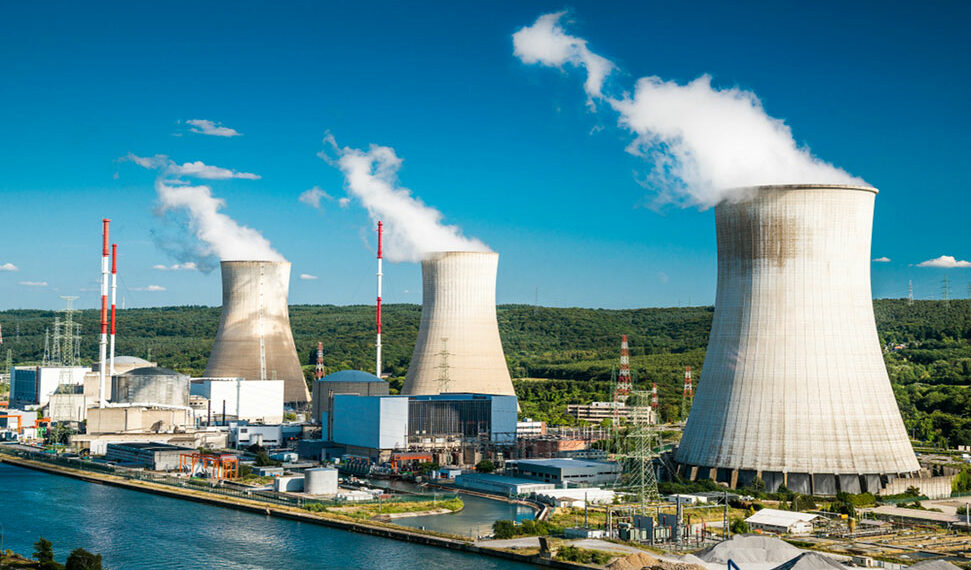
From the Jubilee Field to the national grid, from 44,000 MW of solar potential to a 1,200 MW state-owned thermal plant in development—Ghana’s energy ecosystem is one of the most complex and strategically significant in West Africa. This report provides a complete mapping of the value chain, identifying the key players, infrastructure assets, regulatory bodies, and market dynamics across upstream oil and gas, power generation, transmission, distribution, downstream petroleum, and renewable energy.
The ecosystem operates at three interconnected levels: the upstream (exploration and production), the midstream (processing and transmission), and the downstream (distribution and marketing). Each level is shaped by distinct regulatory regimes, capital requirements, and competitive dynamics. Understanding the architecture is essential for investors, policymakers, and industry participants navigating Ghana’s energy future.

Part 1: Regulatory and Institutional Architecture
The ecosystem is governed by a layered regulatory framework, with distinct bodies overseeing upstream, midstream, and downstream activities.
📢 GET A DETAILED ARTICLES + JOBS
Join ASJ's WhatsApp Channel and never miss a post or opportunity.

| Institution | Mandate | Legal Foundation |
|---|---|---|
| Ministry of Energy and Green Transition | Ultimate policy direction; enters petroleum agreements on behalf of state | Executive authority |
| Petroleum Commission (PC) | Day-to-day regulation of upstream oil and gas; processes exploration and production licence applications | Petroleum Commission Act, 2011 (Act 821) |
| Energy Commission (EC) | Licences natural gas processing, LNG facilities, gas transmission, distribution, and sale; regulates electricity sector | Energy Commission Act, 1997 (Act 541) |
| National Petroleum Authority (NPA) | Regulates downstream refining, storage, transportation, distribution, marketing, and pricing | National Petroleum Authority Act, 2005 (Act 691) |
| Public Utilities Regulatory Commission (PURC) | Sets electricity and water tariffs | PURC Act, 1997 (Act 538) |
| Ghana National Petroleum Corporation (GNPC) | State-owned enterprise with equity stakes in all major upstream operations; exploration and production | GNPC Law, 1983 (PNDC Law 64) |
The Ministry is the ultimate decision-making body, but the day-to-day regulation is distributed. The Petroleum Commission processes applications and ensures the state obtains best value from petroleum resources . The NPA has achieved price liberalisation, allowing industry players to set ex-refinery and ex-pump prices based on a prescribed petroleum pricing formula with no government intervention .
Part 2: Upstream Oil and Gas — Exploration and Production
Legal Framework
Under Article 257 of the 1992 Constitution, all mineral resources, including petroleum, are vested in the President on behalf of the people of Ghana . Petroleum Agreements (PAs), which grant rights for exploration and production, are entered into by the Minister upon the advice of the Petroleum Commission.

Key Assets and Operators
Ghana’s upstream sector is concentrated in two major offshore basins: the Tano Basin and the Cape Three Points Block. Crude oil production has declined from a peak of 71.44 million barrels in 2019 to 48.25 million barrels in 2024, but major new investments aim to reverse this trend .
| Asset | Operator | Key Partners | Status |
|---|---|---|---|
| Jubilee Field | Tullow Ghana | Kosmos Energy, GNPC, PetroSA | Operating (since 2010) |
| TEN Fields (Tweneboa, Enyenra, Ntomme) | Tullow Ghana | Kosmos Energy, GNPC | Operating |
| Offshore Cape Three Points (OCTP) | Eni Ghana | Vitol Upstream Ghana, GNPC | Operating; gas supplied to national grid |
| Tano Basin expansions | Kosmos Energy, Tullow | $2 billion framework agreement for 20 new wells | Announced June 2025 |
| Voltaian Basin exploration | GNPC | — | Drilling scheduled October 2026 |
The Jubilee Field was discovered in 2007, transforming Ghana into a commercial oil producer. Tullow Ghana is the operator, with Kosmos Energy, GNPC, and PetroSA as partners . The TEN fields (Tweneboa, Enyenra, Ntomme) followed, cementing Ghana’s position in the regional upstream landscape.
The OCTP project, operated by Eni Ghana, is strategically critical because it supplies natural gas to Ghana’s thermal power plants, directly linking upstream production to electricity generation.
Major Contractors and Service Providers
The upstream value chain is supported by a network of international and indigenous service companies:
| Company | Service | Key Credentials |
|---|---|---|
| Schlumberger, Baker Hughes, Weatherford | Drilling, well services, oilfield equipment | International majors |
| BGP-BAY Geophysical Services | Onshore and offshore seismic exploration | Only geophysical contractor in Ghana |
| Zeal Environmental Technologies | Oilfield waste management | Operator of Integrated Oilfield waste management Facility, Nyonkrom |
| GRO Oilfield Alliance Ghana | Fabrication, NDT, OCTG and lifting inspections, manpower supply | JV with Global Energy Ventures |
| Harlequin Oil and Gas | Subsea equipment fabrication (suction piles, manifolds, jumpers); hydraulic and pneumatic support | Completed projects for FMC Technologies, NOV, MODEC, Maersk Drilling |
| Wayoe Engineering and Construction (WEC) | Subsea structures fabrication, piping and pipeline construction, tank farms | One of largest privately owned Ghanaian EPC firms; ISO-accredited |
| Base Energy Ghana | Operator of ESWT Block (75% interest) | Wholly Ghanaian-owned |
| Kariba Engineering Services | Facilities management; JV with Baker Hughes Ghana | ISO 9001:2015 and ISO 45001:2018 certified |
| Eleven Energy Services | Offshore/onshore logistics, HVAC, flare inspection, drone inspections | ISO 9001:2015 certified |
Upstream Legal and Insurance Services
| Company | Service | Key Credentials |
|---|---|---|
| Africa Legal Associates | Primary legal advisor for oil and gas, power, project finance, M&A | Noted for local content expertise |
| WTS Nobisfields | Legal services for upstream clients | Key clients include Vitol Upstream Ghana, Vitol Ghana Services Ltd, Cenpower Operations and Services Ltd |
| Globetrotters Legal (GT Legal) | Corporate immigration, employment, regulatory compliance (petroleum, energy, mining) | Advises high-net-worth companies on Ghanaian law |
| Edward Mensah, Wood & Associates (EMWA) | Oil and gas insurance brokerage | Correspondents to Marsh; over 35 years of service |
Part 3: Power Generation — The Supply Stack
Ghana’s installed generation capacity totals approximately 5,571.3 MW, dominated by thermal (gas and oil), followed by hydro and a growing solar segment .
| Energy Source | Installed Capacity (MW) | Percentage |
|---|---|---|
| Oil & Gas (Thermal) | 3,629 | 65.1% |
| Hydropower | 1,584 | 28.4% |
| Solar | 358.3 | 6.5% |
| Total | 5,571.3 | 100% |
Source: GEM Power Sector Transition Database
Thermal Generation Assets
Thermal power plants, concentrated at Aboadze, Kpone, Tema, Asogli, and Kumasi, are the backbone of Ghana’s grid. Key operators include:
| Plant | Operator | Fuel Source | Status |
|---|---|---|---|
| Aboadze Thermal Complex | VRA, independent power producers (IPPs) | Natural gas (via WAGP), light crude oil | Operating |
| Kpone Power Plant | Karpowership / IPPs | Natural gas | Operating |
| Sunon Asogli Power Plant (Kpone) | Sunon Asogli | Natural gas | Operating; 200 MW wind expansion planned |
| AKSA Energy Kumasi Plant | AKSA Enerji | Natural gas | Ramping to 2,449 GWh by 2030 |
| Cenit Energy Kumasi Plant | Cenit Power | Natural gas | New entrant; 2,584 GWh by 2030 |
The government’s 2026 Budget Statement announced that a 1,200 MW state-owned thermal power plant would commence construction in 2026, representing a significant expansion of public sector generation capacity.
Hydropower Assets
VRA manages the Akosombo and Kpong dams, which provide baseload stability but are subject to hydrological variability.

| Dam | Installed Capacity (MW) | Operator |
|---|---|---|
| Akosombo | 1,020 | VRA |
| Kpong | 160 | VRA |
| Bui | 404 | Bui Power Authority |
Renewable Energy Assets
Ghana’s renewable generation capacity has expanded significantly, with several utility-scale solar farms now operating .
| Project | Capacity (MW) | Owner/Operator | Status |
|---|---|---|---|
| Blue Power Energy solar farm | 100 | Private | Operating |
| Bui Floating solar farm | 50 | Bui Power Authority | Operating |
| Bui solar farm | 50 | Bui Power Authority | Operating |
| Dagbon solar farm | 50 | — | Operating |
| First Sky Energies Yendi plant | 50 | First Sky Group | Operational March 2026 |
| Sunon Asogli wind farm | 200 (planned) | Sunon Asogli | Advanced development |
The Bui Power Authority (BPA) is a major renewable owner, with 375 MW in its portfolio . Meinergy Ghana (1,020 MW) and NEK Umwelttechnik AG (1,390 MW) are among the largest developers with prospective projects .
Key Power Generation Companies
| Company | Role | Notable Asset |
|---|---|---|
| Volta River Authority (VRA) | State-owned generation | Akosombo, Kpong dams |
| Bui Power Authority | State-owned generation | Bui Dam, Bui Floating Solar |
| Sunon Asogli | IPP | Kpone thermal plant; 200 MW wind expansion |
| AKSA Energy | IPP | Kumasi thermal plant |
| Cenit Power | IPP | Kumasi thermal plant (new entrant) |
| Karpowership | IPP (floating) | Kpone (phasing out by 2030) |
| First Sky Energies | IPP (solar) | 50 MW Yendi plant |
Part 4: Transmission — GRIDCo and the National Grid
The Ghana Grid Company Limited (GRIDCo) is the sole transmission utility, established under the Energy Commission Act, 1997 (Act 541) and the Volta River Development (Amendment) Act, 2005 (Act 692) .
GRIDCo’s mandate includes:
-
Economic dispatch and transmission of electricity from generating companies to bulk customers (ECG, NEDCo, Mines)
-
Fair and non-discriminatory transmission services
-
Transmission system planning and investment
-
Metering and billing services to bulk customers
-
Management of the Wholesale Power Market
Transmission Volume and Losses
Electricity transmission in Ghana has expanded notably, from 10,232 GWh in 2010 to 24,654 GWh in 2024. Transmission losses fluctuated, starting at 380 GWh in 2010, peaking at 1,076 GWh in 2021, and declining to 951 GWh in 2024 .
Reducing transmission losses is a strategic priority for the sector. GRIDCo’s network expansion includes new substations in Tamale, Kumasi, Yendi, and Obuasi.
Part 5: Distribution — ECG and NEDCo
Electricity distribution is split between two state-owned utilities:
| Distributor | Service Territory | Key Challenge |
|---|---|---|
| Electricity Company of Ghana (ECG) | Southern Ghana (Accra, Tema, Cape Coast, Takoradi, Kumasi) | Distribution losses; collection inefficiencies; tariff shortfalls |
| Northern Electricity Distribution Company (NEDCo) | Northern Ghana | Lower consumption density; collection challenges |
ECG’s financial distress is the most persistent challenge in the power sector. The IMF has called for progress on ECG privatisation under a proposed Private Sector Participation (PSP) arrangement. The government’s 2026 Budget Statement indicates continued focus on ECG’s operational turnaround.
MBH Power, an international energy company with 201-500 employees operating across Nigeria, Ghana, and other African markets, recently inaugurated a new Smart Energy Meter Factory in Ghana. The facility will manufacture metering solutions aligned with Ghana’s vision for energy efficiency and loss reduction .
Part 6: Downstream Petroleum — Oil Marketing Companies (OMCs)
The downstream sector is the most competitive segment of the ecosystem, with over 180 OMCs operating more than 5,000 filling stations nationwide.
Market Leadership (January–February 2026)
| Rank | Company | Total Sales Volume (Litres) | Market Share | Retail Stations |
|---|---|---|---|---|
| 1 | GOIL PLC | 158,173,164 | 11.93% | 400+ |
| 2 | Star Oil Ghana | 155,737,710 | 11.74% | 250+ |
| 3 | Vivo Energy Ghana (Shell) | 92,546,100 | 6.98% | 250+ |
| 4 | Zen Petroleum | 70,259,000 | 5.30% | 60+ |
| 5 | TotalEnergies Ghana | 53,749,130 | 4.13% | 250+ |
GOIL PLC
GOIL is a publicly listed Oil Marketing Firm, ISO 9001:2015 and ISO 14001:2015 certified. The company has the largest retail network in Ghana with over 440 stations. GOIL also supplies mining diesel to mining firms and is the leading LPG marketer in Ghana. Its subsidiaries include:

-
GO Energy (Bulk Distribution Company)
-
GOIL Offshore Limited (upstream business)
-
GOBITUMEN (joint venture bitumen production and distribution)
Other Key OMCs
| Company | Specialisation | Notable |
|---|---|---|
| Zen Petroleum | Mining sector fuel supply (49% market share) | Completed GH¢640m IPO in March 2026 |
| Ghana Oil Company | Petroleum products distribution, fuel card systems | Founded 1960 |
| XpressGas | LPG distribution | Seed-funded ($3M from BIO Invest and Investisseurs & Partenaires) |
| Shalom Oil Limited | Automotive lubricant, fuel haulage, building construction | Founded 2005 |
West African Gas Pipeline (WAGP)
The West African Gas Pipeline Company (WAGPCo) operates the West African Gas Pipeline, transporting natural gas from Nigeria to Benin, Togo, and Ghana . This pipeline is critical for supplying gas to thermal power plants at Aboadze and Kpone.
Midstream and Logistics Infrastructure
| Asset | Operator | Function |
|---|---|---|
| Tema Oil Refinery (TOR) | State-owned (operational) | Crude oil refining; rehabilitation completed |
| Accra Plains Depot (APD) | BOST Energies | Strategic fuel storage; 24-hour distribution pilot |
| Kumasi Terminal | BOST Energies | Regional distribution hub |
| New Takoradi Gasoil Depot | Zen Petroleum | 30,000 metric tonnes capacity |
| Atuabo Gas Processing Plant | Ghana National Gas Company | Natural gas processing for thermal power |
Part 7: Renewable Energy — The Green Transition
Ghana’s National Energy Compact commits to increasing renewable energy share from 4% to 10% by 2026 and to 30% by 2035, mobilising an estimated $20 billion in investment for grid modernisation and renewable projects.
Solar Energy Leaders
| Company | Segment | Key Metric |
|---|---|---|
| First Sky Energies | Utility-scale generation | 50 MW Yendi plant (operational March 2026) |
| Bui Power Authority | Hydro-solar hybrid | Floating solar; 55 MW Bui Solar Project |
| PEG Africa | Off-grid solar | $33.7M revenue |
| Translight Solar | Residential/commercial installation | 5MW installed to date |
| Destra Energy Group | Multi-technology renewables | Solar, wind, hydro, waste-to-energy |
| Aburi Energy | Solar module manufacturing | $12M exports (since July 2025); targeting 4GW capacity |
Utility-Scale Pipeline
-
Norbert Anku Solar Park: 200 MW, expandable to 1 GW by 2032
-
Sunon Asogli wind farm: 200 MW (Ada West district)
Major Renewable Project Owners
According to GEM data, the largest owners of wind and solar capacity in the West African Power Pool region include :
| Company | Capacity (MW) |
|---|---|
| NEK Umwelttechnik AG | 1,390 |
| Meinergy Ghana | 1,020 |
| Bui Power Authority (BPA) | 375 |
| Savannah Energy PLC | 450 |
Part 8: Key Infrastructure Projects and Investments
OCTP Gas Expansion
The Offshore Cape Three Points (OCTP) Non-Associated Gas Upgrade Project, with a term sheet signed by ENI, Vitol Upstream Ghana, and GNPC, will increase gas production by up to 350 MMscfd by 2028 [citation:1 in original energy report].
KfW-Backed Kumasi Solar Factory
A solar module assembly facility launched by Germany’s KfW in late 2025 will have an annual production capacity of 75 MW, becoming the first of its kind in West Africa [citation:1 in original energy report].
1,200 MW State-Owned Thermal Plant
The 2026 Budget Statement announced the commencement of construction of a 1,200 MW state-owned thermal power plant, representing a major expansion of public generation capacity.
MBH Power Smart Meter Factory
MBH Power inaugurated a new Smart Energy Meter Factory in Ghana, enhancing local manufacturing capabilities for metering solutions aligned with Ghana’s vision for energy efficiency .
Jubilee and TEN Field Investment
Kosmos Energy announced a $2 billion framework agreement to drill 20 new wells in the Jubilee and TEN fields, expected to reverse declining oil production .
Part 9: Energy Sector Funding and Investment
Upstream Investment Secured
The Ministry of Energy has secured over $3.5 billion in new upstream investment commitments, including the $2 billion Jubilee/TEN drilling programme.
AfDB Mini-Grid Programme
The African Development Bank’s Ghana Mini Grid and Solar PV Net Metering Project (US$85 million) will install 67.8 MW of new solar generation capacity through 35 mini-grids and 12,000 rooftop systems, providing reliable power to more than 84,000 people [citation:1 in original energy report].
ZEN Petroleum IPO
Zen Petroleum raised GH¢640 million in a March 2026 IPO on the Ghana Stock Exchange, representing one of the largest listings by an indigenous downstream company [citation:1 in original energy report].
Conclusion: A Layered, Evolving Ecosystem
Ghana’s energy ecosystem is defined by layered complexity. Upstream oil and gas production (Jubilee, TEN, OCTP) supplies crude for export and natural gas for domestic power generation. Thermal power plants (Aboadze, Kpone, Asogli, AKSA, Cenit) dominate the generation mix, complemented by hydro (Akosombo, Kpong, Bui) and a growing solar segment (Bui, First Sky, Blue Power). GRIDCo transmits power across the national grid, while ECG and NEDCo distribute to end-users.
The downstream petroleum sector is fiercely competitive, with GOIL, Star Oil, and Zen Petroleum battling for market leadership. Renewable energy is scaling rapidly, with utility-scale solar, wind, and manufacturing capacity (Aburi Energy, KfW-backed Kumasi factory) positioning Ghana as a potential regional exporter.
The sector’s challenges are significant: ECG’s financial distress, transmission losses, tariff pressures, and declining oil production. But the pipeline of investment—$3.5 billion in upstream, $20 billion under the National Energy Compact, and the 1,200 MW state-owned thermal plant—suggests that Ghana’s energy ecosystem is not static. It is evolving, expanding, and attracting capital from global oil majors, development finance institutions, and domestic public markets.
For investors, policymakers, and industry participants, understanding this layered architecture is not merely informative—it is essential for navigating Ghana’s energy future.
Quick Reference: Ghana’s Energy Ecosystem by Segment
| Segment | Lead Institutions | Key Private Players | Strategic Priority |
|---|---|---|---|
| Upstream Oil & Gas | GNPC, Petroleum Commission | Tullow, Kosmos, Eni, Vitol | Reverse production decline; expand gas for power |
| Power Generation | VRA, BPA, Ministry of Energy | AKSA, Sunon Asogli, Cenit, Karpowership | Expand capacity (1,200 MW plant); integrate renewables |
| Transmission | GRIDCo | — | Reduce transmission losses (target below 5%) |
| Distribution | ECG, NEDCo | MBH Power (metering) | ECG financial turnaround; reduce losses |
| Downstream Petroleum | NPA | GOIL, Star Oil, Zen, Vivo, TotalEnergies | Maintain competitive pricing; expand LPG access |
| Renewable Energy | Energy Commission | First Sky, PEG, Translight, Aburi Energy | Achieve 30% renewable by 2035 |
| Gas Processing | Ghana National Gas Company | — | Expand processing capacity (GPP 2) |
| Logistics & Storage | BOST Energies | Zen Petroleum (depot) | 24-hour distribution; strategic reserves |
Source: Accra Street Journal
Last Updated on June 5, 2026 by Samuel Kwame Boadu
Disclaimer: Some content on Accra Street Journal may be aggregated, summarized, or edited from third-party sources for informational purposes. Images and media are used under fair use or royalty-free licenses. Accra Street Journal is a subsidiary of SamBoad Publishing Hub under SamBoad Business Group Ltd, registered in Ghana since 2014.
For concerns or inquiries, please visit our Privacy Policy or Contact Page.

Samuel Kwame Boadu is a Ghanaian media entrepreneur and storyteller with a passion for amplifying urban voices and uncovering everyday truths. He is the Editor-in-Chief and Founder of Accra Street Journal, a dynamic digital platform dedicated to capturing the pulse of Ghana’s capital—its people, culture, challenges, business, sports and innovations.