





Ghana’s trade account remained in positive territory in August 2025, with the Bank of Ghana reporting a modest US$50 million surplus that lifted the overall trade balance to US$6.2 billion. While incremental, the outcome underscores resilience in the country’s external sector and signals stability for the broader economy.
The central bank’s latest Summary of Financial and Economic Data shows that exports continued to outpace imports, maintaining Ghana’s run of surpluses through the year. As a share of GDP, the trade balance edged up slightly to 7.1% in August from 7% in July, reflecting steady inflows despite global market volatility.

Exports Holding the Line
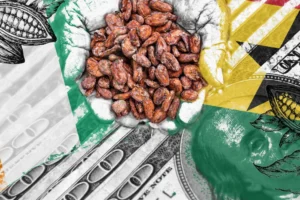
Much of the surplus is being sustained by Ghana’s traditional commodities — gold, cocoa, and oil — which continue to deliver foreign exchange earnings. Economists, however, caution that this reliance leaves the economy exposed to price swings in global markets. Calls for diversification into value-added exports and services remain loud.
📢 GET A DETAILED ARTICLES + JOBS
Join ASJ's WhatsApp Channel and never miss a post or opportunity.

Why the Surplus Matters
Analysts say even small surpluses carry weight. They reinforce investor confidence, improve Ghana’s creditworthiness, and provide the Bank of Ghana with breathing room to manage inflationary pressures and exchange rate volatility.
“Every dollar that pushes the balance into surplus buys the country more time on debt sustainability and shields the cedi from sudden shocks,” said one Accra-based economist.
The trade surplus also reduces the need for short-term borrowing, creating fiscal space for government spending on infrastructure and social programs without excessive reliance on external debt.
The Road Ahead
While the August figure represents a slim improvement compared to earlier months, the persistence of positive balances is viewed as a sign of resilience. Policymakers now face the challenge of leveraging these gains into export diversification, moving beyond raw commodities into higher-value industries.
For now, Ghana’s ability to keep its books in the black — even with modest surpluses — reflects a steady, if cautious, march toward greater economic stability.
Source: Accra Street Journal
Last Updated on September 18, 2025 by Samuel Kwame Boadu
Disclaimer: Some content on Accra Street Journal may be aggregated, summarized, or edited from third-party sources for informational purposes. Images and media are used under fair use or royalty-free licenses. Accra Street Journal is a subsidiary of SamBoad Publishing Hub under SamBoad Business Group Ltd, registered in Ghana since 2014.
For concerns or inquiries, please visit our Privacy Policy or Contact Page.

Samuel Kwame Boadu is a Ghanaian media entrepreneur and storyteller with a passion for amplifying urban voices and uncovering everyday truths. He is the Editor-in-Chief and Founder of Accra Street Journal, a dynamic digital platform dedicated to capturing the pulse of Ghana’s capital—its people, culture, challenges, business, sports and innovations.