





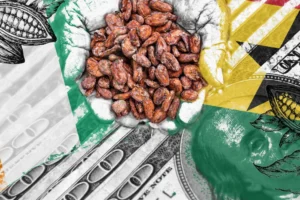



Cocoa prices hit nearly $12,000 per tonne due to supply shortages in West Africa, impacting chocolatiers and Ghana’s struggling cocoa processing sector.

This surge comes at a time when global cocoa supplies are already strained, and stockpiles remain at critically low levels. The current supply deficit is entering its third consecutive year, and cocoa traders are facing increased market volatility. The rising costs have significantly impacted chocolate manufacturers, who have passed the increased prices on to consumers. In Ghana, where cocoa farming is vital to the economy, the price of chocolate has spiked sharply, making the confectionery unaffordable for many local consumers.


Analysts warn that Ghana’s cocoa sector, already under pressure from systemic inefficiencies, crop diseases, and illegal mining, could continue to face challenges into 2025. Cocoa processing companies in the country, which experienced numerous shutdowns in 2024, are bracing for another difficult year. Some companies have struggled to secure enough cocoa beans for production, while others have been unable to compete with foreign brands due to the high cost of raw cocoa powder.
📢 GET A DETAILED ARTICLES + JOBS
Join ASJ's WhatsApp Channel and never miss a post or opportunity.

Although rising global cocoa prices should theoretically benefit producing countries like Ghana, many farmers have been unable to capitalize on the price surge. High production costs, limited access to financing, and inefficiencies in the supply chain mean that cocoa farmers are not seeing the profits they should from these price increases. Additionally, Ghana Cocoa Board (COCOBOD), the regulatory body for the cocoa industry, has been struggling with financial losses, further limiting the potential benefits to the local economy.
With a new government set to take office in January 2025, there is growing pressure to address these challenges. The incoming administration may need to reassess the performance of COCOBOD and consider reforms to revamp the sector. One potential strategy could be placing COCOBOD back under the Ministry of Finance’s oversight to improve efficiency and profitability, while also focusing on boosting production to capitalize on higher global prices.
The long-term outlook for the cocoa market remains positive, with global demand expected to grow as more regions gain access to chocolate products. However, for Ghana to benefit from this growth, significant reforms and improvements in cocoa production are required to ensure that farmers and processors can fully capitalize on rising global prices.
Source: Accra Street Journal
Last Updated on March 9, 2026 by Samuel Kwame Boadu
Disclaimer: Some content on Accra Street Journal may be aggregated, summarized, or edited from third-party sources for informational purposes. Images and media are used under fair use or royalty-free licenses. Accra Street Journal is a subsidiary of SamBoad Publishing Hub under SamBoad Business Group Ltd, registered in Ghana since 2014.
For concerns or inquiries, please visit our Privacy Policy or Contact Page.

Samuel Kwame Boadu is a Ghanaian media entrepreneur and storyteller with a passion for amplifying urban voices and uncovering everyday truths. He is the Editor-in-Chief and Founder of Accra Street Journal, a dynamic digital platform dedicated to capturing the pulse of Ghana’s capital—its people, culture, challenges, business, sports and innovations.