





Tensions flared in Parliament as the Minority caucus mounted a fierce challenge against the National Democratic Congress administration’s decision to slash cocoa producer prices, describing the move as economically devastating and politically deceptive.
The New Patriotic Party (NPP) caucus accused the government of mismanagement, policy inconsistency and betrayal of campaign promises, while pointing to neighbouring Côte d’Ivoire for maintaining its producer price framework despite global market volatility.

Formal Demand on the Floor of Parliament
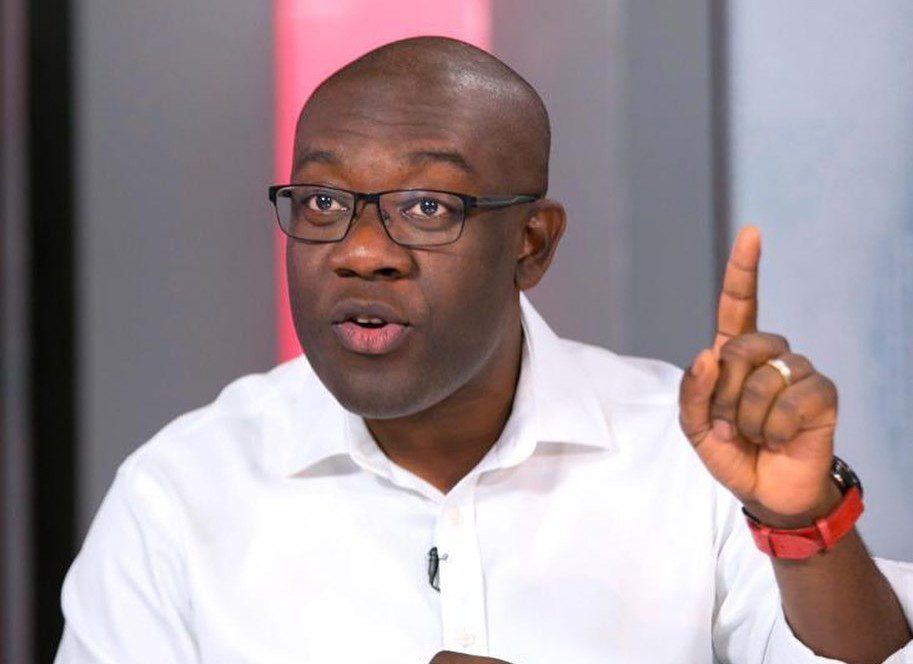
The Minority’s call for an immediate reversal was formally delivered by Kojo Oppong Nkrumah, MP for Ofoase-Ayirebi and Ranking Member on the Committee on Economy and Development, following a statement by the Minority Leader condemning the handling of the cocoa sector.
📢 GET A DETAILED ARTICLES + JOBS
Join ASJ's WhatsApp Channel and never miss a post or opportunity.

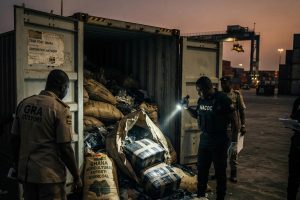
The government’s decision reduced the farmgate price from GH¢3,625 to GH¢2,587 per 64kg bag, a cut of over GH¢1,000 per bag. The announcement has triggered anger across cocoa-growing regions, with farmers describing the move as socially destructive and financially crippling.
Oppong Nkrumah urged Cabinet to reconvene—not to justify the decision—but to reverse it entirely.
“Just as Cabinet convened on an emergency basis to announce a reduction in the prices, we are asking Cabinet to reconvene and restore the bag price to GH¢3,625,” he told the House.
Framing the issue as a humanitarian crisis rather than a technical economic debate, he added:
“For those of us from cocoa-growing villages, this is not a matter of FOB percentages, 70 per cent, 90 per cent, or technical jargon. This is a matter of life and death.”
Human Cost: A GH¢200,000 Loss
To illustrate the impact, the MP recounted a call from a purchasing clerk in his constituency who had mobilised and deposited 200 bags of cocoa at the previous price for evacuation.
Because the beans had not yet been evacuated by COCOBOD before the announcement, they were re-priced at the new lower rate—resulting in an estimated loss of nearly GH¢200,000 for the small-scale buyer.
“How many of us here can suffer a loss of GH¢200,000 and survive?” Oppong Nkrumah asked. “This is not theory. This is real life.”
He warned that nearly one million Ghanaians depend directly on cocoa for their livelihoods, and cutting over GH¢1,000 from every bag would ripple through rural economies—leading to poverty, school dropouts, loan defaults and economic stagnation.
Policy Credibility at Stake
Beyond the immediate hardship, the Minority expressed concern about long-term damage to confidence in Ghana’s cocoa pricing framework.
Oppong Nkrumah questioned how farmers could trust future financing models or policy commitments when, within the same cocoa year, the price had been promised at GH¢3,625 only to be reduced before the season ended.
He cited the 2018–2019 cocoa season, when global prices fell sharply but the government at the time maintained and even increased producer prices, arguing that farmers must be shielded from international volatility.
“We sat in Cabinet meetings where it was clearly stated that no government should look cocoa farmers in the eye and reduce their prices,” he said.
External Factors or Governance Failure?
The Minority rejected claims that the current crisis is driven solely by global price volatility, calling such explanations political deflection.
They argued that domestic mismanagement, weak financial controls and poor trading decisions within the cocoa sector were central to the crisis.
In contrast, they highlighted Côte d’Ivoire—the world’s largest cocoa producer—which has maintained its producer price structure despite global fluctuations, thereby protecting farmer incomes.
According to the Minority, the difference reflects governance choices rather than unavoidable external forces.
Campaign Promises Resurface
The debate also revived campaign-era statements by NDC leaders who had previously suggested cocoa farmers deserved up to GH¢6,500 per bag, describing lower prices as exploitative.
Oppong Nkrumah described the current GH¢2,587 price as a stark contradiction.
“They promised GH¢6,500. They didn’t even achieve GH¢3,600. And now they want to cut it to GH¢2,500. This is not reform. This is betrayal.”
A National Moral Question
In his closing remarks, the Ofoase-Ayirebi MP framed the issue as a national moral test rather than a partisan dispute, urging the government to prioritise the welfare of cocoa farmers over political considerations.
As debate intensifies, pressure is mounting on Cabinet to reconsider the controversial decision—one that has placed Ghana’s cocoa sector, and the livelihoods of hundreds of thousands of farming families, at the centre of a deepening political and economic storm.
Source: Accra Street Journal
Last Updated on March 9, 2026 by Samuel Kwame Boadu
Disclaimer: Some content on Accra Street Journal may be aggregated, summarized, or edited from third-party sources for informational purposes. Images and media are used under fair use or royalty-free licenses. Accra Street Journal is a subsidiary of SamBoad Publishing Hub under SamBoad Business Group Ltd, registered in Ghana since 2014.
For concerns or inquiries, please visit our Privacy Policy or Contact Page.

Samuel Kwame Boadu is a Ghanaian media entrepreneur and storyteller with a passion for amplifying urban voices and uncovering everyday truths. He is the Editor-in-Chief and Founder of Accra Street Journal, a dynamic digital platform dedicated to capturing the pulse of Ghana’s capital—its people, culture, challenges, business, sports and innovations.