






3 min read
Sixth Coupon Settlement Underscores Shift Toward Market Reassurance and Debt Credibility
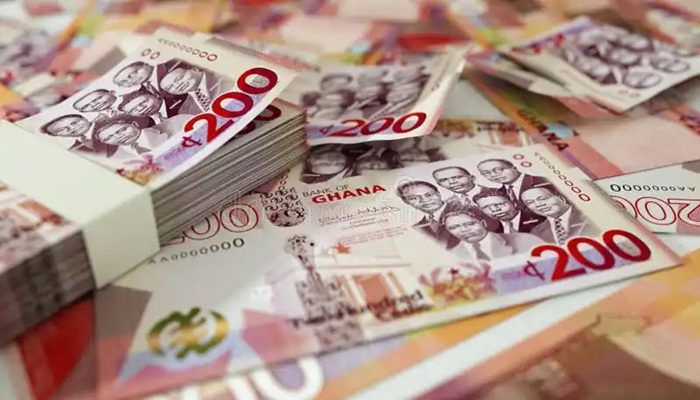
The Government of Ghana has paid GH¢10 billion in interest under its Domestic Debt Exchange Programme (DDEP), marking a pivotal step in its post-restructuring fiscal recovery and signaling renewed confidence in its ability to meet domestic obligations.
Announced Wednesday, the payment represents the sixth coupon settlement under the DDEP and notably the second executed entirely in cash—without any Payment-In-Kind (PIK) component.
Key Takeaways
- Announced Wednesday, the payment represents the sixth coupon settlement under the DDEP and notably the second executed entirely in cash—without any Payment-In-Kind (PIK) component.
- For investors and financial institutions still recalibrating after the 2023 debt restructuring, the all-cash settlement is more than routine bookkeeping.
- This latest payment fulfills coupon obligations in line with the restructuring memorandum and government’s medium-term debt management framework.
For investors and financial institutions still recalibrating after the 2023 debt restructuring, the all-cash settlement is more than routine bookkeeping. It is a message.
A Shift From Restructuring to Restoration
The Domestic Debt Exchange Programme was introduced as a cornerstone of Ghana’s broader fiscal consolidation plan, restructuring cedi-denominated bonds to restore debt sustainability.
This latest payment fulfills coupon obligations in line with the restructuring memorandum and government’s medium-term debt management framework.
Officials described the settlement as evidence of improved fiscal capacity and solvency.
“This timely payment sends a strong positive signal to the market, reinforces investor confidence, and is expected to support Ghana’s credit outlook,” a government statement said.
Financial Sector Relief
Banks, pension funds and asset managers—key holders of domestic government securities—stand to benefit from the strengthened payment profile.
Analysts say consistent coupon settlements reduce uncertainty in balance sheets and ease liquidity planning across the financial sector.
The fact that the GH¢10 billion was settled fully in cash is particularly significant. During earlier phases of restructuring, portions of obligations were met through Payment-In-Kind mechanisms, effectively deferring part of the burden.

An all-cash payment suggests stronger liquidity buffers and improved revenue performance.
Macro Signals Turning Positive
Government officials point to declining inflation, falling interest rates and relative Cedi stability as indicators of macroeconomic improvement.

Lower yields on Treasury instruments and stabilizing domestic liquidity conditions have contributed to easing debt-servicing pressures.
Market observers note that sustained consistency—not a single payment—will ultimately determine Ghana’s restored credibility. However, the uninterrupted sequence of six coupon settlements adds momentum to the recovery narrative.

The Broader Credit Outlook
For international investors and ratings agencies, domestic payment performance is a key metric in assessing sovereign risk.
Meeting DDEP obligations fully in cash reduces rollover concerns and demonstrates adherence to restructuring commitments. It also positions Ghana more favorably as it navigates ongoing external debt negotiations and broader macroeconomic reforms.
The government has reaffirmed its commitment to honoring future obligations under the DDEP framework, citing strengthened fiscal buffers.
A Test of Discipline
While the payment marks progress, fiscal consolidation remains a long-term undertaking. Sustaining investor confidence will require continued expenditure discipline, revenue mobilization and prudent borrowing practices.
Still, for a country emerging from one of the most significant debt restructurings in its history, GH¢10 billion paid in cash is not merely an accounting entry.
It is a signal—to markets, to institutions and to households—that Ghana’s fiscal architecture may be regaining stability.
Source: Accra Street Journal
Last Updated on February 18, 2026 by Samuel Kwame Boadu

Disclaimer: Some content on Accra Street Journal may be aggregated, summarized, or edited from third-party sources for informational purposes. Images and media are used under fair use or royalty-free licenses. Accra Street Journal is a subsidiary of SamBoad Publishing Hub under SamBoad Business Group Ltd, registered in Ghana since 2014.
For concerns or inquiries, please visit our Privacy Policy or Contact Page.

Samuel Kwame Boadu is a Ghanaian media entrepreneur and storyteller with a passion for amplifying urban voices and uncovering everyday truths. He is the Editor-in-Chief and Founder of Accra Street Journal, a dynamic digital platform dedicated to capturing the pulse of Ghana’s capital—its people, culture, challenges, business, sports and innovations.
Use the following reference when citing or referencing this article.
Your feedback helps us improve our journalism.
Report an Error
Help us maintain accuracy. Let our editorial team know if you spot an issue in this article.
Report a problem with this article