




4 min read
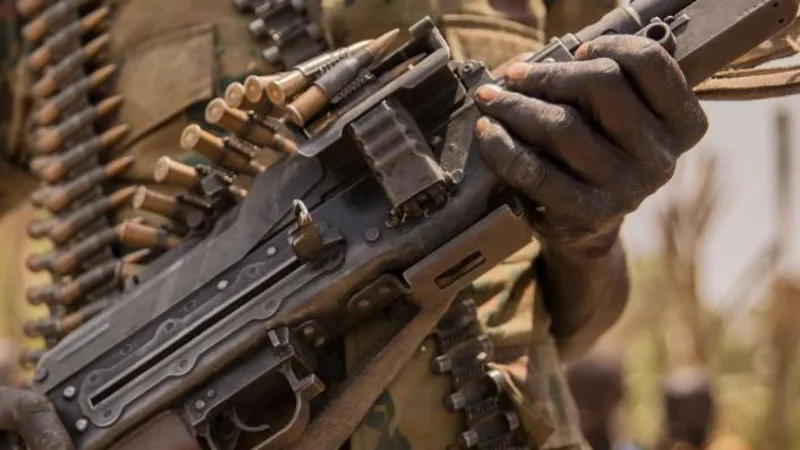
Authorities in northern South Sudan say at least 169 people, including senior local officials, were killed in a pre-dawn assault that has intensified fears the fragile nation could slide back into full-scale civil war.
The attack targeted Abiemnom county in the Ruweng Administrative Area early Sunday morning, according to regional officials. Described as a coordinated assault by dozens of armed youth, the violence unfolded over several hours, overwhelming local security forces and leaving widespread devastation in its wake.
Key Takeaways
- Described as a coordinated assault by dozens of armed youth, the violence unfolded over several hours, overwhelming local security forces and leaving widespread devastation in its wake.
- Ruweng Information Minister James Monyluak Mijok said the dead included 90 civilians — among them children, women and elderly residents — as well as 79 members of regional forces, including police officers.
- The United Nations Mission in South Sudan (UNMISS) said approximately 1,000 civilians had begun seeking protection near its base in the affected area, reflecting growing fear among residents.
Heavy Civilian Toll
Ruweng Information Minister James Monyluak Mijok said the dead included 90 civilians — among them children, women and elderly residents — as well as 79 members of regional forces, including police officers.
The assault began around 4:30 a.m. local time, when residents were still asleep.
“They surprised them,” Mr. Mijok said, adding that government forces were outnumbered during fighting that lasted between three and four hours. Homes and markets were set ablaze amid the clashes.
Several senior local officials were killed, including the county commissioner and executive director, dealing a significant blow to local governance structures in the area.
Fifty others were wounded, with many transported to the neighboring Abyei Administrative Area for treatment.
Accusations and Denials
Mr. Mijok alleged that the attackers came from neighboring Unity state and were linked to the Sudan People’s Liberation Army in Opposition, or Sudan People’s Liberation Army in Opposition (SPLA-IO).
The SPLA-IO, led by Vice President Riek Machar, denied involvement, accusing Unity state authorities of politicizing the violence.
Officials in Unity state have not publicly responded to claims that they had prior knowledge of the attack.
The precise trigger remains unclear. However, tensions between rival factions have been rising in recent months amid deepening political uncertainty and sporadic clashes across several regions.

UN Raises Alarm
The United Nations Mission in South Sudan (UNMISS) said approximately 1,000 civilians had begun seeking protection near its base in the affected area, reflecting growing fear among residents.
“Such violence places civilians at grave risk and must stop immediately,” said Anita Kiki Gbeho, the mission’s officer in charge.

UNMISS said it had strengthened its protective posture and was working with the government to restore calm. Peacekeepers are providing emergency medical care to at least 23 wounded individuals.
The mission called on all parties to cease hostilities and engage in dialogue, reiterating longstanding warnings that the country risks sliding back into widespread conflict.
Humanitarian Strain Expands
The violence in Ruweng comes amid broader instability across the country.
In Jonglei state, the medical charity Médecins Sans Frontières (MSF) reported that 26 of its staff were missing following weeks of escalating clashes between government and opposition forces. The organization has suspended services in Lankien and Pieri, citing deteriorating security conditions.
MSF also said one of its facilities in Lankien was struck by a government airstrike earlier in February, further constraining humanitarian access.
“Many of our staff were forced to flee the violence alongside their families,” the organization said in a statement, noting that several employees are now displaced in remote areas with limited access to food and water.
Local reports indicate that victims of Sunday’s assault were buried in a mass grave due to the scale of casualties and persistent security concerns.
A similar incident in Abiemnom county last year left more than 40 civilians dead, underscoring the area’s vulnerability to recurring violence.
Fragile Peace Under Pressure
South Sudan, which gained independence in 2011, remains the world’s youngest nation. Since its formation, it has been beset by civil war, economic hardship and entrenched political rivalry.
A 2018 power-sharing agreement between President Salva Kiir and his longtime rival Mr. Machar formally ended a brutal five-year conflict that claimed hundreds of thousands of lives. Yet implementation of the deal has faltered amid delays in security reforms, disputes over power allocation and mutual distrust.

The United Nations has repeatedly warned that the political settlement is unraveling, raising the specter of renewed nationwide conflict.
Sunday’s assault, with its high civilian toll and competing political accusations, illustrates the fragility of local security arrangements and the speed with which violence can escalate.
For civilians in northern South Sudan, the immediate concern is survival — securing shelter, medical care and protection in a region where the line between political rivalry and communal violence often blurs.
For the international community, the episode is a stark reminder that South Sudan’s peace remains precarious — and that without sustained political commitment and effective security reforms, localized clashes could once again spiral into a broader war.
Source: Accra Street Journal
Last Updated on March 3, 2026 by Samuel Kwame Boadu
Disclaimer: Some content on Accra Street Journal may be aggregated, summarized, or edited from third-party sources for informational purposes. Images and media are used under fair use or royalty-free licenses. Accra Street Journal is a subsidiary of SamBoad Publishing Hub under SamBoad Business Group Ltd, registered in Ghana since 2014.
For concerns or inquiries, please visit our Privacy Policy or Contact Page.

Samuel Kwame Boadu is a Ghanaian media entrepreneur and storyteller with a passion for amplifying urban voices and uncovering everyday truths. He is the Editor-in-Chief and Founder of Accra Street Journal, a dynamic digital platform dedicated to capturing the pulse of Ghana’s capital—its people, culture, challenges, business, sports and innovations.
Use the following reference when citing or referencing this article.
Your feedback helps us improve our journalism.
Report an Error
Help us maintain accuracy. Let our editorial team know if you spot an issue in this article.
Report a problem with this article