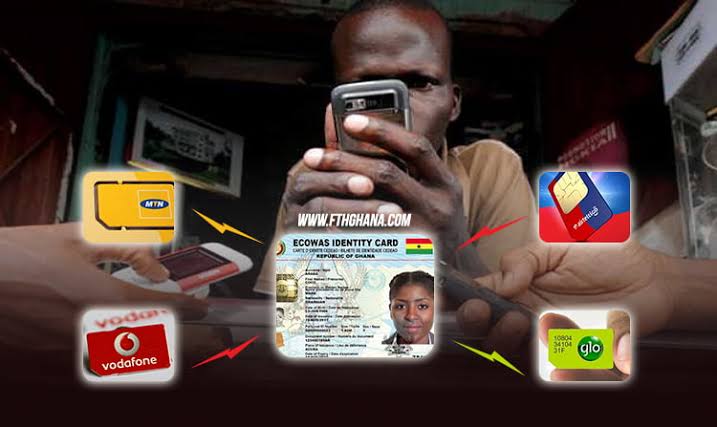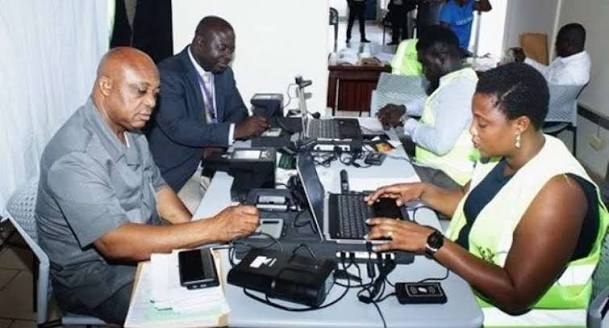
The Mobile Money Agents Association of Ghana (MoMAG) issued a binding directive effective April 27, 2026, prohibiting its members from processing “cash-out” transactions unless the customer is physically present at the point of sale. The order, which applies to all registered agent locations nationwide, represents a significant operational shift for Ghana’s mobile money ecosystem—a sector that processes billions of cedis annually and serves as the primary financial access point for millions of unbanked Ghanaians. The directive is explicitly aimed at curbing a sharp rise in remote-access fraud, particularly unauthorized withdrawals initiated through SIM swap schemes, phishing attacks, and compromised merchant accounts. While the measure strengthens transaction security, it introduces friction for legitimate users accustomed to proxy withdrawals—where a customer sends mobile money to a trusted third party who then cashes out on their behalf. For Ghana’s fintech landscape, which has long prided itself on balancing convenience with inclusion, this directive marks a recalibration: security over seamlessness.
Key Developments: What the MoMAG Directive Changes and Why Now
Under the new rule, any mobile money agent found processing a cash-out for a customer who is not physically present—whether via mobile number verification alone, verbal authorization over the phone, or a shared PIN arrangement—will face sanctions from the association, potentially including fines, suspension of operating privileges, or referral to law enforcement. The directive does not carry the force of law directly, but MoMAG represents over 80% of the estimated 200,000 active mobile money agents in Ghana, giving its guidance effective quasi-regulatory power.

The decision follows a 38% year-on-year increase in reported mobile money fraud cases in the first quarter of 2026, according to internal data shared with this publication by a Bank of Ghana official speaking on condition of anonymity. The most common vector is remote cash-out fraud: a fraudster gains access to a target’s SIM card—often through telecom employee collusion or identity document forgery—then transfers small sums to a complicit agent or a mule account, where the funds are cashed out without the real customer’s knowledge. By the time the victim notices, the physical cash is gone and the agent’s transaction record often shows only a standard withdrawal.
📢 GET A DETAILED ARTICLES + JOBS
Join ASJ's WhatsApp Channel and never miss a post or opportunity.

MoMAG’s directive closes the procedural loophole that allowed such transactions. Previously, agents could verify a customer’s identity using only the mobile money wallet’s USSD prompt or a texted confirmation code. Under the new regime, agents are required to match a government-issued ID—Ghana Card, voter ID, or passport—against the customer’s physical face before releasing cash. The agent must also log the ID number manually in a paper or digital register, creating an audit trail that law enforcement can later use.
The timing is deliberate. The Bank of Ghana is finalizing its revised Mobile Money Guidelines (2026 edition), which are expected to include similar physical-presence requirements for high-value cash-out transactions above GH¢1,000. MoMAG’s preemptive directive signals that the industry prefers self-regulation ahead of potentially stricter central bank rules. It also gives agents a two-week adjustment period before the busy May 1 salary withdrawal cycle, when mobile money volumes typically spike.

Analysis & Implications: The Efficiency-Security Trade-Off in Financial Inclusion
The mobile money agent network is arguably Ghana’s most important financial innovation of the past decade. With fewer than 1,500 bank branches serving a population of 33 million, agents fill the gap, enabling cash-in/cash-out, bill payments, airtime purchases, and micro-lending in communities where formal banking has no presence. The average Ghanaian adult lives within 2.5 kilometers of a mobile money agent—far closer than the 15 kilometers to the nearest bank branch in rural areas.
But the network’s strength—its human intermediation—has also become its vulnerability. Agents operate on thin margins, typically earning a commission of 0.75% to 1.5% per cash-out transaction. That economic pressure incentivizes speed over scrutiny. A 2025 mystery shopping study by the University of Ghana’s Center for Financial Inclusion found that 44% of agents did not request ID for withdrawals below GH¢500, and 22% performed withdrawals over the phone for “regular customers.”
Fraudsters have exploited this systematically. SIM swap fraud, where a criminal convinces a telecom operator to reassign a victim’s phone number to a new SIM, remains the most profitable method. Once the fraudster controls the phone number, they can reset mobile money PINs and request cash-outs at colluding agents. The victim often discovers the loss only when they cannot make outgoing calls or receive transaction alerts—hours or days after the money is gone.
The MoMAG directive raises two immediate tensions. First, it disadvantages legitimate users who rely on proxy withdrawals—such as rural farmers who send mobile money to relatives in town to withdraw on their behalf, or domestic workers who transfer earnings to family members in different regions. MoMAG has acknowledged this but argues that the scale of fraud justifies the friction. Second, the directive imposes additional administrative burden on agents without compensating them for the extra time—and potential lost business. An agent who now spends three minutes verifying ID and logging a transaction, compared to 30 seconds previously, can serve fewer customers per hour. In a competitive market where agents are already under pressure from direct telco-owned outlets, this could reduce profitability.
Yet the counterargument is compelling. The Bank of Ghana estimates that mobile money fraud cost consumers and telcos approximately GH¢210 million in 2025. That figure does not include the reputational damage to the entire ecosystem. If customers lose trust in mobile money, they may revert to holding physical cash—a less efficient, more theft-prone, and entirely untraceable alternative. In that sense, a small reduction in convenience now might protect the long-term viability of the entire digital payments infrastructure.
What This Means for Ghana’s Fintech Ecosystem and Everyday Users
For the millions of Ghanaians who rely on mobile money daily—whether market traders, transport operators, or salary earners—the directive will initially feel like a step backward. A customer who previously called their regular agent to “send me GH¢200 through my number” will now need to visit the agent’s kiosk in person, present ID, and wait while the agent logs the transaction. For elderly users or those with mobility challenges, this is a real inconvenience. For workers in Accra who send money to rural parents, the solution will be to pre-authorize trusted family members as co-signers—a workaround that MoMAG permits but does not formally endorse.
For businesses, the impact is more nuanced. Small enterprises that use mobile money for supplier payments—where a business owner transfers funds to a supplier who then cashes out to pay their own workers—will need to restructure their payment workflows. Some may shift toward bank transfers or mobile money-to-mobile money payments without cash-out, which remains unaffected. Others may register their key employees as authorized withdrawal agents, a legally permissible but administratively heavier process.
For the mobile money agents themselves, the next 30 days will be critical. MoMAG has promised a public awareness campaign and training materials to help agents implement the ID-checking protocol without alienating customers. However, the association has not announced any compensation for the additional time cost. In a sector where the average agent earns GH¢800 to GH¢1,500 monthly, even a 10% reduction in transaction throughput represents a meaningful income loss.
The directive also creates a competitive opening for fintechs that operate outside the traditional agent network. Digital-only banks like Dash and ExpressPay, which offer card-based ATM withdrawals instead of agent cash-outs, could see increased adoption among users frustrated by the new friction. Similarly, telco-owned “customer experience centers”—operated directly by MTN and Telecel—already enforce stricter identity checks, so the directive brings independent agents closer to that standard rather than raising it above.

As the Accra Street Journal reported in its February coverage of mobile money fraud, the underlying issue is not agent behavior alone but the telecom sector’s SIM registration enforcement. The National Communications Authority has yet to fully implement the mandatory biometric SIM re-registration policy announced in 2024. Until the root cause—fraudulently obtained SIMs—is addressed, directives like MoMAG’s are reactive rather than preventive.
Wider Context: How Other African Markets Handle Mobile Money Fraud
Ghana’s approach to cash-out fraud sits in a middle ground compared to its regional peers. In Kenya, where M-Pesa pioneered mobile money, Safaricom has implemented machine-learning-based anomaly detection that automatically flags unusual cash-out patterns—such as withdrawals from a geographic location the user has never visited—and temporarily freezes the wallet pending verification. The system blocked over 3.2 million potentially fraudulent transactions in 2025 alone, according to Safaricom’s sustainability report. Kenya does not require physical presence for cash-outs but has a risk-scoring system that demands higher authentication for flagged transactions.
In Nigeria, where the central bank’s cashless policy has driven mobile money adoption more slowly, the regulatory approach is stricter: all cash-outs above N50,000 (approximately GH¢625) require biometric verification. Nigeria has also mandated that mobile money agents be licensed as “agent banks” with capital requirements, a step Ghana has not taken.
Tanzania’s approach is closest to Ghana’s but more punitive. The Tanzania Communications Regulatory Authority imposes fines of up to 5 million Tanzanian shillings (approximately GH¢15,000) on any agent found processing a cash-out without customer presence. A single enforcement action can bankrupt a small agent. MoMAG’s directive explicitly rejects that model, relying instead on association-led sanctions and eventual deregistration.
The lesson from across the continent is that no single measure eliminates fraud. Ghana’s physical-presence requirement will reduce remote cash-out fraud substantially—by an estimated 60% to 70% based on pilot studies in the Ashanti Region. But it will not stop SIM swap fraud entirely, as determined fraudsters can still present fake IDs in person. That requires telecom-level solutions: faster SIM swap alerts, mandatory 24-hour waiting periods before enabling mobile money on a new SIM, and better law enforcement prosecution of telecom insider collusion.
Outlook / What Happens Next
The MoMAG directive takes effect immediately, but enforcement will be phased. For the first 14 days, the association will issue warnings and educational reminders rather than fines. From May 11, 2026, roving compliance teams will begin spot checks at agent locations in Greater Accra, Ashanti, and Western Regions, with other regions following biweekly.
Longer-term, three developments will shape the outcome. First, the Bank of Ghana’s revised Mobile Money Guidelines, expected in June 2026, will indicate whether the central bank endorses, modifies, or supersedes MoMAG’s directive. If the central bank formalizes the physical-presence requirement, non-compliant agents could lose their operating licenses entirely—a far stiffer penalty than MoMAG can impose.
Second, the telecom operators—MTN Ghana, Telecel, and AT—will need to adjust their agent commission structures. If agents lose business volume due to slower transaction times, telcos may increase per-transaction commissions to compensate, or risk losing agents to other networks. MTN has already signaled openness to a temporary “security adjustment fee” for verified cash-outs, though no formal proposal has been filed with the National Communications Authority.
Third, consumer behavior will adapt. Within six months, most regular users will have internalized the new requirement, and the initial friction will diminish. Proxy withdrawals will not disappear but will shift toward more formalized mechanisms, such as adding authorized agents to one’s mobile money profile through telco customer service centers—a process that currently takes three business days but could be digitized.
The directive is not a permanent solution, but it is a necessary pause. Ghana’s mobile money ecosystem grew faster than its fraud controls. For the first time, the industry is forcing itself to slow down in order to stay secure. Whether customers accept that trade-off will determine if mobile money remains Africa’s fintech success story—or becomes a cautionary tale.
Source: Accra Street Journal

Last Updated on April 27, 2026 by Samuel Kwame Boadu
Disclaimer: Some content on Accra Street Journal may be aggregated, summarized, or edited from third-party sources for informational purposes. Images and media are used under fair use or royalty-free licenses. Accra Street Journal is a subsidiary of SamBoad Publishing Hub under SamBoad Business Group Ltd, registered in Ghana since 2014.
For concerns or inquiries, please visit our Privacy Policy or Contact Page.

Samuel Kwame Boadu is a Ghanaian media entrepreneur and storyteller with a passion for amplifying urban voices and uncovering everyday truths. He is the Editor-in-Chief and Founder of Accra Street Journal, a dynamic digital platform dedicated to capturing the pulse of Ghana’s capital—its people, culture, challenges, business, sports and innovations.