


With a 1,380MW hydro fleet, a $600 million-plus debt to GNPC, a sprawling thermal expansion plan (1,200MW), an audacious Akosombo “battery” transformation project, and a new board appointed to salvage “dwindling fortunes,” Ghana’s flagship power utility is executing the most consequential strategic pivot in its history—even as its own senior staff warn that a “disguised privatisation” of its NEDCo subsidiary could derail the entire operation.
Executive Introduction
In the hierarchy of Ghanaian state enterprises, few institutions carry the weight—or the contradictions—of the Volta River Authority (VRA). Established in 1961 by an Act of Parliament, the Authority was the cornerstone of Kwame Nkrumah‘s industrialisation vision. The Akosombo Dam, completed in 1965, flooded 3.6% of Ghana‘s landmass to create a 400-kilometre-long lake, displacing thousands but providing the cheap, reliable electricity that powered the nation’s aluminium smelter and its nascent industries.

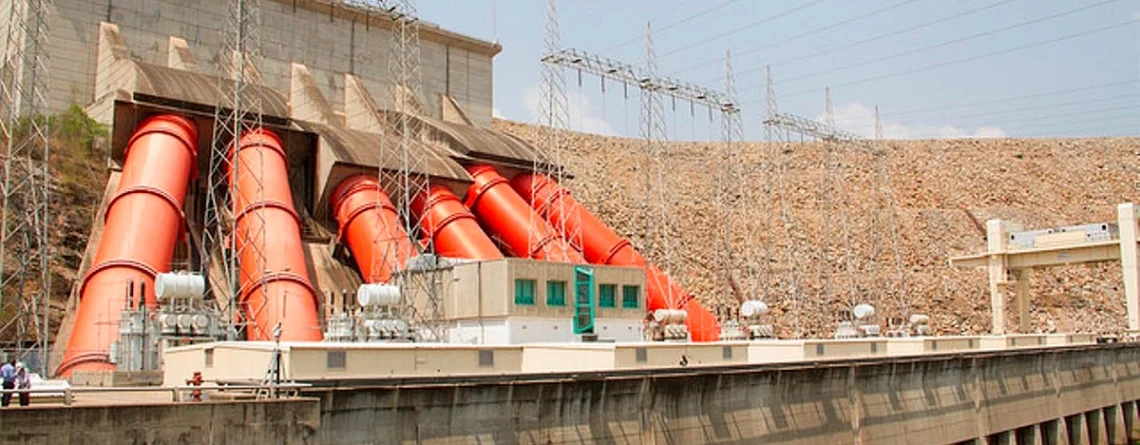
Sixty-five years later, the VRA is a study in complexity. It is a hydro generator—operating the 1,000MW Akosombo Dam and the 160MW Kpong facility—but it has also become a major thermal player, with Takoradi, Tema, and Kpone gas-fired plants diversifying its portfolio . It is a transmission and distribution entity (operating the NEDCo subsidiary serving 64% of Ghana‘s landmass) . It has even ventured into renewable energy, with solar plants in Navrongo, Kaleo, and Lawra .
📢 GET A DETAILED ARTICLES + JOBS
Join ASJ's WhatsApp Channel and never miss a post or opportunity.

Yet, for all its technical and infrastructural might, the VRA is a company in crisis. Energy Minister John Jinapor, inaugurating a new governing board in June 2025, candidly admitted that the “fortunes of VRA have stagnated and dwindled over the years as a result of government policies” . The Authority‘s financial strain is manifest in a $626 million debt to the Ghana National Petroleum Corporation (GNPC) as of mid-2024—accumulated because the VRA could not pay for the gas to run its own thermal plants .
The contradictions are deepening. In 2026, Parliament‘s Energy Committee interrogated VRA management over delays in a 1,200MW thermal expansion . Simultaneously, the Authority is studying a plan to transform Akosombo into a giant “power battery” to store solar energy . Meanwhile, the Senior Staff Association of VRA has railed against the government‘s proposed privatisation of NEDCo, calling it a “disguised privatisation” that would worsen the utility’s operational challenges .

For policymakers, energy sector analysts, and investors, the VRA represents a case study in state-owned enterprise dysfunction—an institution with world-class assets and technical expertise hobbled by political interference, legacy debt, and a distribution monopoly (ECG) that cannot pay its bills. This profile examines the VRA‘s vast generation fleet, its thermal expansion plans, the Akosombo “battery” innovation, the NEDCo privatisation controversy, the 2025 board overhaul, and the critical question: Can a new board and an ambitious CEO salvage an institution whose “dwindling fortunes” are now a matter of public record?
Company Overview: 65 Years of Powering Ghana
The 1961 Act and the Nkrumah Vision
The Volta River Authority was established by the Volta River Development Act, 1961 (Act 46) . Its original mandate was singular: construct the Akosombo Dam, generate hydroelectric power, and transmit it to the Volta Aluminium Company (VALCO) smelter at Tema. The project was a triumph of post-independence engineering, funded through a complex arrangement involving the World Bank, the United States, and the UK.
Over the decades, the VRA‘s mandate expanded dramatically. It now encompasses:
-
Hydroelectric generation (Akosombo, Kpong)
-
Thermal generation (Takoradi, Tema, Kpone)
-
Transmission (through GRIDCo, formerly part of VRA)
-
Distribution (through its subsidiary, NEDCo)
-
Renewable energy development (solar, wind)
-
Non-power activities (hotels, farms, transport, real estate)
Governance: The New Board (June 2025)
On June 23, 2025, Energy Minister John Jinapor inaugurated a new governing board, tasking it with “improving VRA‘s operations, optimising hydro and thermal assets, and firmly anchoring renewable initiatives” .
The New Governing Board:
| Name | Position |
|---|---|
| Ing. Jabesh Amissah-Arthur | Chairman |
| Ing. Edward Ekow Obeng-Kenzo | Acting Chief Executive |
| Dr. Lawrence Ofosu Adjare | Member |
| Hon. Collins Dauda | Member |
| Hon. Fred Kwesi Agbenyo | Member |
| Lawyer Wonder Victor Kutor | Member |
| Awulai Attibrukusu III | Member |
| Lawyer Peggy Addo | Member |
The Chairman, Ing. Jabesh Amissah-Arthur, acknowledged the severity of the challenge, pledging to “salvage the dwindling fortunes of VRA” and provide “strategic guidance and direction to bring VRA back as the lead power generator in the sub-region and Africa” .
Leadership: Ing. Edward Ekow Obeng-Kenzo
Ing. Edward Ekow Obeng-Kenzo serves as the Acting Chief Executive of the VRA . He is an engineer by training, as indicated by the “Ing.“ title.
Obeng-Kenzo has been the public face of the VRA‘s strategic initiatives, including:
-
The 1,200MW thermal expansion project
-
The Akosombo “power battery” feasibility study
-
Engagement with Parliament‘s Energy Committee on the Authority‘s preparedness
He has assured the government that the VRA is “fully ready” to execute the thermal expansion, with lands already secured in Ada, Tema, Pone, Nahoma, and Gomoa .

The Generation Fleet: Hydro, Thermal, and Renewables
The VRA‘s generation portfolio is one of the most diversified in West Africa.
Hydro Assets: Akosombo and Kpong
| Asset | Capacity | Comissioned | Significance |
|---|---|---|---|
| Akosombo Dam | 1,000 MW | 1965 | Ghana‘s largest power plant |
| Kpong Dam | 160 MW | 1981 | Downstream of Akosombo |
| Total Hydro | 1,160 MW | — | — |
Dam Integrity and Lifespan Extension:
In September 2025, CEO Obeng-Kenzo disclosed that the Authority carries out “five-year dam assessments with experts from across the world.” Based on the most recent recommendations, the VRA has extended Akosombo‘s lifespan by almost 40 years and Akuse‘s (a smaller facility) by 30 years .
This is a significant technical achievement. Hydroelectric dams are capital-intensive infrastructure; extending their operational life avoids the multi-billion dollar cost of replacement.
Thermal Assets: The Gas-Fired Fleet
To diversify its generation mix and reduce reliance on hydrology (which is vulnerable to droughts), the VRA has invested heavily in thermal generation.
| Station | Location | Type | Status |
|---|---|---|---|
| Takoradi Thermal Power Station (TTPS) | Takoradi | Gas/steam | Operational |
| Tema Thermal Power Complex (TT1PC) | Tema | Gas | Operational |
| Kpone Thermal Power Station | Kpone | Gas | Operational |
| Takoradi 3 (T3) | Takoradi | Gas | Under restoration |
The T3 Restoration (132 MW):
Parliament‘s Energy Committee inspected the T3 plant, which is expected to add 132MW to the national grid. Initially scheduled for restoration by September 2025, the VRA now projects November 2027 for the procurement of all required equipment . This significant delay is a point of concern for parliamentarians.
Renewables: Solar and Wind
The VRA has operational solar plants in:
-
Navrongo Solar Power Plant
-
Lawra Solar Power Plant
-
Kaleo Solar Power Plant
It is also exploring wind energy potential .
The Thermal Expansion: 1,200 MW (2027-2028)
The most significant addition to the VRA‘s portfolio will be a massive 1,200 MW thermal expansion using natural gas from the Jubilee partners .
Key Details:

| Detail | Information |
|---|---|
| Capacity | 1,200 MW |
| Fuel | Natural gas (Jubilee partners) |
| Land acquisition | Ada, Tema, Pone, Nahoma, Gomoa |
| Initial simple cycle operations | End of 2027 |
| Full combined cycle operations | End of 2028 |
Parliamentary Oversight:
Committee Chairman Emmanuel Kwasi Bedzrah stressed the need for accountability, stating that Parliament “will continue to exercise its oversight responsibility to ensure the Authority delivers on the planned expansion” .
CEO Obeng-Kenzo assured the Committee that the VRA is “fully ready” and that the Sector Minister has given the go-ahead to install three power plants—in Tema, Kumasi, and likely Gomoa .
The Akosombo “Battery” Transformation: A Grid-Scale Storage Innovation
In September 2025, the VRA announced a feasibility study into converting the Akosombo Dam into a massive power battery reserve .
The Technical Rationale
As Ghana transitions to renewable energy—solar and wind—the intermittency of these sources presents a challenge. Solar generates during the day but falls off sharply in the evening, coinciding with peak household demand.
CEO Obeng-Kenzo explained:
“When you run them during the daytime, in the evenings, they are off. So, what we want to do is use Akosombo as a battery because, when you use a normal battery for a renewable, the cost goes very, very high. During the daytime when the solar is running, we‘ll preserve the water in our Akosombo, and in the evening we‘ll bring our Akosombo on board so that it acts as a battery and saves the country” .
How It Works
| Time of Day | Action |
|---|---|
| Daytime (solar active) | Preserve water in Akosombo reservoir; reduce hydro generation |
| Evening (solar inactive) | Release stored water; increase hydro generation to meet peak demand |
This effectively transforms the reservoir into a giant gravitational battery, storing the equivalent of solar energy as potential water head.
Regional Ambition
Obeng-Kenzo noted the broader potential:
“When we‘re able to do that once, we can do it for the whole West Africa because we have a huge water resource” .
This aligns with the Economic Community of West African States (ECOWAS) vision for a regional electricity market. If the VRA can optimise Akosombo as a grid-scale battery, it could export energy storage services to neighbouring countries.
Status
The initiative is currently at the feasibility study stage . No completion date has been announced.
The Karpowership Alternative
The need for flexible, dispatchable power is urgent. In 2025, the government was debating the renewal of a contract with Karpowership, the Turkish company operating floating power plants off the coast of Tema. The VRA‘s hydro battery concept offers a domestically-owned, renewable-based alternative to imported floating gas plants.
The Financial Crisis: $600 Million in Debt and “Dwindling Fortunes”
The VRA‘s technical capabilities mask a severe financial crisis. The Authority is caught in a classic utility trap: it generates power efficiently, but its primary customers—the Electricity Company of Ghana (ECG) and NEDCo—cannot pay their bills.
The GNPC Debt: $626 Million
The most glaring indicator of the VRA‘s financial distress is its debt to the Ghana National Petroleum Corporation (GNPC). As of June 30, 2024, the VRA owed GNPC over $626 million .
Why this matters:
-
GNPC supplies the natural gas that powers the VRA‘s thermal plants.
-
The VRA cannot pay for the gas because ECG and NEDCo have not paid for the power.
-
GNPC, in turn, owes the government and its own suppliers.
This cascade of arrears is a structural feature of Ghana‘s energy sector.
Limited Cash Flow and Mounting Debt
The TIG Post analysis notes that the VRA is “confronted with significant challenges such as increasing debt, limited cash flow, and the need for improved operational efficiency” .
Contributing factors:
-
Delayed remittances from power distributors (ECG, NEDCo)
-
Costly and inefficient power purchase deals
-
Surging operational expenses
-
Government policies that have constrained the VRA‘s ability to set tariffs at cost-reflective levels
The 2023 Akosombo Spillage Crisis
The VRA also suffered a severe reputational blow following the 2023 Akosombo Dam spillage .
| Impact Metric | Value |
|---|---|
| Duration | Mid-September to over six weeks |
| Residents displaced | Approximately 38,624 |
| Homes destroyed | Nearly 1,247 |
| Schools destroyed | 94 |
| Health facilities destroyed | 17 |
| Agricultural losses | Estimated $78 million |
The spillage, necessitated by rising reservoir levels, wreaked havoc on communities in the North, Central, and South Tongu, Ada, and Kpong districts. A five-member committee, tasked by President Mahama to investigate the disaster, concluded that poor preparedness and communication by the VRA, NADMO, and local authorities intensified the devastation .
This crisis exposed governance gaps in the VRA‘s stakeholder engagement—an area explicitly flagged by the Energy Minister when inaugurating the new board .
The NEDCo Privatisation Controversy (June 2026)
The most recent controversy engulfing the VRA concerns the government‘s proposed private sector participation (PSP) in NEDCo, the VRA‘s distribution subsidiary .
The Scale of NEDCo
NEDCo operates under exceptionally difficult conditions: non-cost-reflective tariffs, extensive rural networks, a high proportion of lifeline consumers, ageing infrastructure, and foreign exchange pressures.
The Staff Association‘s Petition
The Senior Staff Association of VRA has vehemently opposed the PSP, describing it as a “disguised privatisation” that would hand over electricity distribution, billing, revenue collection, network maintenance, and customer service to private operators .
The staff groups argued in a petition to the Energy Minister that the proposal contradicts President Mahama‘s stated position that the government has no intention of privatising state-owned distribution companies .
Key concerns raised by the association:
-
Loss of public ownership of a strategic asset
-
Risk of job losses for VRA and NEDCo staff
-
Reduced accountability to citizens
-
Potential for private operators to prioritise profit over universal access
The association‘s demands:
-
Immediate suspension of the PSP process
-
Broad stakeholder consultations involving government, management, and organised labour
-
Tariff rationalisation
-
Increased public investment in electricity infrastructure
-
A clear policy framework to preserve electricity distribution as a strategic public service
Government‘s Position
As of June 2026, the government has not publicly responded to the staff association‘s petition. The PSP proposal remains under consideration.
The standoff echoes similar tensions in the power sector across Africa, where governments seeking to attract private capital for distressed utilities face fierce opposition from labour unions.
Governance and Strategic Direction: The Jinapor Mandate
The 2025 Board Inauguration
Energy Minister John Jinapor‘s address to the new board was unusually candid . He stated that “the fortunes of VRA have stagnated and dwindled over the years as a result of government policies“ .
The Minister‘s strategic priorities for the board:
-
Operational revitalisation
-
Accelerated green transition
-
Human capital and local capacity
-
Public and stakeholder engagement
The Board Chairman‘s Pledge
Chairman Ing. Jabesh Amissah-Arthur acknowledged the scale of the task, pledging to:
-
Salvage the VRA‘s dwindling fortunes
-
Provide strategic guidance and direction
-
Bring VRA back as the lead power generator in the sub-region and Africa
The “Lead Institution” Mandate
Jinapor was explicit: “VRA must work to be the lead institution when it comes to power generation“ . This mandate implicitly demotes the private independent power producers (IPPs)—like Karpowership, Cenpower, and others—that have captured significant generation market share over the past decade.
Whether the VRA can reclaim its leadership position depends on:
-
The successful thermal expansion (1,200MW)
-
Resolution of the debt crisis
-
Successful integration of the Akosombo “battery” concept
-
Improved relations with labour unions regarding NEDCo
The 2026 Agenda: Thermal Expansion, Battery Study, and the Debt Crisis
As of June 2026, the VRA is executing a three-pronged strategy: thermal expansion, hydro modernisation, and financial restructuring.
The Immediate Agenda (2026-2028)
-
Thermal Expansion (1,200MW):
-
Secure financing and complete procurement
-
Initial simple cycle operations by end of 2027
-
Full combined cycle operations by end of 2028
-
-
T3 Restoration (132MW):
-
Procure required equipment by November 2027
-
-
Akosombo Battery Feasibility Study:
-
Complete study; develop implementation plan
-
Scale to regional storage market
-
-
Debt Resolution:
-
Negotiate restructuring of the $626 million GNPC debt
-
Improve cash flow through tariff adjustments or government support
-
-
NEDCo Resolution:
-
Engage with staff associations on the PSP proposal
-
Clarify government policy on distribution privatisation
-
The Bull Case (Optimistic)
-
Thermal Expansion Executed on Schedule: The 1,200MW plants are completed by end-2028. The VRA reclaims its position as the dominant generator, displacing expensive IPP power.
-
Akosombo Battery Proves Feasible: The hydro battery concept works. The VRA offers grid-storage services to renewable IPPs, creating a new revenue stream.
-
Debt Restructured: The government guarantees the VRA‘s GNPC debt or provides a bailout. Cash flow normalises. The VRA invests in maintenance and expansion.
-
NEDCo Resolution: A compromise is reached. Private participation is limited to technical management, not ownership. Staff concerns are addressed.
-
Board Leadership Succeeds: Chairman Amissah-Arthur and CEO Obeng-Kenzo deliver on their mandate. The VRA‘s “dwindling fortunes” are reversed.
The Bear Case (Pessimistic)
-
Thermal Expansion Delayed: Financing difficulties or procurement delays push the 1,200MW plants to 2030 or beyond. IPPs capture the new capacity, entrenching their market position.
-
Akosombo Battery Proves Infeasible: Engineering studies reveal technical or cost constraints. The concept is abandoned.
-
Debt Crisis Worsens: GNPC demands payment. The VRA defaults. Suppliers cut off gas. Thermal plants shut down. Load shedding returns.
-
NEDCo Privatisation Leads to Strike: The government proceeds with PSP without staff consent. Workers strike. NEDCo operations are disrupted. The VRA is further destabilised.
-
Another Spillage Crisis: Poor rainfall management or communication failures lead to another flooding disaster. The VRA suffers another reputational blow.
The Verdict
The Volta River Authority is the most important—and most troubled—state-owned enterprise in Ghana‘s energy sector. Its generation fleet is impressive: 1,160MW of hydro, a growing thermal capacity, and solar plants in the north. Its engineers are world-class, having extended Akosombo‘s lifespan by 40 years and pioneered the concept of a hydroelectric “battery” . Its ambition is clear: 1,200MW of new thermal capacity by 2028 .
Yet, the Authority is teetering on the edge of a financial abyss. A $626 million debt to GNPC, accumulated because ECG and NEDCo cannot pay their bills, is the most glaring symptom of a structural dysfunction . The 2023 spillage crisis exposed governance gaps that the new board has been explicitly tasked to address . And the proposed privatisation of NEDCo has alienated the VRA‘s own staff, who warn of a “disguised privatisation” that could derail operations .
The new board, inaugurated in June 2025, has its work cut out. Chairman Amissah-Arthur‘s pledge to “salvage the dwindling fortunes of VRA” is not hyperbole; it is an accurate description of the task . CEO Obeng-Kenzo has demonstrated technical vision—the Akosombo battery concept is genuinely innovative—but he must also navigate the political economy of thermal expansion and the financial minefield of sector arrears.
For the Ghanaian consumer, the VRA‘s health directly affects electricity reliability and tariffs. A healthy VRA means stable power. A distressed VRA leads to load shedding and price hikes.
For the Ghanaian economy, the VRA is too big to fail. If the Authority collapses, the entire energy sector—and with it, industrial production, mining, and services—would be paralysed.
For policymakers, the VRA‘s predicament is a test of governance. The Authority has the technical expertise. It has the assets. What it lacks is a financially viable off-taker and a government willing to enforce payment discipline.
The VRA is not trying to be the most profitable generator in Ghana—it is a state-owned enterprise, not a private firm. It is trying to be the most reliable. With a 65-year legacy, a world-class workforce, and a new board committed to reform, it has the potential to succeed. But without a resolution to the debt crisis—and without clarity on NEDCo‘s future—the VRA‘s “dwindling fortunes” may continue to dwindle.
Last Updated on June 3, 2026 by Samuel Kwame Boadu
Disclaimer: Some content on Accra Street Journal may be aggregated, summarized, or edited from third-party sources for informational purposes. Images and media are used under fair use or royalty-free licenses. Accra Street Journal is a subsidiary of SamBoad Publishing Hub under SamBoad Business Group Ltd, registered in Ghana since 2014.
For concerns or inquiries, please visit our Privacy Policy or Contact Page.

Samuel Kwame Boadu is a Ghanaian media entrepreneur and storyteller with a passion for amplifying urban voices and uncovering everyday truths. He is the Editor-in-Chief and Founder of Accra Street Journal, a dynamic digital platform dedicated to capturing the pulse of Ghana’s capital—its people, culture, challenges, business, sports and innovations.