










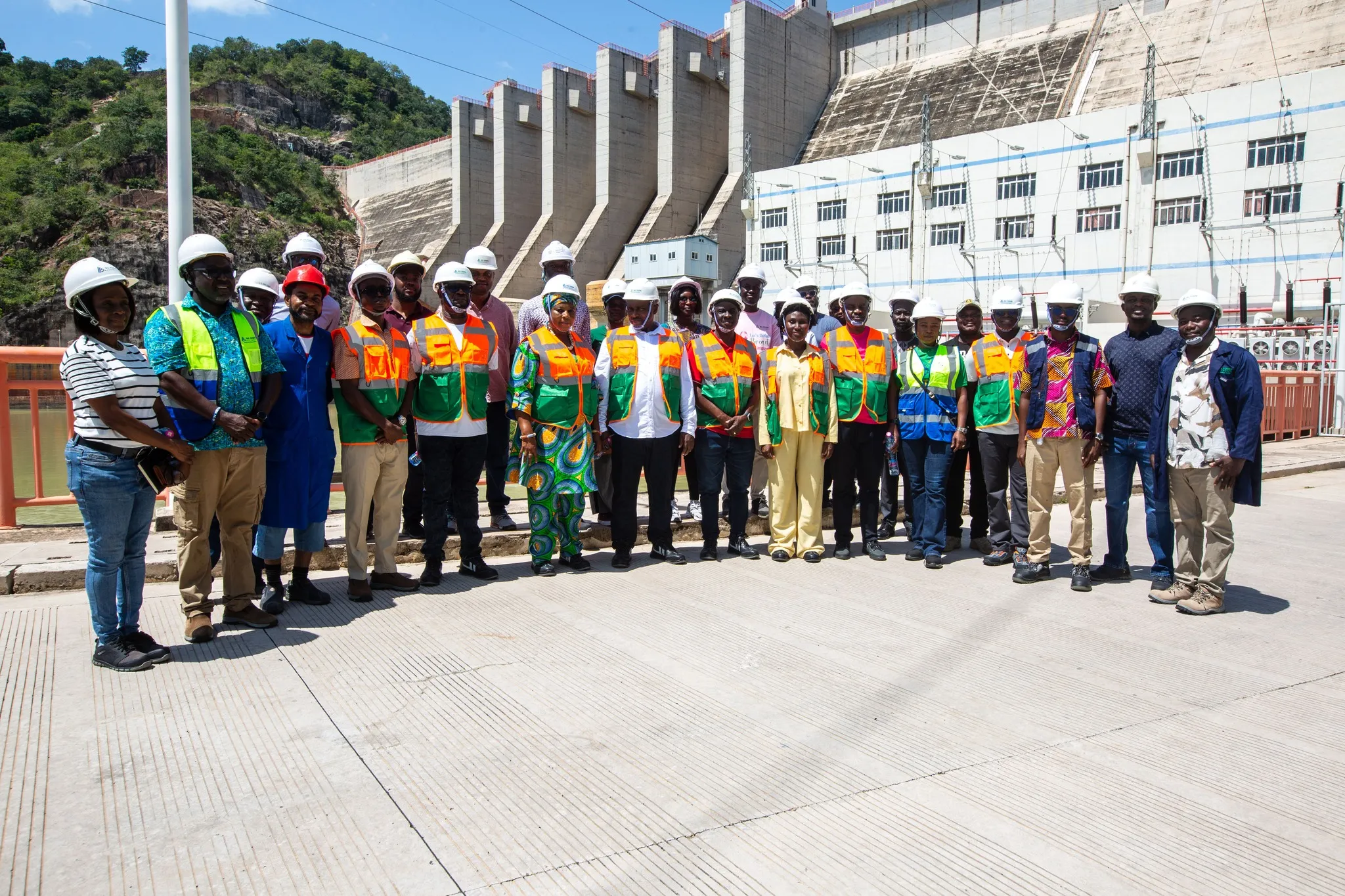
With a 404MW hydro asset on the Black Volta, a pioneering 5MW floating solar installation, a growing portfolio of utility-scale PV plants, and a 2024 net profit of $64.5 million that nearly doubled its target, the state-owned power generator has established itself as the most agile player in Ghana‘s energy transition. Yet, the same financial statements reveal a haunting contradiction: a $1.2 billion accounts receivable pile, dwarfing annual revenue, as the Electricity Company of Ghana‘s mounting debt threatens to turn a crown jewel into a liquidity trap.
Executive Introduction
In the hierarchy of Ghana‘s state-owned enterprises, few assets carry the strategic weight of the Bui Power Authority (BPA). Established by an Act of Parliament in 2007 (Act 740) to develop the Bui Hydroelectric Project, the Authority has since evolved far beyond its original mandate. A 2020 amendment (Act 1046) transformed BPA into a multi-technology renewable energy developer, tasked with harnessing solar, wind, and other clean energy sources to diversify the nation‘s generation mix.

The Authority manages a 404MW hydroelectric dam on the Black Volta River—Ghana‘s second-largest hydropower facility after Akosombo. The dam, a cavernous concrete structure straddling the Savannah and Bono Regions, holds back a reservoir with a surface elevation that fluctuates between 168 and 183 metres above sea level, its live levels accessible to the public via real-time monitoring .
📢 GET A DETAILED ARTICLES + JOBS
Join ASJ's WhatsApp Channel and never miss a post or opportunity.

But BPA is no longer solely a hydro player. It is Ghana‘s most active public developer of utility-scale solar energy. The Authority has deployed a 5MW floating solar array on the Black Volta reservoir—the first of its kind in the country—with plans to scale it to 65MW . A 40MW land-based plant in the Bono Region is operational . And the crown jewel of its solar ambitions is the 50MW Galgu Solar Plant in Yendi, Northern Region, a $59 million facility built in partnership with First Sky Limited .
Yet, for all its operational and technical achievements, BPA navigates a treacherous financial environment. The Authority reported a net profit of $64.5 million in 2024, nearly doubling its $33.6 million target . Total assets climbed 9.2% to $765.2 million . The hydro plant achieved a 93% availability factor and a 99.07% starting reliability . This is a story of disciplined maintenance, strategic foresight, and a successful pivot toward a hybrid energy future.

But the 2024 financial statements also reveal a brutal reality. Accounts receivable surged to over $1.2 billion, up from $860 million the previous year . This figure dwarfs the Authority‘s annual revenue of $139.7 million . The primary culprit is the Electricity Company of Ghana (ECG), which owes BPA vast sums for power dispatched but not paid for. As BPA‘s Board Chairman, Ambassador Kwadwo Nyamekye-Marfo, has warned, this liquidity crisis constrains the Authority‘s ability to procure spare parts, execute capital projects, and service loans linked to the hydro project .
For policymakers, energy sector analysts, and investors, Bui Power Authority represents a paradox: a technically excellent, strategically visionary generator trapped by the structural dysfunction of the sector‘s distribution monopoly.
This ASJ profile examines BPA‘s hydro and solar infrastructure, its 2024 financial performance (the $64.5 million profit and the $1.2 billion receivables), its environmental challenges (illegal mining, unsustainable farming, bushfires), its community engagement (the Bui-Kunuto Education Fund), its leadership under Acting CEO Ing. Kow Eduakwa Sam, and the critical question: Can a generator as efficient as BPA survive the liquidity trap created by the off-taker it is mandated to supply?
Company Overview: The Legislative Mandate
The 2007 Act: Hydro Development
The Bui Power Authority was established by the Bui Power Authority Act, 2007 (Act 740) . The initial mandate was singular: develop a hydroelectric power project on the Black Volta River at Bui and any other potential hydroelectric power sites on that river .
The Act created BPA as a state-owned enterprise, reporting to the Ministry of Energy and Green Transition. The project was conceived as a cornerstone of Ghana‘s energy security, reducing reliance on thermal generation (which depends on imported gas) and stabilising the national grid.
The Bui Dam was completed in 2013, adding 404MW of capacity to the national grid. The reservoir, with a normal operating range of 168.00 to 183.00 metres above sea level , supports irrigation, fishing, and tourism, creating an economic ecosystem in the surrounding communities.
The 2020 Amendment: The Renewables Mandate
The Bui Power Authority Amendment Act, 2020 (Act 1046) fundamentally transformed BPA‘s mission. The Authority was empowered to develop, manage, and operate renewable energy and other clean energy alternatives in the country .
This legislative change enabled BPA to diversify beyond hydropower. The Authority is now authorised to develop:
-
Solar PV plants (utility-scale and floating)
-
Wind energy projects
-
Waste-to-energy facilities
-
Battery storage systems
-
Hybrid hydro-solar systems
The amendment positions BPA as the state‘s primary vehicle for achieving Ghana‘s renewable energy targets—7% of the energy mix by 2027, up from approximately 5% currently .

Leadership
Ing. Kow Eduakwa Sam – Acting Chief Executive Officer
Ing. Sam serves as the Acting CEO of the Bui Power Authority . He has been the public face of BPA‘s financial reporting and strategic planning, presenting the 2024 results at the Authority‘s annual general meeting. His background is technical, as indicated by the “Ing.“ title (short for Engineer), which aligns with BPA‘s engineering-focused mission.
Board of Directors
| Name | Position |
|---|---|
| Ambassador Kwadwo Nyamekye-Marfo | Board Chairman |
| Hon. Yao Gomado | Board Member |
| Other members | Not specified |
At the 2024 AGM, Ambassador Nyamekye-Marfo‘s address was delivered on his behalf by Hon. Yao Gomado .
The Hydro Asset: The Bui Dam
The Bui Dam is the anchor of BPA‘s generation portfolio. It remains one of the largest infrastructure projects undertaken in Ghana since independence.
Technical Specifications
| Metric | Value |
|---|---|
| Installed Capacity | 404 MW |
| Reservoir Normal Range | 168.00 – 183.00 masl |
| Current Level (April 2026) | 169.24 masl |
| 24-Hour Change | -0.13 masl |
The reservoir level is publicly accessible via BPA‘s website, refreshing automatically for operational visibility . This transparency is unusual for a state-owned utility and signals a commitment to stakeholder engagement.
2024 Performance
| Metric | Value | Target / Context |
|---|---|---|
| Hydro Generation Share | 94.4% of total generation | 1,348 GWh total |
| Plant Availability Factor | 93% | Exceeds many thermal plants |
| Starting Reliability | 99.07% | Near-perfect grid stability |
Sources:
These metrics indicate exceptional operational discipline. A 93% availability factor means the plant was available to generate power 93% of the time, accounting only for planned maintenance and unplanned outages. A 99.07% starting reliability means that when dispatched, the plant successfully synchronised with the grid almost every time—critical for grid stability.
Maintenance Regime
According to Acting CEO Ing. Sam:
“Preventive, corrective and predictive maintenance activities were systematically executed to optimise performance and minimise the risk of unplanned outages.”
The Authority implemented a “proactive and well-structured maintenance regime“ that enabled the plant to achieve its reliability metrics .
Environmental Threats
The Bui Dam faces several environmental challenges:

-
Illegal mining (galamsey): Unauthorised gold mining in the catchment area threatens water quality and can damage turbines.
-
Unsustainable farming practices: Agricultural runoff and soil erosion affect reservoir sedimentation.
-
Bushfires: Seasonal fires in the dry season damage vegetation and increase runoff risks.
These threats require ongoing mitigation efforts and coordination with local authorities.
The Renewables Portfolio: Ghana‘s Most Active Public Developer
BPA has become the most active public developer in Ghana‘s solar expansion .
Floating Solar (5MW Operational, 65MW Planned)
BPA‘s floating solar installation on the Black Volta River is the first of its kind in Ghana. With a current capacity of 5MW, it is already operational, generating power directly on the reservoir surface.
Strategic Rationale:
-
Land conservation: Using reservoir space avoids land acquisition conflicts.
-
Efficiency gains: The cooling effect of water improves solar panel efficiency.
-
Hydro-solar hybridisation: Combining hydro and solar smooths generation profiles, as solar peaks during dry seasons when hydro may be constrained.
Plans are in place to scale the floating solar facility to 65MW .
Land-Based Solar Plants
| Plant | Capacity | Status | Region |
|---|---|---|---|
| Bono Region plant | 40MW | Operational | Bono |
| 100MW solar PV project | 100MW | Under execution (3% complete as of Sept 2025) | — |
| 50MW solar PV project | 50MW | Under execution (3% complete as of Sept 2025) | — |
The 100MW and 50MW projects represent BPA‘s commitment to scaling solar capacity significantly.
The Galgu Solar Plant, Yendi (50MW)
The most significant addition is the 50MW Galgu Solar Plant in Yendi, Northern Region.
| Detail | Information |
|---|---|
| Capacity | 50MW |
| Location | Yendi, Northern Region |
| Developer | Bui Power Authority and First Sky Limited |
| Cost | $59 million |
| Model | Engineering, Procurement, Construction, and Financing (EPC+F) |
| Status | Feeds directly into the national grid |
The Galgu plant is a landmark project, bringing utility-scale solar to the Northern Region. The EPC+F model—where the contractor provides financing—allowed BPA to develop the facility without immediate capital outlay.
Future Pipeline (2026–2028)
By the close of 2025, BPA intends to complete all ongoing solar projects . Between 2026 and 2028, the Authority plans to commence development of 300–500MW of solar PV capacity with battery storage systems .
This ambitious pipeline would more than double Ghana‘s current utility-scale solar capacity (approximately 280MW nationwide) .
The Tsatsadu Micro Hydro Plant
BPA also operates the Tsatsadu Micro Hydro Plant, which contributes a small fraction of total generation (the remainder after hydro and solar) .
The 2024 Financial Performance: Profitability and the Receivables Crisis
The 2024 financial results, presented at the AGM on August 29, 2025, tell two opposing stories.
The Good: Profitability and Operational Excellence
| Metric | 2024 Value | Target | Variance |
|---|---|---|---|
| Net Profit | $64.5 million | $33.6 million | +92% |
| Total Revenue | $139.7 million | $139.5 million | Slightly above |
| Total Assets | $765.2 million | — | +9.2% |
| Net Worth | $765.2 million | — | +9.2% |
| Generation | 1,348 GWh | 1,333 GWh | +1.01% |
The net profit of $64.5 million nearly doubled its target . This profitability was achieved despite a revenue decline of 11.1% from the previous year , reflecting disciplined cost management and the non-incurrence of certain administrative costs due to liquidity constraints .
Key Drivers of Profitability:
-
Prudent working capital management: Effective cash flow management, despite the receivables crisis.
-
Cost control: Administrative costs were reduced where possible.
-
Hydro-solar hybrid strategy: Diversification reduced exposure to hydrological variability.
The Bad: The $1.2 Billion Receivables Crisis
The same financial statements reveal a staggering liability:
| Metric | 2024 Value | 2023 Value | Change |
|---|---|---|---|
| Accounts Receivable | $1.2 billion | $860 million | +40% |
| Annual Revenue | $139.7 million | — | — |
| Receivables / Revenue Ratio | 8.6x | — | — |
The accounts receivable of $1.2 billion is almost nine times BPA‘s annual revenue . This means that BPA is owed nearly nine years‘ worth of sales.
The primary off-taker is the Electricity Company of Ghana (ECG) . Acting CEO Ing. Sam attributed the surge to “delays in payments by key customers“ . While sales amounted to $1.2 billion, only $377 million was received .
The Consequence:
Board Chairman Ambassador Nyamekye-Marfo has warned that the arrears have constrained BPA‘s ability to:
-
Procure essential spare parts for the hydro plant
-
Execute capital projects (including the planned 300-500MW solar expansion)
-
Service loans linked to the Bui Hydroelectric Project
This is the paradox of BPA: a profitable, technically excellent generator that is being starved of cash by the very off-taker it is mandated to serve.
The Liquidity Paradox Explained
| Metric | Indicator |
|---|---|
| Profitability | Strong ($64.5 million net profit) |
| Cash Flow | Weak (only $377 million received on $1.2 billion sales) |
| Effect | BPA cannot invest, maintain, or expand adequately |
The Board‘s warning about liquidity constraints suggests that despite the reported profit, BPA is effectively cash-poor. This limits its ability to pay suppliers, invest in new projects, and—critically—pay dividends to the government.
The Dividend Question
The State Interests and Governance Authority (SIGA) has called on BPA to commence dividend payments to the Government of Ghana by the close of the 2025 financial year .
Millicent Atuguba, SIGA‘s General Manager of Operations, stated:
“Commercial entities like BPA must no longer be perceived as a burden but rather a vital economic asset that drives Ghana‘s socio-economic development... Our expectations of BPA are straightforward: to be efficient, profitable, and to pay dividends to the Government of Ghana.”
Whether BPA can pay a dividend while managing a $1.2 billion receivable crisis remains uncertain. The Authority‘s liquidity position, not its profitability, will be the determining factor.
The Operational Metrics: Availability, Reliability, and Efficiency
Plant Availability Factor: 93%
The plant availability factor measures the percentage of time the plant was available to generate power (accounting for planned and unplanned outages). A 93% availability factor is strong for a hydro plant, indicating effective maintenance.
Starting Reliability: 99.07%
Starting reliability measures the percentage of times the plant successfully synchronised with the grid when dispatched. A 99.07% rating is exceptional and contributes to grid stability.
Generation Performance
| Source | Share | Notes |
|---|---|---|
| Bui Hydro Plant | 94.4% | Primary generator |
| Bui Solar PV Plant | 5.6% | Growing share |
| Tsatsadu Micro Hydro | Remainder | Small contribution |
Generation slightly exceeded target (1,348 GWh vs 1,333 GWh) .
The Stakeholder Mandates: Balancing Multiple Masters
BPA operates at the intersection of several demanding stakeholders.
The Ministry of Energy and Green Transition
The Ministry is BPA‘s line ministry. The Minister, John Abdulai Jinapor, has praised BPA for its crucial role in maintaining power supply reliability, especially during periods of high demand .
“During the recent upgrade by ENI to increase gas supply, one of the reasons we maintained an uninterrupted power supply was due to your strategic operations.”
The Deputy Minister, Richard Gyan-Mensah, has called for diversification beyond solar into hydro (run-of-river projects on the Tano, Pra and Cobra rivers), wind, and waste-to-energy .
SIGA (State Interests and Governance Authority)
SIGA oversees the performance of state-owned enterprises. The Authority has called for:
-
Increased efficiency
-
Profitability
-
Dividend payments to the government (by end of 2025)
SIGA‘s General Manager of Operations, Millicent Atuguba, stated that BPA should no longer be perceived as a “burden” but rather as an “economic asset.”
The Electricity Company of Ghana (ECG)
ECG is BPA‘s primary off-taker—the customer that buys the power BPA generates. However, ECG‘s inability to pay its bills on time has created the $1.2 billion receivable crisis.
This relationship is fraught with tension. BPA cannot simply stop supplying power to ECG; it is mandated to generate and dispatch power to maintain grid stability. Yet, ECG‘s arrears are starving BPA of the cash it needs to operate.
The Ministry of Finance and SIGA
The Ministry of Finance and SIGA are working with the Energy Ministry to address the liquidity constraints faced by BPA . This may involve:
-
Restructuring BPA‘s debt
-
Facilitating government payments to ECG, which then flow to BPA
-
Re-negotiating power purchase agreements
Community Engagement and CSR
The Bui-Kunuto Education Fund
In January 2026, BPA supported the Bui-Kunuto Education Fund, an initiative by the Overlord of the Gonja Traditional Area, Yagbonwura Bii-Kunuto Jewu Soale I, aimed at improving access to education for young people in the Savannah Region .
The BPA Scholarship Scheme
Since 2019, BPA has run a scholarship scheme for students from the Bui enclave (Banda, Jama, Bole, and North Mo traditional areas) .
| Metric | Value |
|---|---|
| Total beneficiaries to date | 84+ |
| Tertiary completions | 17 |
| Fields of study | Information Technology, Nursing, Engineering |
| 2025/2026 beneficiaries | 29 (expected) |
| Scholarship coverage | Tuition, accommodation, stipend, one-off laptop |
The scholarship committee includes chiefs and opinion leaders from the four traditional areas, ensuring community ownership of the programme .
Employment and Local Development
BPA‘s operations provide direct employment for engineers, technicians, and administrative staff at the dam site and head office. The Authority also supports local businesses through procurement and service contracts.
The Regulatory and Environmental Context
The EPC+F Model
BPA has deepened partnerships with private sector actors to advance new energy infrastructure development through Engineering, Procurement and Construction – Finance (EPC+F) models . The Galgu Solar Plant ($59 million, First Sky Limited) was developed under this model.
Competitive Procurement Requirements
Under new legislation, all future power purchase agreements (PPAs) must undergo competitive procurement . Deputy Minister Gyan-Mensah emphasised:
“As you expand your generation profile, be guided by government policy for competitive procurement of power, which is crucial to ensuring affordability for consumers and financial sustainability for the sector.”
This policy shift is designed to reduce the cost of power and ensure that new projects are commercially viable.
Environmental Compliance
BPA must manage environmental risks, including:
-
Illegal mining (galamsey): Unauthorised mining threatens water quality and reservoir sedimentation.
-
Unsustainable farming practices: Agricultural runoff affects aquatic ecosystems.
-
Bushfires: Seasonal fires damage vegetation, increase soil erosion, and accelerate sedimentation.
These challenges require coordination with the Environmental Protection Agency (EPA) and local authorities.
Challenges and Risks
No analysis of Bui Power Authority is complete without acknowledging the headwinds it faces.
Risk 1: The Receivables Crisis ($1.2 Billion)
This is BPA‘s most significant risk. If ECG continues to delay payments, BPA will face:
-
Inability to procure spare parts, leading to plant deterioration
-
Inability to service loans, damaging creditworthiness
-
Inability to invest in the 300–500MW solar expansion
-
Potential insolvency despite reported profitability
Risk 2: Hydrological Variability
BPA‘s hydro generation depends on water inflows. In 2024, lower inflows reduced revenue by 11.1% . Climate change could increase the frequency and severity of droughts, affecting generation.
Risk 3: Environmental Degradation
Illegal mining, unsustainable farming, and bushfires threaten the reservoir‘s long-term viability. Sedimentation reduces storage capacity, affecting both hydro generation and water supply for irrigation.
Risk 4: The Dividend Mandate
SIGA requires BPA to pay dividends by the end of 2025 . If BPA is forced to pay dividends despite the receivables crisis, it will further starve the Authority of cash needed for operations.
Risk 5: Solar Tariff Sustainability
Deputy Minister Gyan-Mensah has raised concerns about the sustainability of tariffs from new solar plants . If PPAs are renegotiated to lower tariffs, BPA‘s revenue projections for future solar projects could be affected.
Risk 6: The EPC+F Model Exposure
While the EPC+F model enables BPA to develop projects without upfront capital, it also creates repayment obligations. If ECG arrears prevent BPA from making these payments, the Authority could default.
Risk 7: Flood Risk Management
The reservoir‘s operating range requires careful management. During heavy rainfall, BPA must release water to maintain levels below 183 masl. Uncontrolled releases can cause downstream flooding, creating liabilities and community relations challenges.
Risk 8: Grid Integration of Variable Renewables
Solar generation is variable and non-dispatchable. As BPA adds more solar capacity (300–500MW planned), managing grid stability becomes more complex. Battery storage systems will be essential for integration .
Future Outlook
As of June 2026, BPA is executing a dual strategy: maintain hydro operational excellence while aggressively expanding solar capacity.
The Immediate Agenda (2026-2027)
-
Complete Ongoing Solar Projects: Finalise the 100MW and 50MW solar PV projects (both at 3% completion as of Sept 2025).
-
Scale Floating Solar: Expand the 5MW floating facility to 65MW, leveraging the reservoir‘s surface area.
-
Develop 300-500MW Solar with Battery Storage: Commence development of large-scale solar-plus-storage projects.
-
Address the Receivables Crisis: Work with the Ministry of Finance, SIGA, and ECG to restructure arrears or secure government guarantees.
-
Pay Dividend (if possible): Satisfy SIGA‘s requirement to pay a dividend by the end of 2025 .
The Bull Case (Optimistic)
-
Receivables Crisis Resolved: The government steps in to guarantee ECG‘s arrears or restructures BPA‘s debt. Cash flow normalises. BPA can invest in spare parts, maintenance, and new projects.
-
Solar Expansion Delivers: The 300-500MW solar-plus-storage pipeline is completed on schedule. BPA becomes a major renewable energy generator, reducing Ghana‘s dependence on thermal power.
-
Dividends Paid, Confidence Restored: BPA pays its first dividend to the government. Investor confidence in Ghana‘s energy sector improves. SIGA‘s performance metrics are satisfied.
-
Environmental Threats Mitigated: Government crackdowns on galamsey reduce illegal mining. BPA‘s watershed management programmes succeed.
-
New PPAs at Competitive Tariffs: BPA secures new power purchase agreements through competitive procurement, ensuring affordability while protecting BPA‘s revenue.
The Bear Case (Pessimistic)
-
Receivables Crisis Worsens: ECG‘s arrears continue to accumulate. BPA cannot pay suppliers. Plant reliability deteriorates. SIGA demands dividend payments anyway, creating a cash crisis.
-
Solar Expansion Delayed: Lack of capital (due to receivables) forces BPA to defer the 300-500MW pipeline. Private developers (e.g., First Sky) build the capacity instead, capturing the market.
-
Hydrological Drought: A severe drought reduces water inflows. Hydro generation falls. BPA must purchase expensive thermal power to meet its contractual obligations, reducing profitability.
-
Environmental Degradation Intensifies: Galamsey and sedimentation reduce reservoir capacity. BPA‘s long-term generating potential is permanently impaired.
-
Dividend Forced at the Wrong Time: SIGA compels BPA to pay a dividend despite the receivables crisis. BPA is forced to borrow to pay the dividend, increasing debt and worsening liquidity.
The Verdict
The Bui Power Authority is a tale of two organisations. The first is a technically excellent generator: a 404MW hydro plant achieving 93% availability and 99% starting reliability; a pioneer in floating solar; the most active public developer of utility-scale PV in Ghana; a state-owned enterprise that nearly doubled its profit target in 2024. By these measures, BPA is a crown jewel of Ghana‘s energy sector.
The second BPA is a liquidity trap: a generator owed $1.2 billion by its primary off-taker, the ECG; a company that generated $1.2 billion in sales but received only $377 million; a state-owned enterprise that cannot invest in maintenance, expansion, or loan servicing because its customer refuses to pay. By this measure, BPA is a cautionary tale of sectoral dysfunction.
The conflict between these two realities defines BPA‘s future. The Authority is profitable on paper but cash-poor in practice. It is operationally excellent but financially constrained. It has ambitious expansion plans (300-500MW of solar-plus-storage) but cannot secure the capital to execute them because the ECG‘s arrears have destroyed its creditworthiness .
The government—through the Ministry of Energy and Green Transition, the Ministry of Finance, and SIGA—must intervene. The options are few:
-
Government guarantees: The Treasury guarantees BPA‘s debt or directly pays ECG‘s arrears.
-
Debt restructuring: BPA‘s loans are restructured to reduce service costs.
-
Legal action: The government compels ECG to pay its arrears.
-
Separate BPA‘s generation from ECG‘s distribution: Allow BPA to sell power directly to large industrial customers (disco bypass), bypassing ECG entirely.
Without intervention, the receivables crisis will eventually overwhelm BPA‘s operational excellence. The dam will deteriorate for lack of spare parts. The solar expansion will stall for lack of capital. And a state-owned asset designed to generate wealth for Ghanaians will become exactly what SIGA fears: a burden.
For the Ghanaian energy sector, BPA‘s predicament is a warning. Generation capacity is expanding; renewable energy is growing; but if the distribution monopoly cannot pay its bills, the entire system will seize up. BPA is not the problem—it is the canary in the coal mine.
FAQ SECTION
1. What is the Bui Power Authority?
The Bui Power Authority (BPA) is a state-owned enterprise established by the Bui Power Authority Act, 2007 (Act 740) to develop the Bui Hydroelectric Project. A 2020 amendment (Act 1046) expanded its mandate to include renewable energy development—solar, wind, waste-to-energy, and battery storage.
2. Where is the Bui Dam located?
The Bui Dam is located on the Black Volta River, at the border of the Savannah and Bono Regions of Ghana. The reservoir spans multiple traditional areas, including Banda, Jama, Bole, and North Mo.
3. How much power does the Bui Dam generate?
The Bui Dam has an installed capacity of 404 MW. In 2024, the hydro plant contributed 94.4% of BPA‘s total generation of 1,348 GWh .
4. What is the floating solar project?
BPA operates a 5 MW floating solar installation on the Black Volta reservoir—the first of its kind in Ghana. Plans are underway to scale the facility to 65 MW .
5. What is the Galgu Solar Plant?
The Galgu Solar Plant is a 50 MW utility-scale solar facility in Yendi, Northern Region. It was developed by BPA in partnership with First Sky Limited at a cost of $59 million under an EPC+F (Engineering, Procurement, Construction, and Financing) agreement .
6. How did BPA perform financially in 2024?
BPA reported a net profit of $64.5 million, nearly double its $33.6 million target. Total assets rose to $765.2 million. However, accounts receivable surged to over $1.2 billion—nearly nine times annual revenue—due to delayed payments by ECG .
**7. Why are accounts receivable so high ($1.2 billion)?**
The primary off-taker of BPA‘s power is the Electricity Company of Ghana (ECG), which has accumulated substantial arrears. While BPA recorded $1.2 billion in sales, only $377 million was received .
8. What is the BPA scholarship scheme?
Since 2019, BPA has supported over 84 students from the Bui enclave through a scholarship programme covering tuition, accommodation, stipends, and laptops. Fields of study include IT, Nursing, and Engineering .
9. Who is the Acting CEO of the Bui Power Authority?
The Acting Chief Executive Officer is Ing. Kow Eduakwa Sam, an engineer who presented the 2024 financial results at the Authority‘s AGM .
10. What environmental threats does BPA face?
BPA faces illegal mining (galamsey) in the catchment area, unsustainable farming practices leading to sedimentation, and bushfires during the dry season .
11. What is SIGA‘s expectation for BPA?
SIGA (State Interests and Governance Authority) expects BPA to become more efficient, remain profitable, and—by the close of the 2025 financial year—pay dividends to the Government of Ghana for the first time .
12. How can I monitor the Bui reservoir level?
BPA publishes real-time reservoir level data on its website (buipower.com). As of April 27, 2026, the level was 169.24 masl, within the normal operating range of 168.00 to 183.00 masl .
QUICK FACTS BOX
| Item | Details |
|---|---|
| Established | 2007 (Act 740) |
| Renewables Mandate Added | 2020 (Act 1046) |
| Headquarters | Accra, Ghana |
| Industry | Electricity Generation / Renewable Energy |
| Primary Asset | Bui Dam (404 MW hydro) |
| Total Generation (2024) | 1,348 GWh |
| Hydro Share | 94.4% |
| Plant Availability Factor | 93% |
| Starting Reliability | 99.07% |
| Solar Assets | 5 MW floating, 40 MW land-based, 50 MW Galgu (Yendi) |
| Solar Under Development | 100 MW, 50 MW (3% completion each as of Sept 2025) |
| Planned Solar Pipeline | 300-500 MW with battery storage (2026-2028) |
| Acting CEO | Ing. Kow Eduakwa Sam |
| Board Chairman | Ambassador Kwadwo Nyamekye-Marfo |
| 2024 Net Profit | $64.5 million (+92% vs target) |
| 2024 Revenue | $139.7 million |
| 2024 Total Assets | $765.2 million |
| Accounts Receivable (2024) | $1.2 billion |
| Primary Off-taker | Electricity Company of Ghana (ECG) |
| Receipts vs Sales (2024) | $377 million received on $1.2 billion sales |
| SIGA Dividend Requirement | First dividend payment by end of 2025 |
| Scholarship Beneficiaries | 84+ students from Bui enclave |
| Regulator | Ministry of Energy and Green Transition |
| Oversight Body | State Interests and Governance Authority (SIGA) |
| Website | buipower.com |
Source: Accra Street Journal
Last Updated on June 3, 2026 by Samuel Kwame Boadu
Disclaimer: Some content on Accra Street Journal may be aggregated, summarized, or edited from third-party sources for informational purposes. Images and media are used under fair use or royalty-free licenses. Accra Street Journal is a subsidiary of SamBoad Publishing Hub under SamBoad Business Group Ltd, registered in Ghana since 2014.
For concerns or inquiries, please visit our Privacy Policy or Contact Page.

Samuel Kwame Boadu is a Ghanaian media entrepreneur and storyteller with a passion for amplifying urban voices and uncovering everyday truths. He is the Editor-in-Chief and Founder of Accra Street Journal, a dynamic digital platform dedicated to capturing the pulse of Ghana’s capital—its people, culture, challenges, business, sports and innovations.





