The global economic centre of gravity is shifting, and Africa is increasingly being positioned as one of its biggest beneficiaries, according to leaders at the 29th St. Petersburg International Economic Forum (SPIEF). Russian President Vladimir Putin said BRICS nations—Brazil, Russia, India, China, South Africa, and newer members—now account for nearly 40% of global GDP measured by purchasing power parity and generated 49% of annual global GDP growth over the past five years.
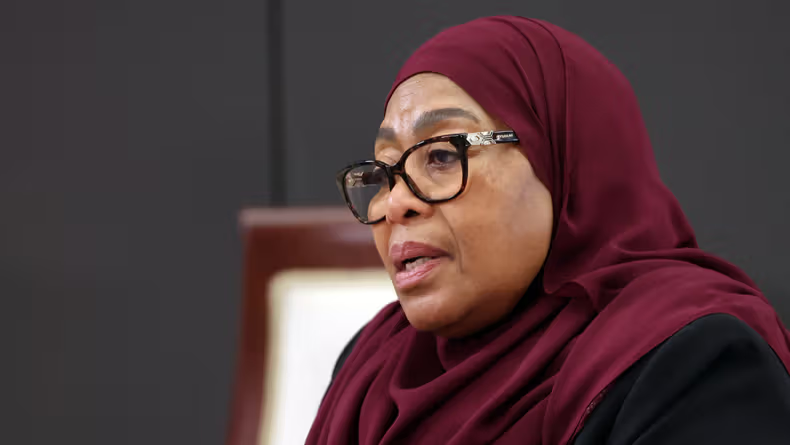
“The focus of global trade, and with it the financial system, will also shift. In fact, it is already shifting,” Putin told delegates, which included Tanzanian President Samia Suluhu Hassan, Uzbek President Shavkat Mirziyoyev, and Chinese Vice President Han Zheng. Putin noted that BRICS countries have more than doubled their share of global merchandise trade since the bloc’s creation, now account for almost a quarter of world exports, and trade among BRICS members has surpassed $1 trillion.

BRICS nations also account for more than one-third of global high-tech exports, reflecting a broader redistribution of technological capabilities beyond traditional Western economies. Tanzanian President Samia Suluhu Hassan said Africa’s demographic and economic trajectory positions it as one of the world’s most important growth regions, noting that by 2050, one in every four people will be African, and nine of the world’s twenty fastest-growing economies will be on the continent.
📢 GET A DETAILED ARTICLES + JOBS
Join ASJ's WhatsApp Channel and never miss a post or opportunity.

Key Developments: BRICS Growth, Trade Expansion, and High-Tech Export Leadership
The BRICS bloc’s economic weight has increased dramatically. From approximately 30% of global GDP a decade ago, the bloc now accounts for nearly 40% measured by PPP. The 49% contribution to global growth over five years means that BRICS countries have been the primary engine of the world economy, outpacing the G7 and other advanced economies.
The trade expansion is equally notable. BRICS countries have more than doubled their share of global merchandise trade. Exports from BRICS nations now account for almost a quarter of the world total. Intra-BRICS trade has surpassed $1 trillion, creating a self-reinforcing economic zone that is less dependent on Western markets.

The high-tech export leadership is perhaps the most significant long-term trend. BRICS nations now account for more than one-third of global high-tech exports. China leads in artificial intelligence patents. India has a strong position in the global software industry. Russia has made advances in digital services, online platforms, and nuclear energy technology. The technological gap between emerging markets and advanced economies is narrowing.
Africa’s role in this shift was highlighted by President Hassan. The continent’s population is growing rapidly; by 2050, one in four people will be African. Nine of the world’s twenty fastest-growing economies will be on the continent. The middle class is expected to exceed one billion people. The African Continental Free Trade Area (AfCFTA) is developing into the world’s largest market by population.
Tanzania’s own investment gains are evidence of the shift. The country attracted $12 billion in foreign direct investment in 2025. Reforms, including a one-stop investment centre and 24-hour online company registration, have positioned Tanzania as one of Africa’s fastest-growing investment destinations. The message is that Africa is no longer merely a destination for investment but is increasingly defining its own development path through frameworks such as the African Union’s Agenda 2063.
The forum also highlighted growing strategic relationships across the Global South. Putin and Uzbek President Mirziyoyev launched construction of a nuclear power plant in Uzbekistan, which became a BRICS partner state in 2025. Mirziyoyev said joint projects between Uzbekistan and Russia now exceed $50 billion, spanning energy, manufacturing, agriculture, logistics, and technology.
The broader theme is that emerging economies are increasingly seeking to shape their own growth models, trade networks, and technological futures. The unipolar moment is over; the world is becoming multipolar.
Analysis & Implications: The Multipolar Economic Order, Africa’s Demographic Dividend, and BRICS Cohesion
The shift toward a multipolar economic order has profound implications. The dollar’s dominance as the world’s reserve currency is being challenged; BRICS countries have discussed alternatives, though progress has been slow. Global trade is being reoriented; supply chains that once ran through Western hubs are being rerouted. Technology is being developed in multiple centres, not just Silicon Valley.
Africa’s demographic dividend is often discussed in terms of potential; President Hassan’s speech argued that the potential is becoming reality. A young, growing population can be a source of dynamism if provided with education, health, and jobs. The AfCFTA can create a continental market that rivals China or India. The challenge is governance: African countries must improve institutions to realise the promise.
BRICS cohesion is a question. The bloc includes countries with divergent interests: China’s economic dominance, Russia’s geopolitical ambitions, India’s balancing act, Brazil’s regional focus, and South Africa’s African leadership. The expansion to include new members (Iran, UAE, Ethiopia, Egypt, among others) has added diversity. Whether BRICS can act collectively on trade, finance, and technology remains to be seen.
The role of the West is not diminished but is relative. The United States and Europe remain large, wealthy, and innovative. But their share of global output is declining. The shift is not a collapse of the West but a rise of the rest. For African countries, this means more partners and more options. They are no longer forced to choose between the US and China; they can engage with Russia, India, Brazil, Turkey, and others.

The technology shift is critical. Africa has leapfrogged traditional development paths in telecommunications (mobile money) and finance (fintech). It can do the same in other sectors. The BRICS’ share of high-tech exports is a signal that emerging markets are capable of innovation, not just imitation. African countries should invest in science, technology, engineering, and mathematics (STEM) education to participate.
The Accra Street Journal notes that Ghana is not a BRICS member but has expressed interest in joining. The country’s stable democracy, strategic location, and economic potential make it a candidate. Membership would provide access to the BRICS New Development Bank (NDB) and a platform for South-South cooperation. The government should continue to engage.
What This Means for Africa, BRICS Partners, and Global Governance
For Africa, the shift toward a multipolar world provides options. African countries can trade with China, invest with the UAE, partner with India, and receive technology from Russia. They are not dependent on any single partner. The challenge is to manage relationships strategically, avoiding debt traps and ensuring that partnerships benefit African citizens.
For BRICS partners, Africa is a growth opportunity. The continent’s population, resources, and market size are attractive. China has invested heavily; India is expanding; Russia is re-engaging; Brazil has interests. The competition among BRICS members for African influence is healthy; it gives African countries leverage.
For global governance, the shift requires reform. The United Nations Security Council, the International Monetary Fund, the World Bank, and other institutions were designed in a different era. They do not reflect current economic realities. The BRICS countries have called for reform; progress has been slow. The G20 has become a more representative forum, but it lacks enforcement power.
The technology dimension has geopolitical implications. As BRICS countries lead in certain technologies, they will set standards, control supply chains, and influence norms. African countries should ensure that they are not locked into proprietary systems. Open-source software, competitive procurement, and technology transfer agreements are important.
The Accra Street Journal’s assessment: the economic centre of gravity is shifting. BRICS countries are growing faster than the G7. Africa’s demographic and economic trajectory is favourable. The multipolar world offers opportunities and risks. African countries must strengthen their institutions, invest in education and infrastructure, and engage strategically with multiple partners. The future is not predetermined; it will be shaped by choices made today.
Wider Context: BRICS Expansion, New Development Bank, and De-Dollarisation
BRICS has expanded beyond the original five. New members include Iran, UAE, Ethiopia, Egypt, and others. The expansion adds economic weight and political diversity. The New Development Bank (NDB), headquartered in Shanghai, provides an alternative to the World Bank and IMF. The NDB has approved dozens of projects in infrastructure and sustainable development.
De-dollarisation is an ongoing discussion. BRICS countries have explored alternatives to the US dollar for trade settlement, including national currencies and a potential BRICS common currency. Progress has been limited; the dollar remains dominant. But the trend is toward diversification. African countries should consider settling more trade in currencies other than the dollar (euro, yuan, rupee) to reduce exposure to US monetary policy.
The comparison with the G7 is instructive. The G7 (US, UK, Canada, France, Germany, Italy, Japan) had a larger share of global GDP 30 years ago. Their share has declined as emerging markets have grown. The G7 remains influential, but it no longer speaks for the world. The G20 has become the premier forum for economic cooperation.
The role of technology in economic growth is increasing. The digital economy, artificial intelligence, and green energy are the growth sectors of the 21st century. Countries that lead in these sectors will dominate the global economy. BRICS countries have invested heavily; African countries must also invest.

The Accra Street Journal’s conclusion: the St. Petersburg forum highlighted a historic shift. The global economic centre of gravity is moving toward emerging markets. BRICS countries are leading. Africa is positioned to benefit. But benefits are not automatic. African countries must invest in human capital, infrastructure, and institutions. They must engage strategically with multiple partners. They must shape their own future. The opportunity is unprecedented. The responsibility is theirs.
Source: Accra Street Journal
Last Updated on June 7, 2026 by Samuel Kwame Boadu
Disclaimer: Some content on Accra Street Journal may be aggregated, summarized, or edited from third-party sources for informational purposes. Images and media are used under fair use or royalty-free licenses. Accra Street Journal is a subsidiary of SamBoad Publishing Hub under SamBoad Business Group Ltd, registered in Ghana since 2014.
For concerns or inquiries, please visit our Privacy Policy or Contact Page.

Samuel Kwame Boadu is a Ghanaian media entrepreneur and storyteller with a passion for amplifying urban voices and uncovering everyday truths. He is the Editor-in-Chief and Founder of Accra Street Journal, a dynamic digital platform dedicated to capturing the pulse of Ghana’s capital—its people, culture, challenges, business, sports and innovations.