








Exchange-traded funds have become the most practical entry point into global markets for Ghanaian investors—lower cost than picking stocks, simpler than opening an offshore account. Here is how the mechanics actually work.

Why ETFs Have Become the Default Choice
For a Ghanaian investor seeking dollar exposure, a US-listed ETF offers something rare: instant diversification at a low cost.
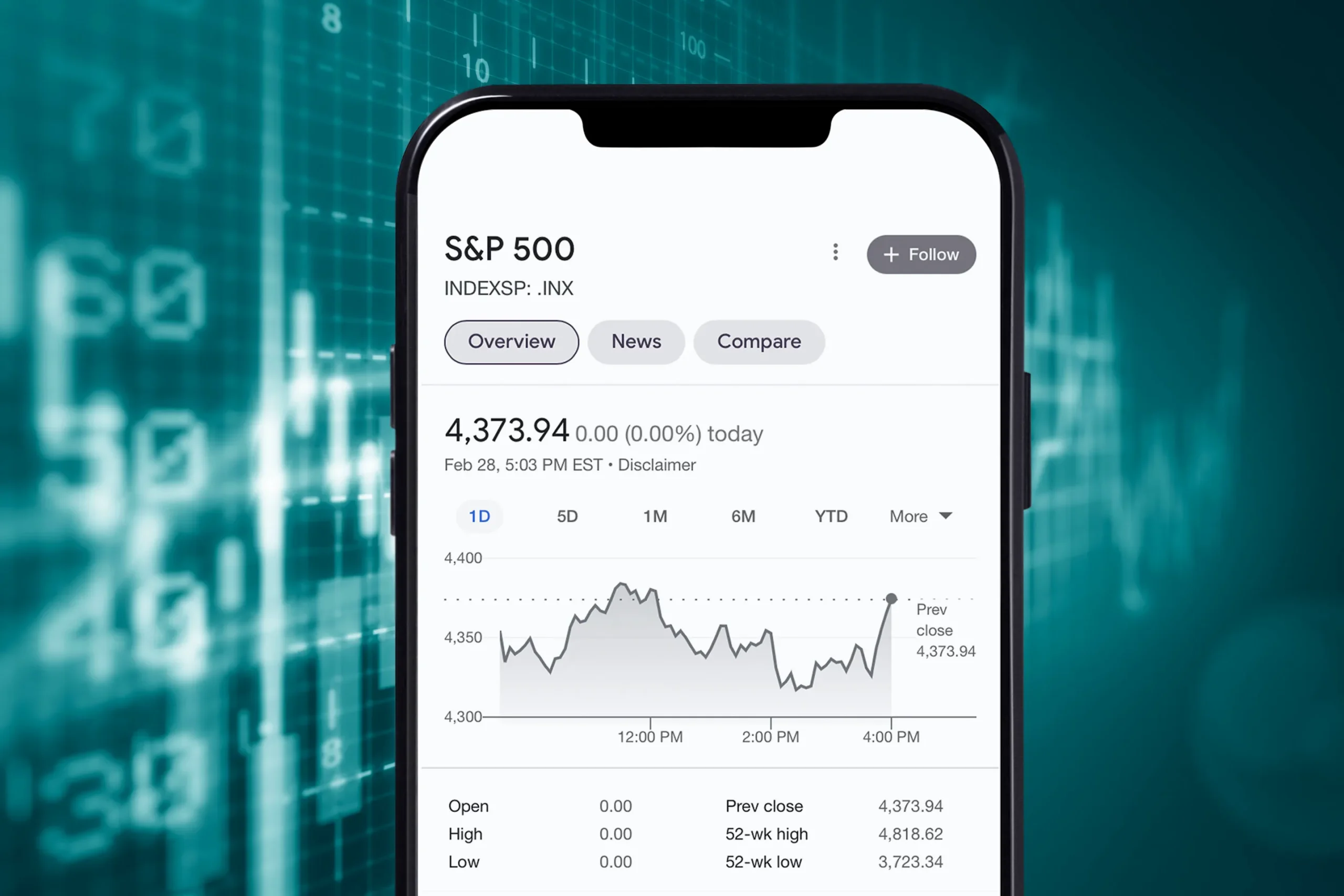
Instead of buying a single stock and hoping it outperforms, you buy a basket. The S&P 500 ETF gives you 500 of America’s largest companies in one instrument. A technology ETF gives you exposure to the sector’s leaders without betting on any single winner.
📢 GET A DETAILED ARTICLES + JOBS
Join ASJ's WhatsApp Channel and never miss a post or opportunity.
The minimums are low enough that a young professional in Accra can start with a few hundred cedis. The platforms are regulated. And the funding methods—mobile money and bank transfer—are ones Ghanaians already use daily.
The door is open. What matters now is understanding the routes.
Route One: Local Apps With US Market Access
The simplest path for most Ghanaians runs through apps designed for the local market. These platforms handle regulatory compliance, currency conversion, and funding through channels that work in Ghana.
Bamboo allows Ghanaian investors to buy fractional shares of US-listed ETFs, starting from as little as $10. The app supports funding through mobile money and bank transfer, with both a cedi wallet and a dollar wallet. Bamboo has partnered with 10th Capital Investments, a fund manager licensed by Ghana’s SEC, and with DriveWealth LLC, a US broker regulated by FINRA and a member of SIPC . That structure means your US ETF holdings are held through a regulated US entity—if Bamboo were to shut down, you could still claim your shares through DriveWealth .
Chipper Cash received a broker-dealer licence from Ghana’s SEC in 2024, enabling its Ghanaian customers to invest in fractional US stocks and ETFs . The licence also grants direct market access, which means faster execution and better pricing .
Trove and Chaka also serve the Ghanaian market, offering fractional shares of US stocks and ETFs .
| Platform | What It Offers | Minimum | Fractional Shares |
|---|---|---|---|
| Bamboo | US stocks & ETFs | From around $10 | Yes |
| Chipper Cash | US stocks & ETFs | From around $10 | Yes |
| Trove | US, Nigerian & Chinese stocks, ETFs, bonds | From a few dollars | Yes |
| Chaka | US & Nigerian stocks | From around $10 | Yes |
Route Two: Global Online Brokers
If you prefer a more established international broker, Interactive Brokers accepts Ghanaian clients . It is one of the world’s largest brokers, regulated by multiple Tier-1 authorities including the SEC (US), FCA (UK), and ASIC (Australia) .
The application requires proof of identity, proof of address issued within the last six months, and a Ghanaian Tax Identification Number . Funding is done via international bank transfer in multiple currencies .
Interactive Brokers offers access to more than 13,000 ETFs, the broadest selection available to Ghanaian investors . It charges $0.0005 per share for US stocks and ETFs, with a $1 minimum per order for international clients .
The process is more involved than using a local app. But it opens access to a far wider range of markets and instruments.
Route Three: Ghanaian Funds With ETF Exposure
Investors who prefer not to open a US brokerage account can buy into a Ghanaian collective investment scheme that holds foreign ETFs.
The EDC Ghana Growth Trust, for example, invests in a diversified portfolio of global stocks, fixed income, and alternative assets. Exposure to equities is achieved directly or indirectly through ETFs .
The Bora Global Balanced Trust allocates 70% of its net asset value to offshore securities, including US Treasuries and dividend-paying ETFs such as the Vanguard Dividend Appreciation ETF and the ProShares S&P 500 Dividend Aristocrats ETF .
This route is simpler—you buy a unit through a local fund manager—but it comes with management fees, and you do not control which specific ETFs are bought.
The Regulatory Layer Investors Should Understand
In February 2026, Ghana’s SEC issued a directive restricting how much local fund managers can invest offshore.
Fund managers licensed to invest locally cannot put more than 20% of funds under management into foreign securities. Managers previously allowed to invest 100% offshore are now capped at 70%, with 30% retained locally .
The directive was designed to protect the cedi and support macroeconomic stability . It also requires that foreign investments be made only in jurisdictions where the regulator has an information-sharing agreement with Ghana’s SEC .
Crucially, this directive restricts institutional fund managers, not individual investors. Ghanaians can still open US brokerage accounts directly or use platforms such as Bamboo and Chipper Cash .
What to Watch Before You Invest
Currency conversion costs. When you fund a US brokerage account from Ghana, you pay for the cedi-to-dollar conversion. The margin an app applies can meaningfully reduce how much ETF your cedis buy. Compare the live USD/GHS rate with the rate your app quotes before funding .
Platform fees. Bamboo charges a 1.5% commission on US stock and ETF buys and 1.5% on sells—a 3% round-trip cost . Interactive Brokers charges $0.0005 per share with a $1 minimum .
Tax obligations. Under current Ghanaian legislation, withholding tax on dividend payments for individuals is 8% . US tax withholding for non-resident aliens is handled through the W-8BEN form, which your broker will require.
CFDs are not the same as owning ETFs. Some brokers marketed to Ghanaian traders offer US ETF Contracts for Difference through platforms like MT5. These are leveraged derivative products, not ownership of the underlying fund. They carry higher risk and are designed for short-term speculation, not long-term investing.
ASJ Bottom Line
Ghanaians can invest in US ETFs. The direct route runs through a global broker like Interactive Brokers. The easier route runs through local apps like Bamboo and Chipper Cash. The indirect route runs through Ghanaian funds with ETF exposure.
ETFs are not a shortcut to guaranteed returns. They are a tool for diversification—a way to own a slice of the global economy without betting on a single company or a single currency.
For Ghanaians seeking dollar-denominated assets outside the cedi, that tool is now within reach.
Quick Facts
| Topic | Details |
|---|---|
| Direct Broker Option | Interactive Brokers (accepts Ghanaian clients) |
| Local Platform Options | Bamboo, Chipper Cash, Trove, Chaka |
| Minimum Investment | From around $10 on local platforms |
| ETF Selection (Interactive Brokers) | 13,000+ ETFs |
| SEC Foreign Investment Cap (Fund Managers) | 20% for locally licensed; 70% for internationally licensed |
| Dividend Withholding Tax (Ghana) | 8% for individuals |
Frequently Asked Questions
1. Can Ghanaians invest in US ETFs?
Yes. Ghanaians can buy US-listed ETFs through local platforms like Bamboo and Chipper Cash, through global brokers like Interactive Brokers, or indirectly through Ghanaian funds that hold foreign ETFs .
2. What is the easiest way to invest in US ETFs from Ghana?
The easiest route is through a local app like Bamboo. You download the app, verify your identity, fund your wallet with mobile money or bank transfer, and buy fractional ETF shares starting from around $10.
3. Can I buy fractional shares of US ETFs from Ghana?
Yes. Bamboo, Chipper Cash, Trove, and Chaka all offer fractional shares, allowing you to invest a fixed cedi amount rather than buying a whole ETF share .
4. Is Bamboo safe for buying US ETFs?
Bamboo has partnered with 10th Capital Investments, licensed by Ghana’s SEC, and DriveWealth LLC, a US broker regulated by FINRA and a member of SIPC. Your US ETF holdings are held through a US-regulated entity, protected up to $500,000 .
5. What is the minimum amount to buy US ETFs from Ghana?
On Bamboo, you can start with as little as $10. Chipper Cash offers similar minimums. Interactive Brokers has no minimum for cash accounts .
6. Does Ghana’s SEC restrict investing in US ETFs?
The SEC’s February 2026 directive restricts local fund managers, not individual investors. Fund managers can invest no more than 20% of assets under management in foreign securities. Individuals can still open US brokerage accounts directly .
7. What fees do I pay when buying US ETFs from Ghana?
Bamboo charges 1.5% commission on buys and 1.5% on sells (3% round-trip). Interactive Brokers charges $0.0005 per share with a $1 minimum for international clients. Currency conversion costs also apply .
8. How do I fund a US brokerage account from Ghana?
You can fund through mobile money on platforms like Bamboo, by bank transfer, or by debit card. Interactive Brokers accepts bank transfers in multiple currencies .
9. Are my US ETF holdings protected if the local platform shuts down?
If your platform routes trades through a US broker like DriveWealth, your ETFs are held in your name and protected by SIPC up to $500,000. You can claim your shares even if the local platform shuts down .
10. Do I pay tax on US ETF dividends in Ghana?
Yes. Under current Ghanaian legislation, withholding tax on dividend payments for individuals is 8%. Your broker will also handle US tax withholding through the W-8BEN form .
11. What is the SEC foreign investment cap for fund managers?
Local fund managers licensed to invest locally cannot invest more than 20% of funds under management in foreign securities. Managers previously allowed to invest 100% offshore are now capped at 70%, with 30% retained locally .
12. Can I invest in US ETFs through a Ghanaian mutual fund?
Yes. Some Ghanaian funds, such as the Bora Global Balanced Trust and the EDC Ghana Growth Trust, hold US ETFs. This is a simpler route but comes with management fees and less control over specific holdings
Source: Accra Street Journal
Last Updated on September 28, 2026 by Samuel Kwame Boadu
Disclaimer: Some content on Accra Street Journal may be aggregated, summarized, or edited from third-party sources for informational purposes. Images and media are used under fair use or royalty-free licenses. Accra Street Journal is a subsidiary of SamBoad Publishing Hub under SamBoad Business Group Ltd, registered in Ghana since 2014.
For concerns or inquiries, please visit our Privacy Policy or Contact Page.

Samuel Kwame Boadu is a Ghanaian media entrepreneur and storyteller with a passion for amplifying urban voices and uncovering everyday truths. He is the Editor-in-Chief and Founder of Accra Street Journal, a dynamic digital platform dedicated to capturing the pulse of Ghana’s capital—its people, culture, challenges, business, sports and innovations.