





12 min read
Introduction
Corporate social responsibility in Ghana has moved past the stage of press releases and photo opportunities. The companies doing it seriously are treating it as a long-term commitment, with foundations, dedicated budgets, and measurable outcomes. They are building schools, funding scholarships, drilling boreholes, and training young people in skills that lead to actual jobs.
The scale is significant. Gold Fields Ghana alone has invested more than $114.85 million in community development through its Foundation, covering healthcare, education, infrastructure, agriculture, water and sanitation . MTN Ghana has supported 1,220 students through its Bright Scholarship programme since 2018. GCB Bank has mobilised over 4,500 employees to undertake 95 community projects across the country in a single year.
Key Takeaways
- Gold Fields Ghana alone has invested more than $114.85 million in community development through its Foundation, covering healthcare, education, infrastructure, agriculture, water and sanitation .
- MTN Ghana has supported 1,220 students through its Bright Scholarship programme since 2018.
- The company has invested more than $114.85 million in community development through the Gold Fields Ghana Foundation.
But the landscape is also uneven. Some companies have sophisticated CSR machinery. Others make occasional donations. And the sector as a whole is still figuring out how to measure impact beyond the number of cheques written.
This ASJ guide covers the companies and institutions leading CSR and community development in Accra and beyond. It looks at the foundations, the scholarship schemes, the skills programmes, and the partnerships that are actually changing lives. It also examines the challenges that hold CSR back from reaching its full potential.
The Corporate Foundations Leading the Way
Gold Fields Ghana Foundation
Gold Fields was adjudged the Overall Best Corporate Social Responsibility Company in Ghana at the 22nd Ghana Club 100 Awards, organised by the Ghana Investment Promotion Centre . The recognition reflects the scale and consistency of its community investment.
The company has invested more than $114.85 million in community development through the Gold Fields Ghana Foundation. The areas covered include healthcare, education, infrastructure, agriculture, water and sanitation. Specific projects include a 33km road linking Tarkwa to Damang at a cost of $27 million, a 360-bed dormitory for female students at Huni Valley Senior High School, and a road project at New Atuabo .
In 2026, 150 tertiary students from host communities benefited from Foundation scholarships, 86 of them female. The company also reported that 69% of its employees and contractors are from its catchment communities. This is CSR that goes beyond charity into the territory of local economic development.
MTN Ghana Foundation
MTN’s Bright Scholarship programme is one of the most established corporate scholarship schemes in the country. In October 2026, MTN awarded 500 scholarships to tertiary students and teachers pursuing STEM and technical programmes. The package covers tuition, accommodation, a laptop, and a stipend .
Since its inception in 2018, the programme has supported 1,220 students, producing 17 valedictorians and 299 first-class graduates. The 2026 cohort included 14 persons with disabilities. MTN received 5,194 applications and interviewed 1,200 before selecting 500 .
The programme is part of MTN’s broader CSR focus on health, education, and economic empowerment. It is a model of corporate investment in human capital that has a clear, measurable output: graduates who enter the workforce with skills the country needs.

Newmont Ahafo Development Foundation (NADeF)
NADeF is funded by a percentage of gold sales and profits from Newmont‘s Ahafo mine. It allocates funds to education, health, livelihoods, and infrastructure in the host communities . The foundation model is significant because it ties CSR funding to production, meaning that when the mine does well, the community benefits directly. It also provides a structured mechanism for community organisations to access funding for projects.
GHACEM Cement Foundation
Since 2002, the GHACEM Cement Foundation has donated cement for health and education infrastructure in deprived communities . This is a simpler model than the large foundations, but it is practical. Cement is a core input for construction, and by providing it, GHACEM enables communities and civil society organisations to build clinics, schools, and other facilities that would otherwise be delayed or abandoned.

Scholarships and Educational Support
Education is the most common focus of corporate CSR in Ghana, and for good reason. It is a sector where targeted investment can produce measurable results, and it aligns with the country’s development priorities.
AngloGold Ashanti awarded scholarships to 30 engineering students at KNUST Obuasi Campus for the 2026/2027 academic year, increasing the number from 20 in the previous cohort. The awards cover full academic fees, accommodation, and a laptop. They target students from the mine’s host communities who face financial difficulties. Since the scheme began, 50 students have been supported .
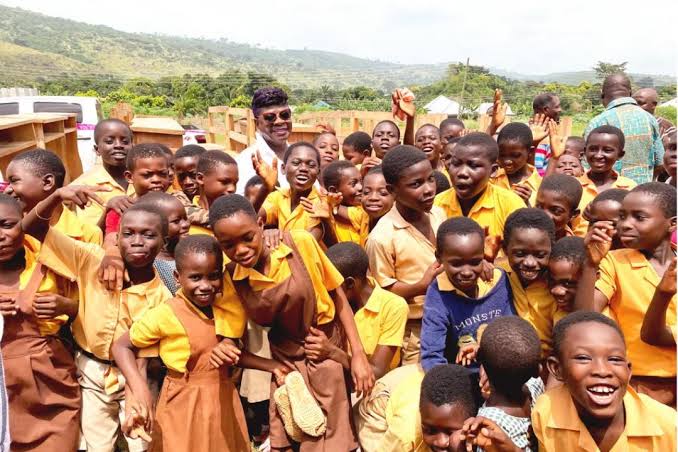
GCB Bank has taken a different approach with its Staff Community Impact Programme. Over 4,500 employees across 95 groups are undertaking 95 community projects nationwide, with the aim of impacting one million Ghanaians. One example is the refurbishment of the nursery block at Oblogo M/A Basic School in the Weija-Gbawe municipality, where staff repaired floors, repainted walls, replaced louvre blades, installed window nets and ceiling fans, and provided cupboards and desks . This is employee-driven CSR, which builds internal culture while serving communities.
Delta Air Lines, marking 20 years of service to Ghana, inaugurated a mechanised borehole facility for the Ga Mashie community in Jamestown, serving more than 2,000 people. The airline has also partnered with Breast Care International to reach over 150,000 people with breast cancer awareness and facilitate more than 20,000 screenings, and with Junior Achievement Africa on youth leadership programmes.
Skills Development and Youth Empowerment
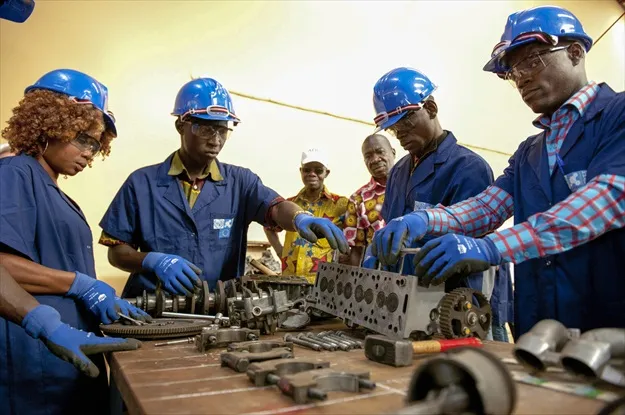
Beyond scholarships, companies are investing in vocational and entrepreneurial skills that lead directly to employment or self-employment.
The Kosmos Innovation Center (KIC) AgriTech Challenge Pro awarded $100,000 in seed funding to ten winning teams in 2026. The top recipient, Angban Life, received $13,000. The programme, run in partnership with the Mastercard Foundation, provides coaching, technical support, and business development assistance to young agripreneurs . KIC’s model is about building businesses, not just giving grants. The seed funding is accompanied by mentorship and the expectation that winners will create jobs.
Benito Mining and Engineering Company launched a free skills training programme for youth in Numereso in the Amansie West District, focusing on the operation of heavy machines like forklifts and excavators. The company’s CEO noted that many young people are eager to learn but are hindered by financial barriers to formal training . This is a smaller-scale intervention, but it addresses a specific skills gap in a specific community.
The Association of Ghana Industries (AGI) announced plans to establish a Youth in Industry Network to mentor and support young entrepreneurs entering the industrial sector. The initiative aims to groom the next generation of Ghanaian industrialists, providing mentorship and exposure to manufacturing and industrial operations . This is an institutional response to the skills gap, rather than a corporate one, but it complements the work companies are doing.
Infrastructure and Community Projects
Some of the most visible CSR is in bricks and mortar: roads, schools, clinics, markets, and water facilities.
Perseus Mining donated GH¢6.864 million to the Ayanfuri community in fulfilment of its MoU with the community. The company also paid $1.4 million to the government for the reclamation of about 70 hectares of concession ceded to the state . The donation was presented at a ceremony attended by representatives of the Ministry of Lands and Natural Resources, the Minerals Commission, the EPA, and the Ghana Chamber of Mines, reflecting the multi-stakeholder nature of mining CSR.

Aggass Company Limited, a sub-contractor under Newmont’s Ahafo North Mine, began construction of a GH¢700,000 modern market square for market women and petty traders at Ntotroso. The project followed an appeal from the community’s chiefs and residents. The old market was located along a roadside, posing safety risks . This is CSR from a contractor, not the main mining company, which suggests that community expectations are filtering down the supply chain.
Duraplast Ghana Ltd. pledged 20 waste bins to the Accra Metropolitan Assembly to improve sanitation in the city. The company’s Executive Director described it as part of its commitment to social responsibility and practical investment in solutions aimed at improving sanitation .
The Partnership Landscape
For civil society organisations looking for funding, a handful of companies have established mechanisms that are open to partnership.
According to a mapping of CSR mechanisms in Ghana, eight companies stand out as potential partners for CSOs: GHACEM Cement Foundation (cement for health and education infrastructure), NADeF (education, health, livelihoods, infrastructure), Gold Fields Ghana Foundation (education, health, economic initiatives), Tullow Ghana Shared Prosperity Program (education, health, environment in oil-producing areas), Kosmos Energy (community infrastructure and social needs), Republic Bank Ghana (education, health, poverty alleviation, youth empowerment through its “Power to Make a Difference” programme), Fidelity Bank (health, inclusion, vocational training, entrepreneurship), and Volta River Authority (skills training, entrepreneurship, infrastructure through its Community Development Programme) .
The shift these partnerships represent is significant. International donor funding is declining, and domestic CSR resources offer an alternative for local organisations. But accessing them requires alignment with corporate priorities, clear reporting, and transparency. Companies want to see impact, not just good intentions.
Challenges
CSR in Ghana faces several obstacles that limit its effectiveness.
Concentration in extractives and telecoms. The largest CSR programmes are run by mining companies and MTN. Other sectors—manufacturing, retail, financial services—participate, but at a smaller scale. This means communities that are not near a mine or not served by a telecoms company may receive less attention.
Measurement and accountability. Many companies report on inputs—how much money was spent, how many scholarships awarded—but not on outcomes. Did the scholarship student graduate and find work? Did the borehole reduce waterborne disease? The data is often thin.
Sustainability. A scholarship that ends when the student graduates is one thing. A skills programme that ends when the grant runs out is another. The most effective CSR is embedded in the company’s business model and community relationships, not dependent on annual budget cycles.
Community expectations and tensions. Mining companies in particular face complex dynamics. Gold Fields’ application to renew its Tarkwa mining leases has generated debate in host communities over employment for local youth, community development, and benefit distribution . CSR does not solve these tensions. It can only address them at the margins.
Coordination. Multiple companies, foundations, government agencies, and NGOs are working in the same communities. Without coordination, there is duplication, gaps, and wasted effort.
Why It Matters
CSR is not a substitute for government services. It cannot fix the education system, the healthcare system, or the infrastructure deficit. But it can fill gaps, support innovation, and demonstrate what is possible.
When Gold Fields builds a 33km road, it connects communities that the government has not reached. When MTN funds 500 STEM scholarships, it creates a pipeline of skilled graduates that the economy needs. When GCB employees refurbish a nursery block, they create a learning environment that gives young children a better start.
For ordinary Ghanaians, the impact is direct. A student from a mining community who could not afford university fees gets a scholarship. A young person in Numereso learns to operate heavy machinery and finds work. A market woman in Ntotroso gets a safe place to sell her goods. A family in Jamestown gets clean water.
The scale of these interventions is not enough to transform the country. But they matter to the people they reach. And they set a standard for what corporate citizenship should look like.
Quick Facts
Topic: CSR and Community Development in Ghana
Overall Best CSR Company (2026): Gold Fields Ghana
Gold Fields Foundation Investment: Over $114.85 million in community development
**MTN Bright Scholarship Reach:** 1,220 students since 2018
**GCB Staff Community Impact Programme:** 95 projects, 4,500+ employees, targeting 1 million lives
**AngloGold Ashanti Scholarships:** 50 KNUST Obuasi students supported since inception
**KIC AgriTech Seed Funding:** $100,000 to 10 teams in 2026
Perseus Mining Community Donation: GH¢6.864 million to Ayanfuri
Key CSR Foundations: Gold Fields, MTN, NADeF, GHACEM, Tullow, Kosmos
Key Challenge: Concentration in extractives and telecoms, limited outcome measurement
Key Opportunity: CSO partnerships with domestic CSR funding
FAQ Section
1. Which company has the best CSR programme in Ghana?
Gold Fields Ghana was adjudged the Overall Best Corporate Social Responsibility Company at the 22nd Ghana Club 100 Awards. It has invested over $114.85 million in community development through its Foundation .
2. How many scholarships does MTN Ghana award?
MTN awarded 500 scholarships in 2026 under its Bright Scholarship programme. Since 2018, it has supported 1,220 students, producing 17 valedictorians and 299 first-class graduates .
3. What is the Gold Fields Ghana Foundation?
It is the community development arm of Gold Fields Ghana, funding projects in healthcare, education, infrastructure, agriculture, water and sanitation. It is funded by a portion of the company’s revenue and has invested over $114.85 million .
4. What is NADeF?
The Newmont Ahafo Development Foundation allocates funds from gold sales and profits for education, health, livelihoods, and infrastructure in Newmont’s host communities .
5. How does GCB Bank do CSR?
GCB runs the Staff Community Impact Programme, where employees undertake community projects across Ghana. In 2026, over 4,500 employees worked on 95 projects targeting one million lives .
6. What is the Kosmos Innovation Center?
KIC runs the AgriTech Challenge Pro, which awards seed funding to young agripreneurs. In 2026, ten teams received a total of $100,000 .
7. How can CSOs access CSR funding in Ghana?
Several companies have established mechanisms open to partnerships, including GHACEM Cement Foundation, NADeF, Gold Fields Ghana Foundation, Tullow Ghana, Kosmos Energy, Republic Bank, Fidelity Bank, and Volta River Authority .
8. What is Perseus Mining’s community donation?
Perseus Mining donated GH¢6.864 million to the Ayanfuri community in fulfilment of its MoU, and paid $1.4 million for land reclamation .
9. What is the biggest challenge facing CSR in Ghana?
CSR is concentrated in mining and telecoms, with limited outcome measurement and sustainability beyond annual budget cycles. Coordination among multiple actors is also a challenge.
10. Does CSR replace government services?
No. CSR fills gaps and supports communities, but it cannot replace the government’s responsibility for education, healthcare, and infrastructure.
Source: Accra Street Journal
Last Updated on November 26, 2026 by Samuel Kwame Boadu
Disclaimer: Some content on Accra Street Journal may be aggregated, summarized, or edited from third-party sources for informational purposes. Images and media are used under fair use or royalty-free licenses. Accra Street Journal is a subsidiary of SamBoad Publishing Hub under SamBoad Business Group Ltd, registered in Ghana since 2014.
For concerns or inquiries, please visit our Privacy Policy or Contact Page.

Samuel Kwame Boadu is a Ghanaian media entrepreneur and storyteller with a passion for amplifying urban voices and uncovering everyday truths. He is the Editor-in-Chief and Founder of Accra Street Journal, a dynamic digital platform dedicated to capturing the pulse of Ghana’s capital—its people, culture, challenges, business, sports and innovations.
Use the following reference when citing or referencing this article.
Your feedback helps us improve our journalism.
Report an Error
Help us maintain accuracy. Let our editorial team know if you spot an issue in this article.
Report a problem with this article