





Breast cancer is not just a women’s disease. Men get it too—and in Ghana, they often discover it too late, for one simple reason: they were never told they could.
The Reality: Men Get Breast Cancer Too
The numbers are small but they are not zero. Data from Korle-Bu Teaching Hospital’s Oncology Unit shows that 3–5% of all breast cancer cases recorded annually occur in men—a figure experts believe is higher due to underreporting and misdiagnosis . Prof. Patrick Kafui Akakpo, an anatomic pathologist, disclosed that male breast cancer accounts for between 1% and 3% of total breast cancer cases in Ghana . In his own practice, he has seen “maybe about half a hundred men who have had male breast cancers” .

The science is straightforward. Men have breast tissue. They have small amounts of estrogen, the hormone responsible for breast tissue growth. That tissue can undergo changes that lead to cancer . The structure is less developed than in women, but it exists—and so does the risk.
📢 GET A DETAILED ARTICLES + JOBS
Join ASJ's WhatsApp Channel and never miss a post or opportunity.

Why Men Do Not Know
The core problem is awareness. Because breast cancer is framed almost universally as a “women’s disease,” men ignore the signs.
“It’s so uncommon in men that many ignore the signs,” says Dr. Halle Moore of the Cleveland Clinic. “That can sometimes lead them to dismiss symptoms or delay seeking care” .
Dr. Afzal of Dartmouth Cancer Center is more direct: “Because breast cancer is commonly thought of as a ‘women’s disease,’ men often do not recognize early symptoms or delay seeking care. Many men wait several months after noticing a lump or change before seeing a doctor”.
The result is predictable. Men tend to be diagnosed at later stages than women—which means worse outcomes .
The Warning Signs Men Should Know
The most common symptom of male breast cancer is a painless lump beneath or behind the nipple . Other warning signs include:
-
Nipple inversion (turning inward)
-
Nipple discharge, which may be clear or bloody
-
Skin changes on the breast, like dimpling, redness, or scaly patches
-
Swelling or enlargement of breast tissue
-
Pain or tenderness in the breast or nipple area
-
Swollen lymph nodes under the arm
Most breast lumps in men are benign—not cancer. But only a healthcare provider can say for certain. As Dr. Moore puts it: “Regardless of what you think it may or may not be, any new lump or other unexplained breast change should be evaluated by a medical professional” .
The Cultural Barrier: It’s Not Just About Awareness
In Ghana, the barriers go beyond simple lack of information. Breast cancer carries a stigma that makes men especially reluctant to seek help. Research in the Sekyere Kumawu District found that many people believe breast cancer is a spiritual attack or a curse—not a medical condition . For a man, admitting to a “woman’s disease” can feel like a double stigma: the disease itself, and the shame of having something associated with women.
Health officials in Ghana have stressed that the disease is “not contagious and not a curse.” As Mercy Adomaa Beaseah of the National Population Council put it: “Ignorance is the enemy. When we know the facts, we can protect our families” .
The Man’s Role: Beyond His Own Risk
There is another reason men should pay attention to breast cancer in Ghana: they are often the decision-makers who determine whether the women in their lives seek care.
Research from Ghana examined the role of male partners in early female breast cancer detection. The study found that while awareness of breast cancer was very high among men (98.8%), their knowledge of the disease was low. The majority (92%) agreed that men can assist in early detection, and 96.2% were willing to be provided with breast examination skills .
A separate clinical trial in rural Ghana tested the “Male Engagement in Gender and Health” (MEGH) programme, which invited male partners of women to attend breast cancer education sessions and discussion groups. The intervention was designed to change gender attitudes and increase support for women’s healthcare utilization.
The National Breast Cancer Awareness Month launch in Ho in 2026 made this explicit. The Minister for Gender, Children and Social Protection, Dr Agnes Naa Momo Lartey, called on men to “play active and committed roles in tackling the disease in women,” emphasising that “men have an important role in encouraging loved ones to seek care, providing emotional and practical support as well as sharing caregiving responsibilities”.
The Caregiver Burden
When a woman is diagnosed with breast cancer, her male partner is often the primary caregiver. A study of men with partners living with breast cancer in the Accra metropolis documented the psychological and socioeconomic impacts on these men. The findings included emotional turmoil, increased caregiver burden, financial strain, work disruptions, and shifting family responsibilities .
The study concluded that healthcare providers should adopt a family-centred approach that includes male partners in treatment discussions and decision-making processes. Men are not bystanders in the breast cancer journey. They are participants—and they need support too .
What Men Should Do
Know the signs. A painless lump under the nipple. Nipple discharge or inversion. Skin changes. These are not things to ignore because “men don’t get breast cancer.” They do—and early detection saves lives.
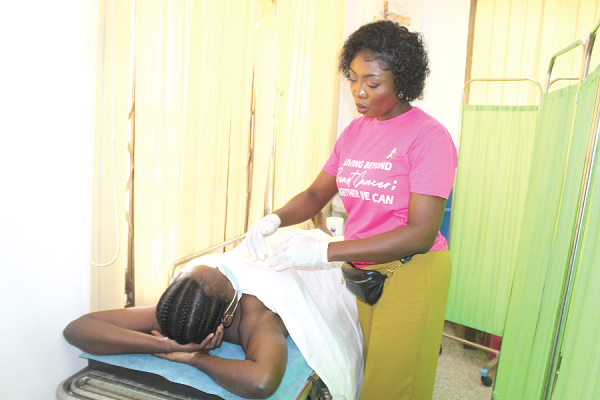
Check yourself. There is no routine screening programme for men because the disease is rare. But if you notice anything unusual, see a doctor. Do not wait for pain. By the time there is pain, the disease may already be advanced .
Support the women in your life. Encourage your wife, mother, sister, or daughter to get screened. Go with them if you can. The research shows men want to help—they just need the knowledge and the skills.
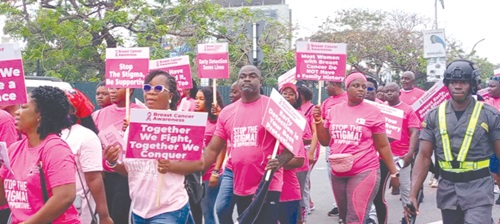
Break the silence. Breast cancer is not a curse. It is not spiritual. It is a medical condition that can affect anyone. Talking about it openly—as men, as husbands, as fathers—reduces the stigma that keeps people from seeking care .
Quick Facts
| Topic | Details |
|---|---|
| Male Share of Breast Cancer Cases in Ghana | 1–3% (Korle-Bu data suggests 3–5%) |
| Commonest Symptom in Men | Painless lump beneath or behind the nipple |
| Typical Age at Diagnosis | 60s and older, but men of all ages can develop it |
| Key Risk Factors | Age, family history, BRCA gene mutations, radiation exposure |
| Male Awareness of Female Breast Cancer | 98.8% aware, but low knowledge |
| Male Willingness to Assist | 92% agreed men can assist in early detection |
| Ghana Men Screened at Afrifanom Event | 20 men participated in 2025 screening |
Frequently Asked Questions
1. Can men in Ghana get breast cancer?
Yes. Men have breast tissue and small amounts of estrogen, which means they can develop breast cancer. In Ghana, male breast cancer accounts for between 1% and 3% of all breast cancer cases .
2. How common is male breast cancer in Ghana?
Data from Korle-Bu Teaching Hospital suggests 3–5% of annual breast cancer cases occur in men. However, experts believe the true figure is higher due to underreporting and misdiagnosis .
3. What are the warning signs of breast cancer in men?
The most common symptom is a painless lump beneath or behind the nipple. Other signs include nipple inversion, discharge, skin dimpling or redness, and swollen lymph nodes under the arm .
4. Why do men delay seeking help for breast cancer?
Because breast cancer is seen as a “women’s disease,” men often ignore symptoms or delay seeking care. Many wait several months after noticing a lump before seeing a doctor, leading to later-stage diagnosis .
5. What role can men play in supporting women with breast cancer?
Men can encourage their partners to seek care, provide emotional and practical support, share caregiving responsibilities, and help with early detection. Research shows 96.2% of Ghanaian men are willing to be taught breast examination skills.
6. What is the Male Engagement in Gender and Health (MEGH) programme?
MEGH is an intervention in rural Ghana that invites male partners of women to attend breast cancer education sessions and discussion groups. It aims to change gender attitudes and increase support for women’s healthcare utilization .
7. What psychosocial impact does breast cancer have on male partners in Ghana?
A study in Accra found that male partners experience emotional turmoil, increased caregiver burden, financial strain, work disruptions, and shifting family responsibilities.
8. Is breast cancer in men treated the same way as in women?
Yes. Treatment follows similar principles, including surgery, radiation, chemotherapy, and hormone therapy. Stage at diagnosis is the most important factor for survival .
9. Are Ghanaian men being included in breast cancer awareness campaigns?
Yes. The 2026 National Breast Cancer Awareness Month launch in Ho called on men to play active roles. Some screening events, like the Afrifanom Foundation screening, have seen male participation .
10. What should a man do if he notices a breast change?
See a doctor promptly. Do not assume it is benign or wait for pain. Any new or persistent breast change should be evaluated by a medical professional
Source: Accra Street Journal
Last Updated on October 4, 2026 by Samuel Kwame Boadu
Disclaimer: Some content on Accra Street Journal may be aggregated, summarized, or edited from third-party sources for informational purposes. Images and media are used under fair use or royalty-free licenses. Accra Street Journal is a subsidiary of SamBoad Publishing Hub under SamBoad Business Group Ltd, registered in Ghana since 2014.
For concerns or inquiries, please visit our Privacy Policy or Contact Page.

Samuel Kwame Boadu is a Ghanaian media entrepreneur and storyteller with a passion for amplifying urban voices and uncovering everyday truths. He is the Editor-in-Chief and Founder of Accra Street Journal, a dynamic digital platform dedicated to capturing the pulse of Ghana’s capital—its people, culture, challenges, business, sports and innovations.