





Every October, Ghana joins the rest of the world in marking Breast Cancer Awareness Month. But beyond the pink ribbons and the public campaigns, the month carries a weight that is deeply personal for thousands of Ghanaian families. Breast cancer is the most prevalent cancer among women in the country, and too often, it is detected late. Here is the story behind the month, and why it matters so much in Ghana.
The Global Origin: Why October?
The story begins in 1985. Breast Cancer Awareness Month was founded as a partnership between the American Cancer Society and the pharmaceutical division of Imperial Chemical Industries (now part of AstraZeneca) . The initial aim was simple and focused: to encourage women to have mammograms, the X-ray screening that can detect breast abnormalities early .

The campaign was later extended from a week to a full month, and October became the designated period. In 1992, the U.S. Congress formalized it, and the pink ribbon—introduced by the Susan G. Komen Foundation and later championed by Evelyn Lauder of Estée Lauder—became the global symbol of the movement.
📢 GET A DETAILED ARTICLES + JOBS
Join ASJ's WhatsApp Channel and never miss a post or opportunity.

Since 1985, October has been recognized globally as Breast Cancer Awareness Month to create awareness, promote early detection, and provide support for those affected by the disease .
The Ghanaian Reality: Why October Matters Here
In Ghana, the global campaign takes on a particular urgency. Breast cancer is the most prevalent cancer among women in the country, and it casts a long shadow over families and communities . The challenge is not just the disease itself, but the timing of detection.
Research conducted at a municipal hospital in Ghana found that while 87.5% of women had heard of breast cancer, only 44.4% had adequate knowledge about its risk factors, and only 46.3% had adequate knowledge about its signs and symptoms . More than half of the women surveyed had inadequate knowledge of what to look for .
This gap in knowledge has life-or-death consequences. When breast cancer is detected early, treated, and properly managed, survival rates increase dramatically . But in Ghana, too many women present at health facilities only when the disease is advanced, when treatment becomes more difficult and less effective .
The Meaning of the Pink Ribbon in Ghana
The pink ribbon is a global symbol, but in Ghana, it carries a specific meaning. It represents more than awareness—it represents the silent battle fought by thousands of women across the country .
For many Ghanaian women, the barriers to early detection are not just about knowledge. They include:
Stigma and cultural beliefs. Research has found that in some communities, breast cancer is considered a taboo subject, associated with evil spirits or believed to be caused by enemies . A principal of a college of education in the Eastern Region acknowledged after a breast cancer education session that the programme had corrected misconceptions that the disease was caused by witchcraft .
Fear and economic barriers. The Gender Minister has urged the public to overcome fear, stigma, cultural beliefs, and economic barriers that prevent women from seeking medical attention .
Late presentation. Because of these barriers, many women do not seek help until the disease has progressed. The message from health authorities is clear: “It is not spiritual. It can be cured when detected early” .
How Ghana Marks the Month
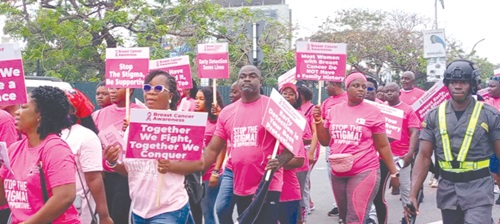
Breast Cancer Awareness Month in Ghana is marked through a combination of government-led initiatives, civil society campaigns, and community outreach.
Government Leadership
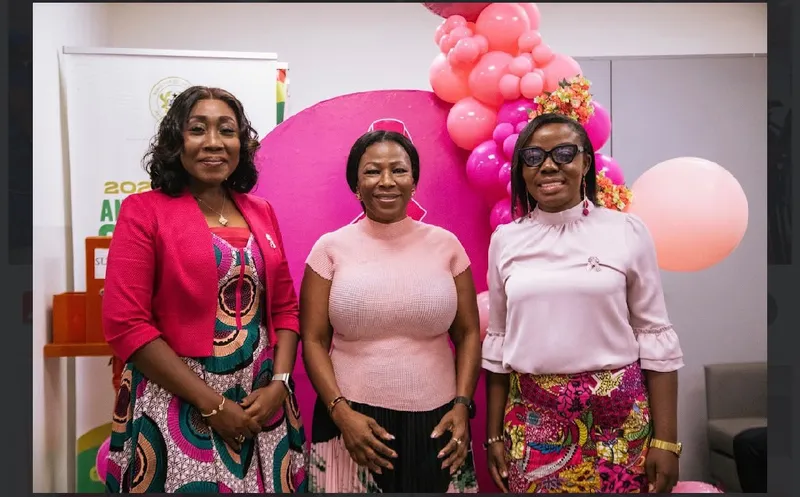
The Ministry of Gender, Children and Social Protection (MoGCSP) plays a leading role. In 2025, the Vice President, Professor Naana Jane Opoku-Agyemang, officially launched the national commemoration at the Ministry’s forecourt . The theme was “Catch it Early; Treat it Right; Survive it” .
The launch featured free breast cancer screening for staff and the general public, as well as NHIS registration for the elderly . The Vice President urged Ghanaians to embrace regular screening and self-examination as lifesaving practices and called for an end to the stigma surrounding the disease .
Community Outreach
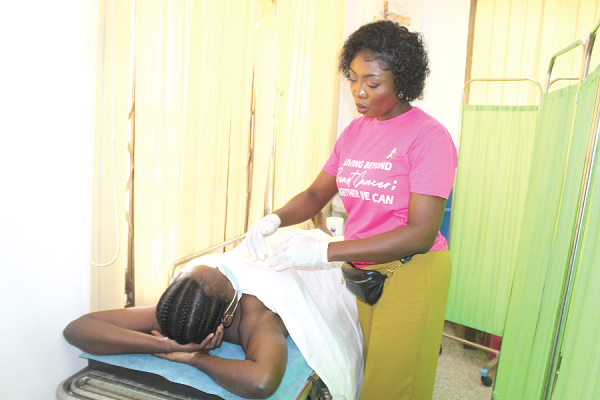
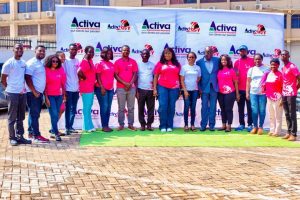
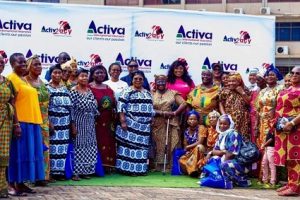
The Ministry has taken screening directly to where women work. In 2024, the Ministry held breast cancer awareness and screening for market women at Kaneshie . Similar exercises have been conducted at the Nsawam Female Prison, targeting both inmates and officers .
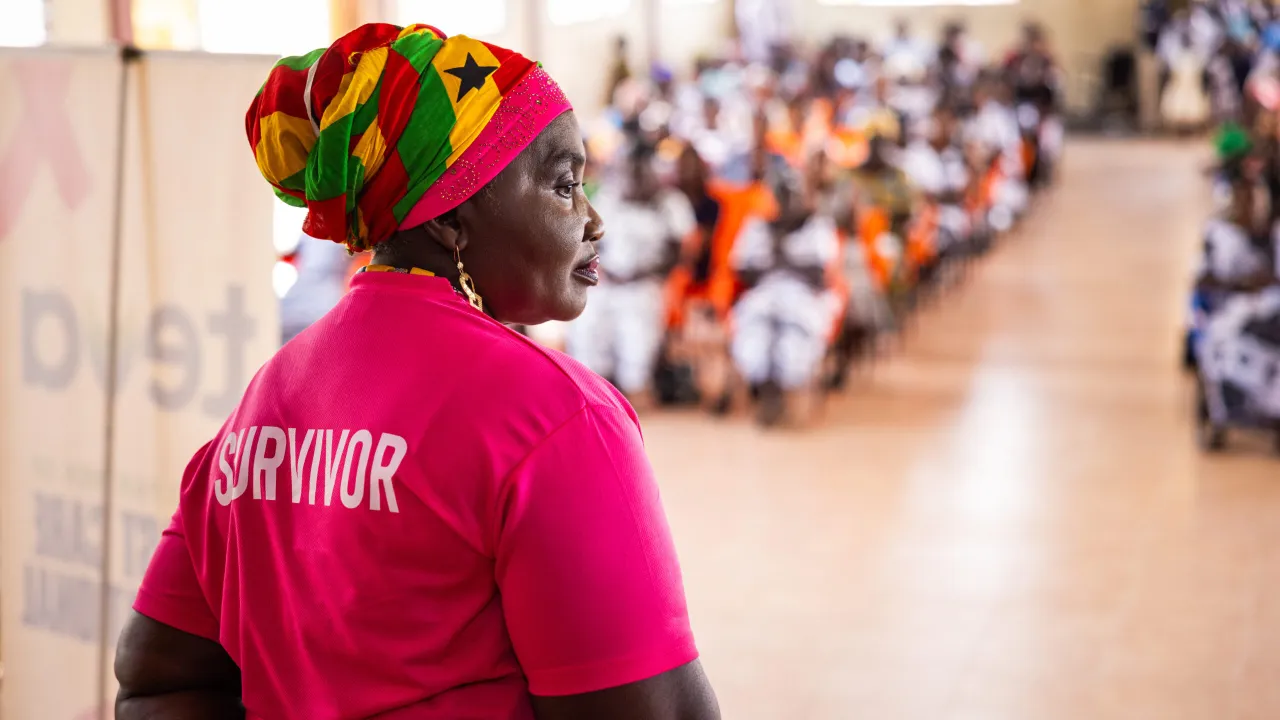
The message delivered at these events is consistent: “Awareness brings education, which empowers action” . The pink ribbons and campaigns are “powerful reminders that the fight against breast cancer is a shared responsibility” .
Civil Society and NGOs
Breast Care International (BCI) , led by Dr. Beatrice Wiafe-Addai, has been at the forefront of year-round awareness campaigns. Through its “Let’s End Breast Cancer Project,” BCI has taken education and clinical screenings to underserved women in regions including the Eastern Region . The organisation stresses that “early detection and prompt action saves lives” and aims to “bridge the care gap to ensure no one battles breast cancer alone” .
NHIS Support
The National Health Insurance Authority (NHIA) uses the month to encourage women to take charge of their health through regular self-examinations, screenings, and seeking medical advice . The NHIS covers diagnostic and treatment services, including chemotherapy and radiotherapy for breast cancer, making care more accessible .
In 2026, the NHIA announced that breast screening is now part of the benefit package under the Free Primary Healthcare (FPHC) policy, a significant step forward for preventive care .
The Challenges That Remain
Despite the progress, significant gaps persist in Ghana’s breast cancer response.
Knowledge gaps. The research is stark: most women have heard of breast cancer, but far fewer have adequate knowledge of risk factors and symptoms . The main source of information is mass media (80%), followed by hospitals (56.3%) .
Screening uptake. Only 61% of women were aware of breast cancer screening, and only 42% had ever had a clinical breast examination . The practice of breast self-examination (BSE) is even lower—only 35.5% of those who knew about it had ever performed it .
NHIS coverage gaps. While the NHIS covers consultations, diagnosis, and treatment, research shows that in practice, patients still face out-of-pocket payments for some services. Rehabilitative care—including breast prostheses after mastectomy—is not covered . Delayed NHIS reimbursement to facilities also creates co-payments at the point of care .
Geographic disparities. Access to screening is uneven. The Ghana Statistical Service has recommended expanding mobile and community-based outreach to districts with screening rates below 10%, particularly in the Savannah, Oti, Bono East, Western North, and Northern regions .
Why October Matters: A Call to Action
October matters in Ghana because it is more than a month of awareness. It is a call to action .
The Vice President’s message at the 2025 launch captured the stakes: “Breast cancer is not only a medical condition, but a social concern that affects us all” . The fight “extends beyond health; it is a matter of national development and social welfare that impacts livelihoods, families, and communities” .
The theme—“Catch it Early; Treat it Right; Survive it”—reminds us that early detection, proper treatment, and sustained awareness are the three vital pillars that save lives .
For Ghanaian women, the message is simple and urgent: know your body, check your breasts, and seek help early. As the health experts say: “It is not spiritual. It can be cured when detected early” .
Quick Facts
| Topic | Details |
|---|---|
| Global Start | 1985, American Cancer Society and Imperial Chemical Industries |
| Ghana Status | Breast cancer is the most prevalent cancer among women |
| Knowledge Gap | 87.5% have heard of it, but only 44.4% have adequate knowledge of risk factors |
| Screening Gap | Only 42% have had a clinical breast examination |
| 2025 Theme | “Catch it Early; Treat it Right; Survive it” |
| NHIS Coverage | Chemotherapy and radiotherapy covered; breast screening added to Free Primary Healthcare in 2026 |
| Key Barriers | Stigma, cultural beliefs, fear, economic barriers, late presentation |
Frequently Asked Questions
1. Why is October Breast Cancer Awareness Month?
October was designated Breast Cancer Awareness Month in 1985 by the American Cancer Society and Imperial Chemical Industries to promote mammography and raise awareness. It has since become a global campaign .
2. What does the pink ribbon mean?
The pink ribbon is the universal symbol of breast cancer awareness. It represents hope, support, and the fight against the disease. In Ghana, it symbolizes the silent battle fought by thousands of women .
3. Why does Breast Cancer Awareness Month matter in Ghana?
Breast cancer is the most prevalent cancer among Ghanaian women. Many cases are detected late due to stigma, lack of knowledge, and limited access to screening. The month is a critical opportunity to promote early detection and save lives .
4. What is the theme of Ghana’s 2025 Breast Cancer Awareness Month?
The theme was “Catch it Early; Treat it Right; Survive it,” emphasizing early detection, proper treatment, and sustained awareness .
5. Does the NHIS cover breast cancer treatment in Ghana?
Yes. The NHIS covers chemotherapy and radiotherapy for breast cancer. In 2026, breast screening was added to the Free Primary Healthcare package. However, some patients still face out-of-pocket payments for certain services .
6. What are the main barriers to early detection in Ghana?
The main barriers include stigma, cultural beliefs (including associations with evil spirits), fear, economic barriers, and lack of adequate knowledge about signs and symptoms .
7. What are the signs and symptoms of breast cancer?
Common signs include a lump in the breast, pain in the armpits or breast, nipple discharge, changes in breast shape or appearance, and a rash around the nipple. Only 46.3% of Ghanaian women have adequate knowledge of these symptoms .
8. How can I get screened for breast cancer in Ghana?
You can visit any health facility for a clinical breast examination. The NHIS covers diagnostic services. Community outreach programmes also provide free screenings, especially during October. Mobile and community-based outreach is being expanded to underserved districts .
9. What is Breast Care International?
Breast Care International (BCI) is a Ghanaian NGO led by Dr. Beatrice Wiafe-Addai. It runs year-round awareness campaigns and provides free breast cancer education and clinical screenings to underserved communities .
10. What can I do to support Breast Cancer Awareness Month in Ghana?
You can participate in awareness campaigns, encourage women to get screened, share accurate information, and support organisations like Breast Care International. The fight against breast cancer is a shared responsibility
Source: Accra Street Journal
Last Updated on October 4, 2026 by Samuel Kwame Boadu
Disclaimer: Some content on Accra Street Journal may be aggregated, summarized, or edited from third-party sources for informational purposes. Images and media are used under fair use or royalty-free licenses. Accra Street Journal is a subsidiary of SamBoad Publishing Hub under SamBoad Business Group Ltd, registered in Ghana since 2014.
For concerns or inquiries, please visit our Privacy Policy or Contact Page.

Samuel Kwame Boadu is a Ghanaian media entrepreneur and storyteller with a passion for amplifying urban voices and uncovering everyday truths. He is the Editor-in-Chief and Founder of Accra Street Journal, a dynamic digital platform dedicated to capturing the pulse of Ghana’s capital—its people, culture, challenges, business, sports and innovations.