





13 min read
Founded in 1991 by a returning civil engineer with one second-hand surveying instrument, LMI Holdings has grown into one of Ghana’s largest indigenous conglomerates—spanning construction, industrial parks, utilities, logistics, and renewable energy. With a 150MW solar project backed by the IFC, the redevelopment of the stalled 5,000-unit Saglemi housing estate, and a planned 1,000MW solar ambition by 2032, the company is positioning itself as the infrastructure backbone of Ghana’s industrialisation and energy transition.
Executive Introduction
In 1997, a small Ghanaian construction company owned just one second-hand theodolite—a precision instrument for measuring angles. That single tool marked the beginning of John Murphy Construction’s journey. At the time, winning contracts was nearly impossible; without equipment, the company couldn’t compete for major projects, and renting tools drained resources while bank loans came with crushing interest rates .
Key Takeaways
- That opportunity allowed John Murphy Construction to expand and eventually become LMI Holdings—now one of Ghana’s largest indigenous-owned companies .
- LMI Holdings, through its subsidiary Helios Solar Company, is building the largest private-sector-led, utility-scale solar power project in West Africa .
- Enclave Power Company is a wholly owned subsidiary of LMI Holdings and Ghana’s only privately-owned power distribution company, serving over 80 companies in the Tema Free Zones Enclave and Dawa Industrial Zone .
Everything changed when the Government of Canada introduced a financing facility in Ghanaian cedis, offering a manageable 25% interest rate on the condition that purchases include at least 60% Canadian content. That opportunity allowed John Murphy Construction to expand and eventually become LMI Holdings—now one of Ghana’s largest indigenous-owned companies .
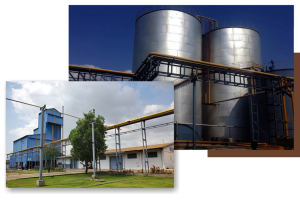
Today, LMI Holdings stands as a highly diversified Ghanaian conglomerate with operations in construction, industrial park development, real estate, warehousing and logistics, utilities, and information and communication technology . It is the primary developer of the Tema Free Zones Enclave, hosting more than 100 companies, and is building the Dawa Industrial City, a 2,000-acre smart city development 40 kilometres east of Accra .
The company’s ambitions extend far beyond industrial parks. LMI is building a 150MW solar photovoltaic plant to power its industrial zones, backed by a **US$100 million loan facility from the International Finance Corporation (IFC)**, with a first tranche of US$21 million . It has also been selected to redevelop the Saglemi Housing Project, a stalled 5,000-unit affordable housing estate, with the first 700 units committed for completion by March 2027 .
This profile examines LMI Holdings’ evolution from a single construction firm to a half-billion-dollar conglomerate, its industrial park and utilities business, its renewable energy ambitions, its leadership under Chairman and CEO Kojo Aduhene, and the question that now defines its trajectory: Can an indigenous Ghanaian company deliver the infrastructure—housing, power, and logistics—that the nation’s industrialisation agenda demands?
Company Overview: The 1991 Founding and the John Murphy Legacy
The Genesis: A Returning Engineer’s Bet
LMI Holdings’ story begins with Kojo Aduhene, a civil engineer who graduated from Leeds University in the United Kingdom and worked on prestigious projects including the Channel Tunnel and the Docklands urban rejuvenation development . He returned to Ghana in 1991 to set up his own company, John Murphy Construction .
What began as a modest construction firm focused on warehousing and general building works quickly grew. In its early years, John Murphy Construction played a pivotal role in shaping Tema’s emerging industrial corridor, developing warehousing complexes and logistics hubs that supported Ghana’s growing trade and manufacturing sectors. As capabilities expanded, the company moved from general construction into roads, drainage systems, water treatment plants, and large-scale industrial park development .
The Evolution to LMI Holdings
John Murphy Construction’s growth was catalysed by the Canadian financing facility, which allowed it to acquire equipment and compete for major contracts . Over three decades, the company evolved into LMI Holdings, a diversified conglomerate.
Key Milestones:
| Year | Event |
|---|---|
| 1991 | John Murphy Construction founded by Kojo Aduhene |
| 1997 | Canadian financing facility enables equipment acquisition |
| — | Expansion into quarrying, concrete, and steel fabrication through LMI Shamrock |
| — | Development of Tema Free Zones Enclave and Dawa Industrial City |
| 2022 | IFC partnership begins with Enclave Power Company |
| 2025 | TransVolta Logistics Network and Asikuma Port site visit |
| 2026 | IFC backs 150MW solar project with US$39.5 million financing |
| 2026 | Selected to redevelop Saglemi Housing Project |
Leadership: Kojo Aduhene
Kojo Aduhene is the Chairman and Chief Executive Officer of LMI Holdings, with 27 years of post-qualification experience in the construction industry . His vision has driven the company’s expansion from construction into industrial parks, utilities, and renewable energy.

Aduhene has been vocal about Ghana’s energy future. Speaking on the need to reduce reliance on oil, he stated: “We’re not getting oil. We don’t need oil to generate electricity. If anything, the Middle East conflict proves why Ghana must invest more in renewables especially solar” . He has also called for a more accommodating regulatory environment, arguing that “the public sector currently dominates the space. The private sector must be allowed to grow” .
His ambition is explicit: to scale LMI’s solar generation to 1,000 megawatts by 2032, comparable to the output of the Akosombo Dam (though limited to daylight hours). “If we do it, it proves others can do it. This supports Ghana’s broader industrialisation agenda,” he said .

Key Operational Metrics (2026)
| Metric | Value |
|---|---|
| Founded | 1991 (as John Murphy Construction) |
| Founder & CEO | Kojo Aduhene |
| Ownership | Ghanaian-owned |
| Employees | Not publicly disclosed |
| Key Industrial Parks | Tema Free Zones Enclave, Dawa Industrial City |
| Solar Target | 1,000MW by 2032 |
| Current Solar Project | 150MW (100MW by Oct 2026, 50MW by June 2027) |
| Housing Project | Saglemi (5,000 units; first 700 by March 2027) |
The Industrial Parks: Tema Free Zones and Dawa Industrial City
Tema Free Zones Enclave
LMI Holdings is the primary developer of the Tema Free Zones Enclave (TFZE), which hosts more than 100 companies operating in various sectors, including building materials and agro-processing . The enclave is a hub for multinational and local manufacturing companies.
Enclave Power Company (EPC):
A wholly owned subsidiary of LMI Holdings, Enclave Power Company is Ghana’s only privately-owned power distribution company. It distributes about 45MW of power purchased from the Volta River Authority to over 80 multinational and local manufacturing companies in the Tema Free Zones Enclave and Dawa Industrial Zone .
EPC operates Ghana’s largest privately-owned substation (130MVA) in Tema. Its clients include Cargill Ghana and Barry Callebaut, two of the world’s largest cocoa processing companies, as well as two of Ghana’s largest steel mills—United Steel Company and Rider Steel Ghana Limited—with a combined maximum demand exceeding 41MW .
Dawa Industrial City
LMI is developing its second industrial park, the Dawa Smart City Development, a 2,000-acre project 40 kilometres east of Accra . The development is designed to support industrial growth with reliable utilities, logistics, and infrastructure.
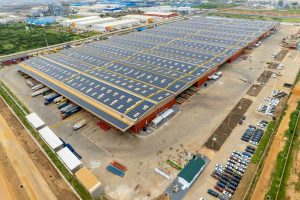
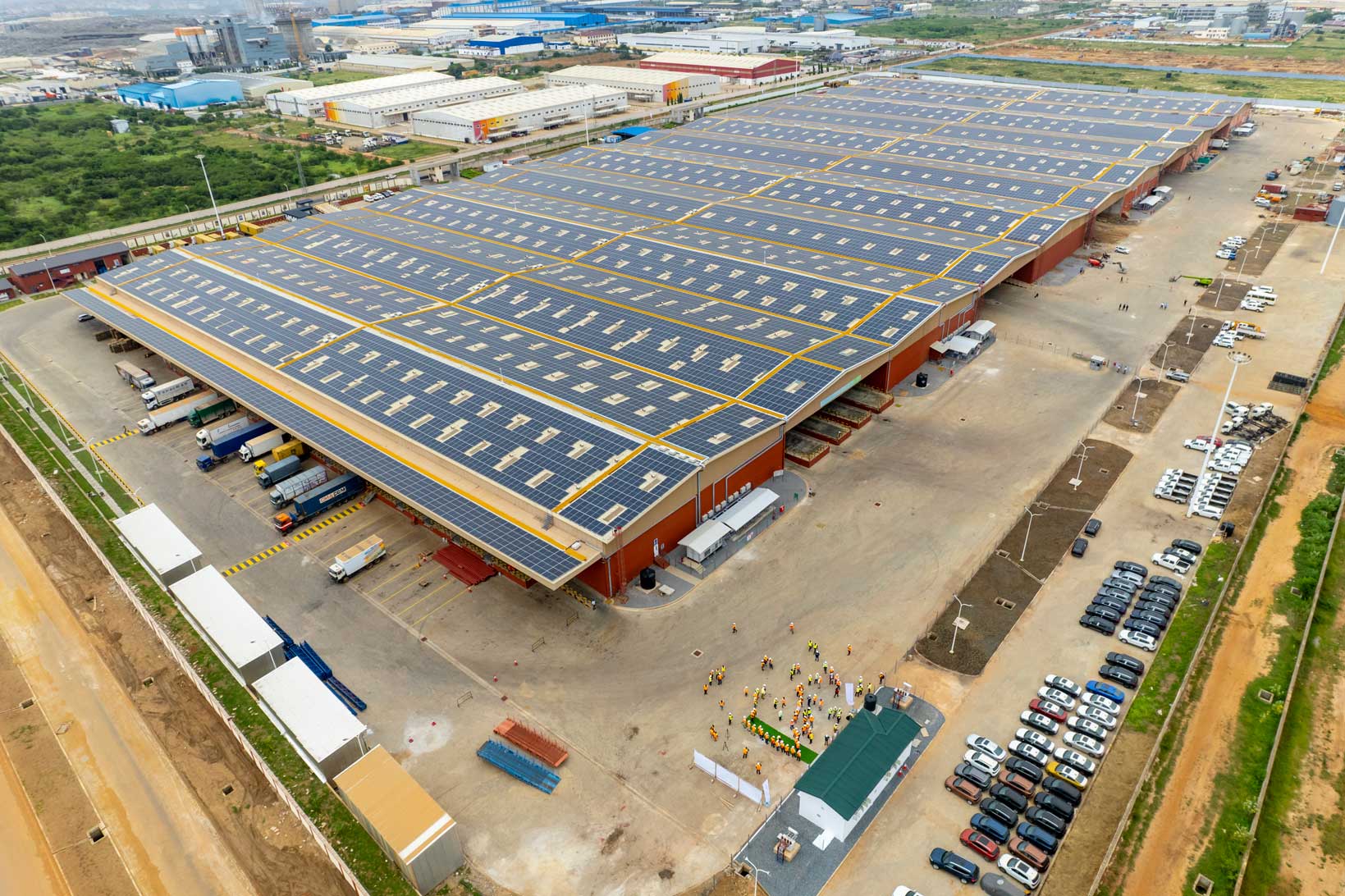
The IFC has previously supported the development of a 16.82MW rooftop solar PV plant in the Tema industrial zone—the largest single rooftop solar project in Africa—as well as a water treatment plant in the Dawa zone .
The Solar Revolution: 150MW and a 1,000MW Ambition
The Solar for Industries Project
LMI Holdings, through its subsidiary Helios Solar Company, is building the largest private-sector-led, utility-scale solar power project in West Africa . The 150MW solar photovoltaic plant will support business activity in LMI’s Tema and Dawa special industrial zones.
Project Details:
| Feature | Detail |
|---|---|
| Capacity | 150MW |
| Phase 1 | 100MW, scheduled for completion by October 2026 |
| Phase 2 | 50MW, scheduled for completion by June 2027 |
| Financing | IFC US$100 million loan facility; first tranche US$21 million |
| Offtaker | Enclave Power Company (EPC), distributing to industrial tenants |
| Carbon Reduction | Approximately 120,000 metric tons annually |
| Beneficiaries | More than 100 businesses in food processing, cement, steel, textiles, and light manufacturing |
The 1,000MW Ambition
Aduhene has set an ambitious target of 1,000MW of solar generation by 2032 . The 150MW project is described as “the start of our planned 1,000 MW solar farm” . The company has already unveiled the world’s third-largest rooftop solar farm in Tema’s Meridian Industrial Park and is integrating a 200MW solar farm sufficient to power about 150,000 homes .
The IFC financing underscores the credibility of LMI’s solar ambitions. In October 2026, the IFC approved US$39.5 million in solar financing for LMI Holdings .
Regulatory Challenges
Aduhene has been candid about the obstacles to scaling renewable energy in Ghana. He cited regulatory restrictions and the dominance of the public sector as major barriers. He argued that “investors would expand renewable projects if the framework guaranteed viable returns, particularly through reliable payments from distribution utilities” and suggested that “privatisation should be considered to ensure financial discipline and timely payment” .

The Saglemi Housing Project: A National Test Case
The Project
The Saglemi Housing Project was originally conceived as a 5,000-unit affordable housing estate under the late President John Evans Atta Mills. The project stalled after a change in government, with legal and investigative processes bringing construction to a halt. Prolonged inactivity left the site vulnerable to vandalism, with electrical cables, fittings, and underground telecommunications cables reportedly removed .
The government eventually decided to partner with the private sector to complete the development, selecting LMI Holdings to undertake the redevelopment .
The Commitment
During President John Dramani Mahama’s inspection of the project in August 2026, LMI Holdings committed to completing the first 700 housing units by March 2027, with the first phase of 1,500 units expected by December 2027 .
President Mahama urged prospective homeowners to register promptly once the sales portal opens, warning that demand would be high. He also noted that industries along the corridor, particularly around Tema and Dawa Industrial Park, could seek to acquire houses for their workers .
Supporting Infrastructure
The President announced that Saglemi would benefit from major supporting infrastructure, including improved road and railway connections. The government is dualising the road from Saglemi to Aflao, with the first phase under construction. A planned railway connection would transport passengers and cargo from Tema Port to the industrial park.
The TransVolta Logistics Network
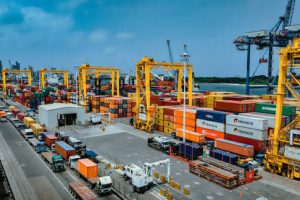
LMI Holdings is developing the TransVolta Logistics Network, a multi-modal logistics project aimed at addressing road congestion, freight inefficiencies, and vulnerabilities in Ghana’s food supply chain .
In November 2025, LMI hosted a high-level joint site visit to the proposed Asikuma Port, marking a milestone in Ghana’s journey towards a modern, integrated logistics ecosystem. The project integrates lake transport with rail and road systems, positioning Ghana as a strategic regional logistics gateway under AfCFTA and ECOWAS frameworks .
LMI is also building a 30-kilometre rail link to Ghana’s ports and two inland ports along a 500-kilometre waterway, which will reduce emissions and costs while efficiently moving goods to northern Ghana and landlocked countries .
The LMI Shamrock Ecosystem: Construction and Materials
LMI Holdings’ construction and engineering capabilities are consolidated under LMI Shamrock, which brings together three specialised subsidiaries :
| Subsidiary | Focus |
|---|---|
| John Murphy Construction | The founding company; civil engineering, roads, drainage, water treatment plants, industrial park development |
| Atlantic Quarry & Concrete Products | Ready-mix concrete, precast production (blocks, railway sleepers), quarry operations producing aggregates, ballast, and boulders |
| McKenzie Brown Engineering Ltd | Structural steel fabrication, roofing systems, and manufacturing for factories, warehouses, and large-scale infrastructure |
This vertically integrated model allows LMI to control the construction value chain from raw materials to finished infrastructure.
Challenges and Risks
Risk 1: Regulatory Barriers to Renewable Energy
Aduhene has identified regulatory restrictions and the dominance of the public sector as major obstacles to scaling solar generation. The company’s 1,000MW ambition depends on a more accommodating regulatory framework and reliable payments from distribution utilities .
Risk 2: Saglemi Execution Risk
The Saglemi housing project has a troubled history, including stalled construction and vandalism. Delivering 1,500 units by December 2027 is a significant operational test .
Risk 3: Currency and Financing Risk
The IFC loan facility is denominated in US dollars, exposing LMI to cedi depreciation. The company’s ability to service dollar-denominated debt depends on its revenue streams, which are largely in cedis.
Risk 4: Concentration in Industrial Parks
LMI’s utilities and solar businesses are heavily dependent on the success of its industrial parks. A downturn in tenant occupancy or industrial activity would affect power demand and revenue.
Risk 5: Infrastructure Execution
The TransVolta Logistics Network and the 30-kilometre rail link are large-scale infrastructure projects with significant execution and financing risks .
Future Outlook
LMI Holdings’ trajectory points toward deeper involvement in Ghana’s industrial and energy infrastructure. The 150MW solar project, backed by the IFC, is scheduled for completion in phases by June 2027 . The Saglemi housing redevelopment is targeted for first handover by March 2027 .
The company’s 1,000MW solar ambition by 2032 is the most consequential bet. If successful, it would position LMI as a major player in Ghana’s renewable energy sector and provide reliable, cost-effective power to its industrial tenants .
The core question is whether LMI can execute on multiple large-scale projects simultaneously—solar, housing, logistics, and industrial parks—while managing the regulatory, financial, and operational risks that accompany them.
Last Updated on November 11, 2026 by Samuel Kwame Boadu
Disclaimer: Some content on Accra Street Journal may be aggregated, summarized, or edited from third-party sources for informational purposes. Images and media are used under fair use or royalty-free licenses. Accra Street Journal is a subsidiary of SamBoad Publishing Hub under SamBoad Business Group Ltd, registered in Ghana since 2014.
For concerns or inquiries, please visit our Privacy Policy or Contact Page.

Samuel Kwame Boadu is a Ghanaian media entrepreneur and storyteller with a passion for amplifying urban voices and uncovering everyday truths. He is the Editor-in-Chief and Founder of Accra Street Journal, a dynamic digital platform dedicated to capturing the pulse of Ghana’s capital—its people, culture, challenges, business, sports and innovations.
Use the following reference when citing or referencing this article.
Your feedback helps us improve our journalism.
Report an Error
Help us maintain accuracy. Let our editorial team know if you spot an issue in this article.
Report a problem with this article