







4 min read
President John Dramani Mahama has announced a major offshore oil and gas discovery in Ghana’s Tano Basin made by Ghanaian-owned Planet One Oil and Gas Limited alongside GOIL Upstream and the Ghana National Petroleum Corporation, marking a significant milestone for indigenous capacity in deepwater exploration.
President John Dramani Mahama has announced a major new offshore oil and gas discovery in Ghana’s Tano Basin, marking a big win for the country’s energy sector and local Ghanaian businesses.
Key Takeaways
- President John Dramani Mahama has announced a major new offshore oil and gas discovery in Ghana's Tano Basin, marking a big win for the country's energy sector and local Ghanaian businesses.
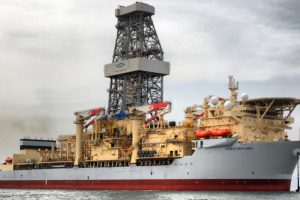
- The discovery was made at the Nya Gyidie-1X exploration well inside the Deepwater Cape Three Points block.
- Addressing over 1,000 energy delegates and industry leaders, President Mahama pointed to the discovery as clear evidence that government efforts to empower local Ghanaian businesses in the oil and gas sector are working.
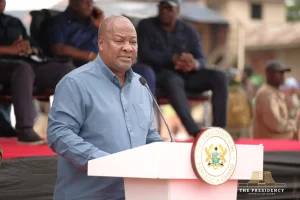
Speaking in Takoradi at the opening of the 2026 Petroleum Commission Local Content Conference, President Mahama revealed that the find was made by Ghanaian-owned Planet One Oil and Gas Limited, working alongside GOIL Upstream and the Ghana National Petroleum Corporation (GNPC).
A First for Ghanaian-Led Exploration
The discovery was made at the Nya Gyidie-1X exploration well inside the Deepwater Cape Three Points block.
The find is especially significant because it represents a major technical success in a unique rock formation — the Cenomanian-Turonian carbonate play — and proves that Ghanaian-owned companies have the capacity to lead complex, deepwater oil exploration.
The play type matters. Carbonate reservoirs of this age have been productive elsewhere along the West African margin but had not previously been proven in Ghana’s deepwater acreage. A commercial discovery in this formation would open a new exploration target across the basin, distinct from the turbidite sandstone plays that underpin Jubilee, TEN and Sankofa.
The Ownership Structure
Planet One took over the block after American energy firm ExxonMobil stepped away in 2021.
Today, Planet One leads the operation with a 75 per cent stake, while GNPC holds 15 per cent and GOIL Upstream holds 10 per cent.
The composition of that partnership is as notable as the discovery itself. ExxonMobil’s exit from Deepwater Cape Three Points in 2021 was widely read as a signal about the block’s prospectivity and about the difficulty of attracting major international operators to frontier acreage in Ghana. That a Ghanaian-led consortium took over, drilled, and made a discovery reverses that narrative — and does so in a deepwater environment where technical and capital demands are highest.
Turning Resources into Jobs and Local Growth
Addressing over 1,000 energy delegates and industry leaders, President Mahama pointed to the discovery as clear evidence that government efforts to empower local Ghanaian businesses in the oil and gas sector are working.
The President assured investors that the government is updating energy laws to bring in more investment, reverse declining oil output, and ensure that new discoveries lead directly to contract opportunities for local suppliers and solid jobs for Ghanaian youth.

That final commitment will be watched closely. Ghana’s local content framework has generated substantial procurement for indigenous firms, but the sector’s headline production has been declining as mature fields age. A new discovery provides an opportunity to test whether local content policy can convert exploration success into sustained industrial capacity, rather than one-off service contracts.
The Broader Context
The announcement comes at a delicate moment for Ghana’s petroleum sector. The state’s financial relationship with GNPC has come under scrutiny, with government debt to the national oil company raising solvency concerns and questions about the corporation’s ability to fund its share of development costs on new discoveries.

For Planet One and its partners, the next phase is appraisal — determining whether Nya Gyidie-1X represents a commercial accumulation and, if so, at what scale. Declaration of a discovery is the beginning of that process, not the end.
Quick Facts
President John Dramani Mahama announced a major offshore oil and gas discovery in Ghana’s Tano Basin at the Nya Gyidie-1X exploration well in the Deepwater Cape Three Points block, made by Ghanaian-owned Planet One Oil and Gas Limited with GOIL Upstream and GNPC.
The find is a technical success in the Cenomanian-Turonian carbonate play, demonstrating Ghanaian capacity for complex deepwater exploration. Planet One holds 75%, GNPC 15% and GOIL Upstream 10%, after taking over the block following ExxonMobil’s exit in 2021.
Mahama told over 1,000 delegates at the 2026 Petroleum Commission Local Content Conference in Takoradi that government is updating energy laws to attract investment, reverse declining output and ensure discoveries generate local supplier contracts and youth employment.
Source: Accra Street Journal
Last Updated on November 11, 2026 by Samuel Kwame Boadu
Disclaimer: Some content on Accra Street Journal may be aggregated, summarized, or edited from third-party sources for informational purposes. Images and media are used under fair use or royalty-free licenses. Accra Street Journal is a subsidiary of SamBoad Publishing Hub under SamBoad Business Group Ltd, registered in Ghana since 2014.
For concerns or inquiries, please visit our Privacy Policy or Contact Page.

Samuel Kwame Boadu is a Ghanaian media entrepreneur and storyteller with a passion for amplifying urban voices and uncovering everyday truths. He is the Editor-in-Chief and Founder of Accra Street Journal, a dynamic digital platform dedicated to capturing the pulse of Ghana’s capital—its people, culture, challenges, business, sports and innovations.
Use the following reference when citing or referencing this article.

Your feedback helps us improve our journalism.
Report an Error
Help us maintain accuracy. Let our editorial team know if you spot an issue in this article.
Report a problem with this article