





13 min read
Introduction
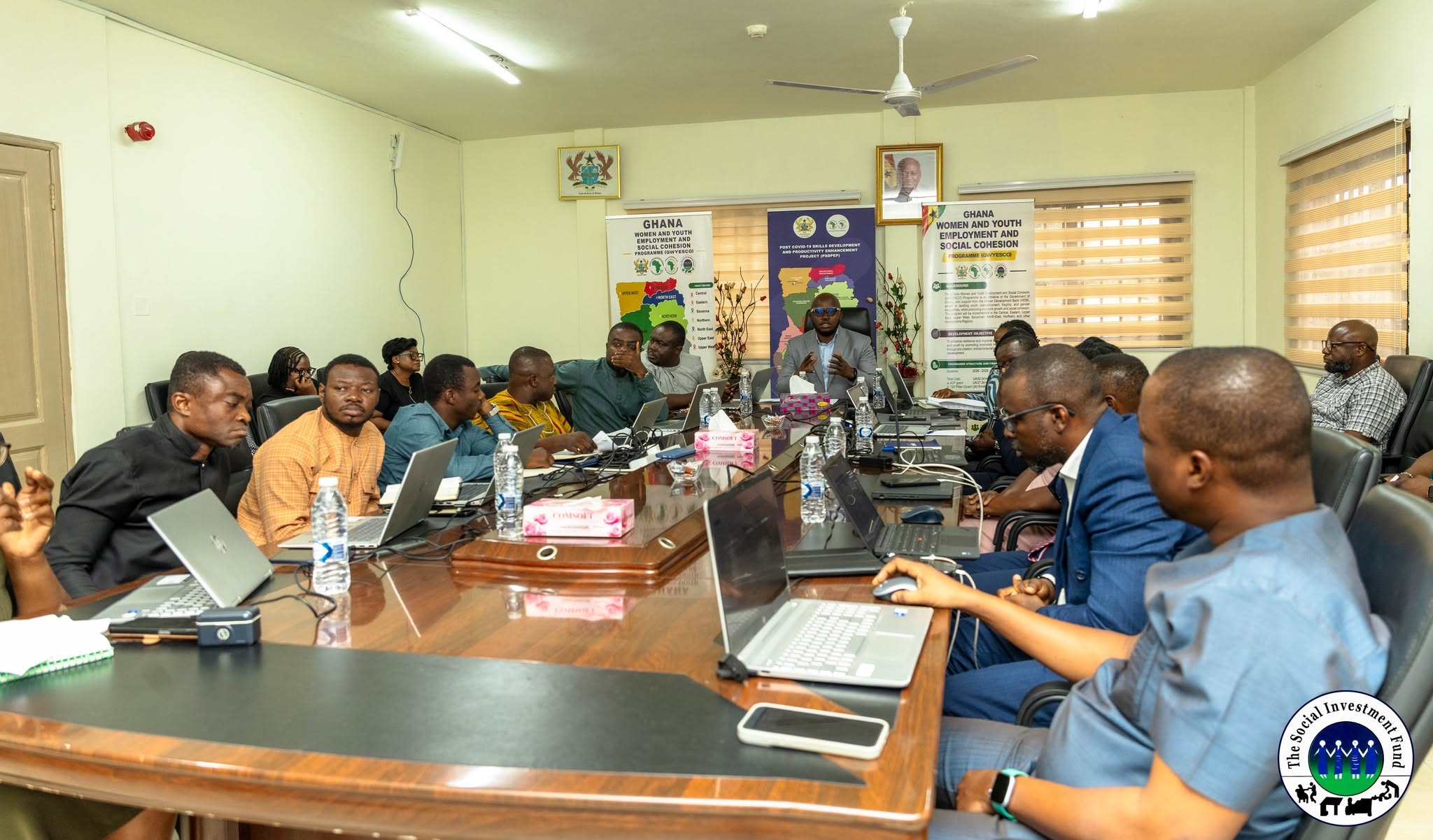
Ghana’s green economy is no longer just a policy aspiration. It is becoming a business reality, driven by companies that see opportunity in the transition away from fossil fuels and wasteful practices.
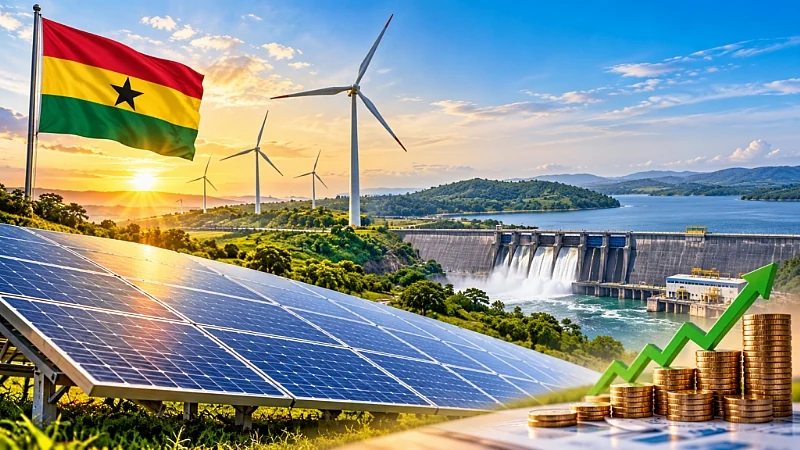
The numbers tell part of the story. Ghana reached 276.7 MW of installed solar capacity by the end of 2025, and the government’s Renewable Energy Master Plan targets 852 MW of new utility-scale solar and 214 MW of distributed solar by 2030 . But the real action is happening in the private sector, where companies are financing, building, and operating the infrastructure that will power Ghana’s green future.
Key Takeaways
- Ghana reached 276.7 MW of installed solar capacity by the end of 2025, and the government's Renewable Energy Master Plan targets 852 MW of new utility-scale solar and 214 MW of distributed solar by 2030 .
- In November 2026, the locally owned conglomerate secured an $88.6 million financing package for a 100 MW solar project in Dawa, southern Ghana.
- The Dawa solar project's $88.6 million package, backed by IFC, EAAIF, Ninety One, and IDA, shows that international development finance is willing to fund well-structured renewable energy projects in Ghana .
This article profiles the companies leading this shift. It covers the large-scale solar developers, the clean energy financing innovators, the waste-to-energy pioneers, and the startups turning agricultural waste into useful products. It also looks at the policy and investment environment shaping their prospects.
The Solar Power Developers
LMI Holdings and the Dawa Solar Project
LMI Holdings is the most ambitious player in Ghana’s utility-scale solar market. In November 2026, the locally owned conglomerate secured an $88.6 million financing package for a 100 MW solar project in Dawa, southern Ghana. The project is being developed through its subsidiaries Solar for Industries Ltd (SFI) and Enclave Power Company Ltd (EPCL), Ghana’s first and only licensed private electricity distributor .
The financing structure is notable. The International Finance Corporation provided a direct loan of $24.2 million. The Emerging Africa & Asia Infrastructure Fund and Ninety One committed a combined $18.15 million in senior secured debt. The World Bank’s IDA participated in the co-financed debt package. LMI Holdings contributed $28 million in equity .
The first phase is expected to generate 129.5 GWh of electricity annually. EPCL will wheel the power approximately 40 km across Ghana’s national grid to industrial customers in the Tema Free Zone and Dawa Industrial Zone, serving more than 95 industrial tenants . This is significant because it targets energy-intensive manufacturers in sectors like cocoa processing, cement, and steel, helping them lower electricity costs and reduce emissions.
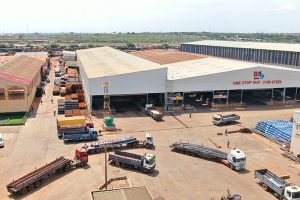
LMI’s track record includes the 16.82 MW Helios Solar rooftop project in Tema, described as Africa’s largest single rooftop solar installation. Mounted across 95,754 square metres of warehouse roofing, it comprises 29,262 solar panels and generates approximately 24,750 MWh of clean electricity annually, reducing carbon emissions by more than 11,000 tons each year . LMI’s goal is to reach 1,000 MW by 2030 .
Helios Solar
Helios Solar, a subsidiary of LMI Holdings, operates the Tema rooftop installation and serves as the operational proof that large-scale solar can work for Ghanaian industry. The facility’s net metering arrangement with the Electricity Company of Ghana allows excess power to be credited, creating measurable economic value . Helios is not just a demonstration project. It is a working model of how industrial solar can reduce costs and emissions simultaneously.
Clean Energy Financing and Service Models
CIPA Holdings Group
CIPA Holdings Group was named Renewable Energy Solutions and Sustainable Infrastructure Company of the Year at the 3rd Ghana Business Integrity Awards in 2026. Its founder and CEO, Kwaku Osei Sarpong, received the Visionary Leader in Clean Energy Financing and Sustainable Infrastructure Development Award.
CIPA’s model is different from LMI’s. It operates as an “Institutional Integrator,” working at the intersection of policy, capital, and project execution. Its energy development subsidiary, CIPA Energy Resources, develops, finances, implements, and manages clean energy infrastructure including solar PV systems and battery energy storage. It delivers projects through a Solar as a Service model, where clients pay for the energy they consume rather than making large upfront investments. CIPA develops financing models in partnership with banks, pension funds, development finance institutions, and private investors.

This model matters because it removes the capital barrier that prevents many businesses from going solar. A factory or commercial building that cannot afford to buy and install a solar system can still benefit from clean energy by paying CIPA for the service. The company’s recognition for integrity and governance is also significant, because renewable energy projects depend on trust between developers, financiers, and clients.
Waste-to-Energy and Circular Economy Innovators
Safisana Ghana
Safisana operates West Africa’s first waste-to-energy plant, located along the Adjei Kojo–Santeo stretch in Tema West. The facility converts organic waste, including faecal sludge and agricultural waste, into electricity and compost. Methane gas extracted from the waste powers a 100-kilowatt generator connected to the national grid through a power purchasing agreement with the Electricity Company of Ghana. A net metering system measures and credits electricity exported to the grid .

Safisana’s model addresses two problems at once: waste management and energy generation. In a city like Accra, where sanitation infrastructure is strained, the ability to turn waste into power is not just an environmental benefit. It is a practical solution to a public health challenge.
Pure Lube
Pure Lube Limited, a Ghanaian agribusiness startup, won the 2026 GreenTech Innovation Challenge with a product that turns cashew nutshell liquid, an agricultural by-product, into biodegradable, high-performance grease. The company received GH¢150,000 to scale up operations .
The innovation addresses two challenges: the mismanagement of waste from cashew processing and the high cost of petroleum-based lubricants. The product has anti-oxidative properties and thermal stability above 250 degrees Celsius, making it suitable for high-temperature applications. As the company’s quality assurance manager put it: “Our grease is affordable and eco-friendly, which is a plus” .
Pure Lube represents the kind of green innovation that Ghana needs more of: locally developed, using local materials, solving local problems, and creating economic value from what would otherwise be waste.
EcoHusk Energy
EcoHusk Energy, founded by Amina Bimunka Mohammed, processes rice husks, groundnut shells, coconut husks, and corn waste into briquettes using pyrolysis, a low-oxygen heating process. The resulting fuel is an alternative to conventional charcoal and is reported to burn two to three times longer. The innovation was part of the CircularEconomy4Ghana Innovative Challenge 2026 .
EcoHusk’s work addresses a practical problem: charcoal is a major source of cooking fuel in Ghana, but it contributes to deforestation and indoor air pollution. Briquettes made from agricultural waste offer a cleaner alternative while creating value from materials that would otherwise be discarded.
Electric Mobility and Transport
Electric Cargo Bikes
The “Electric Cargo Bikes Made in Ghana” project, funded by the International Climate Initiative, demonstrated that locally manufactured electric cargo bikes can be produced, operated, and maintained in Ghana. Seventeen bikes were manufactured and tested, with more than 65 percent of components sourced locally or from recycled materials. The pilot bikes covered over 65,000 kilometres, avoiding more than 5 tonnes of CO₂ emissions and creating 24 jobs .
The project has since scaled. More than 300 electric cargo bikes are now operating in Accra, creating over 400 green jobs, mainly for young people and women. A subscription-based leasing model tested with delivery platforms proved economically viable, with riders reporting reduced daily operating costs .
This is a model of green innovation that directly benefits ordinary Ghanaians: delivery riders earn more because their operating costs are lower, and the city breathes cleaner air.
Reforestation and Carbon Initiatives
Tree for Life Initiative
The government’s Tree for Life Reforestation Initiative, launched in its second edition in 2026, planted over 30 million seedlings in 2025, creating more than 41,000 jobs. The target for 2026 is another 30 million seedlings. Under the 2025 initiative, 23,600 hectares of degraded landscapes were restored .

The Minister for Lands and Natural Resources framed forests as economic assets, pointing to opportunities in carbon credits, sustainable timber, ecotourism, and pharmaceuticals. “A standing, thriving tree is not just an ecological asset but a financial one,” he said .
Zijin and MIIF Reforestation Partnership
Zijin Golden Ridge Limited, which acquired Newmont’s Akyem mine for $1 billion in 2025, partnered with the Minerals Income Investment Fund to restore degraded forest reserves. The partnership supports MIIF’s ESG initiative in the Subri Forest Reserve in the Western Region, where the Forestry Commission has allocated 50 hectares for reforestation. Zijin has already reforested 317 acres within the Ajenjua Bepo and Kweikaro Forest Reserves, about three times its mining footprint .
This is corporate investment in sustainability that is tied to a company’s environmental permit obligations, but it also reflects a growing recognition among mining companies that their social license to operate depends on environmental performance.
The Policy and Investment Context
The regulatory environment for sustainability in Ghana is tightening. The Bank of Ghana, SEC, NIC, and NPRA are expected to converge around ESG integration themes in the next 24 months, including governance requirements, ESG risk management, due diligence, capacity building, disclosure, and supervisory review. The Institute of Chartered Accountants Ghana’s IFRS S1/S2 roadmap will make sustainability reporting mandatory for listed companies and specified regulated businesses from 2027 .
For companies in the renewable energy and green innovation space, this creates both pressure and opportunity. Pressure, because compliance requires investment in reporting systems and governance. Opportunity, because a clear regulatory framework makes it easier to attract international capital that demands ESG standards.
The financing landscape is also improving. The Dawa solar project’s $88.6 million package, backed by IFC, EAAIF, Ninety One, and IDA, shows that international development finance is willing to fund well-structured renewable energy projects in Ghana . The GreenTech Innovation Challenge, organised by Fidelity Bank and Innohub, provides grants and business development support to early-stage green startups .
Challenges
The obstacles facing Ghana’s green economy are real.
Access to finance for smaller players. While LMI Holdings can secure $88.6 million from international lenders, smaller innovators like Pure Lube and EcoHusk operate on grants and small equity rounds. Scaling requires capital that is hard to access.
Infrastructure and grid capacity. Solar projects depend on the national grid to distribute power. Grid reliability and capacity constraints affect how much renewable energy can be integrated.
Policy consistency. The renewable energy sector needs stable, predictable policies to attract long-term investment. Changes in tariffs, regulations, or incentives can undermine projects that take years to develop.
The informal sector’s footprint. Much of Ghana’s economy operates informally, where environmental regulations are harder to enforce and green practices are less accessible. The transition to a green economy must include the informal sector or it will remain partial.
Climate vulnerability. Ghana is already experiencing the effects of climate change, from erratic rainfall to coastal erosion. Companies in the green economy are responding to these challenges, but adaptation requires investment that is often scarce.
Why It Matters to Ordinary Ghanaians
The green economy is not just about companies making money. It affects daily life in concrete ways.
Cleaner air and water. Solar power and waste-to-energy reduce reliance on fossil fuels and improve waste management. This means cleaner air in cities and less pollution in waterways. The reduction in emissions from industrial solar projects like Dawa directly benefits the communities around them.
Jobs. The electric cargo bike sector has created over 400 green jobs, mainly for young people and women . The Tree for Life initiative created over 41,000 jobs in 2025 . Renewable energy projects create construction jobs, operations jobs, and maintenance jobs. These are not just environmental benefits. They are livelihoods.
Lower energy costs. Industrial solar projects help manufacturers reduce electricity costs, which can translate into more competitive prices for goods and more stable businesses . For ordinary consumers, the benefits are indirect but real: a manufacturing sector that is not burdened by high energy costs is more likely to grow and hire.
A healthier environment. The reforestation initiatives, the waste-to-energy plant, and the circular economy innovations all contribute to a cleaner, healthier environment. This matters for communities that live near mining sites, industrial zones, and polluted waterways.
Future Outlook
The direction of Ghana’s green economy is clear: more renewable energy, more circular economy innovation, and more pressure on companies to demonstrate sustainability.
If current trends continue, utility-scale solar will grow, driven by industrial demand and international finance. CIPA’s Solar as a Service model and LMI’s expansion will provide clean power to more businesses. The electric mobility sector will scale beyond Accra. And the regulatory push for ESG reporting will make sustainability a board-level concern for every large company.
The risks are equally clear. If financing dries up, smaller innovators will struggle. If grid infrastructure does not keep pace, solar projects will face constraints. If policy becomes unpredictable, investors will hesitate.
The most likely scenario is uneven progress. The large, well-financed projects will succeed. The smaller, innovative startups will need support to scale. And the benefits will concentrate in Accra and industrial zones unless deliberate efforts are made to spread them.
The wild card is carbon markets. If Ghana can develop credible carbon credit projects, the economic value of standing forests and clean energy projects could increase significantly. The government has signaled interest in this area, but the frameworks are still developing.
Quick Facts
Topic: Companies Leading Sustainability and Green Innovation in Ghana
Installed Solar Capacity (end 2025): 276.7 MW
REMP Target: 852 MW utility-scale + 214 MW distributed solar by 2030
Largest Solar Financing: $88.6 million for 100 MW Dawa project
Key Solar Developer: LMI Holdings (through SFI and EPCL)
Clean Energy Financing Innovator: CIPA Holdings (Solar as a Service)
Waste-to-Energy Pioneer: Safisana Ghana (100 kW from organic waste)
Green Startup Winner: Pure Lube (cashew waste to lubricant, GH¢150,000)
Reforestation Impact (2025): 30.8 million seedlings, 23,600 hectares restored, 41,000+ jobs
Electric Cargo Bikes in Accra: 300+ operating, 400+ green jobs created
Key Regulators: Bank of Ghana, SEC, NIC, NPRA (ESG integration); ICAG (sustainability reporting)
FAQ Section
1. Which company is leading solar development in Ghana?
LMI Holdings, through its subsidiaries Solar for Industries Ltd and Enclave Power Company, is developing a 100 MW solar project in Dawa with $88.6 million in financing. It also operates the 16.82 MW Helios Solar rooftop installation in Tema .
2. What is the Dawa solar project?
A 100 MW solar plant in southern Ghana, the first phase of a planned 200 MW development. It will supply power to more than 95 industrial tenants in the Tema Free Zone and Dawa Industrial Zone .
3. What is Solar as a Service?
A model offered by CIPA Holdings where clients pay for the energy they consume rather than buying and installing solar systems themselves. CIPA designs, finances, installs, owns, operates, and maintains the assets .
4. What is Safisana?
Safisana Ghana operates West Africa’s first waste-to-energy plant in Tema West. It converts organic waste into electricity and compost, with a 100 kW generator connected to the national grid .
5. What is Pure Lube?
A Ghanaian startup that produces biodegradable grease from cashew nutshell liquid, an agricultural by-product. It won the 2026 GreenTech Innovation Challenge and received GH¢150,000 to scale up .
6. How many jobs has the Tree for Life initiative created?
Over 30 million seedlings were planted in 2025, creating more than 41,000 jobs. The target for 2026 is another 30 million seedlings .
7. Are electric cargo bikes used in Ghana?
Yes. More than 300 electric cargo bikes are operating in Accra, creating over 400 green jobs. The project demonstrated that locally manufactured e-bikes can reduce emissions and operating costs for delivery riders .
8. What ESG regulations affect companies in Ghana?
The Bank of Ghana, SEC, NIC, and NPRA are integrating ESG into supervision and reporting. ICAG’s IFRS S1/S2 roadmap will make sustainability reporting mandatory for listed companies and specified regulated businesses from 2027 .
9. What is Ghana’s renewable energy target?
The Renewable Energy Master Plan targets 852 MW of new utility-scale solar, 214 MW of distributed solar, and 1.97 GWh of battery storage by 2030 .
10. How can smaller green innovators get funding in Ghana?
Programmes like the GreenTech Innovation Challenge (Fidelity Bank and Innohub) provide grants and business development support. The CircularEconomy4Ghana Innovative Challenge also supports early-stage circular economy startups
Source: Accra Street Journal
Last Updated on November 26, 2026 by Samuel Kwame Boadu
Disclaimer: Some content on Accra Street Journal may be aggregated, summarized, or edited from third-party sources for informational purposes. Images and media are used under fair use or royalty-free licenses. Accra Street Journal is a subsidiary of SamBoad Publishing Hub under SamBoad Business Group Ltd, registered in Ghana since 2014.
For concerns or inquiries, please visit our Privacy Policy or Contact Page.

Samuel Kwame Boadu is a Ghanaian media entrepreneur and storyteller with a passion for amplifying urban voices and uncovering everyday truths. He is the Editor-in-Chief and Founder of Accra Street Journal, a dynamic digital platform dedicated to capturing the pulse of Ghana’s capital—its people, culture, challenges, business, sports and innovations.
Use the following reference when citing or referencing this article.
Your feedback helps us improve our journalism.
Report an Error
Help us maintain accuracy. Let our editorial team know if you spot an issue in this article.
Report a problem with this article