





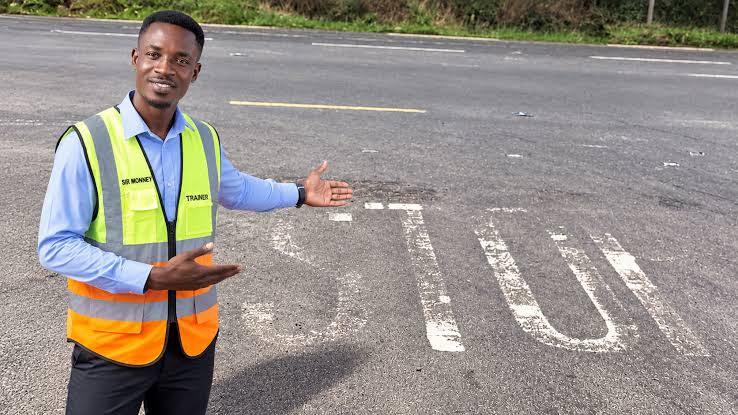
The cameras are live. The text messages are ready. But as the November 1 rollout arrives, a coalition of transport operators is threatening a nationwide shutdown, arguing that a digital system cannot enforce discipline on roads that remain physically broken.
The System: How TraffiTech-GH Actually Works
TraffiTech-GH is not a single camera. It is an ecosystem of fixed junction cameras, in-vehicle units, handheld laser devices, and tripod-mounted speed cameras, all feeding into regional back offices where police officers review footage before issuing electronic fines .

The technical backbone comes from a partnership with Sensys Gatso, a Swedish traffic enforcement technology firm, operating through a Ghanaian private-sector partner, Nationwide Traffic Management & Enforcement Limited (NTMEL). The project has been in development, in various forms, since around 2008 .
📢 GET A DETAILED ARTICLES + JOBS
Join ASJ's WhatsApp Channel and never miss a post or opportunity.

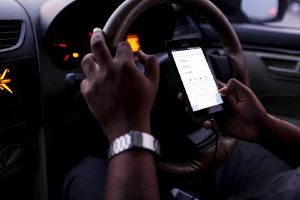
When a camera captures an offence—speeding, running a red light, crossing white lines—the footage is transmitted to a back office. An officer validates the evidence, and an SMS is sent from the sender ID “GPS-MTTD” to the vehicle owner. The message includes a link to view the video evidence, the date, time, and location of the offence, and the prescribed fine .
The registered owner is liable, regardless of who was driving . This is a critical detail. If you lend your car to a friend who speeds, the fine lands on your phone.

The Fines: A Sliding Scale That Grows
The penalty structure is designed to escalate. The first three offences attract a fine of GH¢120. A fourth offence rises to GH¢180, and a fifth to GH¢240. A sixth offence within 24 months can result in a court appearance and a licence suspension of at least one year .
Payment is due within 14 days. A reminder is sent on day seven. From day fifteen, a 1% surcharge is added daily. An unpaid GH¢120 fine becomes GH¢240 after 100 days of default, with no published cap .
The enforcement mechanism extends beyond the fine itself. Unpaid fines can block access to DVLA services—renewing a licence, transferring a vehicle, or registering a new one. Officials have also floated the possibility of restricting access to certain public services tied to the Ghana Card for persistent defaulters .
Motorists can contest a ticket through an online system, after which they are directed to the nearest police station to present their case .
The Case for the System: Discipline Without Confrontation
The government’s argument is straightforward. Speeding accounts for a staggering share of Ghana’s road crashes—one analysis cited figures suggesting 62 of every 100 crashes are speed-related . Human enforcement has failed to curb the carnage, and the police are too stretched, or too compromised, to be everywhere at once.
Transport Minister Joseph Bukari Nikpe framed the system as a tool to “punish indisciplined drivers” and reduce fatalities through automation . The MTTD’s ACP Alexander Kwaku Obeng emphasised that the system gathers “credible evidence” without the need for roadside confrontations, arrests, or the motor courts that clog the justice system .
For some drivers, the appeal is personal. Tech entrepreneur Cecil Ebow Garbrah recounted receiving an automated speeding notification while driving a borrowed car. He had been clocked at 60 km/h in a 50 km/h zone. The notification went to the vehicle owner, not him. Despite the fine, he argued the system could make enforcement less stressful, removing the “hell” of being stopped by police .
The Pushback: “You Cannot Digitalise Illegality”
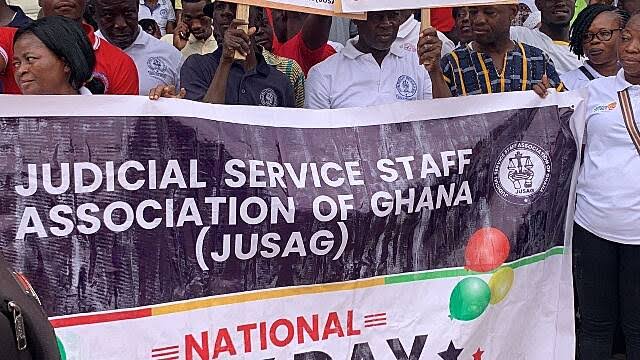
Not everyone is convinced. The most immediate threat comes from the Ghana Private Road Transport Union (GPRTU), the Commercial Transport Operators of Ghana, and the Concerned Drivers Association of Ghana. They have threatened a nationwide suspension of services from November 1, the very day the system goes live .
Their argument is not that traffic laws should be ignored. It is that the roads themselves are not ready for automated enforcement.

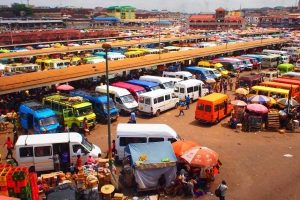
Specifically, they point to Regulation 142 of the Road Traffic Regulations, 2012 (L.I. 2180), which they say provides the legal basis for clearing traders from bus stops and pedestrian walkways. They gave the government until October 20 to enforce it. The deadline passed. Traders remain at major terminals—Kaneshie, Circle, Madina, Kasoa, Kejetia—occupying the spaces drivers need to pick up and drop off passengers .
The operators argue that fining drivers for stopping in spaces that are legally theirs, but physically occupied by traders, is unjust. “You cannot digitalise illegality,” their statement read .
There is also a readiness question. The GPRTU’s Deputy PRO, Samuel Amoah, acknowledged the system’s potential to reduce corruption, but questioned whether the infrastructure and training were complete. He claimed some police officers themselves did not fully understand how the system operates . He called for a postponement to 2027 to allow for effective education and sensitisation .
A separate coalition of transport operators in the Volta Region expressed mixed feelings. Some welcomed the reduction in bribery opportunities; others worried about technical failures and the fairness of penalising drivers for camera malfunctions .
The Road Reality: Potholes, Faded Lines, and Broken Lights
The most pointed critique came from a Graphic Online commentary published just days before the rollout. It did not dispute the need for discipline. It asked a simpler question: are the roads ready?
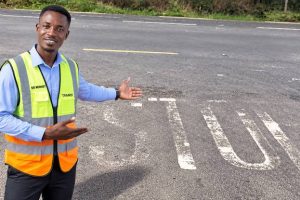
The article catalogued the physical deficiencies that drivers face daily: bumpy roads, potholes that have developed into manholes, traffic lights at major intersections that are habitually out of order, road markings that are either non-existent or badly faded, and zebra crossings and white lines that have worn away .
It also raised the issue of obstructions. Advertisers’ billboards are sited dangerously at some junctions, blocking drivers’ views. Second-hand tyre dealers occupy pavements, causing traffic nuisance whenever customers stop. And criminals have been removing metal drainage covers, leaving gaping holes in the middle of roads .
“If the same roads that drivers drive on are bedevilled with problems, how fair is it for the traffic police to impose sanctions when the roads are not conducive in the first place?” the article asked .
The trotro drivers’ complaint about traders is a specific instance of this broader problem. The enforcement cameras will capture a driver stopping where they should not. They will not capture the trader who made the designated stop unusable.
The Political Economy: A Long Road to November 1
The rollout has already been postponed once. The original date was October 1, 2026. It was pushed to November 1 following what The Ghana Report described as “murmurings about poor sensitisation” .
The project’s history is a case study in Ghanaian public-private partnership persistence. NTMEL, led by Frank Osei, pushed the concept through successive administrations. An agreement was reached in 2016, deployment was planned for 2017, and a presidential road-safety action plan in 2018 directed a partnership with NTMEL. A promised GH¢335 million a year for three years, partly to pay for road signs and markings alongside the technology, did not materialise as planned. The towing scheme collapsed .

Now, under the current administration, the system is being bulldozed through. The legal framework—the Road Traffic (Amendment) Act, 2025 (Act 1153) and the Road Traffic Regulations, 2026 (L.I. 2519)—has been laid.
ASJ Bottom Line
TraffiTech-GH is a technologically sophisticated answer to a problem that is only partly technological. The cameras can capture a speeding vehicle. They cannot fix a pothole, replace a broken traffic light, or clear a trader from a bus stop.
The government’s bet is that automation will instil discipline where human enforcement failed, and that the revenue from fines will help fund the system. The transport operators’ bet is that the public will not accept fines for breaking rules that the state itself has made impossible to follow.
For the ordinary driver, the practical reality is this: from November 1, if you speed, you will likely be caught. The fine will arrive by text. You will have 14 days to pay, or contest it at a police station. And if you ignore it, the consequences will follow you to the DVLA counter.
Whether the roads you are driving on are worthy of that enforcement is a question the cameras cannot answer.
Quick Facts
| Topic | Details |
|---|---|
| System Name | TraffiTech-GH |
| Rollout Date | 1 November 2026 (postponed from 1 October) |
| Technology Partner | Sensys Gatso (Sweden) / NTMEL |
| First Fine | GH¢120 |
| Subsequent Fines | GH¢180 (4th), GH¢240 (5th) |
| Payment Window | 14 days |
| Late Surcharge | 1% per day from day 15 |
| Enforcement Lever | DVLA service block for defaulters |
| Transport Operator Stance | Threat of nationwide shutdown |
Frequently Asked Questions
1. What is TraffiTech-GH?
It is Ghana’s automated traffic enforcement system, using fixed cameras, in-vehicle units, and handheld devices to detect offences like speeding and red-light running, then issuing fines by SMS to vehicle owners .
2. When did TraffiTech-GH start?
The rollout was scheduled for 1 November 2026, after an initial October 1 date was postponed due to concerns about public sensitisation .
3. How much are TraffiTech-GH fines?
The first three offences attract GH¢120. The fourth is GH¢180, and the fifth is GH¢240. A sixth offence within 24 months can lead to court and licence suspension .
4. Who pays the fine if I lend my car to someone?
The registered owner is liable, regardless of who was driving. The SMS goes to the vehicle owner’s phone .
5. What happens if I don’t pay a TraffiTech fine?
After 14 days, a 1% daily surcharge is added. Unpaid fines can block access to DVLA services, and officials have floated restrictions on Ghana Card-linked public services for persistent defaulters.
6. Why are transport operators threatening a shutdown?
The GPRTU and allied groups argue that traders occupy designated bus stops, making it impossible for drivers to comply with traffic rules. They say the government failed to enforce the regulation clearing these spaces before activating the cameras .
7. Can I contest a TraffiTech fine?
Yes. The SMS includes a link to view the video evidence, and motorists can contest the ticket online before attending a hearing at an MTTD station .
8. What offences does TraffiTech-GH capture?
The system initially focuses on speeding (50 km/h in towns, 90 km/h on highways, 100 km/h on motorways), but the broader legal framework covers red-light violations, crossing white lines, and dozens of other offences .
9. Is the technology reliable?
The system uses Sensys Gatso technology, which is deployed internationally. However, critics have raised concerns about technical failures, the fairness of penalising drivers for camera malfunctions, and the adequacy of public education .
10. What is the government’s argument for TraffiTech-GH?
The government says speeding accounts for a majority of road crashes, and that automated enforcement provides credible evidence, reduces corruption, and removes the need for roadside confrontations between police and drivers
Source: Accra Street Journal
Last Updated on November 1, 2026 by Samuel Kwame Boadu
Disclaimer: Some content on Accra Street Journal may be aggregated, summarized, or edited from third-party sources for informational purposes. Images and media are used under fair use or royalty-free licenses. Accra Street Journal is a subsidiary of SamBoad Publishing Hub under SamBoad Business Group Ltd, registered in Ghana since 2014.
For concerns or inquiries, please visit our Privacy Policy or Contact Page.

Samuel Kwame Boadu is a Ghanaian media entrepreneur and storyteller with a passion for amplifying urban voices and uncovering everyday truths. He is the Editor-in-Chief and Founder of Accra Street Journal, a dynamic digital platform dedicated to capturing the pulse of Ghana’s capital—its people, culture, challenges, business, sports and innovations.