







4 min read
The African Development Bank has run back-to-back supervision missions at Ghana’s Social Investment Fund — one on Results-Based Financing for the GWYESCO programme, another assessing progress on the Post-COVID-19 Skills Development and Productivity Enhancement Project — as the Fund moves to tie disbursements directly to verified results.
The second day of the GWYESCO Supervision Mission, held on Tuesday, November 24, 2026, focused on strengthening results management and performance monitoring to ensure effective programme delivery.
Key Takeaways
- The second day of the GWYESCO Supervision Mission, held on Tuesday, November 24, 2026, focused on strengthening results management and performance monitoring to ensure effective programme delivery.
- The mission commenced with a training session on "Introduction to the Results-Based Financing (RBF) Instrument: Framework, Principles and Strategic Relevance for GWYESCO."
- Participants examined RBF principles, operational framework and strategic relevance, with emphasis on linking resource disbursement to measurable results and strengthening accountability, transparency and performance under GWYESCO.
The sessions explored good practices in Results-Based Management, verification and disbursement processes, as well as the respective roles of the Independent Verification Agent (IVA) and Implementing Agencies in the verification process.
The discussions provided valuable insights into how performance can be measured, results verified and resources disbursed transparently to ensure accountability and sustainable impact under GWYESCO.
The RBF Training
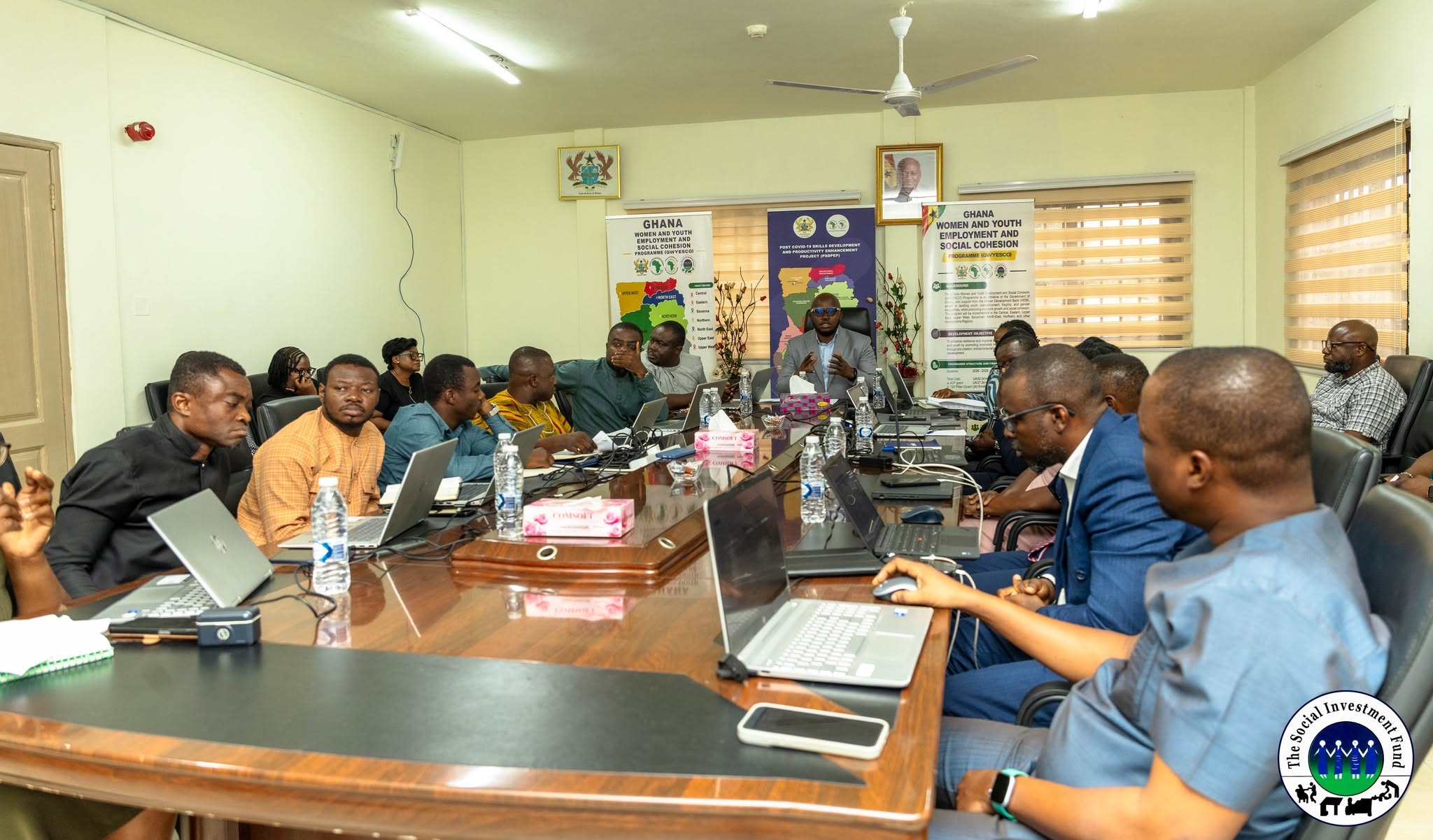
The GWYESCO Mission featured an insightful training session bringing together the AfDB, Ministry of Finance, KPMG and SIF to deepen understanding of the Results-Based Financing (RBF) framework and its role in driving results, transparency and effective programme implementation.
The mission commenced with a training session on “Introduction to the Results-Based Financing (RBF) Instrument: Framework, Principles and Strategic Relevance for GWYESCO.”
Held at the Social Investment Fund (SIF) Conference Room on November 23, 2026, the session brought together representatives from the African Development Bank (AfDB), the Ministry of Finance, KPMG and SIF to deepen their understanding of the RBF framework and its application to GWYESCO implementation.
Participants explored the key principles, operational framework and strategic relevance of RBF, with emphasis on strengthening programme implementation, accountability, transparency and performance.
Through interactive discussions and knowledge sharing, the session highlighted how Results-Based Financing links the disbursement of resources to measurable results, promotes efficiency and ensures that programme interventions achieve their intended outcomes.
Why RBF Matters Here
The shift to results-based financing is a meaningful change in how development money moves through Ghanaian institutions.

Under traditional project financing, funds are disbursed against budgets and activity plans — a school is built, a training workshop is held, a report is submitted. Under RBF, disbursement follows verified results: a number of businesses actually financed, jobs actually created, beneficiaries actually trained.
That distinction places new demands on implementing agencies. It requires measurable indicators, credible data systems, and independent verification — precisely the areas the mission’s second day addressed.

The involvement of KPMG signals the verification architecture, while the Independent Verification Agent role establishes a check separate from the agencies delivering the programme.
The PSDPEP Supervision Mission
Separately, the African Development Bank undertook a supervision mission to SIF from November 1 to 10, 2026, to assess progress in implementing the Post-COVID-19 Skills Development and Productivity Enhancement Project (PSDPEP).
As part of the mission, the AfDB team visited selected beneficiary institutions and project sites, including:
-
The Ghana News Agency (GNA) offices in Accra and Takoradi
-
The Technical Training Centre at Abetifi
-
The Biotechnology Centre, Department of Medical Microbiology and School of Nursing and Midwifery at the University of Ghana
The supervision mission also offered an opportunity to identify implementation challenges, gather feedback from stakeholders, and explore ways to strengthen project delivery to ensure the achievement of its intended objectives.
The Common Thread
The two missions share an institutional logic. PSDPEP — the US$28.5 million AfDB-funded project supporting postgraduate research and health-sector infrastructure — and GWYESCO — the women and youth employment and social cohesion programme allocating 75 per cent of its funds to women — are both administered through SIF and both subject to AfDB oversight.
As Ghana’s development partners increasingly move from activity-based to results-based disbursement, SIF’s capacity to demonstrate verifiable outcomes becomes the binding constraint on how much capital it can access.
Quick Facts
The GWYESCO Supervision Mission continued on November 24, 2026, focusing on results management, performance monitoring, verification and disbursement processes, and the respective roles of the Independent Verification Agent and Implementing Agencies, following a November 23 training session on Results-Based Financing at the SIF Conference Room bringing together the AfDB, Ministry of Finance, KPMG and SIF.
Participants examined RBF principles, operational framework and strategic relevance, with emphasis on linking resource disbursement to measurable results and strengthening accountability, transparency and performance under GWYESCO.
Separately, the AfDB conducted a supervision mission to SIF from November 1 to 10, 2026, assessing PSDPEP implementation with site visits to the Ghana News Agency offices in Accra and Takoradi, the Technical Training Centre at Abetifi, and the Biotechnology Centre, Department of Medical Microbiology and School of Nursing and Midwifery at the University of Ghana, to identify implementation challenges and strengthen delivery.
Source: Accra Street Journal

Last Updated on November 25, 2026 by Samuel Kwame Boadu
Disclaimer: Some content on Accra Street Journal may be aggregated, summarized, or edited from third-party sources for informational purposes. Images and media are used under fair use or royalty-free licenses. Accra Street Journal is a subsidiary of SamBoad Publishing Hub under SamBoad Business Group Ltd, registered in Ghana since 2014.
For concerns or inquiries, please visit our Privacy Policy or Contact Page.

Samuel Kwame Boadu is a Ghanaian media entrepreneur and storyteller with a passion for amplifying urban voices and uncovering everyday truths. He is the Editor-in-Chief and Founder of Accra Street Journal, a dynamic digital platform dedicated to capturing the pulse of Ghana’s capital—its people, culture, challenges, business, sports and innovations.
Use the following reference when citing or referencing this article.
Your feedback helps us improve our journalism.
Report an Error
Help us maintain accuracy. Let our editorial team know if you spot an issue in this article.
Report a problem with this article