Plan International Ghana is urging journalists to move beyond political spectacle and headline-driven coverage, calling instead for rigorous, rights-based reporting that protects children, girls and vulnerable communities.
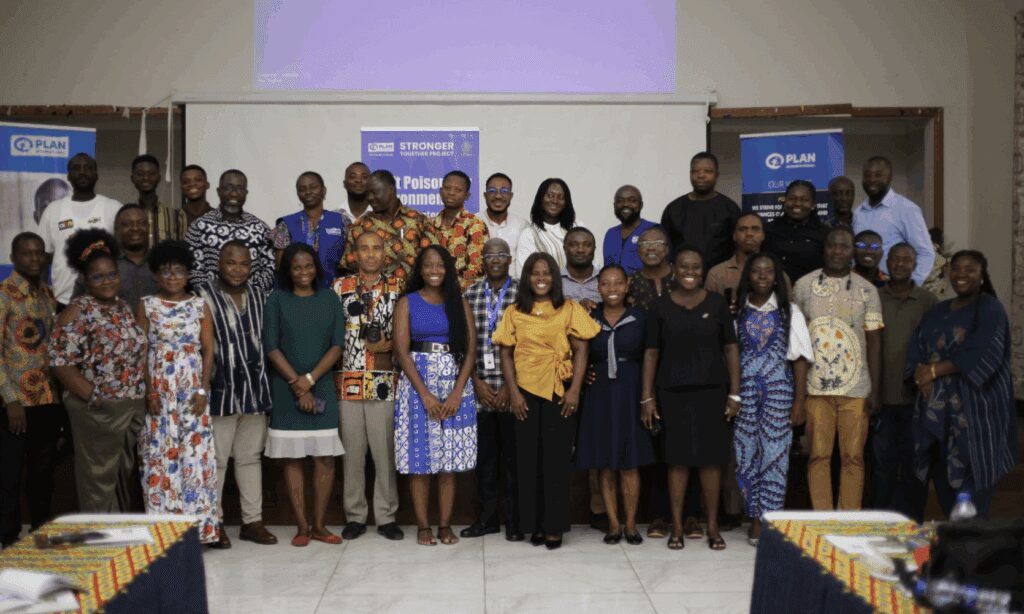
At the opening of a three-day media training in Koforidua, Mr. Eric Ayaba, Head of Programmes and Influencing at the organisation, said development and human rights stories remain underreported compared with partisan and sensational narratives.

The workshop, held at the Eastern Premier Hotel, is themed “Journalism with Purpose: Reporting Responsibly on Children, Gender, Equity and Vulnerable Communities.”
📢 GET A DETAILED ARTICLES + JOBS
Join ASJ's WhatsApp Channel and never miss a post or opportunity.

“Telling the story of children and girls is in itself a development issue. It is also an issue of rights for people to know,” Mr. Ayaba said.
Safeguarding Over Spectacle
Mr. Ayaba warned against reporting that reinforces stereotypes or shifts blame onto victims, particularly in cases involving sexual and gender-based violence.

“The moment you begin to blame the victim, you are almost cutting off the most important information needed to tell the truth about the story,” he said.
He urged journalists to apply the “do no harm” principle, stressing that coverage must not retraumatise or expose vulnerable individuals to further risk. Informed and ongoing consent, he added, is essential—and can be withdrawn at any time. Protecting anonymity, he said, is equally critical.
“As journalists, you are the bridge between reality and public perception. The goal is not just to be better reporters, but responsible reporters.”
Over the past three years, Plan International Ghana has invested in strengthening media capacity for gender-transformative reporting, and Mr. Ayaba said the organisation would continue the partnership if measurable progress is achieved.
Founded in 1937, Plan International operates globally to advance children’s rights and gender equality. In Ghana, its programmes span education, child protection, youth empowerment and sexual and reproductive health and rights.
$1.9 Million Gender Equity Initiative
Ms. Theodora Asare, Project Manager of the Renewed Women’s Voice and Leadership Ghana Project, outlined a six-year initiative funded by Global Affairs Canada with support from Plan International Canada.
Running from March 2025 to December 2031, the $1.9 million project aims to strengthen 120 women’s rights organisations, youth-led groups and human rights defenders nationwide. More than half of the funding will go directly to grantees, with support including flexible financing, advocacy assistance and research-based interventions.
Implementation partners include the Network for Human Rights in Ghana and AfriYan Ghana.
“We want to enhance organisational sustainability,” Ms. Asare said. “If your organisation is not properly structured, you cannot mobilise resources to serve women and girls.”

She emphasised feminist and intersectional approaches, transparency, accountability and collective well-being as central pillars of the programme, noting that evidence-based journalism will be crucial in amplifying research findings and shaping policy reform.
Practical Ethics in the Field
Ms. Regina Asamoah, an award-winning journalist and communications specialist, offered practical safeguarding guidance, including disabling geolocation features on mobile devices when reporting in sensitive communities and obtaining explicit consent before taking photographs or videos.
She encouraged reporters to use inclusive language—substituting “participants” for “beneficiaries”—to avoid reinforcing hierarchical narratives.
Participants are expected to leave the training equipped with stronger skills in safeguarding, gender-sensitive reporting and rights-based storytelling—an approach organisers argue is essential to promoting dignity, accountability and national development.
Source: Accra Street Journal
Last Updated on February 19, 2026 by Samuel Kwame Boadu
Disclaimer: Some content on Accra Street Journal may be aggregated, summarized, or edited from third-party sources for informational purposes. Images and media are used under fair use or royalty-free licenses. Accra Street Journal is a subsidiary of SamBoad Publishing Hub under SamBoad Business Group Ltd, registered in Ghana since 2014.
For concerns or inquiries, please visit our Privacy Policy or Contact Page.

Samuel Kwame Boadu is a Ghanaian media entrepreneur and storyteller with a passion for amplifying urban voices and uncovering everyday truths. He is the Editor-in-Chief and Founder of Accra Street Journal, a dynamic digital platform dedicated to capturing the pulse of Ghana’s capital—its people, culture, challenges, business, sports and innovations.