






Introduction: A Race for Stable Energy
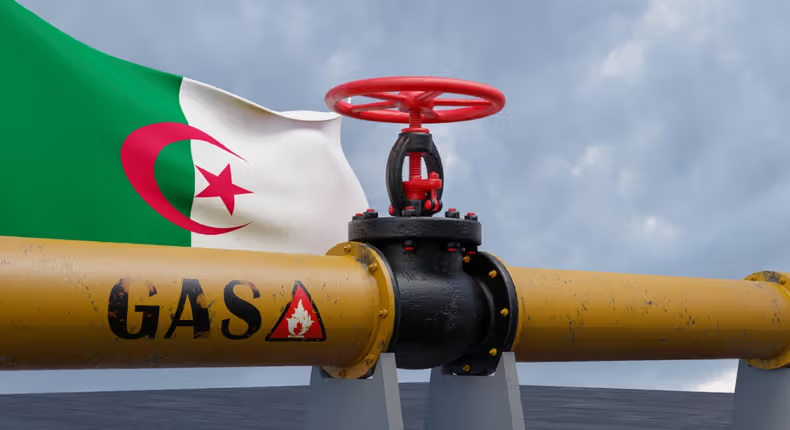
As tensions escalate across the Middle East, Europe is once again scrambling to secure its energy lifelines. For Spain—and increasingly for other European nations—Algeria has emerged as a critical partner. The two countries are now in advanced talks to increase gas supplies through the Medgaz pipeline, a subsea link that directly connects Algeria to Spain, with a potential boost of up to 10 per cent in flows .
The negotiations come at a time of renewed volatility in global energy markets. Conflicts in the Middle East have raised fears of supply disruptions, pushing European buyers to seek more stable sources closer to home . For Algeria, the renewed demand presents an opportunity to strengthen its position as a strategic supplier to Europe.

This ASJ article examines the significance of the proposed Medgaz increase, the broader context of Europe’s energy diversification efforts, and the implications for both North African gas exporters and European energy security.
📢 GET A DETAILED ARTICLES + JOBS
Join ASJ's WhatsApp Channel and never miss a post or opportunity.

The Medgaz Pipeline: A Critical Link
Infrastructure and Capacity
The Medgaz pipeline is a subsea natural gas pipeline that runs from Beni Saf in Algeria to Almería in Spain, traversing the Mediterranean Sea. With a length of approximately 210 kilometres, it is one of the key infrastructure links connecting North African gas reserves to European markets .
| Pipeline Detail | Information |
|---|---|
| Name | Medgaz |
| Route | Beni Saf (Algeria) to Almería (Spain) |
| Length | Approximately 210 km |
| Current Capacity | Approximately 8 bcm/year |
| Spare Capacity | ~1 bcm/year |
| Ownership | Sonatrach (Algeria) majority stake; Naturgy (Spain) minority |
The pipeline currently has spare capacity of roughly 1 billion cubic metres (bcm) annually , which could accommodate the proposed increase of up to 10 per cent in flows.
Strategic Importance
Medgaz is one of several pipelines carrying Algerian gas to Europe, alongside the GME pipeline (via Morocco) and the Trans-Mediterranean Pipeline (via Tunisia to Italy). However, Medgaz has gained particular importance in recent years due to:
-
Direct connection: It bypasses Morocco, avoiding political complications
-
Reliability: The pipeline has a strong operational record
-
Capacity: It provides a substantial volume of gas directly to the Iberian Peninsula
The Negotiations: What’s on the Table?
Talks Nearing Agreement
Two people familiar with the discussions told Reuters that the negotiations between Spain and Algeria were nearing a preliminary agreement , which could be reached during Spanish Foreign Minister José Manuel Albares’ visit to Algiers this week .
Speaking after meeting Algerian President Abdelmadjid Tebboune and senior officials, Mr Albares confirmed that discussions on higher volumes were underway, pointing to ongoing volatility in global gas markets:
“We have talked about there being a greater volume (of gas). We spoke about the context of the gas market with the war in the Middle East” .
Proposed Increase
The proposed increase would rely on spare capacity in the Medgaz pipeline, allowing for an additional 1 bcm of gas annually —roughly a 10 per cent boost over current flows .
| Volume | Significance |
|---|---|
| Spare Capacity | ~1 bcm/year |
| Proposed Increase | Up to 10% of current flows |
| Potential Timing | Following preliminary agreement |
The Algerian Connection
Algeria already plays a critical role in Spain’s energy mix. Data from Spain’s gas grid operator Enagás shows Algerian gas accounted for more than 29 per cent of Spain’s imports in the first two months of 2026, making it one of Madrid’s top suppliers .
Commercial ties between the two countries remain strong. Spanish utility Naturgy holds long-term contracts with Algeria’s state energy firm Sonatrach for around 5 bcm of gas annually . Sonatrach also owns a majority stake in the Medgaz pipeline and a minority share in Naturgy, underscoring the depth of the relationship .
The Broader Context: Europe’s Energy Scramble
Middle East Tensions Reshape Supply Routes
The negotiations come against a backdrop of heightened geopolitical risk. Iran-linked tensions in the Middle East have added fresh uncertainty to supply routes, pushing buyers to seek more stable sources closer to home .
The crisis has disrupted key shipping lanes, with major carriers suspending operations through the Strait of Hormuz and vessels rerouting around the Cape of Good Hope . While much attention has focused on the impact on oil and gold shipments, natural gas markets are also feeling the pressure.
Diversification Away from Russian Gas
Since Russia’s invasion of Ukraine, Europe has worked aggressively to reduce its dependence on Russian gas. Algeria has emerged as one of the continent’s key alternative suppliers, alongside Norway, the United States, and Azerbaijan.
| Supplier | Role in European Gas Market |
|---|---|
| Algeria | Key supplier to Spain, Italy, France |
| Norway | Largest pipeline gas supplier to Europe |
| United States | Leading LNG supplier |
| Azerbaijan | Growing supplier via Southern Gas Corridor |
Competition for North African Gas
Other European countries are also turning to Algeria. Italian Prime Minister Giorgia Meloni said during a visit to Algiers this week that Rome is seeking additional gas supplies , highlighting growing competition for North African energy .
Italy already receives Algerian gas via the Trans-Mediterranean Pipeline (Enrico Mattei), which runs through Tunisia. Any increase in Algerian exports to Spain could have ripple effects across the Mediterranean market, potentially tightening supply for other buyers .
The Algerian Perspective: Strengthening Strategic Position
A Strategic Supplier
For Algeria, the renewed demand from European buyers presents an opportunity to strengthen its position as a strategic supplier to Europe . The country has long been a major gas producer, but its role has grown in significance as Europe seeks to diversify away from Russian supplies.
| Algerian Gas Infrastructure | Destination |
|---|---|
| Medgaz | Spain |
| GME (via Morocco) | Spain (suspended) |
| Trans-Mediterranean (Enrico Mattei) | Italy |
| Maghreb-Europe (via Morocco) | Spain, Portugal (suspended) |
| LNG Terminals | Global markets |
Investment and Capacity
Algeria has been investing in its gas infrastructure to maintain and expand export capacity. Sonatrach, the state energy company, has announced plans to increase exploration and production, aiming to meet growing domestic and international demand .
Geopolitical Leverage
The renewed European interest in Algerian gas also gives Algiers greater geopolitical leverage. As Europe scrambles for stable energy supplies, Algeria’s role as a reliable partner enhances its diplomatic standing and bargaining power .
The Spanish Perspective: Securing Energy Stability
A Critical Partner
For Spain, Algeria is a critical energy partner. The country relies on Algerian gas to meet a substantial portion of its energy needs, and any disruption would have significant economic consequences .
Avoiding Past Tensions
The relationship has not always been smooth. In 2022, diplomatic tensions briefly threatened gas supplies after Spain shifted its stance on Western Sahara, prompting Algeria to threaten to suspend the friendship treaty and reconsider gas exports . Those tensions were eventually resolved, and the current negotiations signal a return to pragmatic cooperation.
Building Resilience
By increasing Medgaz flows, Spain aims to build resilience against potential supply shocks. The additional volumes would help cushion the impact of any disruptions in other supply routes—whether from Middle East tensions, LNG market volatility, or unforeseen outages .
Global Implications: A Shift in Energy Geopolitics
The Enduring Importance of Pipeline Gas
The renewed focus on Medgaz highlights the enduring importance of pipeline gas in Europe’s energy mix. While liquefied natural gas (LNG) has grown in importance, pipelines offer several advantages:
-
Reliability: Fixed infrastructure provides predictable flows
-
Cost: Pipeline gas is often cheaper than LNG
-
Geopolitical stability: Long-term contracts provide mutual benefits for both producers and consumers
North Africa’s Rising Role
North Africa is increasingly central to Europe’s energy security. Algeria, in particular, is well-positioned to supply gas to southern Europe via existing pipelines. Libya and Egypt also have potential to contribute, though political instability and infrastructure challenges remain constraints.
Competition for Resources
As more European countries seek Algerian gas, competition for available supplies is likely to intensify. Italy’s overtures to Algiers during the same week as Spain’s negotiations underscore this dynamic. The outcome will depend on Algeria’s production capacity, investment levels, and strategic priorities .
Frequently Asked Questions (FAQs)
1. What is the Medgaz pipeline?
Medgaz is a subsea natural gas pipeline connecting Beni Saf in Algeria to Almería in Spain. It is a key infrastructure link for transporting Algerian gas to Europe .
2. How much additional gas could Spain receive?
Spain and Algeria are negotiating to increase gas flows through Medgaz by up to 10 per cent, relying on spare capacity of roughly 1 billion cubic metres (bcm) annually .
3. Why are these talks happening now?
The negotiations come amid renewed volatility in global energy markets linked to Middle East tensions, which have raised fears of supply disruptions .
4. How important is Algerian gas to Spain?
Algerian gas accounts for more than 29 per cent of Spain’s imports, making it one of Madrid’s top suppliers .
5. What is Sonatrach?
Sonatrach is Algeria’s state-owned energy company, responsible for exploration, production, and export of oil and gas. It holds a majority stake in the Medgaz pipeline and a minority share in Spanish utility Naturgy .
6. Are other European countries seeking Algerian gas?
Yes. Italian Prime Minister Giorgia Meloni recently visited Algiers to seek additional gas supplies, highlighting growing competition for North African energy .
7. What happened to the GME pipeline?
The GME pipeline, which transported Algerian gas to Spain via Morocco, was suspended after diplomatic tensions between Algeria and Morocco. Medgaz now serves as the primary pipeline link .
8. How does pipeline gas compare to LNG?
Pipeline gas offers reliability and cost advantages, while LNG provides flexibility and access to global markets. Both are important components of Europe’s energy mix .
9. What are the risks to Algerian gas supplies?
Risks include political instability, infrastructure challenges, and competition from other buyers. However, Algeria has maintained a strong record of reliability as a supplier .
10. What does this mean for European energy security?
Securing additional Algerian gas helps Spain and other European countries diversify away from Russian supplies and build resilience against potential disruptions from Middle East tensions .
Conclusion: A Strategic Partnership for Uncertain Times
As Middle East tensions roil global energy markets, the deepening partnership between Spain and Algeria offers a measure of stability. The proposed increase in Medgaz flows—a modest 10 per cent boost—symbolizes something larger: a recognition that in times of uncertainty, reliable infrastructure and trusted partnerships matter more than ever .
For Spain, the additional gas helps insulate the country from potential supply shocks and reinforces its energy security. For Algeria, the renewed demand strengthens its position as a strategic supplier to Europe and provides a platform for deeper commercial and diplomatic ties.
The negotiations also highlight a broader shift in European energy geopolitics. As the continent moves away from Russian gas, North Africa has emerged as a critical alternative. Algeria’s pipelines to Spain and Italy, its LNG terminals, and its vast reserves make it an indispensable partner for Europe’s energy future.
Whether the preliminary agreement reached during Foreign Minister Albares’ visit translates into a formal deal remains to be seen. But the direction is clear: in an increasingly volatile world, the energy ties between Europe and North Africa are only set to grow stronger.
Frequently Asked Questions (FAQs)
1. What is the Medgaz pipeline?
Medgaz is a subsea natural gas pipeline connecting Beni Saf in Algeria to Almería in Spain. It is a key infrastructure link for transporting Algerian gas to Europe .
2. How much additional gas could Spain receive?
Spain and Algeria are negotiating to increase gas flows through Medgaz by up to 10 per cent, relying on spare capacity of roughly 1 billion cubic metres (bcm) annually .
3. Why are these talks happening now?
The negotiations come amid renewed volatility in global energy markets linked to Middle East tensions, which have raised fears of supply disruptions .
4. How important is Algerian gas to Spain?
Algerian gas accounts for more than 29 per cent of Spain’s imports, making it one of Madrid’s top suppliers .
5. What is Sonatrach?
Sonatrach is Algeria’s state-owned energy company, responsible for exploration, production, and export of oil and gas. It holds a majority stake in the Medgaz pipeline and a minority share in Spanish utility Naturgy .
6. Are other European countries seeking Algerian gas?
Yes. Italian Prime Minister Giorgia Meloni recently visited Algiers to seek additional gas supplies, highlighting growing competition for North African energy .
7. What happened to the GME pipeline?
The GME pipeline, which transported Algerian gas to Spain via Morocco, was suspended after diplomatic tensions between Algeria and Morocco. Medgaz now serves as the primary pipeline link .
8. How does pipeline gas compare to LNG?
Pipeline gas offers reliability and cost advantages, while LNG provides flexibility and access to global markets. Both are important components of Europe’s energy mix .
9. What are the risks to Algerian gas supplies?
Risks include political instability, infrastructure challenges, and competition from other buyers. However, Algeria has maintained a strong record of reliability as a supplier .
10. What does this mean for European energy security?
Securing additional Algerian gas helps Spain and other European countries diversify away from Russian supplies and build resilience against potential disruptions from Middle East tensions .
Last Updated on March 28, 2026 by Samuel Kwame Boadu
Disclaimer: Some content on Accra Street Journal may be aggregated, summarized, or edited from third-party sources for informational purposes. Images and media are used under fair use or royalty-free licenses. Accra Street Journal is a subsidiary of SamBoad Publishing Hub under SamBoad Business Group Ltd, registered in Ghana since 2014.
For concerns or inquiries, please visit our Privacy Policy or Contact Page.

Samuel Kwame Boadu is a Ghanaian media entrepreneur and storyteller with a passion for amplifying urban voices and uncovering everyday truths. He is the Editor-in-Chief and Founder of Accra Street Journal, a dynamic digital platform dedicated to capturing the pulse of Ghana’s capital—its people, culture, challenges, business, sports and innovations.