







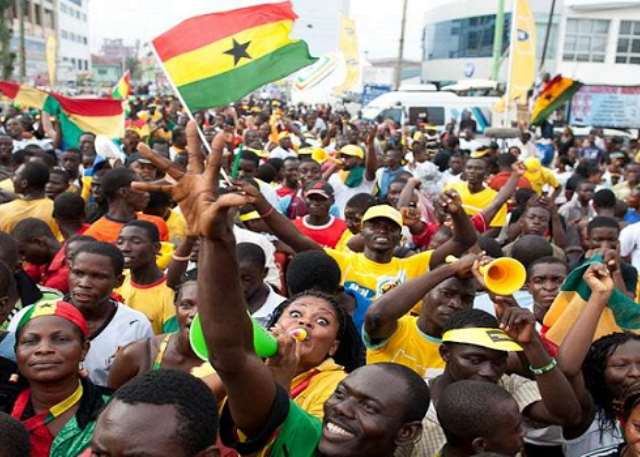
Walk through any busy street in Accra today — from Circle to East Legon — and ask people a simple question: “Which network do you trust the most?”
The answers will tell you something quietly happening in Ghana’s telecom space.

More and more people are moving away from AT Ghana — not loudly, not dramatically, but steadily.
📢 GET A DETAILED ARTICLES + JOBS
Join ASJ's WhatsApp Channel and never miss a post or opportunity.

No announcements. No headlines. Just silent switching.
But why?

Because behind the surface, there are real frustrations that everyday users are dealing with — and most of them are not being explained properly.
1. THE INTERNET EXPERIENCE PROBLEM
Let’s be honest.
For most Ghanaians today, a telecom network is not about calls — it’s about internet performance.
Streaming, WhatsApp, TikTok, mobile banking — everything depends on stable data.
And this is where many users say AT Ghana struggles.
Across different parts of Accra and beyond, users complain about:
- Sudden drops from 4G to 3G
- Slow loading speeds during peak hours
- Inconsistent connection even with full signal bars
Now compare that to MTN Ghana, which has heavily invested in infrastructure and coverage.
The difference becomes obvious very quickly.
People don’t switch because of branding.
They switch because of experience.

2. DATA VALUE VS REALITY
On paper, AT Ghana often looks cheaper.
But in reality, many users feel something isn’t adding up.
You’ll hear complaints like:
- “My data finishes too fast”
- “The bundle doesn’t last like before”
- “Same usage, different results”
Whether it’s network optimization, background consumption, or perception — the trust gap is real.
And in a price-sensitive market like Ghana, perceived value matters just as much as actual price.
When users feel they are not getting value, they don’t argue — they leave.
3. NETWORK RELIABILITY IS EVERYTHING
Imagine this:
You’re about to make an urgent mobile money transfer.
The network freezes.
Or you’re on an important call.
The line drops.
These are small moments — but they carry big consequences.
Reliability is what builds loyalty.

And right now, many users believe other networks — especially Telecel Ghana and MTN — are more dependable in critical moments.
Once that belief settles in, it’s very hard to reverse.
4. CUSTOMER SERVICE FRUSTRATION
Here’s something people don’t talk about enough:
When something goes wrong, how fast can you fix it?
This is where frustration grows.
Common complaints include:
- Long wait times to reach customer care
- Unresolved complaints
- Poor follow-ups
And here’s the thing — telecom issues are often urgent.
If your SIM is blocked or your money is stuck, you don’t want explanations.
You want solutions immediately.
When users don’t get that, they start looking elsewhere.
5. THE POWER OF PERCEPTION
Sometimes, it’s not even about reality — it’s about perception.
Right now in Ghana:
- MTN is seen as the “strongest network”
- Telecel is seen as “stable and improving”
- AT Ghana is often seen as “inconsistent”
Whether fully accurate or not, perception shapes behavior.
And telecom is a trust business.
Once users start believing a network is unreliable, switching becomes inevitable.
6. GOVERNMENT OWNERSHIP QUESTIONS
Since the transition of AirtelTigo into AT Ghana, many people have quietly asked:
- Will service improve or slow down?
- Will investment increase or reduce?
- Is the company still competitive enough?
These are not loud conversations, but they influence decisions.
Because telecom is not static — it requires constant investment, upgrades, and innovation.
And users can feel when that momentum slows.
7. THE SILENT SWITCHING EFFECT
Here’s the most important part:
People are not necessarily abandoning AT Ghana completely.
They are doing something smarter.
They are keeping their AT Ghana SIM — but relying on another network.
Dual-SIM behavior is rising fast in Ghana.
One SIM for affordability.
Another for reliability.
And over time, the “backup SIM” becomes the primary SIM.
That’s how market share shifts — quietly.
FINAL THOUGHT
This is not about attacking AT Ghana.
It’s about understanding a simple truth:
In today’s Ghana, telecom is no longer about who is available —
it’s about who works best when it matters most.
If AT Ghana can fix consistency, improve customer experience, and rebuild trust, the story can change.
But if not, the quiet exit of users will continue — one SIM at a time.
FAQs
❓ Why are people leaving AT Ghana?
Many users cite slow internet speeds, inconsistent network performance, and customer service challenges as key reasons.
❓ Is AT Ghana cheaper than MTN?
In some cases yes, but many users question the real value due to faster data depletion and network inconsistency.
❓ Can I use AT Ghana and another network together?
Yes. Many Ghanaians now use dual-SIM phones to combine affordability and reliability.
❓ Is AT Ghana improving?
There are ongoing efforts, but user perception shows that more improvements are needed in network quality and service delivery.
❓ Which network is currently the most reliable in Ghana?
MTN Ghana is widely perceived as the most reliable, followed by Telecel Ghana, though experiences vary by location.
Source: Accra Street Journal
Last Updated on May 1, 2026 by Samuel Kwame Boadu
Disclaimer: Some content on Accra Street Journal may be aggregated, summarized, or edited from third-party sources for informational purposes. Images and media are used under fair use or royalty-free licenses. Accra Street Journal is a subsidiary of SamBoad Publishing Hub under SamBoad Business Group Ltd, registered in Ghana since 2014.
For concerns or inquiries, please visit our Privacy Policy or Contact Page.

Samuel Kwame Boadu is a Ghanaian media entrepreneur and storyteller with a passion for amplifying urban voices and uncovering everyday truths. He is the Editor-in-Chief and Founder of Accra Street Journal, a dynamic digital platform dedicated to capturing the pulse of Ghana’s capital—its people, culture, challenges, business, sports and innovations.