A 2026 Intelligence Brief from Accra Street Journal
Executive Introduction
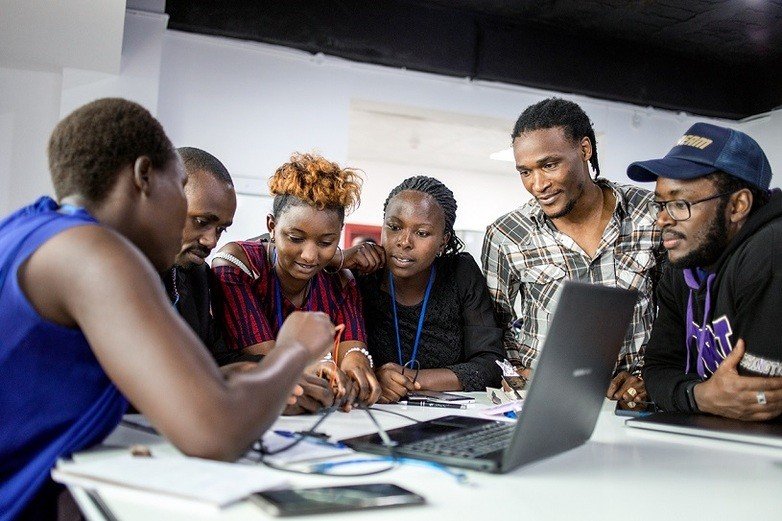
On a quiet street in Accra’s Osu district, a 29-year-old programmer is building a fintech platform that could reach millions across West Africa. Nearby, in a co-working space with Google Fiber internet, a team of designers is training an AI model for medical diagnostics. A few streets away, the CEO of a healthtech startup is preparing for a video call with investors in London.

This is not a scene from a Silicon Valley documentary. It is Accra, 2026.
📢 GET A DETAILED ARTICLES + JOBS
Join ASJ's WhatsApp Channel and never miss a post or opportunity.

The city has become the most attractive destination for tech startups in West Africa—and increasingly, across the continent. With a startup economy valued at $2.6 billion, a 95% surge in total investment in 2024, and Africa’s first applied AI lab from Google opening in the capital, Accra is no longer a secondary player . It is emerging as a genuine innovation powerhouse.
This ASJ report examines the structural forces driving Accra’s startup boom: the policy strategy providing a roadmap, the corporate and institutional anchors that make the ecosystem viable, the demographics and talent pipeline that fuel it, and the major investment signals that confirm its trajectory.

Part 1: The Policy Framework — A Strategy, Not Just an Accident
Accra’s startup growth is not accidental. It is the result of deliberate policy coordination.
The Ghana Startup Strategy
For years, Ghana’s startup ecosystem was fragmented. As Solomon Adjei, President of the Association of Ghana Startups (AGS), put it: “Everyone was working in isolation. There were lots of small initiatives, but no coordinated approach. As a result, resources were wasted, and startups couldn’t get the help they needed” .
That changed in 2025. The AGS, supported by the International Trade Centre’s Netherlands Trust Fund V, developed the country’s first Ghana Startup Strategy — a five-year plan to help new businesses grow and operate more sustainably .
On 18 June 2025, the final document was handed to the Minister for Youth Development and Empowerment, George Opare Addo. The Minister committed to leading efforts to implement the plan, recognising that most startups are led by young people .
Key goals of the strategy include:
| Goal | Mechanism |
|---|---|
| Institutional coordination | Creating a national coordinating council to align policy and resources across five ministries |
| Legal backing | Passing a Startup Innovation Bill |
| Progress tracking | Launching a dashboard to monitor implementation |
| Clearer roles | Defining responsibilities among government bodies |
Source: ITC Netherlands Trust Fund V report
The Innovation and AI Hub — $1 Billion Signal
In December 2025, Ghana and the UAE signed a $1 billion strategic investment agreement to develop what is billed as Africa’s largest integrated innovation and artificial intelligence hub . The hub will be developed in Ningo–Prampram in the Greater Accra Region, with construction scheduled to begin in 2026 .
The investment breakdown reveals the scale of ambition:
| Allocation | Focus |
|---|---|
| $400 million | High-performance AI infrastructure (including $180m AI Compute Hub, $100m digital identity system) |
| $350 million | Digital infrastructure (5G networks, Tier IV data centre, renewable power, satellite internet) |
| $250 million | Innovation, talent and capital ($100m Ghana Startup Fund, $75m AI and Web3 campus, $75m annual summit) |
Source: African Business

This is not a conventional technology park. It is designed to attract multinational technology companies—Microsoft, Meta, Oracle, IBM, Alphabet—while strengthening local enterprise capacity and skills development . For startups, it signals long-term commitment, not short-term hype.
Part 2: The Ecosystem — Infrastructure That Makes Startups Possible
Startups don’t survive on inspiration. They survive on infrastructure, mentorship, and access to capital. Accra provides all three.
The Accra Digital Centre — A Proven Engine
The Accra Digital Centre has become the beating heart of the city’s tech ecosystem. According to Dzifa Gunu, CEO of Ghana Digital Centres Limited, the Centre has:
-
Supported over 500 startups
-
Created more than 3,000 jobs
-
Trained 10,000 young people in digital skills
-
Hosted over 60 tech events in the past year alone, from robotics competitions to digital content training
However, the Centre operates at only 60% capacity, and demand continues to grow . As Gunu writes: “Walk through our corridors and you witness the future being coded, designed and launched” .
MEST Africa — 2,000+ Entrepreneurs Trained
Founded in 2008, MEST Africa (Meltwater Entrepreneurial School of Technology) is one of the continent’s most established tech incubators. Based in Accra, it provides an intensive, full-time tech-entrepreneurship training programme to emerging talent from more than 22 African countries and provides early-stage investment to promising ventures .
The scale:
-
2,000+ entrepreneurs trained since inception
-
90+ startups invested in across the continent
-
159 employees (as of June 2026)
-
Foundational presence in Accra since 2008
MEST’s graduates have gone on to build companies across the continent, creating a diaspora of founders who maintain ties to the Accra ecosystem.
Impact Hub Accra — The City’s Premier Startup Hotspot
Impact Hub Accra describes itself as “the city’s premier startup hotspot” with a diverse community of 250+ members and over 1,700 sqm of workspaces under management . Located in Osu Ako-Adjei, it has evolved into what it calls Accra’s “innovation district”—the nerve centre for entrepreneurs and bold thinkers .
What it offers:
-
Collaborative workspace with Google Fiber internet
-
Meeting rooms, makerspace, and cafe
-
Accelerator programmes
-
Mentorship and networking sessions
-
Hackathons and prototyping
-
A health innovation incubator in partnership with Merck
It is part of the global Impact Hub Network with a presence in 85 cities and 15,000+ members .
InnovAIMS — Bridging Research and Entrepreneurship
InnovAIMS, established by AIMS Ghana in partnership with the Mastercard Foundation, provides a dynamic innovation and entrepreneurship hub in Accra . Its focus areas include:

-
Research and Development
-
Entrepreneurship and Business Incubation
-
Digital Skills Training
-
Makerspace and hardware for rapid prototyping
-
Start-up Funding and Investments
Its programmes include hackathons, a Social Innovation Prize, a GreenTech & AgriTech Accelerator, and an Innovation Exchange Program . The hub positions itself as “more than a lab — it’s a launchpad” for creating interdisciplinary solutions to Africa’s toughest problems .
Part 3: The Talent Pipeline — Young, Educated, Digital-Native
A startup ecosystem is only as strong as its talent pool. Accra’s talent advantage is structural, not accidental.
The Demographic Dividend
Accra’s population has a median age that is under 22, meaning a large, tech-savvy youth population eager to innovate, particularly in the digital space . Over the past decade, Accra has seen more than 400 new startups spring up to tackle problems in agriculture, finance, and other sectors .
Why this matters: Young, digital-native talent is the raw material of a tech ecosystem. Accra has it in abundance.
78 Funded Startups
According to Dealroom, Accra has 78 funded startups that have raised at least $100,000 . While modest compared to global tech hubs, the trajectory is upward, and international investors are paying closer attention to West Africa’s innovation potential .
The sector breakdown reveals a fintech-heavy ecosystem, with growing interest in AI, healthtech, cybersecurity, and consumer tech .
The Talent Concentration Effect
Why do tech professionals concentrate in Accra? The answer is structural :
-
Corporate headquarters: Major banks, telecoms, fintech firms, and multinationals are headquartered in Accra. High-paying digital roles are concentrated here.
-
Startup density: Innovation thrives on collaboration. Developers, designers, founders, and investors interact regularly within the same ecosystem .
-
Funding proximity: Venture capital firms and angel investors are largely based in Accra. Startups relocate there to improve funding prospects .
This creates a reinforcing cycle: capital attracts startups, startups attract talent, and talent attracts more capital. Over time, this strengthens Accra’s dominance .
The Educational Pipeline
Universities and private training institutions in Accra are producing software developers, engineers, product managers, and digital marketers at increasing rates. Coding bootcamps and innovation programs have shortened the gap between education and employability .
When talent clusters geographically, innovation accelerates. Proximity fosters collaboration, idea exchange, and startup formation. Accra provides this density at scale .
Part 4: The Anchor Sectors — Where the Action Is
Accra’s startup ecosystem is not a generalist environment. It has specific strengths that attract founders and investors alike.
Fintech — The Undisputed Engine
If one sector defines Accra’s tech rise, it is fintech . The widespread adoption of mobile money and digital payments has created fertile ground for startups building financial solutions.
In 2024, Ghana’s mobile money market processed approximately $80 billion in transactions, representing over 100% of GDP . Leading players include:
-
Zeepay: Specialising in remittances across Africa
-
ExpressPay: A payment aggregator
-
Dash: A unified payments app that raised $32.8 million in 2022, one of the largest seed rounds in African tech history
The fintech layer acts as infrastructure for other digital services. Once payments become seamless, e-commerce, logistics, and subscription-based services flourish .
Agritech — Solving Real Problems
With agriculture employing nearly 30% of Ghana’s workforce, agritech has emerged as a critical sector . The Timbuktoo AgriTech Hub, launched in Accra in March 2026, brings together innovators, investors, and incubators to transform agriculture across the continent .
The Minister for Communication, Digital Technology and Innovations, Hon. Samuel Nartey George, called on African startups to “leverage technology to transform agriculture and strengthen food systems” . The hub provides access to both catalytic and commercial capital—a critical factor for scaling solutions .
Startups like Farmerline serve over 800,000 farmers; AgroCenta connects smallholder farmers to markets; and Complete Farmer enables global citizens to own farms remotely .
Healthtech — Growing Fast
Accra’s healthtech startups are addressing accessibility and quality challenges:
-
mPharma: Manages prescription drug inventory across multiple countries
-
MinoHealth AI Labs: Uses AI for diagnosis of tuberculosis, malaria, and pneumonia
-
Redbird: Provides rapid diagnostic tests
The COVID-19 pandemic accelerated adoption of telemedicine platforms, and Zipline’s medical drone delivery system now covers approximately 2,000 health facilities across Ghana .
Part 5: The Google Signal — Africa’s First Applied AI Lab
The most significant development of 2026 is Google’s decision to launch Africa’s first applied artificial intelligence laboratory in Accra .
What it is: The Google Africa Applied AI Lab will be based at the AI Community Centre in Accra. It will bring together startup founders from across the continent with Google researchers and give them early access to the company’s latest AI models. Applications opened on July 1, 2026, and are open until August 31 .
The ambition: The lab aims to help create Africa’s first generation of AI-native unicorns—privately held companies valued at more than $1 billion. It is backed by the Google AI Futures Fund, Google Research, and venture capital partners .
Why Accra? The move builds on Google’s existing presence in Ghana. In April 2019, it opened Africa’s first AI research center in Accra. In July 2025, it expanded with the AI Community Centre, backed by $37 million in funding . James Manyika, Google’s senior vice president for research and technology, said: “AI represents a major opportunity for Africa,” and that the company is committed to working with Africans to help the continent realise that potential .
What it signals: For Accra’s ecosystem, the Google lab is a signal that the city is not just a regional hub—it is a site of global technological ambition.
Part 6: The Challenge — Success Is Not Yet Distributed
The concentration of opportunity in Accra is both a strength and a weakness.
The Accra Centralisation Problem
The Accra Digital Centre’s success—500 startups, 3,000 jobs, 10,000 trained—is remarkable . But it also represents unfinished business. As Dzifa Gunu writes: “This concentration of opportunity in one location represents both our achievement and our unfinished business” .
The uncomfortable truth: innovators from outside Accra must come to the capital to access training, mentorship, and ecosystem support. Esther Addu, who developed an AI-powered solar irrigation system for women farmers in Northern Ghana, had to come to Accra to refine her solution—for a problem that exists in the very region she serves .
The Regional Digital Centre Proposal
The solution, according to Gunu, is regional digital centres:
“Imagine if we could replicate this success in Tamale, where agri-tech innovators are already developing solutions for the agricultural belt that feeds our nation. Picture a digital centre in Takoradi becoming the maritime technology hub for West Africa, or Kumasi emerging as the continent’s craft digitisation capital” .
The economic argument is straightforward: “Consider the reduction in migration pressure as young people find opportunities in their home regions. Factor in the solutions that will emerge when entrepreneurs deeply understand local challenges because they live them daily” .
Conclusion: From Regional Hub to Global Contender
Accra has earned its place as West Africa’s leading startup destination. The policy framework is in place—a national strategy, a Startup Innovation Bill in the pipeline, and a national coordinating council to align resources . The infrastructure exists—MEST Africa, Impact Hub Accra, the Accra Digital Centre . The talent pipeline is growing—young, educated, and digital-native . And the signals of ambition are unmistakable—a $1 billion AI hub, Africa’s first Google applied AI lab, and 78 funded startups .
The challenge is not to prove that Accra can produce startups. It has already done that. The challenge is to ensure that success is not a concentrated privilege—that the digital revolution reaches every region, and that a young person’s postcode does not determine their potential .
As Dzifa Gunu concluded: “The future is not something that happens to us. It is something we build, deliberately and inclusively” .
Quick Reference: Accra’s Tech Startup Ecosystem
| Indicator | Value | Source |
|---|---|---|
| Startup economy value (2023) | $2.6 billion | ITC |
| Funded startups | 78 | Dealroom |
| Investment increase (2024) | 95% | ITC |
| Startups supported (Accra Digital Centre) | 500+ | Ghana Digital Centres Ltd |
| Jobs created | 3,000+ | Ghana Digital Centres Ltd |
| People trained in digital skills | 10,000 | Ghana Digital Centres Ltd |
| MEST entrepreneurs trained | 2,000+ | MEST Africa |
| Startups invested in (MEST) | 90+ | MEST Africa |
| Impact Hub Accra members | 250+ | Impact Hub |
| UAE-Ghana AI hub investment | $1 billion | African Business |
| Google AI lab launch | July 2026 | Ecofin Agency |
| AI hub data centre | Tier IV hyperscale | African Business |
| 5G urban centres | 3 | African Business |
Source: Accra Street Journal
Last Updated on July 21, 2026 by Samuel Kwame Boadu
Disclaimer: Some content on Accra Street Journal may be aggregated, summarized, or edited from third-party sources for informational purposes. Images and media are used under fair use or royalty-free licenses. Accra Street Journal is a subsidiary of SamBoad Publishing Hub under SamBoad Business Group Ltd, registered in Ghana since 2014.
For concerns or inquiries, please visit our Privacy Policy or Contact Page.

Samuel Kwame Boadu is a Ghanaian media entrepreneur and storyteller with a passion for amplifying urban voices and uncovering everyday truths. He is the Editor-in-Chief and Founder of Accra Street Journal, a dynamic digital platform dedicated to capturing the pulse of Ghana’s capital—its people, culture, challenges, business, sports and innovations.