
From 5:30 a.m. departures to the GH¢4.5 billion cost of lost time — the daily struggle that defines Accra’s working life
Executive Introduction
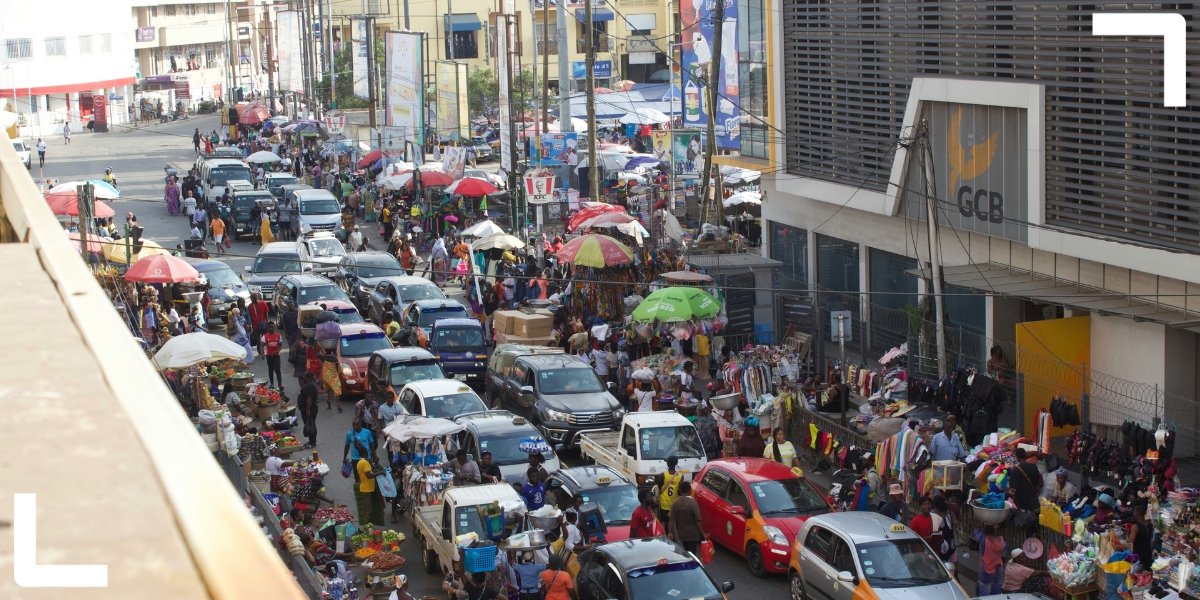
Ask any Accra resident about their morning commute, and you will hear the same weary refrain: “I left home at 5:30 a.m. just to get to work by 8.” The Spintex Road, the Circle-Achimota stretch, the Madina–37 corridor. These are not merely roads; they are daily battlegrounds where time, money, and dignity are lost in slow-moving traffic .
For millions of Ghanaians, the daily commute is a test of endurance. At the 37 bus stop, commuters wait for hours, worn out from the day’s toil, stuck in a queue that seems to stretch into eternity . There is Kofi, the young professional who has missed three deadlines because of traffic; Ama, the student who has slept on the streets more nights than she would care to admit; and Emmanuel, the father of three who has been commuting for four hours a day just to put food on the table . Their stories are a microcosm of a nation where the transport system is creaking under the weight of millions .

This ASJ report examines the realities of moving across Accra every day: the economic cost of congestion, the human toll on commuters, the structural failures of the transport system, and the reforms that could finally break the gridlock.
📢 GET A DETAILED ARTICLES + JOBS
Join ASJ's WhatsApp Channel and never miss a post or opportunity.

Part 1: The Economic Cost — GH¢4.5 Billion in Lost Productivity
The cost of Accra’s congestion is not abstract. It is measurable, and it is staggering. A 2026 study by Glima Research found that traffic congestion costs Ghana’s economy an estimated GH¢4.5 billion annually: GH¢3.2 billion in lost time (71%), GH¢434 million in wasted fuel, and GH¢815 million in stress-related productivity losses .
| Cost Component | Annual Impact (GH¢) | Share |
|---|---|---|
| Time lost in traffic | 3.2 billion | 71% |
| Wasted fuel | 434 million | 10% |
| Productivity losses (stress & fatigue) | 815 million | 18% |
Source: Glima & ASJ Research 2026 study

Beyond the immediate financial cost, idling vehicles generate approximately 73,000 metric tons of excess carbon dioxide annually, the climate equivalent of cutting down three million trees every year . This is not just an economic issue—it is an environmental and public health emergency.
The research centered on the heavily congested Madina–37 corridor, analyzing time losses, fuel waste, and productivity impacts . Other heavily congested routes—Spintex Road, Mallam–Kasoa, and Circle–Achimota—face similar or even worse gridlock . The question is not whether a commuter will experience delays, but how severe those delays will be.
Part 2: The Human Toll — Time, Dignity, and Resilience
The economic cost is only part of the story. The human cost is harder to quantify but no less real.
The Time Sink
Transport expert Godfred Akyea Darkwa described the situation: “People have to leave their homes as early as five o’clock, four o’clock before they can get to the center of the city. And when it happens like that, when they close, they have to run home; they will not wait for the closing time. So, if you’re closing at five o’clock, they will leave their workplace at three o’clock at the expense of productive hours” .
A civil servant, Bismark Amponsah, described the situation as stressful, explaining that he had been waiting for more than an hour and a half after arriving at the roadside at 6 a.m. without securing a vehicle . A trader, Martha Obiyaa, said she had waited for over two hours without success and might have to return home .
The Commuter’s Arithmetic
For middle-income workers in Accra, the daily commute is a major household expense. Workers earning between GH¢2,000 and GH¢3,000 monthly face transport costs of approximately GH¢440 per month for basic trotro rides between home and workplace, consuming up to 22% of monthly salaries . The average monthly transport spending ranges between GH¢200 and GH¢600, depending on car ownership and commute frequency .
For low- and middle-income workers, transportation costs are not a variable expense; they are a fixed cost that determines what is left for food, housing, and healthcare.
Part 3: The Structural Failures — Why the System Is Breaking
The crisis is not a capacity problem—it is a governance and strategy problem . The roots of the crisis are institutional.
The Backbone That Cannot Be Ignored
Tro-tros carry approximately 70% of daily commuters in Accra . They are governed by trade unions which set flat fares in consultation with the Ministry of Transport. Their genius is adaptability: they go nearly everywhere, operate without timetables, and charge a fraction of what a taxi costs. No government system has ever matched their coverage.

But their dominance is also a symptom of a formal system that has never consistently shown up. Vehicles are poorly maintained, safety standards are essentially unenforced, and the “fill-and-run” model means passengers wait indefinitely . The tro-tro is organically efficient but structurally fragile.
The BRT That Became “Bus Slow Transit”
In November 2016, the government launched the Aayalolo Bus Service with roughly $95 million in international funding . The vision was sound: dedicated lanes, scheduled departures, and electronic payment. What followed is one of the more instructive cautionary tales in Ghanaian infrastructure policy.
The dedicated lanes were never built. The government purchased nearly three times more buses than recommended. Successive administrations neglected the system. By 2025, Aayalolo drivers were observed stopping indiscriminately along the Accra-Nsawam highway, competing directly with tro-tros . As of January 2026, only 80 of the 245 Aayalolo buses procured in 2016 were operational due to maintenance and financial challenges.
Aayalolo is not proof that BRT cannot work in Ghana. It is proof that without physically separated lanes, institutional independence, and continuity across administrations, no bus system will ever justify its investment .
The Governance Fragmentation
Between 1989 and 2017, Accra moved from one assembly to about twenty-four. Decentralisation itself is not the problem. The challenge lies in running transportation policy in silos in a city where most residents commute daily toward one central business district .
As Appiah Kusi Adomako, Director of CUTS International’s West Africa Regional Centre, put it: “You cannot run a single city with multiple transport decision centers working in isolation. Urban movement does not respect political boundaries. Planning must follow how people live and commute” .
The Road Traffic Regulation 2012 (LI 2180) requires private operators to work under defined route-based systems with clear service standards, but this framework remains largely inactive . Assemblies issue permits that apply broadly rather than to specific routes. Drivers choose only high-profit corridors, leaving many routes underserved. In practice, transport unions allocate routes based on influence rather than planning data .
Part 4: The Policy Failure — Announcements Without Accountability
The GPRTU has attributed the transport crisis in Accra largely to heavy traffic congestion, rejecting suggestions that commercial drivers had created “artificial” shortages to justify fare increases . National Chairman Nana Nimako Asiamah stated that “the problem is the traffic in Accra is affecting the transport business” . However, the government has expressed concerns that unlawful practices by some private transport operators had worsened transportation challenges, with drivers avoiding designated terminals and instead roaming urban centres in search of passengers willing to pay more .
The government has responded by announcing the procurement of over 350 buses for Metro Mass Transit . CUTS International welcomed the intervention but warned that buses alone will not solve the problem. “Procurement is necessary, but procurement alone will fail. Without policy reform, coordination, and strong institutions, the same crisis will return within a few years, and many of these buses will end up as scrap” .
Conclusion: The Commuter Deserves Better
The realities of moving across Accra every day are brutal. Commuters leave home at 4 a.m. or 5 a.m. just to arrive at work by 8 a.m. They spend hours in traffic—time stolen from families, from sleep, from productive work. They pay a significant portion of their income just to get to and from their jobs.
The Ghanaian commuter deserves better. They deserve a system that does not just move them from point A to B, but should dignify them, respect them, and acknowledge their right to arrive safely .

The solutions are known: an independent Accra City Transportation Authority, dedicated BRT corridors with physically separated lanes, formalisation of the tro-tro sector, and investment in rail . The challenge is not identifying the solutions—it is implementing them with discipline and continuity across administrations.
As CUTS International concluded: “Accra does not suffer from a shortage of buses alone. Accra suffers from a shortage of planning, coordination, and political commitment to treat transportation as the lifeline of the city”
Source: Accra Street Journal
Last Updated on July 21, 2026 by Samuel Kwame Boadu
Disclaimer: Some content on Accra Street Journal may be aggregated, summarized, or edited from third-party sources for informational purposes. Images and media are used under fair use or royalty-free licenses. Accra Street Journal is a subsidiary of SamBoad Publishing Hub under SamBoad Business Group Ltd, registered in Ghana since 2014.
For concerns or inquiries, please visit our Privacy Policy or Contact Page.

Samuel Kwame Boadu is a Ghanaian media entrepreneur and storyteller with a passion for amplifying urban voices and uncovering everyday truths. He is the Editor-in-Chief and Founder of Accra Street Journal, a dynamic digital platform dedicated to capturing the pulse of Ghana’s capital—its people, culture, challenges, business, sports and innovations.