










14 min read
EXECUTIVE INTRODUCTION
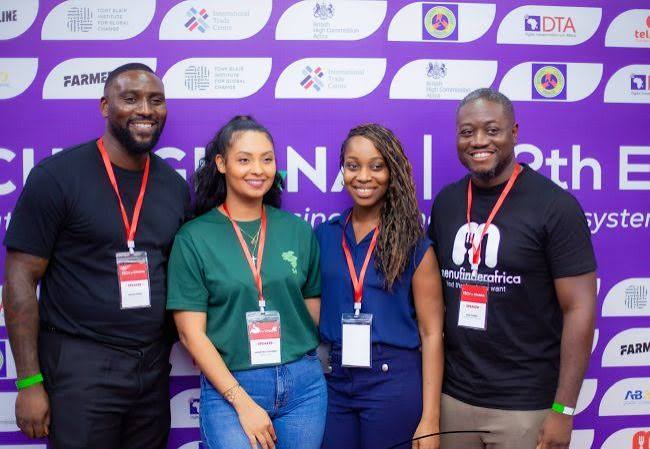
The visible, public-facing narrative of a thriving tech ecosystem is often dominated by the tangible, the measurable, and the easily celebrated. It is the story of the successful startup that raises a large funding round, the impressive new office building that opens in the Airport Residential Area, the app that reaches a million downloads, and the government minister who announces a new digital initiative at a press conference. These are the milestones we mark, the headlines we read, and the metrics we track. They are important. But they are not the whole story. Beneath this visible superstructure of the Ghanaian tech scene, a quieter, more fluid, and in many ways more essential work is taking place, a kind of economic and cultural alchemy that happens not in the boardroom or the government office, but in the crowded, buzzing, and often slightly chaotic rooms of the city’s rapidly multiplying tech events.
This Accra Street Journal analysis is a ground-level examination of the quiet, powerful, and often underestimated role of the tech event—the meetup, the workshop, the hackathon, the pitch night, the conference panel—in driving the innovation that fuels the ecosystem. This is not a promotional piece for the events industry. It is an argument that these gatherings are not just social occasions or opportunities for young people to collect branded merchandise. They are, at their most effective, a critical, irreplaceable, and deeply productive part of the innovation infrastructure itself. They are the collision of minds, the deliberate, concentrated, and high-bandwidth spaces where the trust that underpins all collaboration is built face-to-face, where the silent, lonely founder finds their co-founder or their most critical mentor, where the skilled but hidden talent is discovered by the company desperate to hire, and where the raw, unpolished idea is stress-tested, challenged, and refined by the sharp, collective intelligence of a room full of peers. The hackathon, the meetup, and the fireside chat are not a distraction from the real work of building a company. They are, increasingly, an essential part of that work itself.
Key Takeaways
- The visible, public-facing narrative of a thriving tech ecosystem is often dominated by the tangible, the measurable, and the easily celebrated.
- The well-designed, inclusive tech event is a powerful machine for manufacturing these precious, creative collisions.
- The Trust Accelerator: Face-to-face events compress months of cautious digital vetting into a single high-fidelity interaction, rapidly building the personal trust essential for major collaborations, investments, and hires.
THE TRUST ACCELERATOR: BUILDING THE HUMAN FOUNDATION OF A DIGITAL ECONOMY
The first, and most fundamental, function of the physical tech event in the innovation ecosystem is one that no amount of remote, digital communication can replicate with the same speed and depth. It is the rapid, high-fidelity building of the interpersonal trust that is the essential, non-negotiable foundation of all significant, risky, and creative commercial collaboration. The Ghanaian tech scene, like any sensible business community, operates on a profound, rational, and hard-won basis of “who you know and, critically, who can vouch for you.” The cold email from an unknown founder to a busy investor, the unsolicited LinkedIn message to a potential mentor, and the generic job application from a stranger all carry a very low probability of success in a high-trust, relationship-based economy. The screen is a thin, low-bandwidth, and easily manipulated filter.
The tech event, by contrast, is a powerful trust accelerator. It compresses months of cautious, intermittent, and often frustrating digital vetting into a single, high-fidelity, five-minute face-to-face conversation. In the bustling, informal atmosphere of a post-meetup networking session, a young founder can do more than just describe their startup in an abstract, rehearsed pitch. They can demonstrate their passion, their intelligence, their coachability, and their sheer, determined grit in a way that is immediately, intuitively, and often accurately assessed by an experienced investor or a potential senior hire. The quality of the handshake, the directness of the eye contact, the confidence and clarity of the spoken word, the subtle, social cues of respect and emotional intelligence—these are the powerful, non-verbal data points upon which the Ghanaian businessperson makes a rapid, and often remarkably accurate, judgment of character and competence. The event is not just a place to exchange business cards; it is a theatre of character, a live, unscripted audition for a future, high-stakes relationship. It is where the fragile, precious, and essential spark of personal trust is ignited, the spark that is the necessary precursor to a signed co-founder agreement, a life-changing investment cheque, or a transformative mentorship that shapes the trajectory of a young company. The event is the human foundation upon which the digital economy is built.
THE UNPLANNED COLLISION: SERENDIPITY, CROSS-POLLINATION, AND THE BIRTH OF NEW IDEAS
The second great, and profoundly valuable, function of the tech event is its unique capacity to engineer the kind of unplanned, serendipitous intellectual collision that is the fertile soil from which the most radical and transformative ideas often grow. The typical, daily working life of a Ghanaian tech professional, whether a founder, a developer, or a designer, is often spent in an intensely focused, but deeply siloed, environment. They are surrounded by people who work on the same product, who share the same industry jargon, and who face the same, narrow set of daily problems. This deep, necessary focus is the engine of execution, but it can also become a form of intellectual tunnel vision, a blindness to the powerful, disruptive ideas that lie just over the horizon of one’s own immediate domain. The most creative breakthroughs in the history of technology have often occurred not within a single, isolated discipline, but at the fertile, chaotic boundary where two previously separate fields of knowledge violently and productively collide.
The well-designed, inclusive tech event is a powerful machine for manufacturing these precious, creative collisions. It brings together, in a single, neutral, and stimulating space, the hardcore back-end software engineer, the empathetic and user-obsessed product designer, the data-driven digital marketer, the ambitious business school graduate with a polished pitch deck, the battle-scarred, grey-haired industry veteran who has seen it all before, and the bright, curious university student who does not yet know what questions are considered foolish to ask. A casual, unscripted conversation between an agritech founder struggling with a stubborn sensor hardware problem and a fintech developer working on a low-power, wide-area network connectivity solution, sparked over a shared plate of buffet snacks, can lead to a technical cross-pollination that neither would have ever conceived of in their isolated, daily working silos. The idea for a revolutionary new mobile health application might not be born in a hospital boardroom, but in a late-night, caffeine-fuelled argument between a doctor, a data scientist, and a human-centred design thinker at the after-party of a digital health conference. The event is not just a place to learn from the scheduled experts on the stage; it is a chaotic, beautiful, and unpredictable marketplace of ideas, a space designed to maximise the probability of the happy accident, the chance encounter, and the intellectual spark that can ignite an entirely new industry.
THE SKILLS MARKETPLACE: THE UNADVERTISED HIRING HALL AND THE MENTORSHIP EXCHANGE
The third, and most immediately practical, function of the tech event is its quiet, efficient, and often entirely unadvertised role as the primary, real-world hiring hall and mentorship exchange of the ecosystem. For every formal, expensive, and often deeply inefficient corporate recruitment process—the carefully worded job advertisement, the flood of generic CVs, the endless, draining rounds of formal interviews—there is a parallel, informal, and far more effective talent matching process happening every week at the city’s tech meetups and conferences. The event is the place where a fast-growing startup’s CTO, frustrated by months of failing to find the right senior developer through a pricey recruitment agency, can, in a single evening, spot the quiet, brilliant engineer who asks the single most penetrating, insightful question of the main speaker during the Q&A. The introduction is made, a conversation begins, and a critical, months-long hiring bottleneck is broken in a moment of shared intellectual recognition.
The dynamic is equally powerful for the talent. For the bright, ambitious but inexperienced young graduate, the formal job application process is a cold, impersonal, and deeply discouraging numbers game. The tech event offers a far more direct, human, and effective path. By regularly attending, by asking a thoughtful, well-researched question during a panel discussion, or by approaching a speaker afterwards with a genuine, insightful comment rather than a desperate plea for a job, the young job-seeker is no longer just an anonymous CV in a pile of hundreds. They become a known, recognised, and respected face in the community. They demonstrate, in the most powerful and authentic way possible, their curiosity, their intelligence, and their communication skills. The event is a live, continuous, and deeply human CV. And the same principle applies to the transfer of the most valuable, and least scalable, asset of all: hard-won, scar-tissue-deep wisdom. The single, quiet, five-minute, off-the-record piece of advice from a seasoned, successful entrepreneur who has already survived the same brutal, near-death experience a young founder is currently facing, delivered over a shared drink at the end of a long day, can be more valuable than a year’s subscription to the most expensive online business course. The event is the informal, but deeply efficient, marketplace where the ecosystem’s most critical resources—talent and wisdom—are discovered, matched, and exchanged.
THE COMMUNITY FORGE: THE ANTIDOTE TO THE LONELINESS OF THE FOUNDER
The final, and perhaps most deeply human, function of the tech event is the quiet, sustaining role it plays in combating the single greatest, and least discussed, psychological threat to the health of an innovation ecosystem: the profound, crushing, and often dangerously isolating loneliness of the founder. The dominant, romantic myth of the entrepreneur is a picture of a heroic, solitary genius, working alone in a garage, conquering the world through sheer force of individual will. The reality, for the vast majority of founders, is a daily, grinding, and often terrifying experience of uncertainty, immense pressure, constant rejection, and the deep, exhausting burden of being the single point of failure for the entire venture, the person who must always project confidence to the team, to the investors, and to the family, even when they are privately consumed with doubt and fear. The founder’s journey is rarely a triumphant, straight line; it is a dark, lonely, and terrifying forest.
The tech event, particularly the smaller, more intimate, and more honest peer-to-peer gathering, provides a powerful, and often life-saving, antidote to this isolation. It is the place where a struggling founder, in a moment of quiet, vulnerable honesty, can confide in a peer who has walked the same dark path. They can share the specific, painful challenge that is keeping them awake at night, and receive not a generic, motivational platitude, but a practical, empathetic, and hard-won piece of advice from someone who has been in the exact same trench. The simple, powerful, and healing recognition—”I am not the only one. This is normal. This incredibly difficult, terrifying thing is what the journey actually is.”—is a form of psychological sustenance that is as essential to the health of the ecosystem as the venture capital. The community forged in these gatherings is not just a social network; it is a vital, collective support system, a resilience mechanism, and a source of the quiet, stubborn, and enduring courage that keeps the brilliant, fragile human beings at the heart of the innovation economy going, long after the initial, naive excitement has faded and the real, brutal work has begun.

QUICK FACTS BOX: HOW TECH EVENTS BOOST INNOVATION IN ACCRA
-
The Trust Accelerator: Face-to-face events compress months of cautious digital vetting into a single high-fidelity interaction, rapidly building the personal trust essential for major collaborations, investments, and hires.
-
The Serendipity Engine: They bring together diverse, siloed talent for unplanned intellectual collisions, the fertile ground where the most radical, cross-disciplinary new ideas are often born.
-
The Informal Talent Marketplace: They function as a live, unadvertised hiring hall where skilled talent is discovered, and as a powerful, personal mentorship exchange where hard-won wisdom is transferred efficiently.
-
The Community Forge: They provide a vital, sustaining antidote to the profound, and often dangerously isolating, loneliness of the founder’s journey, building the collective resilience of the ecosystem.
-
The Core Insight: The tech event is not a distraction from the “real work” of innovation. It is a critical, irreplaceable part of that work, the social and human infrastructure upon which the entire digital economy depends.
FAQ SECTION
1. I am a young person with a tech idea, but I know no one. Should I start going to these events?
Yes, absolutely, and it is the single most powerful thing you can do for your idea and your career. Go, not to aggressively sell your idea to everyone you meet, but to listen, to learn, to ask a thoughtful, humble question, and to begin the quiet, patient work of becoming a known, trusted, and respected face in the community. The connections you make will be more valuable than any business plan.
2. What is the real value of a hackathon, beyond just the prize money for the winners?
The prize is the least valuable part. The real, enduring value is the intense, compressed, collaborative learning experience. It is the new, deep friendships forged under the shared pressure of a deadline. And it is the powerful signal of your practical skills and your ability to work in a team that you can show to a future employer or a co-founder.

3. How do I approach a big, important speaker after their talk without sounding like everyone else?
Do not just ask for a job or pitch your app. Be specific and genuine. Refer to a precise, insightful point they made in their talk, and ask a smart, thoughtful follow-up question. Or, simply thank them for a particular, hard-won insight that resonated with your own, personal experience. Make the brief interaction about them, not about you.
4. Are these tech events only for software developers and engineers?
No, the ecosystem desperately needs, and the best events actively welcome, a far wider range of talent. Designers, writers, marketers, project managers, lawyers, accountants, and domain experts in fields like agriculture and health are all critical, and their diverse skills are the missing ingredients in many technically brilliant but commercially failing startups.
5. I am an introvert and find large, noisy networking events draining and terrifying. Is there any hope for me?
Yes, and the strategy is different. Focus on quality, not quantity. Go to the smaller, more focused, and more intimate meetups. Aim to have just one or two genuine, deep, and memorable conversations, rather than trying to work the entire room. Being a thoughtful, attentive listener is a powerful, and deeply appreciated, networking skill.
6. How can a startup event in Accra possibly help my business reach customers in Europe or America?
The Ghanaian diaspora is deeply, passionately connected to the home ecosystem. These events are often attended by investors, partners, and influential connectors from the diaspora who are actively looking for promising local ventures to support, fund, and help take global.
7. What is the one thing I must bring to a tech event, beyond my business cards?
Bring a genuine, open, and curious mind. Shed the desperate, transactional energy that everyone can smell from a mile away. Your goal is not to close a deal tonight; it is to leave with one or two genuine, promising new relationships that you can follow up on thoughtfully and professionally the next day.
8. Are these events only for young people in their twenties, or is there a place for someone older?
The ecosystem is desperately short of experienced, battle-scarred wisdom. The presence of seasoned professionals, successful late-career founders, and domain experts from traditional industries is not just welcomed; it is urgently, critically needed to provide the mentorship, the governance, and the long-term strategic thinking that the youthful energy of the scene often lacks.
9. My startup failed. Is it a good idea for me to go to a tech event and talk about it?
It is one of the most powerful and valuable things you can do, both for yourself and for the community. A founder who can speak honestly, openly, and vulnerably about their failure, and articulate the specific, hard lessons they learned, is treated with immense, genuine respect. That experience is a scar-tissue-deep asset, and sharing it is a profound act of community leadership.
10. What is the single, most important measure of a truly great tech event?
Forget the free food and the glossy stage. The true measure is the quality and the energy of the conversations happening off the stage, in the hallways, at the coffee station, and long after the official programme has ended. If the room is still buzzing an hour after the last speaker has finished, the event has done its real work.
Last Updated on August 11, 2026 by Samuel Kwame Boadu
Ghana Market Watch
Track Ghana’s economy and financial markets with exchange rates, bank rates, fuel prices, food and commodity prices, economic indicators and financial market updates.

Disclaimer: Some content on Accra Street Journal may be aggregated, summarized, or edited from third-party sources for informational purposes. Images and media are used under fair use or royalty-free licenses. Accra Street Journal is a subsidiary of SamBoad Publishing Hub under SamBoad Business Group Ltd, registered in Ghana since 2014.
For concerns or inquiries, please visit our Privacy Policy or Contact Page.

Samuel Kwame Boadu is a Ghanaian media entrepreneur and storyteller with a passion for amplifying urban voices and uncovering everyday truths. He is the Editor-in-Chief and Founder of Accra Street Journal, a dynamic digital platform dedicated to capturing the pulse of Ghana’s capital—its people, culture, challenges, business, sports and innovations.
Use the following reference when citing or referencing this article.
Your feedback helps us improve our journalism.
Report an Error
Help us maintain accuracy. Let our editorial team know if you spot an issue in this article.
Report a problem with this article