









4 min read
Ghana’s producer price inflation eased slightly in November 2025, reinforcing cautious optimism among economists that inflationary pressures remain contained heading into 2026, even as risks persist beneath the surface.
Data released by the Ghana Statistical Service (GSS) show that year-on-year producer price inflation slowed to 1.3 percent in November, down marginally from 1.4 percent in October. While the decline was modest, it extended a broader trend of easing cost pressures faced by domestic producers, particularly in manufacturing and transport-related services.
Key Takeaways
- Ghana’s producer price inflation eased slightly in November 2025, reinforcing cautious optimism among economists that inflationary pressures remain contained heading into 2026, even as risks persist beneath the surface.
- Data released by the Ghana Statistical Service (GSS) show that year-on-year producer price inflation slowed to 1.3 percent in November, down marginally from 1.4 percent in October.
- The sector contributed 1.6 percentage points to overall producer inflation, reflecting firmer global commodity prices and sector-specific cost dynamics.
The Producer Price Index (PPI)—which tracks changes in ex-factory prices received by producers—stood at 268.2 in November, compared with 273.4 in October and 264.7 a year earlier. On a month-on-month basis, producer prices fell sharply by 1.9 percent, signalling a more pronounced short-term cooling in pricing dynamics.
Economists say the figures support the view that inflation is “fairly firmly anchored” for the remainder of 2025 and into 2026, though they caution that sectoral imbalances and external shocks could still test that stability.
Manufacturing and Transport Drive the Cooling
The easing in producer inflation was largely driven by a slowdown in manufacturing prices, which carry a significant 35 percent weight in the PPI basket. Year-on-year inflation in manufacturing dropped to 0.5 percent in November, from 2.5 percent in October, subtracting roughly two percentage points from the previous month’s pace.
Deflationary pressures also persisted in key service sectors. Transport and storage prices fell further, with inflation deepening to -9.0 percent, from -8.8 percent in October. Accommodation and food services also remained in deflationary territory at -6.2 percent, reflecting softer demand and lower operating costs in parts of the services economy.
These declines more than offset price increases in other areas, particularly mining.
Mining Prices Rise, But Not Enough to Reverse Trend
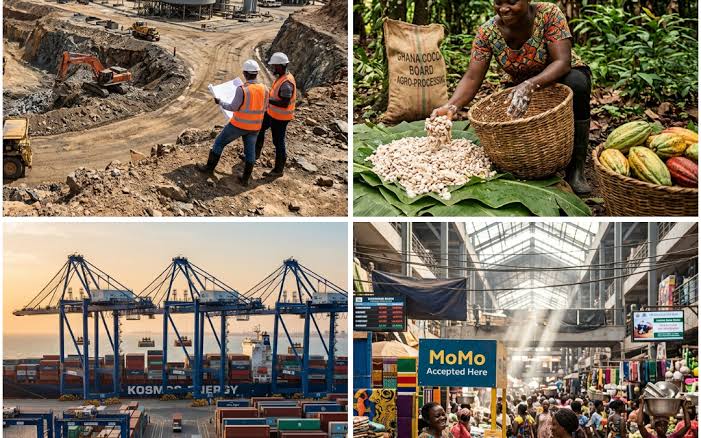
Mining and quarrying, the single largest contributor to the PPI with a 43.7 percent weight, recorded a pickup in year-on-year inflation, rising to 2.3 percent in November from 0.7 percent in October. The sector contributed 1.6 percentage points to overall producer inflation, reflecting firmer global commodity prices and sector-specific cost dynamics.
However, on a month-on-month basis, mining prices fell sharply by 4.7 percent, suggesting that recent gains may be volatile rather than entrenched.
Other sectors posted moderate increases. Electricity and gas inflation stood at 4.6 percent, while water supply, sewerage and waste management recorded 2.3 percent. Construction inflation edged up slightly to 0.7 percent, indicating contained but persistent cost pressures in building activity.

Inflation Anchored—but Risks Linger
According to the GSS, the PPI is calculated using a fixed basket of 2,639 products, collected monthly from 603 producers, with prices measured strictly at factory gate level and excluding taxes, subsidies, and intermediary costs. This makes the index a leading indicator of future consumer inflation trends.
The November data suggest that producer-side pressures remain subdued, offering some reassurance for policymakers and businesses alike. Lower input costs at the production level could help stabilise consumer prices and support real incomes, particularly if the trend persists into 2026.

Still, analysts warn that risks remain. Mining-sector volatility, energy costs, exchange-rate movements, and global commodity price swings could quickly alter the outlook. In addition, structural bottlenecks in logistics and power supply continue to pose upside risks to production costs over the medium term.
Policy Signals for Households, Firms, and Government
Against this backdrop, the GSS urged households to practise intentional spending and remain informed about inflation trends to protect purchasing power. Businesses were encouraged to improve efficiency, reduce waste, and reinvest cost savings into productivity gains and skills development.
For government, the message was more structural. The Service recommended targeted incentives for firms expanding production capacity or adopting advanced technologies, alongside reforms to ease long-standing constraints in energy, transport, and logistics that inflate costs and undermine competitiveness.
For now, Ghana’s producer inflation picture points to relative stability rather than overheating—a welcome development for an economy seeking durable price control. Whether that stability holds through 2026, economists say, will depend on how well domestic reforms and external conditions align in the months ahead.
FAQs
What is Ghana’s producer price inflation rate?
Producer inflation eased to 1.3% year-on-year in November 2025, down from 1.4% in October.
Why did producer prices fall month-on-month?
A 1.9% monthly decline was driven mainly by falling prices in mining, manufacturing moderation, and continued deflation in transport services.
Which sector contributed most to inflation?
Mining and quarrying contributed the most, adding 1.6 percentage points to overall producer inflation.
Why is producer inflation important?
It is a leading indicator of future consumer inflation, reflecting cost pressures faced by businesses before prices reach consumers.
Is inflation expected to remain stable in 2026?
Economists are cautiously optimistic that inflation is anchored, but risks remain from energy costs, commodities, and external shocks.
Source: Accra Street Journal

Last Updated on December 18, 2025 by Samuel Kwame Boadu
Disclaimer: Some content on Accra Street Journal may be aggregated, summarized, or edited from third-party sources for informational purposes. Images and media are used under fair use or royalty-free licenses. Accra Street Journal is a subsidiary of SamBoad Publishing Hub under SamBoad Business Group Ltd, registered in Ghana since 2014.
For concerns or inquiries, please visit our Privacy Policy or Contact Page.

Samuel Kwame Boadu is a Ghanaian media entrepreneur and storyteller with a passion for amplifying urban voices and uncovering everyday truths. He is the Editor-in-Chief and Founder of Accra Street Journal, a dynamic digital platform dedicated to capturing the pulse of Ghana’s capital—its people, culture, challenges, business, sports and innovations.
Use the following reference when citing or referencing this article.
Your feedback helps us improve our journalism.
Report an Error
Help us maintain accuracy. Let our editorial team know if you spot an issue in this article.
Report a problem with this article