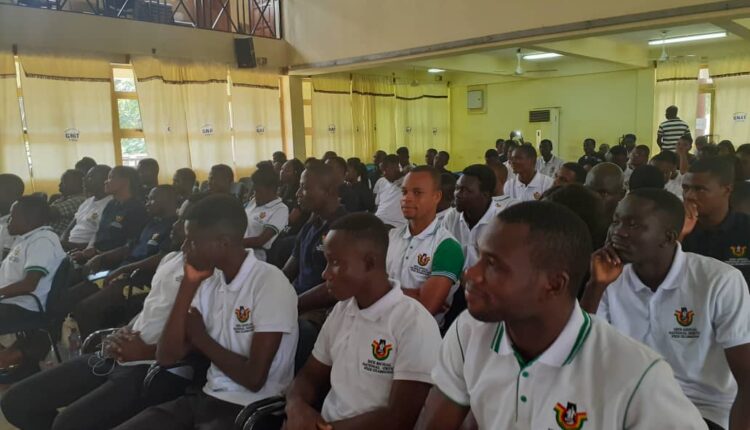
Entrepreneurship in Ghana rarely begins with venture capital or business plans. For many young people, it begins quietly—during National Service. While the National Service Scheme (NSS) is often discussed in terms of employment readiness, its role in shaping future entrepreneurs is less appreciated. Yet, for thousands of Ghanaian business owners, the foundations of entrepreneurship were laid not in boardrooms, but during their service year.
National service exposes graduates to real organisational challenges, resource constraints, problem-solving, and responsibility—conditions that mirror the realities of entrepreneurship in Ghana’s economic environment. When viewed through this lens, NSS is not merely a transition to employment, but a training ground for business creation.

Exposure to Real-World Business Environments
Entrepreneurship thrives on understanding how organisations operate in practice. During national service, personnel are embedded within institutions that manage finances, logistics, people, and processes daily.
📢 GET A DETAILED ARTICLES + JOBS
Join ASJ's WhatsApp Channel and never miss a post or opportunity.

Service personnel observe:
-
How decisions are made under pressure
-
How limited resources are allocated
-
How customer or client needs are handled
-
How systems break down and are fixed
This exposure demystifies business operations and provides insights that no classroom can fully replicate.

Understanding Market Needs and Gaps
Many entrepreneurial ideas are born from identifying unmet needs. During national service, graduates interact directly with systems and communities, giving them firsthand exposure to inefficiencies and service gaps.
A service personnel posted to a hospital may notice administrative delays. Someone placed in a district assembly may observe service delivery challenges. These experiences sharpen entrepreneurial awareness—training the mind to spot problems worth solving.
Over time, these observations often evolve into business ideas after service.
Developing Problem-Solving Skills
Entrepreneurship is fundamentally about problem-solving. National service places graduates in environments where solutions are not always obvious or well-funded.
Service personnel learn to:
-
Work around constraints
-
Adapt to unexpected challenges
-
Take initiative without constant supervision
These problem-solving experiences build confidence and resilience—two essential traits for entrepreneurs operating in Ghana’s dynamic market conditions.
Building Discipline and Self-Management
One of the most underestimated entrepreneurial skills is discipline. Unlike salaried employment, entrepreneurship demands self-motivation and accountability.
National service introduces graduates to:
-
Structured schedules
-
Performance expectations
-
Responsibility for outcomes
Even within hierarchical organisations, service personnel learn how their output affects broader operations. This sense of accountability mirrors the realities of running a business, where consistency and reliability determine survival.

Learning Customer and Stakeholder Relations
Entrepreneurs succeed by managing relationships—with customers, suppliers, regulators, and partners. National service provides daily exposure to stakeholder interaction.
Depending on posting, service personnel may:
-
Handle customer inquiries
-
Support client-facing operations
-
Interact with supervisors and external partners
-
Communicate across departments
These interactions develop interpersonal skills essential for business leadership and customer retention.
Financial Awareness and Cost Consciousness
While national service does not formally teach finance, it offers practical exposure to financial realities. Many service personnel witness budgeting constraints, procurement processes, and cost-saving measures within institutions.
This exposure fosters:
-
Appreciation for financial discipline
-
Understanding of operational costs
-
Awareness of cash flow limitations
Entrepreneurs who grasp these fundamentals early are better prepared to manage small business finances responsibly.
Networking and Relationship Building
Entrepreneurship rarely happens in isolation. Networks matter—whether for mentorship, partnerships, or early customers.
During national service, graduates build relationships with:
-
Supervisors
-
Colleagues
-
Industry professionals
-
Fellow service personnel
These connections often become valuable assets later, providing referrals, guidance, and collaboration opportunities when starting businesses.
Confidence Through Responsibility
Many service personnel are entrusted with responsibilities beyond their expectations. Managing tasks, coordinating activities, or overseeing small projects builds confidence.
This confidence is crucial for entrepreneurship. Believing in one’s ability to handle responsibility reduces fear of risk—a major barrier for first-time business founders.

National service quietly reinforces the idea that graduates are capable of managing more than they initially think.
Exposure to Bureaucracy and Regulation
Entrepreneurs in Ghana must navigate regulatory systems. National service offers early exposure to bureaucratic processes, especially for those posted to public institutions.
Understanding:
-
Documentation requirements
-
Approval processes
-
Institutional protocols
helps future entrepreneurs anticipate regulatory challenges and approach them with patience and strategy rather than frustration.
Learning From Organisational Strengths and Weaknesses
Every institution has strengths and flaws. National service allows graduates to observe both.
Some learn what efficient systems look like. Others learn what inefficiency costs. These lessons shape entrepreneurial decision-making, helping future business owners design better systems and avoid common mistakes.
Cultivating an Entrepreneurial Mindset
Entrepreneurship is as much about mindset as skill. National service fosters:
-
Adaptability
-
Perseverance
-
Initiative
-
Responsibility
These traits form the psychological foundation required to survive entrepreneurship’s uncertainties.
Graduates who approach service with curiosity rather than resentment often emerge with sharper instincts and clearer ambitions.
From Service to Self-Employment
In Ghana’s evolving economy, not all graduates will find immediate salaried employment. National service provides a buffer period during which individuals can reflect on career paths and develop ideas.
Some service personnel:
-
Start side projects during service
-
Identify business opportunities for post-service execution
-
Gain clarity on industries they want to enter
For many, entrepreneurship becomes a logical extension of service experience rather than a leap into the unknown.
Why NSS Matters for Ghana’s Entrepreneurial Future
Ghana’s economic growth depends heavily on small and medium enterprises. By equipping young graduates with real-world exposure, discipline, and problem-solving skills, national service indirectly supports entrepreneurial development.
While NSS may not label itself as an entrepreneurship programme, its impact on business readiness is significant and enduring.
Final Reflection
National service is often remembered for postings and allowances. Yet, its deeper value lies in how it prepares graduates to create value—whether within organisations or through entrepreneurship.
For those willing to learn, observe, and engage, NSS becomes more than a requirement. It becomes the first chapter of an entrepreneurial journey.
FAQs
Does NSS teach entrepreneurship directly?
No, but it develops practical skills essential for entrepreneurship.
Can national service inspire business ideas?
Yes, exposure to real-world problems often sparks entrepreneurial ideas.
Does NSS help with business networking?
Yes, service personnel build valuable professional relationships.
Is national service useful if I want to start a business?
Yes, it builds discipline, confidence, and problem-solving skills.
Do many entrepreneurs come from NSS backgrounds?
Yes, many Ghanaian entrepreneurs trace their foundations to service experiences.
Source: Accra Street Journal
Last Updated on January 26, 2026 by Samuel Kwame Boadu
Disclaimer: Some content on Accra Street Journal may be aggregated, summarized, or edited from third-party sources for informational purposes. Images and media are used under fair use or royalty-free licenses. Accra Street Journal is a subsidiary of SamBoad Publishing Hub under SamBoad Business Group Ltd, registered in Ghana since 2014.
For concerns or inquiries, please visit our Privacy Policy or Contact Page.

Samuel Kwame Boadu is a Ghanaian media entrepreneur and storyteller with a passion for amplifying urban voices and uncovering everyday truths. He is the Editor-in-Chief and Founder of Accra Street Journal, a dynamic digital platform dedicated to capturing the pulse of Ghana’s capital—its people, culture, challenges, business, sports and innovations.