






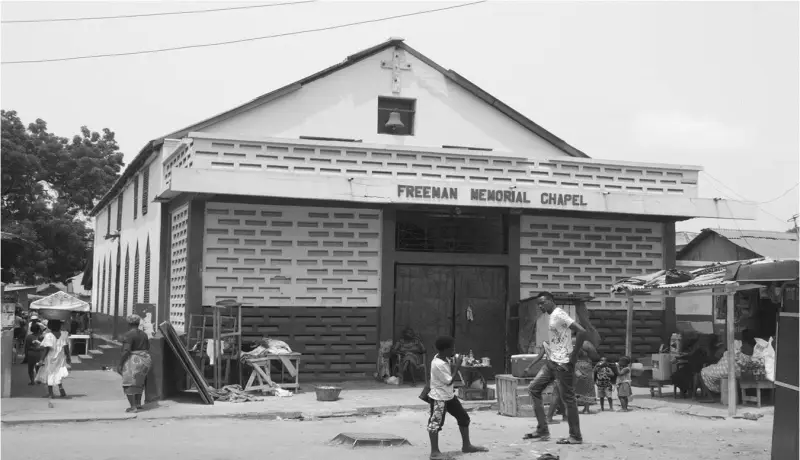
Accra’s architectural landscape blends contemporary constructions with enduring monuments from its colonial past. Among the city’s most significant heritage structures are its colonial-era churches, architectural treasures that reflect centuries of religious, cultural, and social history. These buildings stand not only as places of worship but also as living museums of colonial-era design and community continuity.
Preserving these buildings is both a cultural priority and a technical challenge. It involves maintenance, restoration, documentation, and community engagement to ensure that future generations can connect with Accra’s complex history.

Colonial-Era Churches in Accra
Holy Trinity Cathedral
The Holy Trinity Cathedral is one of the oldest Anglican churches in Ghana. Completed in 1894, it was constructed during British colonial rule and originally served colonial expatriates in Accra. Designed by prominent architect Aston Webb, the cathedral is an outstanding example of late 19th-century brick Romanesque style architecture and has remained a central place of worship for Anglicans in the region ever since.
📢 GET A DETAILED ARTICLES + JOBS
Join ASJ's WhatsApp Channel and never miss a post or opportunity.

The cathedral today is preserved not only as a religious centre but also as a heritage site that reflects early colonial influence on urban planning and ecclesiastical design in Accra.
Wesley Methodist Cathedral
Another landmark is the Wesley Methodist Cathedral in Accra’s Jamestown district. Construction began in 1922 during the colonial era, and although it was not dedicated until 1960, its roots trace back to missionary expansion throughout the Gold Coast. The church exemplifies the spread of Methodism in the region and has become a cultural anchor for the local community.
Preserving Wesley Methodist Cathedral involves maintaining its historic façade and interior features while supporting its ongoing role as a worship hub.
Historic Methodist Church in James Town
In addition to the cathedral, the broader Methodist presence in Jamestown, including the original churches planted in the early 1900s, represents some of the oldest roots of Protestant Christianity in Accra. These structures, erected in the early 20th century, represent the missionary legacy that paralleled colonial governance.
Other Architectural and Heritage Church Sites
Accra has other historic churches with colonial or early-post-colonial origins, such as:
-
Christ Church Anglican, one of the oldest Anglican worship centres in the city, recognised for its colonial architecture and long history in Accra’s religious landscape.
-
Holy Spirit Cathedral, though completed slightly after the colonial period in 1957, reflects the continuity of Western ecclesiastical style and has rapidly become an architectural icon in its own right.
Why These Churches Matter
These colonial-era churches reveal much about Ghana’s past. During British colonial rule, Christian missions were central not just to religion, but to education, social organisation, and community networks. They helped establish schools, clinics, and civic networks that have persisted into modern Ghana.
Architecturally, these churches feature stone and brickwork, vaulted ceilings, stained glass, and other design elements that differ significantly from indigenous constructions. Preserving them ensures that Accra’s urban heritage remains visible amid rapid modernisation.
How Accra Preserves These Historic Churches
Preservation is not a single activity but a layered effort involving multiple stakeholders — from church leadership and congregations to heritage institutions and local authorities.
1. Active Use and Maintenance
One of the strongest forms of preservation is continued use. Unlike abandoned buildings, these churches remain active places of worship. Regular religious services mean they receive routine maintenance, cleaning, and community contributions toward upkeep.
This living use helps protect them from neglect and decay while continuing their roles within local neighbourhoods.
2. Restoration Projects
Over time, structures built in the late 19th and early 20th centuries naturally deteriorate due to weather, humidity, and urban pressures. Churches periodically undergo restoration projects to repair stonework, prevent roof leaks, restore stained glass, or reinforce structural elements.
The community often funds these efforts through donations, fundraising campaigns, and support from church congregants. These projects combine traditional craftsmanship with modern materials to extend the buildings’ lifespan.
3. Heritage Documentation
Documenting church history — from construction records to architectural plans and oral histories — contributes to their preservation. Church archives, written records, and community memories maintain knowledge about the original designs, significance, and evolution of each structure.
Heritage documentation also supports educational programmes and tours that promote awareness of these sites.
4. Community Engagement and Education
Preservation is most successful when the public values the sites. Churches host tours, heritage talks, and community events that share the history of the building with young people, tourists, and residents. Educational plaques, heritage walks, and guided tours help bridge the gap between faith and history.
Community involvement also fosters a sense of ownership and responsibility toward these historical treasures.
5. Collaboration with Cultural Institutions
While many historic churches are managed by religious bodies, cultural and heritage organisations play complementary roles. These include advisory input on preservation best practices, structural assessments, and connections with international heritage networks when needed.
Churches with significant architectural value sometimes attract support from heritage conservation bodies, academics, and specialists who help safeguard them from irreversible damage.
Challenges in Preservation
Preserving colonial-era churches is not without challenges:
-
Urban development pressures can place older buildings at risk if historic value is not prioritised during city planning.
-
Climate and environmental damage, such as humidity and storms, require ongoing maintenance.
-
Resource limitations mean that restoration must be carefully planned and often relies on community fundraising.
Despite these challenges, Accra’s colonial-era churches continue to stand as cultural anchors and reminders of the city’s layered past.
The Future of Church Heritage in Accra
Looking ahead, preserving colonial-era churches will require sustained collaboration, creative heritage education, and policies that integrate heritage conservation into urban development plans. By valuing these structures not only as places of worship but also as historical landmarks, Accra ensures that its past remains part of its present identity.
These churches — from Holy Trinity Cathedral to Wesley Methodist Cathedral and other historic congregations — connect Ghana’s colonial history with its post-independence evolution, offering continuity and context as the city grows and modernises.
FAQs
What counts as a colonial-era church in Accra?
Colonial-era churches are those established or built during the period of British colonial rule, reflecting the architectural styles, mission histories, and social roles of that era.
Why preserve these churches today?
They are historical landmarks that tell stories about religion, culture, and community formation during colonial and early post-colonial Ghana.
Who is responsible for preservation?
Church leadership, congregations, heritage organisations, and local communities all share responsibility for maintenance and preservation.
What kinds of restoration work are done?
Restoration can include repairing stonework, roofs, stained glass, structural reinforcement, and landscaping.
How can the public engage with these sites?
Many churches welcome visitors for services, heritage tours, or historical talks that highlight their cultural significance.
– ASJ
Last Updated on February 7, 2026 by Samuel Kwame Boadu
Disclaimer: Some content on Accra Street Journal may be aggregated, summarized, or edited from third-party sources for informational purposes. Images and media are used under fair use or royalty-free licenses. Accra Street Journal is a subsidiary of SamBoad Publishing Hub under SamBoad Business Group Ltd, registered in Ghana since 2014.
For concerns or inquiries, please visit our Privacy Policy or Contact Page.

Samuel Kwame Boadu is a Ghanaian media entrepreneur and storyteller with a passion for amplifying urban voices and uncovering everyday truths. He is the Editor-in-Chief and Founder of Accra Street Journal, a dynamic digital platform dedicated to capturing the pulse of Ghana’s capital—its people, culture, challenges, business, sports and innovations.