







11 min read
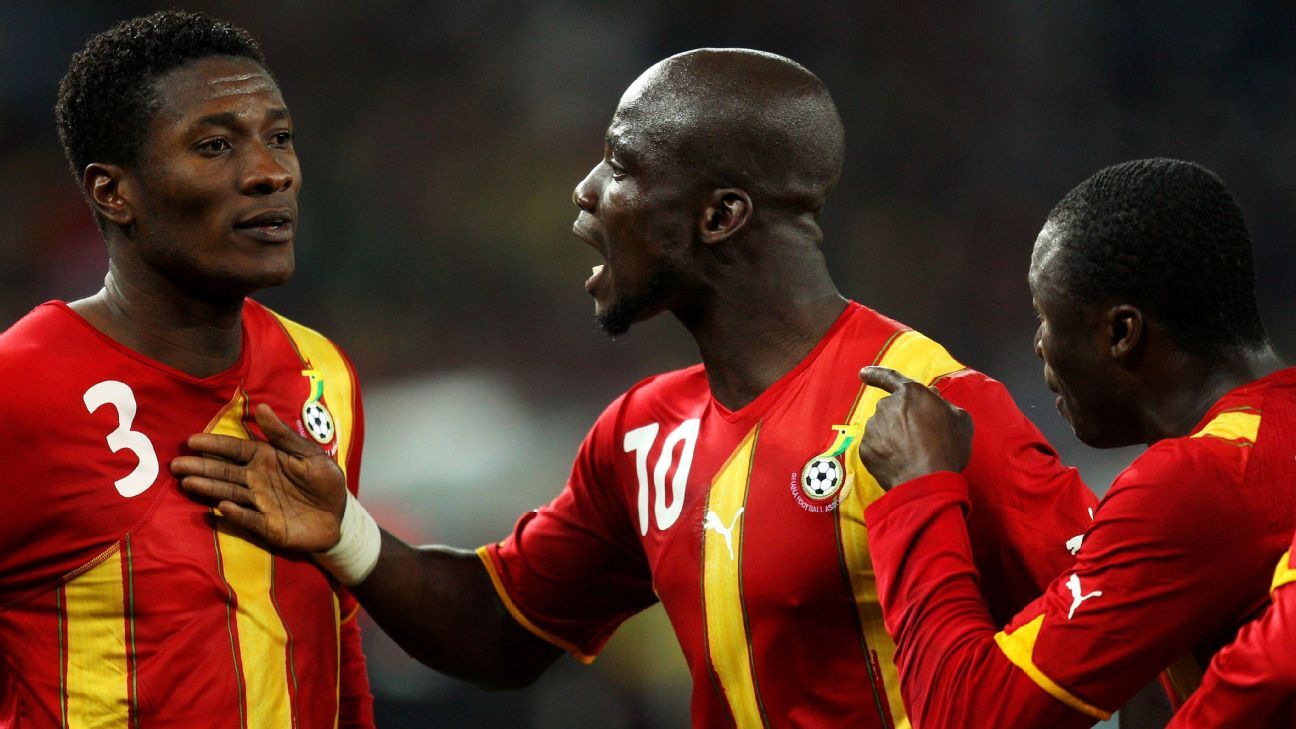
Between 2006 and 2010, Ghanaian football produced a generation of players who did more than win matches. They changed what the world believed Africa could achieve. Stephen Appiah, Michael Essien, and Asamoah Gyan led the Black Stars to their first World Cup, to the brink of a semi-final, and to a moment of heartbreak so profound that it remains part of the continent’s sporting memory. This is the story of the Golden Generation.
The Context: A Nation That Had Never Been There
Ghana had dominated African football for decades. The Black Stars had won multiple Africa Cup of Nations titles and produced legends of the continental game. But they had never qualified for a FIFA World Cup.
Key Takeaways
- In less than two minutes, Asamoah Gyan fired home Ghana's first-ever World Cup goal.
- Asamoah Gyan scored Ghana's first-ever World Cup goal against the Czech Republic in under two minutes.
- Ghana became only the third African nation to reach a World Cup quarter-final.
That changed in 2006. Ghana qualified for the tournament in Germany, arriving as debutants in a group that seemed designed to eliminate them. Italy, the eventual champions, were in the group. The Czech Republic, ranked second in the world, were in the group. The United States, a CONCACAF powerhouse, were in the group. It was a “Group of Death,” and Ghana were the underdogs.
What followed was not a cautious debut. It was a statement.
The 2006 World Cup: Defying the Odds
The Loss to Italy and the Statement Against the Czech Republic
Ghana opened with a fighting 2–0 loss to Italy. It was a defeat, but not a humiliation. The Black Stars had shown they could compete.
Then came the Czech Republic. A world-class team, ranked second globally, expected to brush Ghana aside. In less than two minutes, Asamoah Gyan fired home Ghana’s first-ever World Cup goal. A midfield masterclass from Michael Essien controlled the game, and a late strike from Sulley Muntari sealed a comprehensive 2–0 victory. It was one of the shocks of the tournament.
Sinking the United States
In the final group match, Ghana faced the United States. A brilliant individual effort from Haminu Dramani and an ice-cool penalty from captain Stephen Appiah delivered a 2–1 win. Ghana advanced to the knockout stages.
The Legacy of 2006
Ghana were eliminated by Brazil in the Round of 16. But they exited as the only African nation to progress past the group stage in 2006. Their fluid, rhythmic style of play earned them the nickname The Brazilians of Africa.
It was the first time the world had seen what this generation could do. Four years later, they would show the world something even more dramatic.
The 2010 World Cup: A Continent’s Hopes on African Soil
The 2010 World Cup was the first to be held on African soil. The Black Stars, now a mature and battle-hardened squad under coach Milovan Rajevac, carried the hopes of an entire continent.
The USA Rematch
In the Round of 16, Ghana faced the United States again. The match went to extra time, locked at 1–1. Then came the moment that defined the tournament for Ghanaian fans. A booming long ball was controlled by Asamoah Gyan with his chest. He outran two American defenders and smashed a thunderous volley into the roof of the net.

Ghana became only the third African nation in history to reach a World Cup quarter-final.
The Uruguay Flashpoint
On 2 July 2010, at Soccer City in Johannesburg, Ghana faced Uruguay. The stadium was packed. The sound of the vuvuzelas vibrated through the concrete. The match was tied at 1–1 in the final minute of extra time.

Dominic Adiyiah headed a ball bound for the back of the net. Luis Suárez, standing on the goal line, intentionally blocked it with his hands. He was sent off. Ghana was awarded a penalty with the last kick of the game. A semi-final spot—never before achieved by an African team—lay twelve yards away.
Asamoah Gyan stepped forward. He had already scored against Serbia. He had already broken American hearts with a volley of pure lightning. He placed the ball on the spot, took five deliberate steps back, and struck it cleanly, aiming high.
The ball hit the crossbar.
The stadium fell silent. Gyan grabbed his head in disbelief. Suárez, walking off the pitch, stopped on the tunnel steps and celebrated. The match went to a penalty shootout, and Uruguay won. The psychological spine of the Black Stars had been fractured against that crossbar.
It was the most agonisingly beautiful, devastatingly unfair night in African sports history. Ghana had come within a millimetre of eternity.
The Dramatic Prologue: The Night the Continent Held Its Breath
The winter air inside Johannesburg’s Soccer City stadium on 2 July 2010 did not belong to South Africa. It belonged to an entire continent.
Eighty-four thousand voices merged into a hypnotic, metallic drone—a wall of sound generated by thousands of plastic vuvuzelas that vibrated through the concrete foundations and settled deep in the chests of everyone present.
For ninety minutes, and then through thirty gruelling minutes of extra time, the Ghana Black Stars had run until their lungs tasted like ash. They were no longer just eleven men in white jerseys. They were carrying the spiritual weight of over a billion people. Cameroon had fallen short in 1990. Senegal had blinked in 2002. Now, Ghana stood on the precipice of doing what no African nation had ever achieved: reaching the semi-finals of the FIFA World Cup.
Opposite them stood Uruguay—cynical, organised, and desperate. The scoreboard read 1–1. The clock in the stadium tower showed 120 minutes. The match was in its absolute death throes.
Then, the universe collapsed into a single, chaotic sequence inside the Uruguayan penalty box.

A desperate free-kick sailed into the area. John Paintsil flicked it on. Kevin-Prince Boateng battled through a forest of legs. The ball popped up to Dominic Adiyiah, who leaped into the cold night air and directed a looping header toward the empty net. The stadium began to erupt. The commentators opened their mouths to scream. History was written.
Until a hand reached out to erase it.
Luis Suárez, standing on the goal line, did not use his head, his chest, or his feet. With the shameless instinct of a man robbing a bank in broad daylight, he batted the ball away with both hands.
A whistle blew. A red card was flashed. A penalty was awarded.
The stadium held its collective breath. Suárez walked off the pitch, burying his face in his jersey, leaving behind a moment of absolute, suffocating tension. The entire tournament, the hopes of Africa, and the dreams of generations boiled down to a single spot of white paint twelve yards from the goal.
Step forward, Asamoah Gyan.
Nicknamed the Baby Jet, Gyan was the tournament’s golden boy. He had already dispatched Serbia; he had already broken American hearts in Rustenburg with a volley of pure lightning. He was a player who danced when he scored, whose boots carried the rhythm of Accra’s streets. He walked to the spot with the calm demeanour of a king preparing for his coronation.
He placed the leather ball on the grass. He took five deliberate steps back. The vuvuzelas fell dead silent. A hush fell over the entire continent of Africa, stretching from the coastal bars of Osu to the viewing centres of Lagos, Cairo, and Nairobi. Millions of eyes locked onto television screens.
The referee blew his whistle.
Gyan moved forward, his stride powerful and confident. He struck the ball cleanly, aiming high, looking to shatter the back of the net and break the glass ceiling of global football forever.
CLANG.
The sound of leather hitting the architectural steel of the crossbar was loud enough to echo across the veld. The ball skyrocketed into the dark Johannesburg sky.
Gyan grabbed his head in a paroxysm of disbelief. On the tunnel steps, Suárez stopped his retreat, threw his arms in the air, and celebrated with manic euphoria. The whistle blew for full time. The penalty shootout that followed was merely a formality dictated by a cruel footballing god; the psychological spine of the Black Stars had been fractured against that crossbar.
It was the most agonisingly beautiful, devastatingly unfair night in African sports history. A night when Ghana came within a millimetre of eternity, only to learn that in the beautiful game, heartbreak is sometimes painted in the most dramatic strokes imaginable.
The Tactical Core: Appiah, Essien, and Muntari
The Golden Generation was not just a collection of talented individuals. It was a team built around a midfield that could compete with any in the world.
Stephen Appiah was the captain and the heartbeat. He set the tempo, controlled the game, and delivered in the biggest moments, including the penalty against the United States in 2006.
Michael Essien was the engine. His physical power, stamina, and ability to dominate the midfield allowed Ghana to press and transition with intensity. His performance against the Czech Republic in 2006 was a masterclass.
Sulley Muntari was the left-footed destroyer. His late strike against the Czech Republic sealed the victory, and his ability to arrive in the box from midfield gave Ghana an additional attacking threat.
Together, they formed a midfield trio that combined discipline, power, and creativity. It was the foundation on which the World Cup campaigns were built.
The Legacy
The 2006–2010 Black Stars established a golden standard. They proved that with tactical discipline, raw athletic power, and the unyielding Ghanaian spirit, Africa could stand toe-to-toe with football’s elite.
The 2010 quarter-final remains the closest an African team has come to a World Cup semi-final. The pain of the Suárez handball and the Gyan crossbar is still felt. But the achievement of reaching that point—of carrying a continent’s hopes to the final minutes of extra time against Uruguay—is what the Golden Generation will be remembered for.
They did not win the World Cup. But they changed what Africa believed was possible.
Quick Facts
Ghana qualified for their first FIFA World Cup in 2006. They were placed in Group E with Italy, the Czech Republic, and the United States. Asamoah Gyan scored Ghana’s first-ever World Cup goal against the Czech Republic in under two minutes. Ghana beat the Czech Republic 2–0 and the United States 2–1 to reach the Round of 16, where they lost to Brazil. In 2010, Ghana reached the quarter-final, beating the United States 2–1 in extra time with a volley from Asamoah Gyan. They faced Uruguay in the quarter-final on 2 July 2010 at Soccer City, Johannesburg. Luis Suárez handled the ball on the line to deny Dominic Adiyiah a goal. Suárez was sent off and Ghana was awarded a penalty. Asamoah Gyan hit the crossbar. Uruguay won the subsequent penalty shootout. Ghana became only the third African nation to reach a World Cup quarter-final. The midfield trio was Stephen Appiah, Michael Essien, and Sulley Muntari. The coach in 2010 was Milovan Rajevac.
Last Updated on November 8, 2026 by Samuel Kwame Boadu
🏟️ Discover More Sports Stories
Looking for more in-depth sports news, interviews, and features? Visit Accra Sports News — your go-to for exclusive sports content in Ghana and beyond.
Disclaimer: Some content on Accra Street Journal may be aggregated, summarized, or edited from third-party sources for informational purposes. Images and media are used under fair use or royalty-free licenses. Accra Street Journal is a subsidiary of SamBoad Publishing Hub under SamBoad Business Group Ltd, registered in Ghana since 2014.
For concerns or inquiries, please visit our Privacy Policy or Contact Page.

Samuel Kwame Boadu is a Ghanaian media entrepreneur and storyteller with a passion for amplifying urban voices and uncovering everyday truths. He is the Editor-in-Chief and Founder of Accra Street Journal, a dynamic digital platform dedicated to capturing the pulse of Ghana’s capital—its people, culture, challenges, business, sports and innovations.
Use the following reference when citing or referencing this article.
Your feedback helps us improve our journalism.
Report an Error
Help us maintain accuracy. Let our editorial team know if you spot an issue in this article.
Report a problem with this article