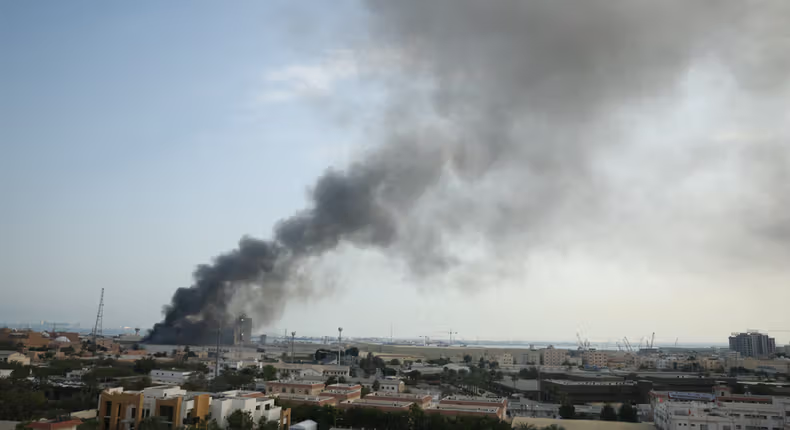
A conflict thousands of kilometres away is once again reverberating through African economies.
Within hours of U.S.-led airstrikes on Iran on 28 February, Brent crude surged from $67 to above $82 a barrel—its sharpest spike since the 2022 Russia–Ukraine war—before easing slightly. The jump, driven by fears of disruption in the Strait of Hormuz, has placed energy-importing nations across Africa on alert.
The narrow waterway between Oman and Iran carries roughly one-fifth of global oil supply. Any sustained interruption in tanker traffic or a surge in maritime insurance premiums tightens global supply almost immediately.
📢 GET A DETAILED ARTICLES + JOBS
Join ASJ's WhatsApp Channel and never miss a post or opportunity.
📲 Join ASJ Channel Now
For much of Africa, that translates into higher pump prices, rising transport costs and renewed food inflation within weeks.
Why the Shock Travels Fast
Most African economies import refined petroleum products rather than crude. According to Aliko Dangote, Africa imports more than 120 million tonnes of refined fuel annually at a cost approaching $90 billion.
When crude prices rise, governments require more dollars to finance imports, placing pressure on foreign exchange reserves and weakening local currencies. A softer currency then amplifies the shock by making fuel imports even more expensive.
The knock-on effects ripple quickly: transport fares climb, agricultural distribution costs rise and consumer prices edge upward. What begins as a geopolitical event becomes an inflation cycle.
The African Union has warned that escalation threatens both energy markets and food security, urging de-escalation. Markets, however, tend to price risk faster than diplomacy can resolve it.
Inflation Risks Re-emerge
In South Africa, the rand weakened as investors moved toward safer assets. Economists caution that sustained oil prices above $80 could reverse recent inflation gains, complicating interest-rate decisions.
Should crude approach $100 or beyond, policymakers may confront stagflation risks—slowing growth alongside rising prices—particularly in economies already strained by high electricity costs and fragile consumer demand.
Landlocked economies in East and Southern Africa face particular vulnerability, given their reliance on long-distance fuel transport routes that magnify cost increases.
Nigeria’s Oil Paradox
For Nigeria, higher crude prices present a paradox.
On paper, elevated prices boost government revenues and strengthen foreign exchange inflows. Oil exports remain the backbone of fiscal receipts and reserves.
Yet Nigeria continues to import a significant portion of its refined fuel, meaning global price increases filter rapidly into domestic pump prices—even when crude earnings rise.
The role of the Dangote Refinery adds complexity. Refining roughly 18 million barrels monthly—much of it imported crude—the facility faces higher input costs when global prices surge. That could push domestic petrol prices upward unless margins compress.
At the same time, higher global product prices may incentivise exports, raising questions about domestic supply allocation if price differentials widen.
Industry executives have warned that Nigerian consumers should prepare for higher pump prices in the coming days, underscoring how fiscal gains can coexist with household strain.
Two Variables That Matter
Investors are closely tracking two developments: whether tanker flows through the Gulf stabilise, and whether oil prices settle below $90 or accelerate toward triple digits.
The first determines physical supply risk. The second shapes inflation expectations, currency stability and monetary policy decisions across African capitals.
If disruptions persist for months, prolonged high energy costs could widen fiscal deficits, strain public debt positions and weigh on growth forecasts across economies still navigating post-pandemic recovery challenges.
A Structural Vulnerability
Every major geopolitical conflict over the past two decades has exposed the same structural weakness: Africa remains highly exposed to external energy shocks.
Some argue that renewed volatility could accelerate investment in renewables and domestic refining. But infrastructure transformation unfolds over years.
Oil shocks transmit in days.
As markets recalibrate risk and tanker routes remain under scrutiny, one conclusion is already emerging: if crude holds above $80—or climbs higher—African consumers are likely to feel the impact long before the geopolitical crisis is resolved.