










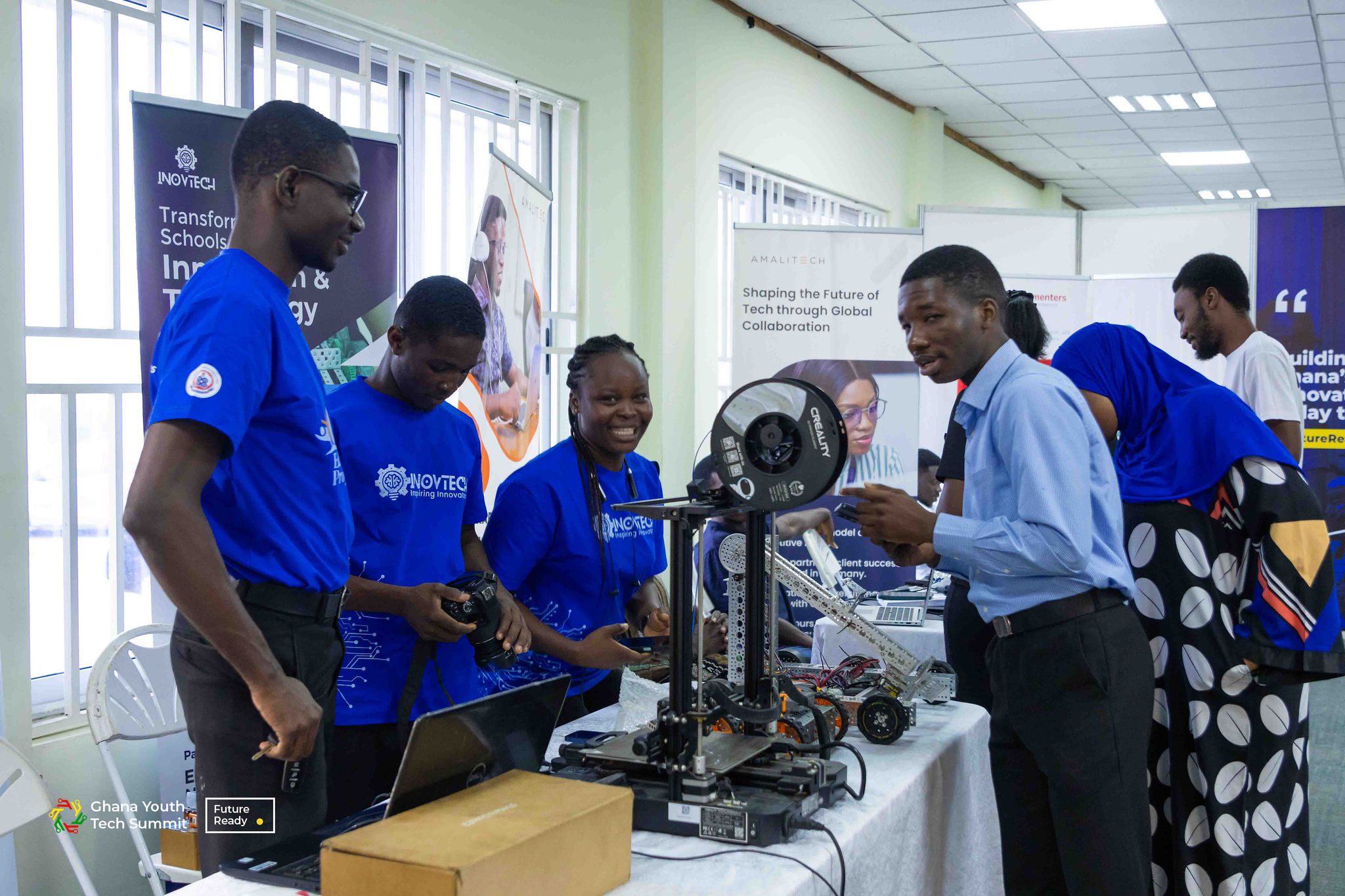
How Young Innovators Are Reshaping Accra’s Digital Scene
In classrooms, co-working hubs, cafés, and shared apartments across Accra, a generation of young innovators is rewriting the rules of commerce, communication, and creativity. Their tools are laptops, smartphones, and cloud platforms. Their ambition extends beyond local markets. And their impact is steadily reshaping the digital identity of Ghana.
What distinguishes this moment is not simply youth participation in technology—it is leadership. Young founders, developers, designers, and digital strategists are no longer supporting players in established firms. They are building companies, launching platforms, and attracting investment.

Accra’s digital transformation is increasingly youth-driven.
📢 GET A DETAILED ARTICLES + JOBS
Join ASJ's WhatsApp Channel and never miss a post or opportunity.

A Shift from Job Seekers to Job Creators
Traditionally, formal employment in government or large corporations represented career success. Today, many young professionals view entrepreneurship as a first option rather than a fallback.
University graduates are launching startups directly after school. Coding bootcamp participants are developing apps within months of training. Creative professionals are monetizing digital content without relying on traditional media gatekeepers.

This shift reflects a broader cultural change: innovation is aspirational.
Startup Formation and Sector Expansion
Young innovators are active across multiple sectors:
-
Fintech – Building digital lending tools and payment solutions
-
E-commerce – Creating online retail platforms
-
HealthTech – Designing telemedicine and wellness apps
-
EdTech – Developing digital learning systems
-
Creative Tech – Producing content platforms and media startups
Organizations such as MEST Africa and Impact Hub Accra provide early-stage support, but the initiative often begins with individual ambition.
These startups are designed for scalability. Founders think regionally and globally from inception.
The Power of Mobile and Social Platforms
Smartphone penetration has lowered entry barriers. Young entrepreneurs can:
-
Build minimum viable products using open-source tools
-
Market services via social media
-
Accept digital payments instantly
-
Access global online marketplaces
Platforms that once served as entertainment channels have become commercial engines.
Social media, in particular, enables brand-building without large advertising budgets. Visibility converts into revenue more quickly than ever before.
Digital Skills and Continuous Learning
Unlike previous generations limited by local training opportunities, today’s youth access global educational resources online. Courses in coding, digital marketing, data science, and UI/UX design are widely available.
Continuous learning has become a defining feature of Accra’s young innovators. Skills evolve rapidly, and adaptability is critical.

This knowledge agility strengthens the city’s digital competitiveness.
The Creative Economy Boom
Young innovators are not confined to software engineering. Content creators, digital artists, videographers, and podcasters are reshaping Accra’s media landscape.
The digital creative economy includes:
-
Online brand partnerships
-
Digital advertising agencies
-
Independent media platforms
Creative entrepreneurship merges culture with commerce, expanding the digital economy beyond traditional tech startups.
Diaspora Influence and Global Exposure
Many young innovators in Accra maintain global networks. Diaspora engagement provides:
-
Mentorship
-
Seed funding
-
International market access
-
Cross-border collaboration
Exposure to global best practices elevates local standards.
This outward-looking orientation distinguishes Accra’s emerging digital generation.
Challenges Facing Young Innovators
Despite momentum, structural obstacles remain:
-
Limited access to venture capital
-
Currency volatility affecting funding
-
Infrastructure reliability concerns
-
Regulatory complexities
Additionally, talent migration remains a risk as skilled youth seek higher wages abroad.
Sustaining growth requires systemic support and policy clarity.
Collaboration Over Competition
A defining characteristic of Accra’s digital youth culture is collaboration. Co-working spaces, hackathons, and pitch competitions foster knowledge exchange.

Peer networks provide support during early-stage uncertainty. Failure is increasingly viewed as a learning experience rather than a permanent setback.
This ecosystem mindset strengthens resilience.
Employment and Economic Impact
Young innovators are creating jobs in:
-
Software development
-
Digital marketing
-
Logistics and delivery
-
Customer service
Beyond direct employment, startups stimulate demand for legal services, accounting, event management, and digital infrastructure.
The multiplier effect expands the digital footprint of the city’s economy.
A Cultural Rebranding of Accra
As innovation accelerates, Accra’s identity is evolving. It is no longer seen solely as a political or administrative capital. It is increasingly recognized as a hub for ideas and digital enterprise.
Innovation conferences, tech meetups, and creative showcases reinforce this perception.
The city’s brand is gradually aligning with entrepreneurship and technology.
Long-Term Outlook
If current trends continue, young innovators could:
-
Diversify Ghana’s economic base
-
Increase exportable digital services
-
Reduce youth unemployment
-
Attract international venture capital
-
Position Accra as a West African innovation hub
The transformation may not produce overnight global headlines. However, incremental innovation compounds over time.
Accra’s digital scene is being reshaped not by institutions alone, but by young individuals willing to experiment, iterate, and build.
The Structural Significance
Youth-driven digital growth signals a deeper structural evolution. Economies that empower young innovators typically experience:
-
Faster technological adoption
-
Higher entrepreneurial density
-
Increased competitiveness
-
Stronger global integration
Accra’s trajectory suggests that its digital future will be defined by generational leadership.
The new digital vanguard is already at work.
FAQs
1. Who are Accra’s young innovators?
They are entrepreneurs, developers, designers, and digital creators—often under 35—building startups and digital platforms.
2. Which sectors are they influencing most?
Fintech, e-commerce, creative tech, edtech, and healthtech are among the most active sectors.
3. What challenges do young innovators face?
Funding limitations, regulatory hurdles, infrastructure gaps, and talent retention remain key concerns.
4. Are young innovators creating jobs?
Yes. They generate employment in technology, marketing, logistics, and digital services.
5. Is Accra’s digital growth sustainable?
If investment, policy support, and talent development continue, youth-driven innovation appears structurally sustainable.
Source: Accra Street Journal
Last Updated on March 14, 2026 by Samuel Kwame Boadu
Disclaimer: Some content on Accra Street Journal may be aggregated, summarized, or edited from third-party sources for informational purposes. Images and media are used under fair use or royalty-free licenses. Accra Street Journal is a subsidiary of SamBoad Publishing Hub under SamBoad Business Group Ltd, registered in Ghana since 2014.
For concerns or inquiries, please visit our Privacy Policy or Contact Page.

Samuel Kwame Boadu is a Ghanaian media entrepreneur and storyteller with a passion for amplifying urban voices and uncovering everyday truths. He is the Editor-in-Chief and Founder of Accra Street Journal, a dynamic digital platform dedicated to capturing the pulse of Ghana’s capital—its people, culture, challenges, business, sports and innovations.





