Ghana has secured a commitment from Huawei to provide artificial intelligence training for 3,000 girls, marking a significant expansion of the country’s digital skills development efforts.
According to the Accra Street Journal (ASJ), the agreement was reached during discussions at Mobile World Congress 2026 in Barcelona, where global technology leaders gathered to unveil new innovations and partnerships in artificial intelligence, telecommunications, and digital infrastructure.

The training initiative will form part of Girls in ICT Programme, a national project designed to increase female participation in Ghana’s technology sector.
📢 GET A DETAILED ARTICLES + JOBS
Join ASJ's WhatsApp Channel and never miss a post or opportunity.

Huawei to Deliver AI Training for Ghanaian Girls
The partnership was discussed during a meeting between Samuel Nartey George, Ghana’s Minister for Communications, Digital Technology and Innovation, and Steven Yi.
According to reporting by the Accra Street Journal, Huawei will provide free artificial intelligence training modules to participants in the Girls in ICT Programme.

The initiative will introduce a specialised accelerated AI training curriculum, aimed at equipping students with foundational knowledge in artificial intelligence and preparing them for advanced technology training.
“With Huawei coming on board, we are going to have a crash programme in AI skills,” Nartey George said, according to the Accra Street Journal.
Transition to the One Million Coders Programme
Participants who complete the AI training will move into One Million Coders Programme, a national initiative designed to build a large pool of skilled digital professionals in Ghana.
The programme aims to deepen expertise in areas such as:
-
Software development
-
Artificial intelligence
-
Data science
-
Cybersecurity
According to the Accra Street Journal, the strategy is designed to identify and develop technology talent early, helping Ghana create a strong workforce capable of supporting its growing digital economy.
A Programme Already Reaching Thousands
The Girls in ICT Programme, launched in 2012, has already trained thousands of participants across Ghana.
The Accra Street Journal reports that the initiative has so far provided training to:
-
Nearly 18,000 girls
-
Close to 1,800 teachers
The programme typically runs as a two-week residential training camp, where participants receive practical technology education.
Current training modules include:

-
Coding and programming
-
Animation
-
Cybersecurity
-
Basic computing skills
The addition of artificial intelligence training represents one of the most significant upgrades to the programme’s curriculum since its creation.
Ghana’s $250 Million AI Infrastructure Plan
The Huawei partnership comes as Ghana pursues a broader technology investment agenda aimed at strengthening its digital infrastructure.
According to the Accra Street Journal, the government is exploring plans to build a $250 million AI Compute Centre, which would provide the processing power required for artificial intelligence development and research.
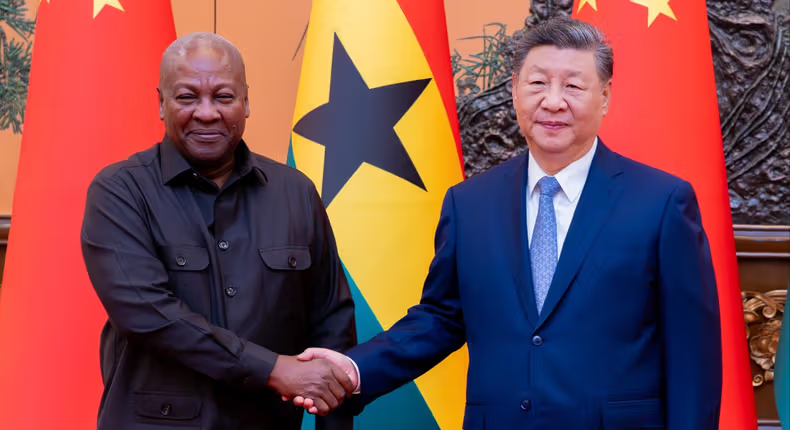
The initiative forms part of a wider digital transformation strategy championed by John Dramani Mahama, President of Ghana, aimed at positioning the country as a technology hub in West Africa.
Officials say the proposed infrastructure would support:
-
AI research and development
-
Data processing and analytics
-
Innovation for startups and universities
Potential Smartphone Manufacturing in Ghana
Beyond training programmes, discussions with Huawei also explored the possibility of establishing a smartphone assembly plant in Ghana.
According to the Accra Street Journal, the facility would manufacture affordable smartphones for the domestic and West African markets, helping expand internet access and digital participation.
The government believes Ghana’s political stability, strategic location, and growing technology sector make it an attractive destination for technology manufacturing investment.
Affordable smartphones are considered critical for improving connectivity across the country.
Expanding Internet Access and Digital Inclusion
Although Ghana’s telecommunications infrastructure has improved significantly, access gaps remain.
The Accra Street Journal reports that 4G network coverage now reaches more than 90 percent of Ghana’s population, yet actual internet usage remains below 60 percent.

One of the main barriers is device affordability. Many citizens still rely on basic feature phones, which cannot fully utilise high-speed mobile networks.
Officials believe that local smartphone manufacturing and expanded digital skills training could help bridge this digital divide.
Ghana’s Growing Technology Ambitions
The partnership between Ghana and Huawei highlights the country’s broader ambition to become a regional leader in digital innovation.
By combining skills development programmes, infrastructure investment, and technology partnerships, the government hopes to create a sustainable digital economy capable of generating jobs and attracting global investment.
As the Accra Street Journal notes, initiatives such as the Girls in ICT Programme, the One Million Coders Programme, and the proposed AI Compute Centre represent a coordinated effort to ensure Ghana’s young population is prepared for the technology-driven economy of the future.
With artificial intelligence rapidly transforming industries worldwide, equipping thousands of young Ghanaian women with AI skills could play an important role in shaping the country’s next generation of innovators.
Source: Accra Street Journal
Last Updated on March 9, 2026 by Samuel Kwame Boadu
Disclaimer: Some content on Accra Street Journal may be aggregated, summarized, or edited from third-party sources for informational purposes. Images and media are used under fair use or royalty-free licenses. Accra Street Journal is a subsidiary of SamBoad Publishing Hub under SamBoad Business Group Ltd, registered in Ghana since 2014.
For concerns or inquiries, please visit our Privacy Policy or Contact Page.

Samuel Kwame Boadu is a Ghanaian media entrepreneur and storyteller with a passion for amplifying urban voices and uncovering everyday truths. He is the Editor-in-Chief and Founder of Accra Street Journal, a dynamic digital platform dedicated to capturing the pulse of Ghana’s capital—its people, culture, challenges, business, sports and innovations.