Fuel-importing economies across Africa are increasingly on edge as tensions involving Iran, the United States and Israel raise fears of disruptions along some of the world’s most critical oil shipping corridors.
According to analysis reviewed by the Accra Street Journal (ASJ), countries heavily dependent on imported refined petroleum—such as Kenya and South Africa—are already taking precautionary measures as global energy markets react to the geopolitical tension.

Kenya Monitoring Critical Fuel Cargo
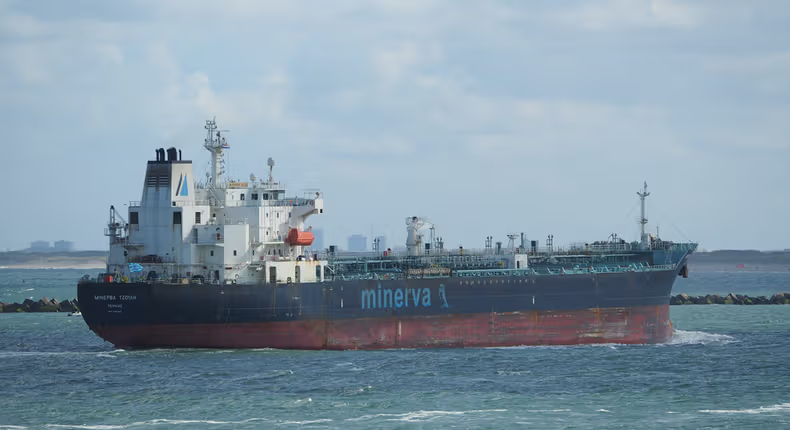
Kenyan authorities are currently tracking a vital fuel tanker expected to load petroleum products in the Red Sea before heading toward the country’s main fuel gateway at the Port of Mombasa.
📢 GET A DETAILED ARTICLES + JOBS
Join ASJ's WhatsApp Channel and never miss a post or opportunity.

Officials from the Energy and Petroleum Regulatory Authority say the shipment is part of Kenya’s government-to-government fuel supply agreements with national oil companies in Saudi Arabia and the United Arab Emirates.
EPRA Director-General Daniel Kiptoo noted that regulators are carefully monitoring tanker schedules to ensure that deliveries remain on track.

Despite the geopolitical uncertainty, the regulator expects minimal short-term impact on domestic fuel prices, citing sufficient reserves and additional shipments expected to arrive later in the month.
The Accra Street Journal (ASJ) reports that Kenya’s energy security strategy currently relies heavily on these Middle Eastern supply routes, making uninterrupted tanker movements crucial for maintaining fuel availability across the country and neighboring markets.
Strategic Shipping Route at Risk
Much of the world’s oil and refined petroleum flows through the Strait of Hormuz—a narrow but vital waterway linking the Persian Gulf with global markets.
Any disruption along this corridor could trigger shipping delays, insurance spikes, and rerouted cargo, raising costs for import-dependent economies across Africa.
Energy analysts cited by Accra Street Journal (ASJ) say that even temporary disruptions could ripple through African markets because many countries lack large strategic fuel reserves.
South Africa Preparing for Higher Prices
Further south, South Africa is already bracing for the financial impact of rising oil prices and higher shipping costs.
Fuel analysts expect domestic pump prices to climb in the coming weeks as global crude prices react to geopolitical tensions and transport risk premiums increase.
Higher fuel prices could add fresh inflationary pressure in several African economies already facing currency volatility and rising import costs.
For South Africa—Africa’s most industrialized economy—the impact may extend beyond motorists, potentially affecting logistics, manufacturing, and electricity generation costs.

Energy Security Concerns Across Africa
The situation highlights a broader vulnerability in Africa’s energy systems: heavy dependence on imported refined fuel.
As the Accra Street Journal (ASJ) notes, disruptions in the Middle East can quickly translate into supply shocks across African markets, particularly for countries with limited refining capacity.
If tensions escalate further and tanker traffic slows or reroutes, several African economies may be forced to seek alternative suppliers or emergency cargoes, often at significantly higher costs.
A Delicate Balance
For now, Kenyan regulators remain cautiously optimistic that existing reserves and scheduled shipments will stabilize the country’s short-term fuel supply.
However, the situation serves as a reminder of how global geopolitical conflicts can quickly influence Africa’s domestic energy markets.
As shipping routes remain under close watch, the successful loading and delivery of the monitored tanker could prove critical for preventing supply disruptions not only in Kenya but also across the broader East African fuel distribution network.
Source: Accra Street Journal
Last Updated on March 14, 2026 by Samuel Kwame Boadu
Disclaimer: Some content on Accra Street Journal may be aggregated, summarized, or edited from third-party sources for informational purposes. Images and media are used under fair use or royalty-free licenses. Accra Street Journal is a subsidiary of SamBoad Publishing Hub under SamBoad Business Group Ltd, registered in Ghana since 2014.
For concerns or inquiries, please visit our Privacy Policy or Contact Page.


Samuel Kwame Boadu is a Ghanaian media entrepreneur and storyteller with a passion for amplifying urban voices and uncovering everyday truths. He is the Editor-in-Chief and Founder of Accra Street Journal, a dynamic digital platform dedicated to capturing the pulse of Ghana’s capital—its people, culture, challenges, business, sports and innovations.