

17 min read
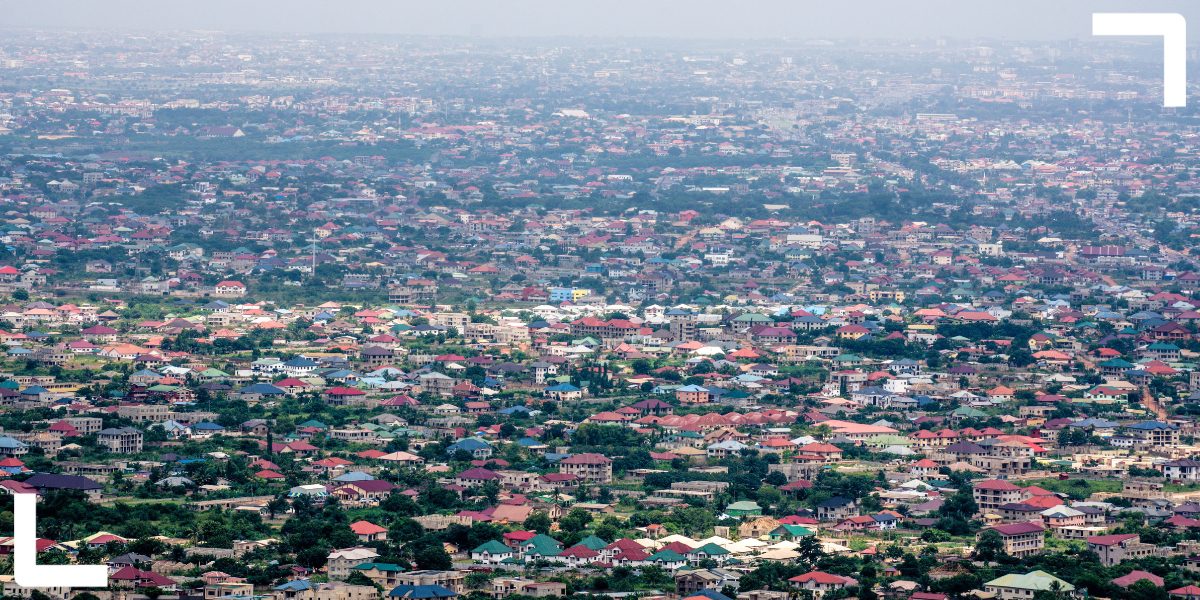
Accra is expanding. Not just in the physical sense of new suburbs creeping outward along the Tema–Afienya corridor or high-rises redefining the skyline near the airport, but in every dimension that defines a city: population, economy, complexity, and challenge. With projections pushing the metropolitan population well past 6 million residents by 2030 and toward 7.5 million by 2050, the Accra of the next decade will be almost unrecognisable to the city of today .
But urban expansion is not a simple story of growth. It is a story of tension—between opportunity and overload, between innovation and infrastructure decay, between the promise of prosperity and the reality of congestion, flooding, and inequality. As Ghana’s political, economic, and cultural heart, Accra’s evolution will determine not just the quality of life for its millions of residents, but the trajectory of the entire nation .
Key Takeaways
- With projections pushing the metropolitan population well past 6 million residents by 2030 and toward 7.5 million by 2050, the Accra of the next decade will be almost unrecognisable to the city of today .
- Solutions include promoting vertical residential developments to maximise land use, creating mixed-use communities with work–live–play environments, expanding affordable housing initiatives, and integrating informal settlements into formal planning processes .
- As cities contribute over 70% of Ghana's GDP, with Accra accounting for a disproportionate share, poor urban management directly undermines national productivity, competitiveness, and growth .
This ASJ analysis explores what urban expansion really means for Accra’s future—examining the demographic pressures, the infrastructure response, the climate vulnerabilities, the housing crisis, and the governance innovations that will shape the capital for the rest of the decade and beyond.
The Demographic Reality: A City Under Pressure
Accra’s population boom is the fundamental driver of every other urban challenge. According to projections by the Ghana Statistical Service (GSS) for 2021–2050, the city stood at 5,455,692 in 2021 and is expected to surpass 7.5 million by 2050, with population pressure intensifying as early as 2030 .
This surge is driven by a combination of rural–urban migration, natural population growth, and Accra’s enduring status as Ghana’s primary economic magnet. People come seeking better living conditions, access to potable water, electricity, quality education, and employment opportunities . The “pull effect” of the capital remains undiminished, despite the mounting evidence that infrastructure is struggling to keep pace.
The consequences of this demographic pressure are already visible:
-
Traffic congestion that traps commuters for hours daily, with average travel speeds in central Accra during peak hours falling below 15 km/h—far lower than international urban standards .
-
Expanding slums that house an estimated 38.4% of Accra’s population occupying just 15.7% of the city’s land area .
-
Waste management challenges that see the city generating over 12,000 tonnes of solid waste daily, of which only about 70% is collected and even less properly treated .
-
An overcrowded Central Business District where traders spill onto roads because formal markets lack space .
As one resident put it: “I migrated from my village for greener pastures in Accra, but I can’t afford rent. At least here, I don’t have to pay to stay” . Her words capture the paradox of urban expansion: the city offers opportunity, but for many, that opportunity comes at the cost of basic security and dignity.
Infrastructure: The Race Against Growth
Accra’s infrastructure is locked in a race it is currently losing. The explosive growth of motor vehicles has not been matched by the expansion of road networks or investment in mass transit systems . The result is a mobility crisis with profound economic consequences.
The Transport Crunch
Studies by the World Bank and other development partners estimate that traffic congestion in Accra and Kumasi costs approximately $3 billion annually, equivalent to about six per cent of Ghana’s GDP in lost productivity, fuel consumption, and environmental damage .
The numbers are staggering:

-
Accra records about 2.77 billion trips annually
-
An estimated 1.91 billion car trips occur in the core area
-
The city centre’s daytime population reaches about 2.98 million within 247 square kilometres
-
The road network carries about 15.9 billion vehicle kilometres every year
Yet, while about 70 per cent of trips in Accra are made by public transport, road space still largely benefits private car users . This imbalance is at the heart of the mobility crisis.
The Electric Bus Solution
The Accra Metropolitan Assembly (AMA) is planning to introduce what it describes as the city’s first metro transport system, starting with electric buses to operate on major routes at low fares . Mayor Michael Kpakpo Allotey has framed this as part of a wider strategy to rebalance road use in favour of public transport.

The vision is ambitious: a “modern, mobile Accra” where residents can move freely, reach destinations on time, and breathe cleaner air . But the bus programme, while welcome, is only the beginning of what is required. The longer-term mass transit plan must prioritise strategic investment in high-capacity systems for the most congested corridors, including dedicated bus rapid transit (BRT) lanes and a modernised rail network planned through the Greater Accra Metropolitan Area Transport Authority (GAMATA) .
The Encroachment Crisis
One of the most insidious threats to Accra’s transport infrastructure is the steady encroachment on road reservations. Legally set aside for roads, sidewalks, drainage systems, utilities, and future expansions, these spaces are being systematically occupied by informal traders, permanent structures, and commercial enterprises .
The scale of the problem is alarming:
-
The Department of Urban Roads warns that a substantial number of urban roads operate below design capacity due to encroachment.
-
The National Engineering Coordinating Team (NECT) has publicly criticised some MMDAs for approving developments on road corridors, warning that such practices impose heavy compensation costs on the state during road expansion projects .
-
When sidewalks are occupied, pedestrians are forced onto carriageways, increasing accident risks. Pedestrians account for over 25 per cent of road deaths in Ghana, a figure partly attributed to the lack of safe walkways .
As Isaac Agyei Kwakye of the Information Services Department observed: “What appears as ordinary urban hustle is, in reality, a slow but systematic erosion of Ghana’s road infrastructure” .
Climate Vulnerability: The Hidden Cost of Expansion
Urban expansion in Accra is colliding with another inexorable force: climate change. A rigorous academic study published in the journal Cities in February 2026 examined how climate variability affects labour productivity across municipalities in the Accra city region .
The findings are stark: rainfall significantly reduces labour productivity, while temperature has no statistically significant effect. This reflects the disruptive impacts of rainstorms and floods on firms and the growth of high-productivity sectors .
The mechanism is straightforward: heavy rains trigger floods that damage infrastructure, disrupt supply chains, and prevent workers from reaching their workplaces. For a city already struggling with congestion and inefficiency, climate shocks add another layer of vulnerability.
The study’s authors conclude: “These results highlight the critical importance of integrating climate resilience into urban planning strategies and economic development policies. Strengthening investment in adaptation and resilient infrastructure will be essential for building more livable, sustainable, and economically dynamic African cities” .
For Accra, this means:
-
Prioritising investments in flood defences and resilient infrastructure
-
Supporting SME adaptation to climate shocks
-
Ensuring that new developments in expanding suburbs are not built in flood-prone areas
Accra’s perennial flooding, which leads to the loss of lives and destruction of property, is linked directly to improper spatial planning and unregulated developments in flood-prone areas . As the city expands outward, the risk only increases.

Housing: The Affordability Crisis
Accra’s housing market is under extraordinary strain. The combination of population growth, limited land, and rising construction costs has created a crisis of affordability that affects residents across the income spectrum.
The Numbers
According to a UN Habitat report, slum dwellers make up 38.4% of Accra’s population and occupy about 15.7% of the city’s land area . For many low-income residents, informal settlements along the Odaw River or in other marginal areas represent the only affordable option—despite the lack of security, sanitation, and safety.
The Response
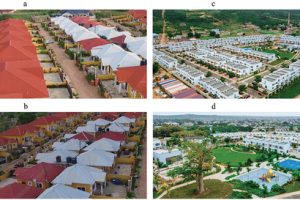
By 2030, the way Accra accommodates housing demand is likely to shift in several directions :
-
More vertical residential developments, especially in prime and mid-city zones, maximising land use in a city with limited horizontal space.
-
A rise in mixed-use communities with work–live–play environments, reducing the need for long commutes.
-
Growth of affordable housing initiatives, both public and private, targeting the gap between market-rate housing and informal settlements.
-
Expansion of short-term rental ecosystems in suburbs and near commercial centres, catering to a growing diaspora and business travel market.
The AMA’s draft Medium Term Development Plan (MTDP) for 2026–2029 identifies housing and infrastructure deficits as central challenges, with proposed interventions including the rehabilitation of stalled projects such as the Salaga and Sempe markets and the provision of recreational parks .
But as the Accra Street Journal noted in its 2030 vision piece: “Housing affordability will remain a challenge, but innovative construction technologies, modular building systems, and policy incentives may begin to ease pressures that today seem entrenched .
The Vision: Planned Expansion vs. Uncontrolled Sprawl
The question facing Accra is not whether the city will expand—it will—but whether that expansion will be planned or chaotic. Several frameworks and initiatives are attempting to chart a course toward the former.
The Sustainable Cities Strategy for Ghana (SCSG)
Launched in June 2025, the SCSG is a national framework to steer Ghana’s urban transition toward a greener, more inclusive, resilient, and prosperous future . Developed by the Ministry of Local Government, Chieftaincy and Religious Affairs with support from the World Bank, the strategy complements the revised National Urban Policy (NUP) to provide a coherent framework for guiding urban development.
Key objectives include:
-
Transforming urban areas into inclusive communities with equal opportunities
-
Ensuring sustainable living standards and access to affordable housing
-
Improving urban mobility and climate resilience
-
Deepening citizen participation in local governance
Minister Ahmed Ibrahim emphasised that sustainable urban development requires the active participation of local authorities, traditional leaders, religious bodies, civil society, the private sector, and communities .
The AMA’s Medium Term Development Plan (2026–2029)
The Accra Metropolitan Assembly has developed a draft MTDP with a vision to “transform Accra into a smart, safe and climate-resilient city with decent jobs and prosperity for all citizens” . With an estimated implementation cost of GH¢940,579,492.16, the plan focuses on:
-
Job creation and economic transformation
-
Resilient infrastructure development
-
Sustainable urban living
-
Enhanced revenue mobilisation through digitisation and property rate revaluation
The Accra Reset Initiative and 24-Hour Economy
President Mahama’s Accra Reset Initiative, launched in September 2025, includes commitments to major infrastructure development under the “Big Push” programme, including a 360-kilometre expressway linking Accra to the country’s second capital .
The 24-Hour Economy Authority, established in February 2026, aims to enable factories and key industries to operate three shifts daily, maximising the use of installed machinery, factory plants, labour, and infrastructure . This policy, if successful, could transform Accra’s economic geography, spreading activity across all hours and reducing peak-time congestion.
Alan Kyerematen’s GARI Project
During his 2024 presidential campaign, Alan Kyerematen unveiled the “Greater Accra Redevelopment Initiative” (GARI), a 15-point agenda aiming to establish Accra among the top five cities in Africa by 2030 . Elements include:
-
Complete overhaul of public transportation
-
Enhanced waste management and flood-control measures
-
Affordable housing and expanded healthcare facilities
-
Redevelopment of the Central Business District into a financial hub for West and Central Africa
While the GARI project was a campaign proposal rather than implemented policy, its elements reflect the broader consensus on what Accra needs.
The Economic Stakes: Why Urban Management Matters
Urban expansion is not just about quality of life—it is about economic competitiveness. Cities contribute over 70 per cent of Ghana’s GDP, and Accra’s share is disproportionately large . If the capital becomes unliveable, unproductive, or uncompetitive, the entire national economy suffers.
The costs of inaction are already quantifiable:
-
$3 billion annually lost to congestion in Accra and Kumasi .
-
Nearly 3 per cent of GDP lost to poor sanitation, pollution, and waste mismanagement .
-
2,373 road traffic fatalities in 2022, with pedestrians accounting for over 25 per cent .
But the opportunities of effective action are equally significant. A well-planned Accra could:
-
Attract regional and global investment as a financial hub
-
Support a thriving digital economy and creative sector
-
Provide quality housing for a growing workforce
-
Offer reliable, efficient public transport that enhances productivity
The Governance Challenge: Who Decides Accra’s Future?
Ultimately, the question of urban expansion is a question of governance. Who makes the decisions? Who enforces the rules? Who bears the cost of change, and who reaps the benefits?
Institutional Weaknesses
The encroachment crisis illustrates the governance failures at the heart of Accra’s expansion. Local authorities often lack the capacity to enforce planning laws. In some cases, building permits are issued for structures located within road reservations, reflecting administrative lapses or political interference .
The dual land tenure system—customary and statutory—creates ambiguities that facilitate illegal development. And enforcement actions against encroachers can provoke public protests and electoral backlash, leading authorities to adopt a cautious approach until problems become unmanageable .
The Political Dimension
Urban space in Ghana is deeply political. As Hon. Zuwera Mohammed Ibrahimah noted in a parliamentary debate, the contrast with cities like Addis Ababa is stark: “Space! And we saw couples holding hands and walking, and we saw Ethiopians walking in their city. We do not walk in this country because there is nowhere to walk” .
Her observation points to a fundamental truth: the quality of urban life is a political choice. Other nations have made different choices and achieved different outcomes. Ghana can do the same—if it summons the political will.
The Need for Integration
The World Bank’s Division Director for Ghana, Dr Robert Taliercio, highlighted a critical governance gap: the decentralised administration system has strengthened over the past 10 years, but most decisions and financial resources are still controlled at the national level .
Closing this gap—empowering Metropolitan, Municipal, and District Assemblies (MMDAs) with both authority and resources—is essential for effective urban management.
What Accra Could Look Like in 2030
If current plans and policies succeed, Accra in 2030 could be a city transformed :
Transportation
-
Electric buses operating on dedicated BRT lanes on major corridors
-
A modernised rail network serving the Greater Accra Metropolitan Area
-
Pedestrian-friendly streets with safe walkways and cycling infrastructure
-
Reduced congestion through staggered working hours and improved public transport
Housing
-
Vertical residential developments in prime areas maximising land use
-
Mixed-use communities where residents can live, work, and play within walking distance
-
Affordable housing initiatives easing pressure on informal settlements
-
Regulated short-term rental markets integrated into the housing ecosystem
Environment
-
Expanded tree cover and green spaces integrated into urban design
-
Improved drainage systems reducing flood risk
-
Circular waste economy with recycling cooperatives and material recovery facilities
-
Cleaner air through reduced vehicle emissions and industrial regulation
Economy
-
Thriving digital economy with tech clusters in East Legon, Airport, and Dansoman
-
Creative industries—music, film, fashion—attracting regional attention
-
Financial hub status drawing investment to the redeveloped CBD
-
Gig economy platforms providing flexible employment for youth
Governance
-
Digital citizen services improving the interface between residents and public institutions
-
Technology-driven traffic management and emergency response
-
Participatory planning processes involving communities in decisions
-
Stronger enforcement of planning laws and road reservation protection
Conclusion: The Choice Before Us
Urban expansion is not inherently good or bad. It is a process—one that can produce either vibrant, inclusive, prosperous cities or congested, polluted, unequal ones. The difference lies in the choices made by policymakers, the investments prioritised by governments, and the engagement of citizens in shaping their environment.
Accra is at a crossroads . The city’s population will continue to grow, its economy will continue to expand, and its influence will continue to extend. But whether that growth translates into improved quality of life or deepened crisis depends on decisions being made today.
As Minority Chief Whip Frank Annoh-Dompreh warned in a parliamentary statement: “If we build without foresight, we will inherit congestion, pollution, and decay. But if we build with a purpose guided by ecological wisdom, justice, and innovation, we will create cities that breathe, move, and heal” .
The Sustainable Cities Strategy, the AMA’s Medium Term Development Plan, the Accra Reset Initiative, and the proposed electric bus programme are all steps in the right direction. But they must be implemented with urgency, integrity, and a relentless focus on the people they are designed to serve.
For the millions of Accra residents—the traders on road reservations, the commuters stuck in traffic, the families in informal settlements, the entrepreneurs in tech hubs—urban expansion is not an abstraction. It is the daily reality of their lives. And the future of their city will determine the future of their opportunities, their security, and their well-being.
The question is not whether Accra will expand. It will. The question is what kind of city it will become.
Frequently Asked Questions (FAQs)
1. How large will Accra’s population be by 2030?
Accra’s metropolitan population is projected to push well past 6 million residents by 2030, up from approximately 5.46 million in 2021. By 2050, the population could reach 7.5 million .
2. What are the biggest challenges facing Accra’s expansion?
The most pressing challenges include traffic congestion (costing an estimated $3 billion annually), inadequate public transport, encroachment on road reservations, flooding linked to poor drainage, housing affordability, waste management (over 12,000 tonnes daily), and the growth of informal settlements housing nearly 40% of residents .
3. How does climate change affect Accra’s economy?
Research shows that rainfall significantly reduces labour productivity in Accra by triggering floods that disrupt business operations and supply chains. This constrains the growth of high-productivity sectors and underscores the need for climate-resilient infrastructure .
4. What is being done to improve public transport?
The Accra Metropolitan Assembly plans to introduce city-owned electric buses operating on major routes at low fares as the first phase of a metro transport system. Longer-term plans include dedicated bus rapid transit (BRT) lanes and a modernised rail network through GAMATA .
5. Why are roads and sidewalks being encroached by traders?
Encroachment is driven by a combination of factors: overcrowded formal markets, urban poverty, land scarcity, institutional weaknesses in enforcing planning laws, and political sensitivities around evictions. For many, trading on road reservations is a survival strategy .
6. How much does congestion cost Accra’s economy?
Traffic congestion in Accra and Kumasi costs approximately $3 billion annually, equivalent to about six per cent of Ghana’s GDP in lost productivity, fuel consumption, and environmental damage .
7. What is the Sustainable Cities Strategy for Ghana?
Launched in June 2025, the SCSG is a national framework to guide Ghana’s urban transition toward greener, more inclusive, resilient, and prosperous cities. It was developed by the Ministry of Local Government with World Bank support .
8. How can Accra manage housing demand as it expands?
Solutions include promoting vertical residential developments to maximise land use, creating mixed-use communities with work–live–play environments, expanding affordable housing initiatives, and integrating informal settlements into formal planning processes .
9. What role do informal settlements play in Accra’s expansion?
Informal settlements house an estimated 38.4% of Accra’s population on just 15.7% of the city’s land. They provide affordable housing for low-income migrants but lack adequate infrastructure, security, and services, creating health and safety risks .
10. Will traffic improve in Accra by 2030?
Improved transport infrastructure—including BRT lanes, electric buses, and rail plans—should ease some congestion, though daily peaks will still present challenges. Success depends on consistent implementation and investment .
11. What global examples offer lessons for Accra?
Parliamentary debates have cited Kigali (strict planning and sanitation enforcement), Singapore (green design and “City in Nature” strategy), and Copenhagen (cycling infrastructure and pedestrian focus) as models Ghana can adapt .
12. How does Accra’s expansion affect national economic performance?
As cities contribute over 70% of Ghana’s GDP, with Accra accounting for a disproportionate share, poor urban management directly undermines national productivity, competitiveness, and growth .
13. What is the AMA’s Medium Term Development Plan?
The 2026–2029 MTDP aims to transform Accra into a “smart, safe and climate-resilient city with decent jobs and prosperity for all citizens.” It prioritises job creation, resilient infrastructure, and sustainable urban living, with an estimated budget of GH¢940.6 million .
14. How can citizens participate in shaping Accra’s future?
The AMA conducts public hearings on development plans, engaging Heads of Departments, CSOs, private sector actors, traditional leaders, community representatives, and residents. The Sustainable Cities Strategy also emphasises citizen participation in local governance .
15. Is Accra likely to remain Ghana’s primary economic hub?
Yes. Accra’s role as the national centre of commerce, government, and international connectivity is unlikely to change. The challenge is to manage expansion so that growth remains inclusive and sustainable
Source: Accra Street Journal
Last Updated on March 19, 2026 by Samuel Kwame Boadu
Disclaimer: Some content on Accra Street Journal may be aggregated, summarized, or edited from third-party sources for informational purposes. Images and media are used under fair use or royalty-free licenses. Accra Street Journal is a subsidiary of SamBoad Publishing Hub under SamBoad Business Group Ltd, registered in Ghana since 2014.
For concerns or inquiries, please visit our Privacy Policy or Contact Page.

Samuel Kwame Boadu is a Ghanaian media entrepreneur and storyteller with a passion for amplifying urban voices and uncovering everyday truths. He is the Editor-in-Chief and Founder of Accra Street Journal, a dynamic digital platform dedicated to capturing the pulse of Ghana’s capital—its people, culture, challenges, business, sports and innovations.
Use the following reference when citing or referencing this article.
Your feedback helps us improve our journalism.
Report an Error
Help us maintain accuracy. Let our editorial team know if you spot an issue in this article.
Report a problem with this article