







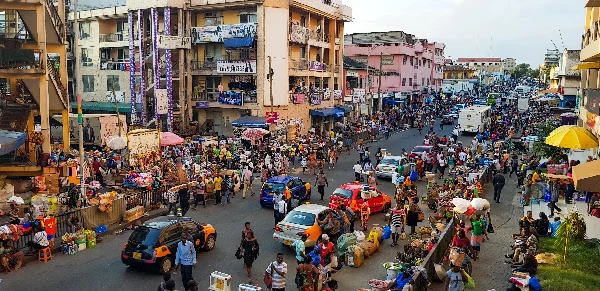
There is a quiet arithmetic to survival in Accra. It does not make dramatic headlines. It happens instead at the market stall, at the landlord’s door, at the end of the month when the salary notification arrives and the mental calculation begins—and fails . For millions of residents, the cost of simply existing has outpaced the means by which ordinary people are expected to live.
In March 2026, Ghana’s inflation rate has dropped sharply to 3.3 percent, the lowest level since August 1999 . This represents the 14th consecutive monthly decline from the 23.1 percent recorded in February 2025. But as Government Statistician Dr. Alhassan Iddrisu explained: “When we say that inflation has reduced from 23.1 to 3.3 per cent over one year, it doesn’t mean that the general price level has reduced. It means that the rate at which the prices are increasing has reduced” . Prices are still rising, just more slowly.

This ASJ guide provides a comprehensive breakdown of what it actually costs to live in Accra in 2026—from rent and food to transport, utilities, healthcare, and education. Whether you are a professional planning a move, a family budgeting for the year, or simply trying to understand where your money goes, this breakdown is for you.
📢 GET A DETAILED ARTICLES + JOBS
Join ASJ's WhatsApp Channel and never miss a post or opportunity.

1. Housing: The Largest Expense
Housing is by far the biggest financial burden for Accra residents. The city’s housing market varies dramatically depending on the neighborhood, property type, and whether you are paying in dollars or cedis.
Average Rent by Neighborhood
Accra’s rental market is characterized by stark contrasts. Luxury areas like Airport Residential, Cantonments, and East Legon feature modern apartments and gated communities with prices ranging between GH¢15,000 – GH¢35,000 per month for 2–3 bedroom units .
Mid-range areas such as Spintex, Achimota, and Madina offer more affordable housing, typically GH¢3,000 – GH¢8,000 per month for 1–2 bedroom apartments .
Budget-friendly areas like Kasoa, Adenta, and Teshie-Nungua offer rooms and shared apartments for GH¢800 – GH¢2,000 per month .
What the Numbers Really Mean
A one-bedroom apartment in central Accra commands around GH¢2,200 per month, with Cantonments, Airport Residential, and Labone pushing considerably higher . But the monthly rate is only part of the challenge. It is normal in Ghana to pay one or two years of rent upfront, placing an enormous financial demand on a tenant before they have even moved in .
The average monthly salary in Ghana sits at approximately GH¢2,579—roughly $210 at current exchange rates . A mid-level public servant asked to pay two years upfront on a modest Accra flat faces a demand exceeding a full year of gross salary, payable before a single sock has been unpacked .
For context, the Ghana Property Centre reports that the average price for apartments in Airport Residential Area stands at GH¢10,000 per month as of February 2026 . For four-bedroom houses in the same area, the average monthly rent is a staggering GH¢60,000 .
Rent Summary Table
| Neighborhood | 1-Bedroom | 2-3 Bedroom | Upfront Requirement |
|---|---|---|---|
| Airport Residential / Cantonments / East Legon | GH¢10,000+ | GH¢15,000 – GH¢35,000 | 1–2 years |
| Spintex / Achimota / Madina | GH¢2,000 – GH¢4,000 | GH¢3,000 – GH¢8,000 | 1–2 years |
| Kasoa / Adenta / Teshie-Nungua | GH¢800 – GH¢1,500 | GH¢1,500 – GH¢3,000 | 1–2 years |
Sources: https://accrastreetjournal.com/
2. Food and Groceries
Accra offers a mix of local markets and modern supermarkets. Food expenses vary greatly depending on your lifestyle and whether you buy from open-air markets or high-end supermarkets.
Local Market vs. Supermarket
A weekly grocery bill for one person can cost GH¢500 – GH¢1,200, depending on where you shop . Local markets like Makola, Agbogbloshie, and Madina offer significantly lower prices than supermarkets, but the quality and shopping experience differ.
Sample Grocery Prices (as of March 2026) :
| Item | Average Price (GH¢) |
|---|---|
| Rice (1 kg) | 21.27 |
| Eggs (dozen) | 24.03 |
| Chicken breast (1 kg) | 62.21 |
| Beef (1 kg) | 68.98 |
| Fresh milk (1 litre) | 28.61 |
| Tomatoes (1 kg) | 31.59 |
| Onions (1 kg) | 27.40 |
| Cooking oil (1 litre) | Approx 30–40 |
| Bread (loaf) | Approx 10–15 |
Eating Out
Local meals such as waakye, jollof rice, or kenkey cost between GH¢20 – GH¢50, while dining at restaurants in Osu or East Legon may cost GH¢150 – GH¢400 per person .
A casual dining experience averages GH¢64, while an upscale dinner for two can reach GH¢460 . A fast food combo typically costs around GH¢110 .
Monthly Food Budget
| Category | Single Person (GH¢) | Family of 4 (GH¢) |
|---|---|---|
| Groceries (local market) | 500 – 800 | 1,500 – 3,000 |
| Groceries (mixed) | 800 – 1,500 | 3,000 – 6,000 |
| Occasional dining out | 300 – 700 | 800 – 2,000 |
| Total Monthly Food | GH¢2,000 – GH¢3,500 | GH¢6,000 – GH¢10,000 |
Source: https://accrastreetjournal.com/
3. Transportation
Accra’s transportation system includes public minibuses (trotros), taxis, and ride-hailing services like Bolt and Uber. For many residents, transport is a significant monthly expense—especially those commuting long distances.
Public Transport (Trotro)
Trotro fares range from GH¢5 – GH¢15 per trip within the city, depending on distance . A short 10-minute ride from Circle to Osu costs approximately GH¢7 .
Ride-Hailing (Bolt / Uber)
Bolt and Uber trips cost GH¢25 – GH¢100 depending on distance and traffic . For shorter trips within central Accra, expect to pay around GH¢25–40. For longer distances or peak hours, prices can exceed GH¢100.
Delivery dispatch services for food and packages typically charge GH¢30 – GH¢50 per delivery, depending on distance . Despite recent fuel price reductions, delivery fees have remained largely unchanged due to other operational costs .
Private Vehicle Costs
If you own a car, fuel costs are a major consideration. As of March 2026, petrol costs approximately GH¢15.50 per litre . Monthly fuel and maintenance costs typically range from GH¢2,000 – GH¢4,000 .
Monthly Transport Budget
| Category | Estimated Cost (GH¢) |
|---|---|
| Public transport only (trotro) | 300 – 800 |
| Mixed (trotro + occasional Uber) | 800 – 1,500 |
| Daily Uber/Bolt | 1,500 – 3,000 |
| Private vehicle (fuel + maintenance) | 2,000 – 4,000 |
Source: https://accrastreetjournal.com/
4. Utilities
Utility costs in Accra depend on usage, household size, and the efficiency of your appliances.
Electricity
Electricity is priced at approximately GH¢1.80 – GH¢2.50 per kWh . Average monthly bills range from GH¢400 – GH¢1,200, depending on usage. Air conditioning is the biggest contributor to high electricity bills.
Water
Monthly water bills typically range from GH¢150 – GH¢400 .
Internet
Broadband services from providers like MTN, Telecel, and Surfline cost GH¢500 – GH¢800 per month for unlimited data . According to LivingCost, average monthly internet cost is approximately GH¢747 .
Monthly Utility Summary
| Utility | Low Usage (GH¢) | Average Usage (GH¢) | High Usage (GH¢) |
|---|---|---|---|
| Electricity | 400 – 600 | 600 – 900 | 900 – 1,200+ |
| Water | 150 – 200 | 200 – 300 | 300 – 400 |
| Internet | 500 – 600 | 600 – 700 | 700 – 800 |
| Total Utilities | GH¢1,050 – GH¢1,400 | GH¢1,400 – GH¢1,900 | GH¢1,900 – GH¢2,400 |
Source: https://accrastreetjournal.com/
5. Healthcare
Ghana’s healthcare system includes both public and private facilities. The quality and cost vary significantly between them.
Consultation Costs
-
Public hospitals: Affordable but often crowded; consultations cost around GH¢100 – GH¢200 .
-
Private hospitals: Offer faster service and better amenities; expect GH¢400 – GH¢1,000 per consultation .
Health Insurance
Private health insurance is strongly recommended for consistent access to quality care. Annual premiums range from GH¢1,500 – GH¢4,000 depending on the plan .
Monthly Healthcare Budget
| Category | Single Person (GH¢) | Family of 4 (GH¢) |
|---|---|---|
| Routine care (public) | 100 – 200 | 300 – 600 |
| Routine care (private) | 400 – 600 | 800 – 1,500 |
| Insurance (annual /12) | 125 – 330 | 500 – 1,300 |
| Total Monthly | GH¢500 – GH¢1,000 | GH¢1,500 – GH¢3,000 |
Source: https://accrastreetjournal.com/
6. Education
For families with children, education is a major cost factor. Accra offers options ranging from affordable public schools to elite international institutions.
School Options
| School Type | Annual Cost (GH¢) |
|---|---|
| Public schools | Less than 3,000 |
| Private local schools | 3,000 – 15,000 |
| International schools | 25,000 – 100,000 |
A monthly fee for private kindergarten averages approximately GH¢1,474 .
University Tuition
| University Type | Semester Cost (GH¢) |
|---|---|
| Public universities (Legon, UPSA) | 4,000 – 8,000 |
| Private universities (Ashesi, etc.) | 15,000+ |
7. Entertainment and Lifestyle
Accra has a vibrant nightlife and entertainment culture—from beach bars to cinemas and festivals. How much you spend depends entirely on your lifestyle choices.
Common Entertainment Costs
| Activity | Cost (GH¢) |
|---|---|
| Cinema ticket | 80 – 150 |
| Local beer (pint) | 16 – 20 |
| Cocktail | 40 – 80 |
| Gym membership (monthly) | 500 – 1,200 |
| Night out (dinner + drinks) | 400 – 800 |
Monthly Recreation Budget
| Lifestyle | Monthly Cost (GH¢) |
|---|---|
| Minimal (occasional outings) | 300 – 600 |
| Moderate (weekly outings) | 1,000 – 2,000 |
| High (frequent dining, gym, events) | 2,500 – 5,000 |
Source: https://accrastreetjournal.com/
8. Overall Monthly Breakdown (2026 Averages)
Single Person Monthly Expenses
| Category | Low Budget (GH¢) | Mid-Range (GH¢) | High-End (GH¢) |
|---|---|---|---|
| Housing | 800 – 1,500 | 2,000 – 4,000 | 8,000 – 15,000 |
| Food | 1,500 – 2,000 | 2,000 – 2,500 | 3,000 – 4,000 |
| Transport | 300 – 600 | 800 – 1,500 | 2,000 – 4,000 |
| Utilities | 1,000 – 1,200 | 1,200 – 1,500 | 1,500 – 2,000 |
| Healthcare | 300 – 500 | 500 – 800 | 800 – 1,500 |
| Recreation | 200 – 400 | 500 – 1,000 | 1,500 – 3,000 |
| Total | GH¢4,100 – GH¢6,200 | GH¢7,000 – GH¢11,300 | GH¢16,800 – GH¢29,500 |
Family of Four Monthly Expenses
| Category | Low Budget (GH¢) | Mid-Range (GH¢) | High-End (GH¢) |
|---|---|---|---|
| Housing | 1,500 – 3,000 | 4,000 – 8,000 | 15,000 – 30,000 |
| Food | 4,000 – 6,000 | 6,000 – 8,000 | 8,000 – 12,000 |
| Transport | 600 – 1,200 | 1,500 – 3,000 | 4,000 – 6,000 |
| Utilities | 1,500 – 2,000 | 2,000 – 2,500 | 2,500 – 3,500 |
| Healthcare | 800 – 1,200 | 1,200 – 2,000 | 2,500 – 4,000 |
| Education | 200 – 500 | 1,000 – 3,000 | 6,000 – 10,000 |
| Recreation | 400 – 800 | 1,000 – 2,000 | 2,500 – 5,000 |
| Total | GH¢9,000 – GH¢14,700 | GH¢16,700 – GH¢28,500 | GH¢41,000 – GH¢70,500 |
Sources: https://accrastreetjournal.com/
9. The Salary Reality
The average monthly salary after tax in Ghana is approximately GH¢5,023 . This figure is significant: a mid-range lifestyle for a single person (GH¢7,000–11,300) already exceeds the average salary. A family of four living even modestly requires two incomes or significantly more.
This gap between wages and the cost of living is the hidden crisis that drives many Ghanaians to seek additional income streams, accept substandard housing, or compromise on essentials .
As one Accra resident put it: “If living in Accra will leave me no penny to take care of myself and my family, then I cannot survive” .
10. Tips for Managing the Cost of Living
Despite these challenges, many Accra residents have developed strategies to stretch their budgets.
Housing
-
Consider sharing accommodation with roommates to split rent
-
Look for rentals in mid-range areas like Spintex, Achimota, or Madina
-
Negotiate with landlords for shorter payment terms where possible
Food
-
Buy from local markets (Makola, Madina, Agbogbloshie) instead of supermarkets
-
Cook at home rather than eating out frequently
-
Join community-based buying cooperatives for bulk discounts
Transport
-
Live closer to work or school to reduce commuting costs
-
Use public transport (trotro) for routine trips
-
Share rides or carpool when using ride-hailing services
Utilities
-
Use prepaid electricity meters to monitor consumption
-
Unplug appliances when not in use
-
Use fans instead of air conditioning when possible
General
-
Track all expenses for one month to understand your spending patterns
-
Set up automated transfers to savings on payday
-
Consider additional income streams to supplement salary
Conclusion from ASJ
The real cost of living in Accra in 2026 reflects a city at a crossroads. Inflation has stabilized—a significant achievement—but the prices that rose during the crisis have not come back down. A mid-range lifestyle for a single person cost between GH¢7,000 and GH¢11,300 per month, while a family of four requires GH¢16,700 to GH¢28,500 to live comfortably.
For the average worker earning approximately GH¢5,023, these numbers represent a persistent challenge . The gap between wages and the cost of living is the hidden arithmetic that shapes daily life—the reason professionals commute three to five hours daily, families choose between rent and school fees, and so many Ghanaians seek opportunities beyond their formal employment .
Yet Accra remains a city of resilience and resourcefulness. From communal gardens to cooperative buying initiatives, residents are finding ways to stretch budgets and support one another . The economic stability achieved in 2025 and 2026 has laid a foundation. The harder, more human work of making that stability mean something to the nurse in Tamale, the graduate in Kumasi, and the family in Nima is the work ahead.
Frequently Asked Questions (FAQs)
1. What is the average cost of living in Accra for a single person?
A single person living comfortably in a mid-range area can expect to spend between GH¢7,000 and GH¢11,300 per month on housing, food, transport, utilities, and recreation .
2. How much is rent in Accra?
Rent varies dramatically by area. A one-bedroom apartment in a mid-range area like Spintex or Madina costs GH¢2,000–4,000 per month, while luxury areas like Airport Residential command GH¢10,000 or more. Most landlords require 1–2 years of rent upfront .
3. What is the minimum salary needed to live comfortably in Accra?
A single person should earn at least GH¢10,000 per month to live modestly in mid-range areas .
4. How much does food cost in Accra per month?
A single person spending moderately on food can expect to pay GH¢2,000–3,500 per month. A family of four may spend GH¢6,000–10,000 .
5. Is Accra more expensive than other West African cities?
Compared to other West African cities, Accra can be expensive, especially in upscale neighborhoods. However, with smart budgeting, living comfortably is possible . Lagos, despite being larger and more commercially intense, regularly offers comparable housing at lower dollar-equivalent rates .
6. What is the average salary in Accra?
The average monthly salary after tax in Ghana is approximately GH¢5,023 . Entry-level civil servants earn between GH¢2,200 and GH¢3,200 .
7. Why are prices in Accra still high even though inflation has dropped?
Lower inflation means prices are rising more slowly, not falling. As Government Statistician Dr. Alhassan Iddrisu explained: “It doesn’t mean that the general price level has reduced. It means that the rate at which the prices are increasing has reduced” .
8. What is the cheapest area to live in Accra?
Areas like Kasoa, Madina, and Adenta offer the most affordable rent and access to public transport. Rooms in these areas can cost as little as GH¢800–1,500 per month .
9. How much does transportation cost in Accra?
Trotro fares range from GH¢5–15 per trip. A monthly transport budget for a single person using public transport is approximately GH¢300–800. Daily Uber users may spend GH¢1,500–3,000 .
10. Is it possible to live comfortably in Accra on one salary?
For a single person, it is possible with careful budgeting, especially if you live in mid-range areas and manage expenses. For a family, two incomes are typically required for a comfortable lifestyle
Source: Accra Street Journal
Last Updated on March 20, 2026 by Samuel Kwame Boadu
Disclaimer: Some content on Accra Street Journal may be aggregated, summarized, or edited from third-party sources for informational purposes. Images and media are used under fair use or royalty-free licenses. Accra Street Journal is a subsidiary of SamBoad Publishing Hub under SamBoad Business Group Ltd, registered in Ghana since 2014.
For concerns or inquiries, please visit our Privacy Policy or Contact Page.

Samuel Kwame Boadu is a Ghanaian media entrepreneur and storyteller with a passion for amplifying urban voices and uncovering everyday truths. He is the Editor-in-Chief and Founder of Accra Street Journal, a dynamic digital platform dedicated to capturing the pulse of Ghana’s capital—its people, culture, challenges, business, sports and innovations.