Introduction: A Quiet Revolution in How Accra Works
For decades, the rhythm of work in Accra was predictable. The 8 a.m. rush hour, the 5 p.m. exodus, the long queues at SSNIT offices, the endless meetings in crowded boardrooms. But something has shifted. Across the capital, companies are rethinking not just where people work, but how they work, when they work, and what they expect from their employers.
The transformation is visible in multiple forms. Co-working spaces are expanding at a record pace, with international giants like IWG opening new Regus locations to meet surging demand for flexible workspace . Government institutions are digitising services to eliminate queues and enable 24/7 access . Corporate wellness programs have evolved from occasional health walks to institutionalised initiatives, with the 10th edition of OmniBSIC Bank’s Health Walk drawing thousands . Even the way companies design their physical spaces has changed, with Hubtel renovating offices across Accra to prioritise collaboration and flexibility over rigid cubicles .

This ASJ article explores the shifting work culture across Accra’s companies—from the rise of hybrid work and the expansion of co-working spaces to the growing emphasis on employee wellness, digital transformation, and the changing attitudes toward leadership and accountability.
📢 GET A DETAILED ARTICLES + JOBS
Join ASJ's WhatsApp Channel and never miss a post or opportunity.

The Rise of Hybrid Work: From Survival to Strategy
The Productivity Crisis No One Is Talking About
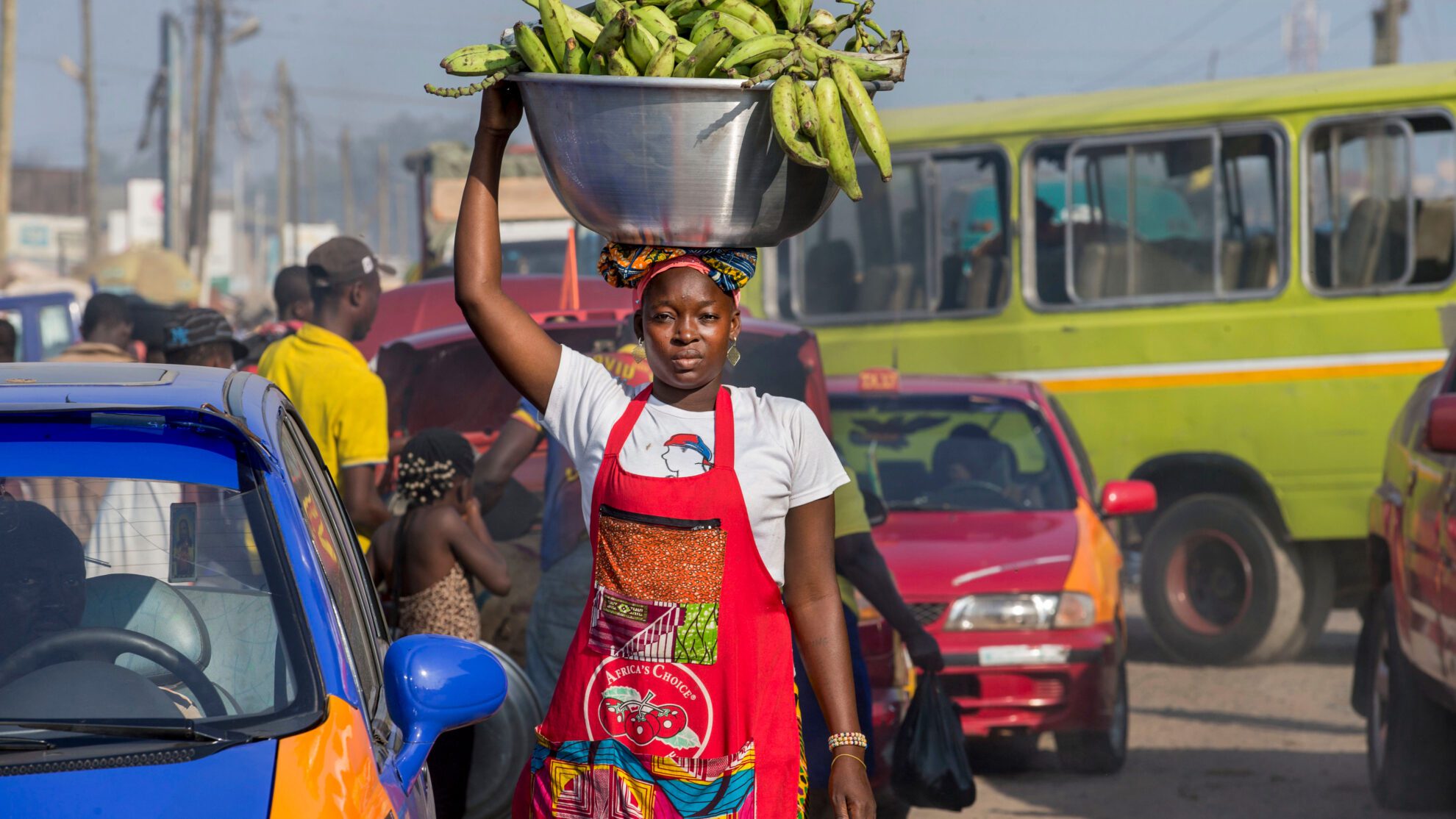
Every morning, workers across Accra, Tema, Kumasi, and Takoradi spend hours in traffic—arriving at work tired and returning home exhausted. According to workplace analyst Samuel Adu Amo, this is no longer just a transport issue. It is a national productivity crisis .
When employees lose 2–4 hours daily to commuting, the economy quietly loses:

-
Productive work hours
-
Employee well-being
-
Family and personal development time
-
Organisational efficiency
Yet in many roles, the daily commute adds little value to the actual work. The traditional 5-day, office-only model, Adu Amo argues, no longer reflects Ghana’s urban, economic, and technological realities .
Hybrid Work: A Policy Choice, Not a Perk
The COVID-19 pandemic demonstrated what was previously considered impossible: many jobs can be done effectively outside the office, productivity can be sustained or even improved, and Ghanaian workers are adaptable and responsible .
Now, forward-thinking companies are embracing hybrid work not as a temporary accommodation but as a strategic advantage. The shift moves focus from:
-
Presence → Performance
-
Desk time → Deliverables
-
Control → Accountability
According to research commissioned by IWG (International Workplace Group), hybrid working can boost productivity by up to 11 per cent, while delivering average cost savings of $11,000 per employee for companies .
The Hybrid Future Requires Intentionality
For hybrid work to succeed, it cannot be informal. It must be intentional, structured, and well-governed. Adu Amo argues that the public sector must lead with clear policies, role-based eligibility, and outcome-driven performance management, while the private sector must see hybrid work not as a perk but as a competitive advantage .
Some companies are already moving in this direction. SSNIT’s launch of a Virtual Branch in December 2025 reflects this shift, acknowledging that many workers now operate on flexible schedules, remotely, or for companies outside Ghana .
The Co-Working Boom: Flexible Spaces for a Flexible Workforce
IWG’s Aggressive Expansion
The expansion of co-working spaces in Accra is one of the most visible manifestations of the shifting work culture. On the 11th floor of Skyview Towers in Cantonments, a new Regus workspace is preparing to open. In East Legon, dedicated desks are available from GH₵1,500 per month. And across the city, Impact Hub Accra, Workshed Africa, and Kukun are operating at capacity, with waitlists for private offices .
IWG—the world’s largest platform for work, whose brands include Regus and Spaces—signed 899 new locations globally in the first half of 2025 alone, more than in its entire first decade of operations . Accra is a key part of this expansion.
Mark Dixon, CEO of IWG, explained the rationale: “Our opening in Accra comes at a time when more and more companies are discovering that flexible and platform working is incredibly popular with employees, improving their work-life balance and satisfaction, while also providing a multitude of benefits to companies” .

Why Co-Working Is Growing
The demand for co-working spaces in Accra is driven by several factors :
-
The global shift toward hybrid work – Hybrid models are becoming permanent, and companies need flexible spaces to support them
-
The startup boom – Accra’s fast-growing tech ecosystem creates natural demand for flexible, scalable workspace
-
Infrastructure challenges – For many professionals, the cost of setting up a reliable home office with consistent electricity and high-speed internet is prohibitive. Co-working spaces provide backup generators, redundant internet connections, and professional environments
-
Economic benefits – Flexible arrangements deliver significant cost savings. IWG research shows average savings of $11,000 per employee
A Diverse User Base
The user base for co-working spaces in Accra has diversified far beyond freelancers and startups :
| User Segment | Characteristics |
|---|---|
| Independent Professionals | Freelancers, consultants, remote workers seeking professional environments |
| Startup Teams | Early-stage companies needing flexible, scalable space |
| SMEs | Growing businesses wanting professional addresses without long-term leases |
| Large Corporations | Enterprises establishing satellite offices or flexible work arrangements |
Globally, flexible workspace is projected to account for 30 per cent of all commercial real estate by 2030. Accra is positioned to capture a significant share of this growth .
Employee Wellness: From Perk to Priority
The Institutionalisation of Wellness
What began as occasional corporate health walks has evolved into institutionalised wellness programmes across Accra’s companies. The evolution is perhaps best illustrated by OmniBSIC Bank’s Health Walk, which reached its 10th edition in February 2026 .
Launched as a post-pandemic internal staff programme, the initiative has grown into a nationally recognised public event drawing customers, corporate partners, staff, families, and the public. The 10th edition, held at the University of Ghana Sports Stadium, featured a vendor exhibition showcasing businesses across aviation, agriculture, fashion, healthcare, and food and beverage .
Managing Director Daniel Asiedu said the programme has delivered on its founding promise: “From the outset, our commitment has been to embed wellness into our corporate culture for the long term. Ten editions later, the Health Walk has delivered on that vision, growing in scale and impact with each quarter” .
Staff Wellness at the NHIA
The National Health Insurance Authority (NHIA) has also invested in staff wellness, commissioning an ultra-modern gym at its head office in Accra in March 2026 . The facility, fully equipped with modern exercise tools, was designed to support staff fitness and productivity.
NHIA CEO Dr. Victor Asare Bampoe reiterated the Authority’s commitment to staff welfare, noting that the initiative aligns with the broader vision of promoting preventive healthcare. The gym will be accessible outside official working hours, with professional instructors on hand to guide staff .
Why Wellness Matters
The growing emphasis on employee wellness reflects a broader cultural shift. Employers are recognising that:
-
Healthy employees are more productive
-
Wellness programmes reduce absenteeism and healthcare costs
-
Investment in employee well-being improves retention and morale
-
In a competitive job market, wellness offerings are a differentiator
The Ghana Post management, in its October 2025 staff durbar, similarly emphasised that the company’s success depends on the dedication and motivation of its workers, announcing promotions for over 300 employees and training programmes for more than 400 staff .
Digital Transformation: From Queues to Clicks
SSNIT’s Virtual Branch: 24/7 Pension Services
One of the most significant shifts in Accra’s work culture is the digitisation of public services. The Social Security and National Insurance Trust (SSNIT) launched its Virtual Branch in December 2025, allowing members to access pension services remotely through digital platforms .

The initiative responds directly to long-standing complaints about congestion at SSNIT branches and the difficulties faced by elderly persons, persons with disabilities, and members living far from service centres. The Virtual Branch eliminates the need for travel, long queues, and repeated physical visits .
Director-General Kwesi Afreh Biney explained the rationale: “There are people who leave home early and return late, and may not have the opportunity to walk into a branch. This platform is for all, whether you are a platform worker, a formal sector employee, or someone working remotely” .
The Virtual Branch is also expected to benefit Ghanaians in the diaspora who previously struggled to access SSNIT services from abroad. Trained officers will be available around the clock to guide users and respond to enquiries .
Ghana Post’s Digital Transformation
Ghana Post is also undergoing a digital transformation. At an October 2025 staff durbar, Managing Director Rita Sraha highlighted achievements under the new leadership, including the successful nationwide delivery of over 72,000 chip-embedded passports, driver’s licences, and other security documents .
The company is also partnering with key e-commerce platforms to expand local parcel delivery and position itself as the preferred last-mile logistics partner. The transformation has already gained international attention, with Ghana Post winning the 2025 Quality Management Silver Award with a score of 94 per cent and the EMS Excellence Bronze Award—making it the only African postal operator to receive that honour .
Workspace Redesign: Spaces That Work for People
Hubtel’s Office Transformation
For Hubtel, a Ghanaian fintech company, growth meant rethinking spaces to better support people, culture, and customers. In early 2026, the company completed a major office transformation across its 11-city nationwide network .
Teams that once operated from different locations in Accra were brought together into more accessible and strategic offices in Kwabenya, La Trade Fair, and Mile 11. The head office in Kokomlemle was renovated. In Kumasi, teams from Kentinkrono, Tanoso, and Kumasi City Mall were moved into a new office in Ahodwo .
The redesigned spaces feature:
-
Flexible, open layouts that support different ways of working
-
Hot desking zones for flexible seating
-
New meeting rooms and dedicated booths for calls and conversations
-
Shared lounges for informal connection and relaxation
The goal, Hubtel explained, was to create spaces that feel functional, comfortable, and welcoming—not just for staff, but for everyone who walks through their doors .
Regus’s “Design Your Own Office”
The new Regus location in Airport City offers a “Design Your Own Office” service, allowing businesses to customise their working environment. Facilities include private offices, meeting rooms, co-working spaces, and creative areas, along with 24/7 access, roof terrace, on-site restaurant, and patio garden .
This level of flexibility and customisation would have been unthinkable for most Accra companies a decade ago. Today, it reflects a broader understanding that physical spaces must adapt to how people actually work, rather than forcing people to adapt to rigid spaces.
Leadership and Accountability: A Cultural Shift
The Call for Merit-Based Leadership
At an inaugural lecture at the University of Professional Studies, Accra (UPSA) in October 2025, Professor Albert Puni called for a cultural shift in the appointment of leaders of State-Owned Enterprises (SOEs) .
He proposed a Three-C model—competence, commitment, and character—for selecting board members and chief executives, and recommended that SIGA develop and manage a pool of vetted directors and CEOs to support transparent and competitive recruitment .
Prof. Puni explained that appointing the right leaders with integrity and skill would help reverse SOEs’ chronic losses and set a benchmark for good governance across Corporate Ghana. “To reverse the chronic loss-making situation of Ghanaian SOEs and promote sustainable development, there must be a cultural change in the selection and appointment process,” he said .
Changing Attitudes in Public Service
At the Accra Metropolitan Assembly (AMA), Mayor Michael Kpakpo Allotey has called for a change in work attitude across the institution. In a January 2026 management meeting, he urged leaders and staff to take responsibility for addressing challenges within their areas of assignment .
“Wherever you find yourself, fix the problems there,” he said, stressing that the city’s transformation required practical solutions and a consistent mindset across departments. The Mayor noted that AMA worked hard in the previous year, but the impact of those efforts was not sufficiently felt because of recurring institutional and operational challenges .
He called for a problem-solving mindset and collective responsibility, saying leadership at every level must reflect the urgency of the public’s expectations .
The Broader Message
These calls for accountability and merit-based leadership reflect a broader shift in expectations across Ghanaian workplaces. Whether in public service or private enterprise, there is growing recognition that:
-
Leadership should be earned, not inherited
-
Performance should be rewarded
-
Accountability should be non-negotiable
-
Institutional culture must prioritise outcomes over appearances
The Future of Work in Accra: What’s Next?
A Hybrid Default
The direction is clear. The future of work in Accra will be hybrid by default. The pandemic proved that remote work is possible; the post-pandemic period has demonstrated that hybrid models are preferable—for employees seeking work-life balance, for employers seeking productivity and cost savings, and for the city seeking to reduce traffic congestion and improve quality of life .
Wellness as Infrastructure
Employee wellness is no longer an afterthought; it is becoming core infrastructure. The companies that succeed in attracting and retaining talent will be those that invest in physical wellness, mental health, and work-life balance .
Digital as Default
Digital transformation is moving from ambition to expectation. Citizens and customers increasingly expect to access services 24/7, without queues, without travel, without frustration. SSNIT’s Virtual Branch and Ghana Post’s digital logistics are models of what is possible .
Spaces That Serve People
The traditional office—with its fixed desks, rigid hours, and hierarchy of spaces—is being replaced by environments designed for flexibility, collaboration, and well-being. Whether co-working spaces or corporate headquarters, the spaces that will thrive are those that adapt to how people actually work .
Frequently Asked Questions (FAQs)
1. What is driving the shift in work culture across Accra’s companies?
The shift is driven by multiple factors: the global transition to hybrid work, the expansion of co-working spaces, investment in employee wellness programmes, digital transformation initiatives, and changing attitudes toward leadership and accountability .
2. Is hybrid work becoming common in Ghana?
Yes. Hybrid work is increasingly being adopted across both public and private sectors. SSNIT’s Virtual Branch and IWG’s expansion in Accra reflect this shift, and analysts argue that hybrid models can address Ghana’s productivity crisis by reducing commuting time .
3. What co-working spaces are available in Accra?
Key spaces include Regus (Airport City, Cantonments), Impact Hub Accra (Osu), Workshed Africa (Spintex Road), Basecamp Initiative (East Legon), Kukun (Osu), The Ark (Dzorwulu), and The Enterprise Village (Dzorwulu). International Workplace Group continues to expand its presence .
4. How are companies investing in employee wellness?
Companies like OmniBSIC Bank have institutionalised health walks (now in its 10th edition), while the NHIA has commissioned an ultra-modern gym at its head office. These initiatives reflect a broader commitment to staff welfare and preventive healthcare .
5. What is SSNIT’s Virtual Branch?
Launched in December 2025, SSNIT’s Virtual Branch allows members to access pension services remotely through digital platforms, eliminating the need for travel, long queues, and repeated physical visits. Trained officers are available 24/7 to support users .
6. How is Ghana Post transforming its operations?
Ghana Post is undergoing a digital transformation, partnering with e-commerce platforms to expand parcel delivery and positioning itself as a last-mile logistics partner. The company has also cleared legacy debts, promoted over 300 employees, and won international awards for service excellence .
7. What is Hubtel’s office transformation?
Hubtel renovated its offices across Accra and Kumasi to create flexible, open layouts with hot desking zones, new meeting rooms, and shared lounges. The redesign prioritises collaboration and employee well-being over rigid, traditional office structures .
8. What leadership changes are being proposed for Ghana’s workplaces?
Professor Albert Puni of UPSA has proposed a Three-C model (competence, commitment, character) for selecting SOE leaders, calling for a merit-based system to reverse chronic losses. Mayor of Accra has similarly called for a change in work attitude across the AMA .
9. What is the productivity case for hybrid work in Ghana?
Analysts argue that commuting 2–4 hours daily reduces productivity, employee well-being, and family time. Hybrid work shifts focus from presence to performance, reduces costs, and aligns with Ghana’s urban and technological realities .
10. What is the future of work in Accra?
The future is likely hybrid by default, with digital services as the norm, wellness as core infrastructure, and workspaces designed for flexibility. Companies that embrace these shifts will be better positioned to attract and retain talent .
Conclusion: A New Work Culture Taking Root
The shifting work culture across Accra’s companies is not a temporary trend or a passing fashion. It is a structural transformation driven by fundamental changes in how people work, how businesses operate, and what employees expect.
The rise of hybrid work acknowledges that productivity is about outcomes, not presence. The expansion of co-working spaces reflects the need for flexibility and infrastructure that home offices cannot provide. The investment in employee wellness recognises that healthy, motivated workers are the foundation of any successful organisation. The digitisation of public services understands that convenience and accessibility are not luxuries but necessities.
These changes are happening across sectors—from fintech startups like Hubtel to public institutions like SSNIT, from commercial banks like OmniBSIC to logistics companies like Ghana Post. They are happening in physical spaces and digital platforms, in leadership attitudes and employee expectations.
The message is clear: the old ways of working—rigid hours, long commutes, queues, and cubicles—are being replaced by a new model that values flexibility, wellness, and accountability. The companies and institutions that embrace this shift will be better positioned to attract talent, serve customers, and thrive in the years ahead.
For Accra, this transformation holds the promise of a more productive, more liveable, and more competitive city. The work culture is shifting—and with it, the future of work in Ghana’s capital.
Frequently Asked Questions (FAQs)
1. What is driving the shift in work culture across Accra’s companies?
The shift is driven by multiple factors: the global transition to hybrid work, the expansion of co-working spaces, investment in employee wellness programmes, digital transformation initiatives, and changing attitudes toward leadership and accountability .
2. Is hybrid work becoming common in Ghana?
Yes. Hybrid work is increasingly being adopted across both public and private sectors. SSNIT’s Virtual Branch and IWG’s expansion in Accra reflect this shift, and analysts argue that hybrid models can address Ghana’s productivity crisis by reducing commuting time .
3. What co-working spaces are available in Accra?
Key spaces include Regus (Airport City, Cantonments), Impact Hub Accra (Osu), Workshed Africa (Spintex Road), Basecamp Initiative (East Legon), Kukun (Osu), The Ark (Dzorwulu), and The Enterprise Village (Dzorwulu) .
4. How are companies investing in employee wellness?
Companies like OmniBSIC Bank have institutionalised health walks (now in its 10th edition), while the NHIA has commissioned an ultra-modern gym at its head office. These initiatives reflect a broader commitment to staff welfare and preventive healthcare .
5. What is SSNIT’s Virtual Branch?
Launched in December 2025, SSNIT’s Virtual Branch allows members to access pension services remotely through digital platforms, eliminating the need for travel, long queues, and repeated physical visits .
6. How is Ghana Post transforming its operations?
Ghana Post is partnering with e-commerce platforms to expand parcel delivery, clearing legacy debts, promoting over 300 employees, and winning international awards for service excellence .
7. What is Hubtel’s office transformation?
Hubtel renovated its offices to create flexible, open layouts with hot desking zones, new meeting rooms, and shared lounges, prioritising collaboration and employee well-being .
8. What leadership changes are being proposed?
Professor Albert Puni of UPSA has proposed a Three-C model (competence, commitment, character) for selecting SOE leaders, calling for a merit-based system to reverse chronic losses .
9. What is the productivity case for hybrid work in Ghana?
Analysts argue that commuting 2–4 hours daily reduces productivity and well-being. Hybrid work shifts focus from presence to performance, reduces costs, and aligns with Ghana’s realities .
10. What is the future of work in Accra?
The future is likely hybrid by default, with digital services as the norm, wellness as core infrastructure, and workspaces designed for flexibility .
Last Updated on March 31, 2026 by Samuel Kwame Boadu
Disclaimer: Some content on Accra Street Journal may be aggregated, summarized, or edited from third-party sources for informational purposes. Images and media are used under fair use or royalty-free licenses. Accra Street Journal is a subsidiary of SamBoad Publishing Hub under SamBoad Business Group Ltd, registered in Ghana since 2014.
For concerns or inquiries, please visit our Privacy Policy or Contact Page.

Samuel Kwame Boadu is a Ghanaian media entrepreneur and storyteller with a passion for amplifying urban voices and uncovering everyday truths. He is the Editor-in-Chief and Founder of Accra Street Journal, a dynamic digital platform dedicated to capturing the pulse of Ghana’s capital—its people, culture, challenges, business, sports and innovations.