









With a 40% capital adequacy ratio, single-digit non-performing loans, and a new private banking offensive, Nigeria‘s oldest bank is proving that patience, prudence, and parent-group scale can outlast flashier rivals in Ghana’s competitive banking sector.

Executive Introduction
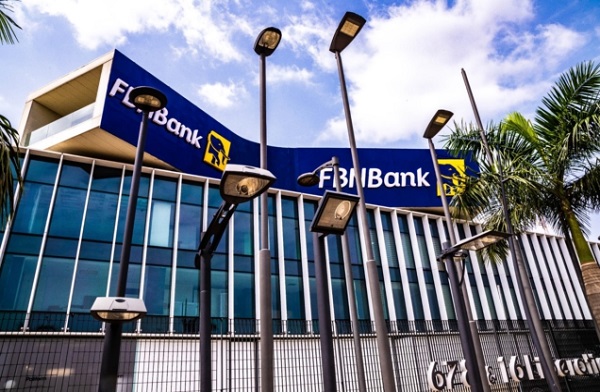
In Ghana‘s banking landscape—where mergers, state rescues, and fintech disruptions dominate headlines—there exists a quiet contender that rarely seeks the spotlight but consistently delivers the numbers. FirstBank Ghana Ltd, a subsidiary of Nigeria‘s First Bank of Nigeria Limited (established 1894), has spent over a decade methodically building a position as one of the most prudently managed banks in the country.
The 2025 financial results tell a compelling story of balance sheet discipline. While competitors scrambled to recover from the Domestic Debt Exchange Programme (DDEP) and rising Non-Performing Loans (NPLs), FirstBank Ghana posted a Capital Adequacy Ratio (CAR) of 40.29%—more than triple the regulatory minimum of 13% . Its NPL ratio dropped sharply from 15.81% to 6.13%, signalling a decisive clean-up of its loan book . Total assets surged 69% year-on-year to GH¢6.24 billion, driven by a 118% leap in customer deposits .
📢 GET A DETAILED ARTICLES + JOBS
Join ASJ's WhatsApp Channel and never miss a post or opportunity.
For investors, analysts, and corporate clients, FirstBank Ghana represents a distinct proposition: a well-capitalised subsidiary of a pan-African banking behemoth, operated with the rigour of Nigerian risk management but deeply integrated into the Ghanaian economy. Unlike state-owned banks navigating political pressures or indigenous private banks managing capital constraints, FirstBank Ghana enjoys the best of both worlds: local decision-making and parent-group balance sheet strength.
This ASJ profile examines the bank‘s evolution from International Commercial Bank (ICB) to a FirstBank subsidiary, its customer-centric “Value Banking” philosophy, the strategic launch of private banking and wealth management, and the critical question: Can a foreign-owned bank with just 22 branches truly challenge the dominance of GCB, Ecobank, and Fidelity?
Company Overview
Historical Evolution: From ICB to FirstBank
FirstBank Ghana‘s roots trace back to November 1996, when International Commercial Bank (ICB) commenced operations in Ghana . For nearly two decades, ICB operated as a mid-tier commercial bank, winning modest recognition for advisory services and customer support at the Ghana Banking Awards .
The transformation came in 2013. First Bank of Nigeria Limited, West Africa‘s premier banking brand with a history dating to 1894, acquired 100% equity stake in ICB‘s West Africa operations . Following regulatory approval from the Bank of Ghana, the institution was rebranded as FirstBank Ghana Limited, with the official launch taking place in October 2014 .
The acquisition was not merely a branding exercise. It brought Ghanaian customers under the umbrella of a financial institution with over 750 business locations across Africa, 10 million customer accounts, and a reputation for corporate governance that had weathered multiple Nigerian banking crises .
Ownership Structure: The Nigerian Anchor
FirstBank Ghana is a wholly-owned subsidiary of First Bank of Nigeria Limited, which is itself a flagship entity of FBN Holdings PLC, listed on the Nigerian Stock Exchange . This ownership structure is distinctive in Ghana‘s banking landscape:
| Bank | Ownership Type | Parent/Backing |
|---|---|---|
| FirstBank Ghana | Foreign subsidiary | First Bank of Nigeria (est. 1894) |
| Ecobank Ghana | Pan-African subsidiary | Ecobank Transnational Inc. (Lome) |
| Stanbic Bank Ghana | Foreign subsidiary | Standard Bank Group (South Africa) |
| GCB Bank | State-influenced / Public | Government of Ghana / GSE-listed |
| Fidelity Bank | Private indigenous | Ghanaian private investors |
| CBG | State-owned | Government of Ghana |
The parent-group connection provides FirstBank Ghana with several structural advantages: access to a larger capital base, shared technology platforms (including the Finacle 11.x Core Banking Application), cross-border expertise, and a mature risk management framework developed across multiple African markets .
However, this ownership also means that strategic decisions—particularly regarding capital allocation, dividend policy, and expansion—must align with the Nigerian parent‘s pan-African priorities. The bank does not have the independent decision-making latitude of a locally-listed institution like GCB.
Leadership: Victor Asante and the Executive Team
Victor Yaw Asante serves as the Managing Director and Chief Executive Officer of FirstBank Ghana. Appointed to lead the bank‘s transformation, Asante has overseen the dramatic improvement in financial health from 2023 to 2025. He articulated the bank‘s strategy at the launch of private banking services in 2025, emphasising wealth protection and cross-border investment access .
Key Technology Leadership:
-
Ikenna Njubigbo – Country Head of Technology, Digital Innovation, and Services. Njubigbo delivered a keynote address at the 2025 Connected Banking Summit, articulating FirstBank Ghana‘s commitment to agile methodologies, cloud computing, and data-driven customer personalisation .
Board of Directors (per FirstBank Sierra Leone website):
| Name | Position |
|---|---|
| Hon. Joseph Yieleh Chireh MP | Chairman |
| Mr. Gbenga Odeyemi | MD/CEO (historic listing) |
| Mr. Abdul Suleiman Kofarsauri | Director |
| Mrs. Hannah Brenda Amoateng | Director |
| Mr. John Kumi | Director |
| Mr. Olusanu Abiodun Otudeko | Director |
Note: Board composition may have evolved since the source publication.
Operations and Footprint
FirstBank Ghana operates a lean but strategic physical network:
| Operational Metric | Value |
|---|---|
| Branches | 22 |
| Agencies | 2 |
| Employees | 501–1,000 |
| Headquarters | Liberation Road, Plot No. 6, 7 & 9, Accra |
The bank‘s 22-branch network is modest compared to GCB‘s 183 branches or Fidelity‘s 9,000+ agency points. However, this lean footprint reflects a deliberate strategy: focus on high-value relationships and digital scalability rather than physical density.
Business Model: The “Value Banking” Philosophy
FirstBank Ghana operates a universal banking model anchored in what the parent company terms “Value Banking” —a philosophy that addresses customer needs from both functional and affective dimensions .
The Four Customer Segments
The bank structures its operations around four primary segments :
-
Private Banking & Wealth Management (New – 2025 Launch): Targeting high-net-worth individuals (HNWIs) with personalised investment strategies, real estate opportunities, and international market access .
-
SME Banking: A recognised strength, with the bank consistently winning accolades for supporting small and medium enterprises .
-
Corporate Banking: Serving large Ghanaian enterprises, multinationals, and public institutions.
-
Public Sector Banking: Government agencies and state-owned enterprises.
How They Make Money: The 2025 Financials
FirstBank Ghana‘s 2025 financial performance demonstrates a bank that has successfully navigated Ghana‘s post-DDEP environment while strengthening its core fundamentals .
Balance Sheet Strength:
| Metric | 2025 | 2024 | Change |
|---|---|---|---|
| Total Assets | GH¢6.24 billion | GH¢3.69 billion | +69% |
| Customer Deposits | GH¢4.4 billion | GH¢2.0 billion | +118% |
| Loans & Advances | Undisclosed | +14% | Modest growth |
| Shareholders‘ Funds | GH¢1.04 billion | GH¢1.02 billion | +2% |
| Cash & Equivalents | GH¢2.86 billion | Not disclosed | Strong liquidity |
Profitability Metrics:
| Metric | 2025 | 2024 | Change |
|---|---|---|---|
| Profit Before Tax (PBT) | ~GH¢355.6 million (est.) | GH¢284.7 million | +25% |
| Revenue (Annual) | ~GH¢750 million (US$750M est.) | Not disclosed | Growing |
Capital and Risk Metrics:
| Metric | 2025 | 2024 | Regulatory Minimum |
|---|---|---|---|
| Capital Adequacy Ratio (CAR) | 40.29% | 48% | 13% |
| Non-Performing Loan Ratio | 6.13% | 15.81% | Industry average ~10-17% |
| Liquidity Ratio | 104.22% | 104.34% | N/A |
| Leverage Ratio | 19.71% | 14.95% | N/A |
Analysis of Key Drivers
Extraordinary Capital Strength: A CAR of 40.29% is exceptionally high, providing FirstBank Ghana with an enormous buffer against unexpected losses and the capacity to expand its loan book without immediate capital raising .
Deposit Surge: The 118% increase in customer deposits to GH¢4.4 billion suggests significant market share gains, perhaps from corporates seeking stable banking partners following the financial sector cleanup.
NPL Improvement: The reduction from 15.81% to 6.13% is one of the most dramatic improvements in the industry. While partly reflecting write-offs or recoveries, it also indicates tighter underwriting standards.
Profitability Lagging Growth: Despite the balance sheet expansion, PBT growth of 25% is slower than asset growth (69%) or deposit growth (118%). This suggests the bank has prioritised safety and liquidity over margin expansion.
Market Position and Competition
Industry Standing: The Prudent Foreigner
FirstBank Ghana does not compete on asset size. With GH¢6.24 billion in total assets, it is a Tier-2 bank, significantly smaller than Ecobank (GH¢46 billion) or GCB (GH¢60 billion+). However, it competes fiercely on capital adequacy (40% vs. industry average ~20%) and asset quality (6.13% NPL vs. many peers above 10-15%) .
Recent Awards and Recognition
FirstBank Ghana has accumulated industry validation for its strategic direction:
| Award | Year | Issuing Body |
|---|---|---|
| Innovative Bank of the Year | 2025 | Ghana-West Africa Business Excellence Awards |
The award recognised the bank‘s upgrade to the Finacle 11.x Core Banking Application, deployment of intelligent cabling for enhanced network connectivity, and implementation of multi-factor authentication and advanced transaction monitoring .
Competitive Landscape
FirstBank Ghana competes across multiple segments against distinctly different rivals:
| Competitor | Where FirstBank Wins | Where FirstBank Loses |
|---|---|---|
| GCB Bank | Capital adequacy (40% vs. ~18%), NPL ratio (6.13% vs. 4.9%—comparable), parent-group scale | Branch network (22 vs. 183), brand heritage in Ghana |
| Ecobank Ghana | CAR (40% vs. ~19%), recent NPL improvement | Pan-African trade finance corridors, regional scale |
| Fidelity Bank | Capital buffer, parent-group support, NPL ratio | Agency banking (9,000+ agents), indigenous ownership narrative |
| Stanbic Bank | CAR strength, private banking launch | Corporate CX rankings, investment banking muscle |
| OmniBSIC Bank | CAR (40% vs. 17.8%), lower NPL (6.13% vs. 23%) | Asset size (GH¢6.24B vs. GH¢21.6B), growth rate |
Competitive Advantages
-
Parent-Group Support: As a wholly-owned subsidiary of First Bank of Nigeria, the bank can access capital, technology, and expertise that purely indigenous banks cannot .
-
Exceptional Capitalisation: A CAR of 40.29% provides a fortress balance sheet that can absorb shocks and fund expansion .
-
Clean Asset Quality: The 6.13% NPL ratio—down from 15.81%—places FirstBank Ghana among the best-managed banks in the country on loan book health .
-
130-Year Brand Heritage: While the Ghana subsidiary is younger, the FirstBank brand carries weight across West Africa, signalling stability and governance .
-
Cross-Border Capability: Through the parent group‘s presence in multiple African countries, FirstBank Ghana can facilitate trade and investment flows that local banks cannot match .
Competitive Disadvantages
-
Limited Physical Footprint: 22 branches is among the smallest networks for a bank of its ambition. Digital channels must compensate.
-
Lower Asset Size: At GH¢6.24 billion , the bank is a fraction of the size of Tier-1 competitors.
-
Foreign Ownership Perception: Some Ghanaian depositors and corporate clients may prefer “indigenous” banks for patriotic or procurement reasons.
-
Slower Growth Than Peers: While 69% asset growth is impressive, competitors like OmniBSIC have grown faster (106% in 2025).
Digital Strategy and Innovation: From Core Banking to AI
FirstBank Ghana‘s digital transformation is being led by Ikenna Njubigbo, Country Head of Technology, Digital Innovation, and Services. At the Connected Banking Summit 2025, he articulated a vision that prioritises customer-centric adaptability over flashy but superficial technology deployments .
Core Technology Upgrades
The bank has made substantial investments in its technology infrastructure:
-
Finacle 11.x Core Banking Application: An upgrade that improves operational stability and processing capacity .
-
Intelligent Cabling: Enhanced network connectivity across branches and digital channels .
-
Multi-Factor Authentication (MFA): Strengthened security for customer transactions .
-
Advanced Transaction Monitoring: Real-time fraud detection capabilities .
Future Digital Roadmap
FirstBank Ghana has publicly committed to :
-
Mobile Banking Enhancements: Improving the user experience and feature set of its mobile application.
-
AI-Driven Financial Advisory Services: Using artificial intelligence to provide personalised financial recommendations to customers.
-
Seamless Digital Services: Expanding the range of banking activities that can be completed without branch visits.
The “Adaptability” Philosophy
Njubigbo argued that modern banking requires a shift from rigid, waterfall-style IT delivery to agile methodologies. He emphasised three pillars :
-
Cloud Computing: “The foundation for scalability in banking operations.”
-
Data-Driven Decision-Making: Using real-time insights and predictive analytics to personalise customer interactions.
-
Omni-Channel Experience: Ensuring consistency across web, mobile, and physical touchpoints.
His keynote concluded with a clear warning: “The customer is king (and queen!). Statistics show a significant shift in customer behavior, with many customers willing to switch banks due to poor digital experiences.”
Private Banking and Wealth Management: The 2025 Strategic Pivot
In March 2025, FirstBank Ghana announced the launch of a private banking and wealth management service targeting the nation‘s growing high-net-worth individual (HNWI) segment .
The Market Opportunity
Ghana‘s wealthy are increasingly seeking sophisticated financial services beyond standard savings and loan products. As Victor Asante, MD/CEO, explained: “This particular product focuses on the individual who has some wealth that they want to protect. As you know, if you have wealth and you don‘t protect it, what will happen is that you may lose value, perhaps through depreciation, through inflation, and all of that” .
The Product Offering
The service provides HNWIs with:
-
Personalised investment strategies tailored to individual risk appetites.
-
Real estate investment opportunities as an alternative asset class.
-
International market access beyond Ghana‘s borders—a key differentiator from more localised wealth offerings.
-
Wealth preservation strategies to protect against inflation and currency depreciation.
The Competitive Edge
Idowu Adebayo Thompson, Group Executive for Private Banking and Wealth Management at FirstBank Nigeria, highlighted changing wealth patterns across Africa: “We‘ve seen things move from the days of our parents back then, people who made money from resources—cocoa, timber, and a lot of that. You‘re seeing a lot of young people coming into things like technology. You‘re seeing unicorns, which are companies with a valuation of over a billion and higher, coming out of Africa as well” .
Thompson also offered a cautionary note that resonated with Ghana‘s experience of financial scams: “If it‘s too good to be true, then it‘s too good to be true. Don‘t invest in things that are esoteric, things you do not understand” .
Strategic Implications
The private banking launch signals that FirstBank Ghana sees wealth management—not traditional lending—as a growth engine. This is a defensive move against two threats:
-
Interest Rate Compression: As the Bank of Ghana reduces policy rates, net interest margins will compress. Fee-based wealth management income is less rate-sensitive.
-
Fintech Disintermediation: Payment-focused fintechs are eroding transaction revenues. Private banking relationships are stickier and less vulnerable to disruption.
Challenges and Risks
No analysis of FirstBank Ghana is complete without addressing the headwinds that accompany its measured growth strategy.
Risk 1: Parent-Group Dependency
While the FirstBank Nigeria connection provides capital and expertise, it also introduces risks. The Nigerian banking sector has faced its own challenges—currency volatility, regulatory changes, and credit risks. A crisis at the parent level would inevitably affect the Ghana subsidiary.
Risk 2: Limited Scale
With GH¢6.24 billion in assets , FirstBank Ghana is a mid-tier player. Its ability to win large corporate mandates—particularly from multinationals—is constrained by its balance sheet size. Major infrastructure financing or large-scale trade deals may exceed its single-obligor limits.
Risk 3: Private Banking Execution Risk
The wealth management launch is a strategic pivot, but success is not guaranteed. FirstBank Ghana will compete against established wealth managers like Stanbic‘s Private Banking, as well as independent asset managers. Building trust and track record in this segment takes years.
Risk 4: Profitability Constraints
Despite strong balance sheet growth, the bank‘s PBT growth of 25% lags asset growth (69%). This suggests the bank is not yet converting its capital strength into superior returns. Investors seeking high-growth metrics may look elsewhere.
Risk 5: Technology Investment Burden
The bank has committed to significant technology upgrades—Finacle 11.x, AI-driven advisory, mobile enhancements . These investments are costly and may depress short-term profits. If the expected customer acquisition and retention benefits do not materialise, the ROI will be disappointing.
Economic and Industry Impact
Employment
FirstBank Ghana employs between 501 and 1,000 people , providing stable, formal-sector jobs in Ghana‘s financial services industry. The bank‘s expansion has likely increased this figure.
SME Support
The bank has consistently won accolades for its SME banking, though specific lending figures are not publicly disclosed . SMEs are the engine of Ghana‘s economy, and FirstBank Ghana‘s willingness to serve this segment—many banks consider it too risky—contributes to economic growth.
Financial Inclusion
Through its 22 branches and digital channels, the bank provides banking access to customers across Ghana . While its physical footprint is smaller than GCB‘s, its digital investments expand reach.
Banking Sector Stability
FirstBank Ghana‘s exceptionally high CAR of 40.29% and low NPL ratio of 6.13% contribute to overall banking system stability. A well-capitalised, well-managed bank is less likely to require regulatory intervention or depositor bailouts.
Cross-Border Trade Facilitation
As a subsidiary of a pan-African banking group, FirstBank Ghana can facilitate trade and investment flows between Ghana and Nigeria—West Africa‘s two largest economies. This supports the African Continental Free Trade Area (AfCFTA) agenda.
Future Outlook
As of May 2026, FirstBank Ghana is executing a dual strategy: consolidate its balance sheet strength while pivoting toward fee-based wealth management. The next 12–24 months will determine whether this strategy delivers superior returns.
The Bull Case (Optimistic)
-
Capital Deployment Accelerates: With a 40% CAR, the bank has enormous lending capacity. If it can deploy even a portion of this capital into high-quality loans while maintaining NPLs below 7%, profit growth will accelerate dramatically.
-
Private Banking Scales: Ghana‘s HNWI segment is underserved. If FirstBank Ghana captures meaningful market share, wealth management fees could become a significant profit centre, diversifying revenue away from volatile interest income.
-
Digital Investments Pay Off: The Finacle upgrade and planned AI-driven advisory tools could drive customer acquisition and retention, particularly among younger, tech-savvy professionals.
-
Parent-Group Synergies Deepen: As FirstBank Nigeria expands its pan-African presence, FirstBank Ghana could serve as the gateway for Nigerian companies expanding into Ghana, and vice versa.
The Bear Case (Pessimistic)
-
NPLs Re-emerge: The dramatic reduction from 15.81% to 6.13% may reflect one-time recoveries rather than sustainable underwriting improvements. If the Ghanaian economy slows, NPLs could rise again.
-
Private Banking Stalls: If the wealth management offering fails to gain traction—due to competition, inadequate marketing, or trust issues—the strategic pivot will be seen as a distraction rather than a transformation.
-
Technology Costs Outrun Benefits: The IT investments are expensive. If the anticipated customer benefits do not materialise, the bank could face rising cost-to-income ratios and margin compression.
-
Parent-Group Distress: Nigeria‘s banking sector remains volatile. A crisis at FBN Holdings would inevitably affect FirstBank Ghana‘s credit rating, deposit stability, and strategic direction.
The Verdict
FirstBank Ghana is not the most exciting bank in the country—that title belongs to high-growth lenders like OmniBSIC. It is not the largest—GCB and Ecobank hold those crowns. But it may be the most prudently managed.
The 40.29% CAR, the sharp NPL reduction, the measured branch strategy, and the deliberate pivot toward wealth management all suggest a bank that knows exactly what it is: a stable, well-capitalised subsidiary of a pan-African giant, focused on sustainable growth rather than headline-grabbing expansion.
For corporate clients, FirstBank Ghana offers parent-group backing and cross-border capability that purely indigenous banks cannot match. For HNWIs, the new private banking service may provide wealth preservation options previously unavailable locally. For depositors, the capital strength and liquidity provide safety that few competitors can claim.
The risks are real—parent-group dependence, limited scale, execution risk—but the trend line is positive. FirstBank Ghana has entered 2026 looking safer, stronger, and better balanced than it was a year earlier . In a banking sector where many institutions are still recovering, that is a compelling proposition.
FAQ SECTION
1. Is FirstBank Ghana a Ghanaian-owned bank?
No. FirstBank Ghana Limited is a wholly-owned subsidiary of First Bank of Nigeria Limited, Nigeria‘s oldest banking brand (established 1894). The bank was formerly International Commercial Bank (ICB) before First Bank acquired 100% equity in 2013 and rebranded in 2014 .
2. Who is the Managing Director of FirstBank Ghana?
The Managing Director and CEO is Victor Yaw Asante. He has led the bank through its recent transformation, including the launch of private banking services in 2025 .
3. How did FirstBank Ghana perform in 2025?
FirstBank Ghana delivered strong 2025 results: total assets grew 69% to GH¢6.24 billion, customer deposits surged 118% to GH¢4.4 billion, and Profit Before Tax increased 25% . The bank also achieved a Capital Adequacy Ratio of 40.29% and reduced its NPL ratio to 6.13% .
4. What is FirstBank Ghana’s Non-Performing Loan (NPL) ratio?
As of the 2025 financial year, FirstBank Ghana‘s NPL ratio was 6.13% , a significant improvement from 15.81% in 2024 . This places the bank among the best in Ghana on asset quality.
5. Does FirstBank Ghana offer private banking services?
Yes. In March 2025, FirstBank Ghana launched a private banking and wealth management service targeting high-net-worth individuals (HNWIs). The service provides personalised investment strategies, real estate opportunities, and international market access .
6. How many branches does FirstBank Ghana have?
FirstBank Ghana operates 22 branches and 2 agencies across the country . Its headquarters is located on Liberation Road, Plot No. 6, 7 & 9, Accra .
7. What digital banking innovations has FirstBank Ghana implemented?
The bank has upgraded to the Finacle 11.x Core Banking Application, deployed intelligent cabling for enhanced network connectivity, and implemented multi-factor authentication and advanced transaction monitoring. Future plans include mobile banking enhancements and AI-driven financial advisory services .
8. Is FirstBank Ghana safe for deposits?
Yes. The bank maintains exceptionally strong capital and liquidity positions. Its Capital Adequacy Ratio of 40.29% (2025) is more than triple the regulatory minimum of 13%, and its liquidity ratio stands at 104.22% . The bank is licensed by the Bank of Ghana and deposits are protected by the Ghana Deposit Protection Scheme.
9. What awards has FirstBank Ghana won?
In 2025, FirstBank Ghana was named Innovative Bank of the Year at the Ghana-West Africa Business Excellence Awards, recognised for its technology upgrades and commitment to digital innovation .
10. What is the “Value Banking” philosophy?
Value Banking is FirstBank‘s customer service philosophy, which addresses needs from both functional and affective dimensions. Functionally, it ensures accessibility, confidentiality, and good service platforms. Affective dimensions include professionalism, integrity, transparency in pricing, and customer-centric product innovation .
11. Does FirstBank Ghana offer SME banking?
Yes. The bank has a dedicated SME banking segment and has consistently won accolades for supporting small and medium enterprises. Products include invoice discounting, purchase order financing, import financing, stock replacement facilities, and secured overdrafts .
12. How can I contact FirstBank Ghana?
-
Head Office: Meridian House, Ring Road Central, P.M.B 16, Accra North, Ghana
-
Phone: +233 302 236133, +233 302 235810
-
Email: [email protected]
-
Website: www.fbnbankghana.com
QUICK FACTS BOX
| Item | Details |
|---|---|
| Founded | November 1996 (as ICB); 2014 (as FirstBank Ghana) |
| Headquarters | Liberation Road, Plot No. 6, 7 & 9, Accra, Ghana |
| Industry | Banking / Financial Services |
| Services | Private Banking, Wealth Management, Corporate Banking, SME Banking, Public Sector Banking, Retail Banking |
| Ownership | Wholly-owned subsidiary of First Bank of Nigeria Limited |
| Parent Founded | 1894 (First Bank of Nigeria, 130+ years) |
| CEO (MD) | Victor Yaw Asante |
| Country Head of Technology | Ikenna Njubigbo |
| Employees | 501–1,000 |
| Branches | 22 branches, 2 agencies |
| Total Assets (2025) | GH¢6.24 billion |
| Customer Deposits (2025) | GH¢4.4 billion |
| Profit Before Tax (2025) | ~GH¢355.6 million |
| Capital Adequacy Ratio (2025) | 40.29% |
| NPL Ratio (2025) | 6.13% (improved from 15.81% in 2024) |
| Liquidity Ratio (2025) | 104.22% |
| Cash & Equivalents (2025) | GH¢2.86 billion |
| Key Innovation | Private Banking & Wealth Management (2025 launch); Finacle 11.x Core Banking |
| Key Award | Innovative Bank of the Year 2025 (Ghana-West Africa Business Excellence Awards) |
| Parent Network | Nigeria, DR Congo, Guinea, Senegal, Sierra Leone, The Gambia, United Kingdom |
| Regulator | Bank of Ghana |
| Deposit Protection | Ghana Deposit Protection Scheme member |
| Website | www.fbnbankghana.com |
Source: Accra Street Journal
Last Updated on May 3, 2026 by Samuel Kwame Boadu
Disclaimer: Some content on Accra Street Journal may be aggregated, summarized, or edited from third-party sources for informational purposes. Images and media are used under fair use or royalty-free licenses. Accra Street Journal is a subsidiary of SamBoad Publishing Hub under SamBoad Business Group Ltd, registered in Ghana since 2014.
For concerns or inquiries, please visit our Privacy Policy or Contact Page.

Samuel Kwame Boadu is a Ghanaian media entrepreneur and storyteller with a passion for amplifying urban voices and uncovering everyday truths. He is the Editor-in-Chief and Founder of Accra Street Journal, a dynamic digital platform dedicated to capturing the pulse of Ghana’s capital—its people, culture, challenges, business, sports and innovations.