









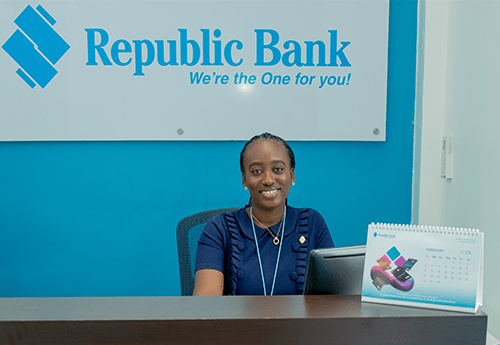

With a 615% stock surge in one year and a declared ambition to triple profits by 2028, the Trinidadian-owned lender is proving that a “patient foreigner” strategy—anchored in mortgage dominance and life-stage banking—can outperform noisy local rivals.

Executive Introduction
In Ghana’s crowded banking landscape—dominated by pan-African behemoths (Ecobank), state-backed giants (GCB), and aggressive indigenous challengers (Fidelity, OmniBSIC)—there exists a quieter, arguably more intriguing player: Republic Bank (Ghana) PLC.
Unlike its competitors, Republic Bank does not compete on branch density (it operates roughly 40 locations) nor on raw asset size (GH¢12 billion plus). Instead, it competes on focus. Specifically, a near-obsessive focus on the mortgage market and a strategic philosophy it calls “life-stage banking” —bundling products from a young professional‘s first account to a retiree’s trust fund under one conceptual roof.
📢 GET A DETAILED ARTICLES + JOBS
Join ASJ's WhatsApp Channel and never miss a post or opportunity.
The results are turning heads on the Ghana Stock Exchange. Over the past year, Republic Bank‘s stock (GHSE: RBGH) has surged by a staggering 615.2% , massively outperforming both the banking index (166.9%) and the broader market (129.5%) . The bank grew profit after tax by 45% in 2024 to GH¢210.7 million, and by early 2026, that momentum translated into a GH¢276.9 million net income run rate .
But this is not a story of a scrappy underdog. Republic Bank is a subsidiary of Republic Financial Holdings Limited (RFHL) of Trinidad and Tobago, a Caribbean giant with over US$19.6 billion in assets . It brings a unique blend of foreign management discipline—specifically regarding credit risk—and deep local integration.
For investors, the promise of a profit tripling by 2028 offers a compelling growth narrative . For homebuyers, the bank claims an unassailable lead in the mortgage space. However, lurking beneath the surface are red flags: a volatile operating cash flow that swung from positive to a negative GH¢2 billion in 2025, and a dependency on life-stage marketing rather than raw digital scale to fend off fintech disruptors.
This ASJ profile dissects Republic Bank‘s business model, its “Republic Verse” ecosystem, its leadership under Dr. Benjamin Dzoboku, and the critical question: Can a Caribbean-owned lender with a niche focus truly become a Tier-1 powerhouse in Ghana?
Company Overview
Caribbean Roots, Ghanaian Soil
Republic Bank (Ghana) PLC commenced operations in Ghana on May 7, 1990 . For over three decades, it has operated as a universal bank, but its DNA is distinctly different from local peers. It is a wholly-owned subsidiary of Republic Financial Holdings Limited (RFHL) , headquartered in Port of Spain, Trinidad .
This parentage is crucial. RFHL is a giant in the Caribbean and West African corridors (with a presence in 7 countries) . For Ghanaian depositors, this provides a level of balance sheet diversification that purely local banks cannot match. For the management team, it imposes the credit risk frameworks and reporting standards of a mature international financial group.
The Ghanaian Footprint
As of 2026, the bank operates with approximately 1,164 employees and a network of 40+ branches strategically located in commercial hubs rather than every district capital . Its headquarters is located at No. 35, Sixth Avenue, North Ridge, Cantonments, Accra .
Operational Segments
The bank structures its operations into four key segments to address distinct market needs :
-
Retail Banking: Private banking, savings, current accounts, investment products, and consumer loans.
-
Corporate Banking: Direct debits, overdrafts, structured trade finance, project finance, and working capital for large enterprises.
-
Microfinance Banking: Focused on savings, deposits, and credit facilities for small-scale entrepreneurs and informal operators.
-
Mortgage Banking: The undisputed crown jewel—offering housing loans and related real estate services.
Business Model: The “Republic Verse” and Life-Stage Banking
Republic Bank has moved away from the industry standard of “product push” (selling loans or accounts) to a holistic “Life-Stage Banking” model. In February 2026, the bank launched “The Republic Verse,” a conceptual ecosystem designed to retain customers from “cradle to golden years” .
Life-Stage Segmentation
Managing Director Dr. Benjamin Dzoboku articulated that the Republic Verse reimagines banking as a personalized journey rather than a transactional service :
-
Young Professionals: “First account” services, career development financing, and entry-level cards.
-
Families & Homebuyers: Mortgage solutions (the bank‘s historical stronghold), family protection plans, and children’s education savings.
-
Entrepreneurs & SMEs: Business expansion loans, trade finance, and corporate cards.
-
Retirees: Wealth preservation, trust management, and legacy planning.
How They Make Money
Republic Bank generates revenue through a diversified mix of interest income, fees, and trading, though the 2025 financials reveal a volatile cash position.
Key Financial Metrics (2025 vs. 2024):
| Metric | 2025 | 2024 | Change | Driver |
|---|---|---|---|---|
| Net Income | GH¢276.9M | GH¢201.9M | +37% | Reduced impairments + loan growth |
| Revenue/Sales | GH¢1.56B | ~GH¢1.42B | +9.85% | Interest income expansion |
| Net Margin | 17.77% | ~14.2% | +360bps | Operational efficiency & lower loss provisions |
| Operating Cash Flow | -GH¢2.04B | +GH¢127.9M | -1,696% | Aggressive deployment into loans & securities |
| ROE | 23.58% | ~19% | +458bps | High profitability on equity base |
Analysis of the Operating Cash Flow Red Flag:
The most striking data point is the negative GH¢2.04 billion operating cash flow in 2025 . On the surface, this looks alarming. However, in banking accounting, massive negative operating cash flow often signals that the bank is deploying capital—specifically, it made a GH¢1.4 billion net investment in securities and aggressively expanded its loan book. It suggests the bank is in “growth mode,” trading short-term liquidity for long-term asset accumulation. The financing cash flow was strongly positive (GH¢2.28B), driven by a GH¢2.24 billion increase in deposit accounts, proving the bank can fund this growth .
The Mortgage Moat
Republic Bank claims the title of Ghana’s leading mortgage lender. Managing Director Dzoboku stated at the 2025 AGM: “We centralised our mortgage portfolio and we are now the leading bank when it comes to mortgages. I’m not sure any bank can compete with us.”
This dominance is a structural advantage. Mortgages in Ghana are complex, requiring long-term liability matching and specialized real estate valuation skills. Republic Bank‘s parent group experience in Caribbean real estate markets gives it a technical edge in structuring these loans profitably.
Market Position and Competition
Republic Bank occupies a unique “Goldilocks” position: it is not as large as GCB or Ecobank, but it is far more specialized and capitalized than microfinance banks.
Competitive Landscape
| Competitor | Where Republic Bank Wins | Where Republic Bank Loses |
|---|---|---|
| GCB Bank | Mortgage expertise, foreign parent backing, ROE (23.6% vs. GCB’s ~20%) | Branch network (183 vs. 40), brand heritage (1953 vs. 1990) |
| Ecobank Ghana | Caribbean/Cross-border trust, niche SME focus | Pan-African trade finance corridors, regional scale |
| Stanbic Bank | Mortgage market share, “Life-stage” CX model | Corporate investment banking & M&A advisory |
| Fidelity Bank | Foreign ownership stability (de-risked), Microfinance segment | Agency banking (9,000+ agents) |
Stock Market Performance
The market has rewarded Republic Bank‘s focus handsomely. The stock currently trades at a P/E Ratio of 4.00 (excluding extraordinary items) and a P/B Ratio of 0.84 . This suggests the stock is still fundamentally undervalued relative to its book value, even after the massive price run-up.
Key Valuation Metrics :
| Metric | Value |
|---|---|
| Market Cap | ~GH¢4.02 Billion |
| P/E (Normalized) | 4.00x |
| Price-to-Book | 0.84x |
| Return on Equity | 23.58% |
| Revenue/Employee | GH¢1.34 Million |
Digital Strategy and Innovation
Unlike some competitors who chase flashy AI banking, Republic Bank‘s digital strategy is rooted in accessibility and integration.
The “Zero” Contact Centre
The bank has heavily promoted its 0800 414 414 toll-free line and WhatsApp banking (0546 414 414) as the primary entry points for the Republic Verse . This approach recognizes that in Ghana, high-net-worth individuals and busy SMEs prefer a human voice with rapid pick-up times over troubleshooting a buggy app.
Enhanced Digital Platforms
While the “Republic Verse” is a marketing ecosystem, the bank has invested heavily in the plumbing. In 2024, the bank saw a 65.25% increase in software licensing and ICT costs to support digital transformation . The backend systems have been enhanced to ensure “simpler processes, faster service delivery, and smarter financial solutions” .
ESG and Sustainability
The bank operates under a sustainability agenda focusing on Health, Education, Water, and Climate Action . This is not just CSR; it is a strategic alignment with the international development finance institutions (DFIs) that Republic Bank partners with for long-term funding lines.
Leadership and Governance
The Boardroom Reset (2025-2026)
Republic Bank underwent a significant governance restructuring in 2025, signaling a new era of professional oversight.
-
Mr. Jonathan Prince Cann (Board Chairman): Appointed in February 2025, Mr. Cann is a Chartered Accountant and Management Consultant specializing in Governance, Risk, and Compliance (GRC). He holds an MBA from the University of East London and previously served as Chairman of the Audit Committee . His appointment highlights a shift toward rigorous risk management.
-
David Addo-Ashong (Former Acting Chairman): Stepped down as Acting Chairman in 2025 but remains a key figure, having stabilized the board during the post-COVID turbulence .
Dr. Benjamin Dzoboku (Managing Director)
Dr. Dzoboku is the public face of the “Republic Verse” strategy. He has articulated a clear vision: to triple profits by 2028. His leadership style appears to balance the demands of the Caribbean parent (profitability, risk) with the local need for growth and mortgage accessibility.
Challenges and Risks
The path to tripling profits by 2028 is not without landmines.
Risk 1: The Cash Flow Volatility
The swing from positive to negative operating cash flow (-GH¢2.04B) is a risk if the assets the bank is buying (securities/loans) do not perform. If Ghana’s economy dips, Republic Bank could face a liquidity squeeze despite having a strong parent backstop .
Risk 2: Cost-to-Income Pressure
Despite revenue growth, the bank‘s cost-to-income ratio crept up to 58.71% in 2024 from 57.65% . Staff costs jumped nearly 50% due to salary adjustments and allowances. As the bank expands its “Republic Verse” ecosystem, keeping overheads in check will be crucial.
Risk 3: The “No Dividend” Decision
The bank did not declare a dividend for 2024 . While this is prudent for a bank retaining capital to grow, income-focused investors on the GSE may become restless if dividends are deferred for multiple years.
Risk 4: Dependency on Interest Rates
As a mortgage leader, Republic Bank is sensitive to the Bank of Ghana’s policy rate (currently 18%). If rates rise, mortgage affordability drops; if rates fall, net interest margins compress.
Economic and Industry Impact
Home Ownership Catalyst
By pushing mortgage dominance, Republic Bank is directly addressing Ghana‘s massive housing deficit. For middle-class Ghanaians, the bank is often the first stop for a home loan application.
Professionalizing Microfinance
Unlike traditional banks that ignore microfinance, Republic Bank has a dedicated segment for it. This allows small-scale traders to access structured banking products, pulling them out of the informal lending cycle.
Stock Market Liquidity
The 615% stock price surge has brought significant attention to the Ghana Stock Exchange‘s financial services sector, attracting both local “retail” and foreign portfolio investors back to the market .
Future Outlook (2026-2028)
As of May 2026, Republic Bank is executing its five-year strategic plan with urgency.
The Bull Case (Optimistic)
-
Profit Tripling: Management commits to tripling profits by 2028. If ROE holds above 20%, this would place Republic Bank among the elite performers in West Africa.
-
Mortgage Cross-Sell: The “Republic Verse” ecosystem successfully cross-sells investment and trust products to mortgage holders, creating “sticky” relationships that last decades.
-
Parent Synergy: Leverages RFHL‘s Caribbean network to facilitate trade finance between Ghana and the Caribbean/West African corridors.
-
GSE Re-rating: As profits grow, the P/B ratio of 0.84 is likely to normalize toward 1.2-1.5x, offering capital appreciation.
The Bear Case (Pessimistic)
-
Cash Flow Crunch: The aggressive asset deployment backfires. If the GH¢1.4 billion in securities purchased declines in value (due to interest rate hikes), the bank takes a capital hit.
-
Competition: Ecobank or Stanbic could launch aggressive mortgage campaigns subsidized by their treasury arms, eroding Republic‘s market share.
-
Dividend Disappointment: Continued lack of dividends could cause the stock to sell off, limiting the bank‘s ability to raise further equity.
The Verdict
Republic Bank (Ghana) PLC is arguably the most efficiently run foreign-owned bank in the country. It does not pretend to be a pan-African giant; it knows exactly what it is—a mortgage and life-stage specialist with a wealthy safety net (RFHL).
The 615% stock surge reflects a recognition that the bank has successfully navigated the post-DDEP crisis and is now in an offensive growth position. For corporate clients, it offers stability and a specialized mortgage desk. For retail customers, the “Republic Verse” offers a compelling simplification of financial planning.
However, the negative operating cash flow serves as a stern reminder: this bank is gambling on growth. If the Ghanaian economy holds steady, Dr. Dzoboku will likely achieve his profit-tripling goal. If it stutters, the liquidity profile will be tested. For now, the trajectory is unmistakably upward, and the valuation (P/B of 0.84) still looks like a bargain.
FAQ SECTION
1. Is Republic Bank Ghana a Ghanaian-owned bank?
No. Republic Bank (Ghana) PLC is a subsidiary of Republic Financial Holdings Limited (RFHL) , a financial conglomerate headquartered in Port of Spain, Trinidad and Tobago. RFHL operates across the Caribbean and has a significant presence in Ghana .
2. Who is the Managing Director of Republic Bank Ghana?
The Managing Director is Dr. Benjamin Dzoboku. He has been leading the bank’s transformation, including the launch of the “Republic Verse” strategy, and has committed to tripling the bank‘s profits by 2028 .
3. What is “Republic Verse”?
Launched in February 2026, Republic Verse is a life-stage banking ecosystem. It bundles the bank’s retail, mortgage, SME, corporate, investment, and trust services to support customers from early adulthood through retirement. It aims to move banking away from transactions toward relationship-driven journeys .
4. Is Republic Bank a good investment?
The stock (GHSE: RBGH) has returned 615% over the past year, massively outperforming the market. It trades at a Price-to-Book ratio of 0.84 and a normalized P/E of 4.00, suggesting it may still be undervalued relative to its book value and earnings power. However, investors should note the bank did not pay a dividend in 2024 as it is retaining capital for growth .
5. What is Republic Bank‘s Net Profit?
For the 2025 fiscal year, Republic Bank reported a Net Income of GH¢276.9 million (approx US$22 million), up from GH¢201.87 million in 2024 .
6. How does Republic Bank make most of its money?
The bank generates revenue primarily through Interest Income (loans and mortgages) and Fees & Commissions. A significant portion of its profitability in 2025 came from a reduction in impairment losses (bad debts), cleaning up its balance sheet post-DDEP .
7. Does Republic Bank offer mortgages?
Yes. Republic Bank claims to be the leading mortgage lender in Ghana. Managing Director Benjamin Dzoboku has stated that the bank has centralised its mortgage portfolio and that he believes no other bank can compete with them in the housing finance space .
8. Is Republic Bank‘s cash flow stable?
Recent financials show volatility. While the bank is profitable, the operating cash flow was negative GH¢2.04 billion in 2025 . This is primarily due to the bank aggressively deploying funds into new securities and loans (growth mode), rather than an operational loss. Financing cash flow from deposits remained strongly positive.
9. Who are the key leaders on the board?
As of 2025, the Board Chairman is Mr. Jonathan Prince Cann, a Chartered Accountant and GRC specialist. He replaced David Addo-Ashong, who served as Acting Chairman. The board has a strong focus on audit, risk, and compliance .
10. Does Republic Bank have a mobile app?
Yes. While the “Republic Verse” is the branding umbrella, the bank has invested heavily in digital infrastructure, reporting a 65% increase in software licensing costs to support its digital transformation agenda . They offer standard mobile banking along with dedicated WhatsApp banking support.
11. What is the bank‘s target for 2028?
Management has set a strategic goal to triple the bank‘s profits by 2028, driven by its six pillars: retail, commercial banking, SME support, corporate banking, mortgage financing, digital transformation, and wealth management .
12. Where is Republic Bank headquartered?
The bank‘s head office is located at No. 35, Sixth Avenue, North Ridge, Cantonments, Accra .
QUICK FACTS BOX
| Item | Details |
|---|---|
| Founded | May 7, 1990 |
| Headquarters | No. 35, Sixth Avenue, North Ridge, Cantonments, Accra |
| Industry | Banking / Financial Services |
| Services | Retail Banking, Corporate Banking, Microfinance, Mortgage Banking, Wealth Management |
| Ownership | Republic Financial Holdings Limited (RFHL), Trinidad & Tobago |
| Stock Ticker | GHSE: RBGH |
| CEO (MD) | Dr. Benjamin Dzoboku |
| Board Chairman | Jonathan Prince Cann (appointed Feb 2025) |
| Market Position | Mid-Tier Foreign-Owned; #1 in Mortgages (Claimed) |
| Employees | 1,164 |
| Total Assets (2025) | ~GH¢12B+ |
| Revenue (2025) | GH¢1.56 Billion |
| Net Income (2025) | GH¢276.9 Million |
| Return on Equity | 23.58% |
| Capital Adequacy Ratio | Not publicly disclosed in specific sources (Parent group well capitalized) |
| Key Innovation | Republic Verse (Life-Stage Banking Ecosystem) |
| Stock Performance (1Y) | +615.2% |
| Contact | 0800 414 414 (Toll-Free), 0546 414 414 (WhatsApp) |
| Website | www.republicghana.com |
Source: Accra Street Journal
Last Updated on May 3, 2026 by Samuel Kwame Boadu
Disclaimer: Some content on Accra Street Journal may be aggregated, summarized, or edited from third-party sources for informational purposes. Images and media are used under fair use or royalty-free licenses. Accra Street Journal is a subsidiary of SamBoad Publishing Hub under SamBoad Business Group Ltd, registered in Ghana since 2014.
For concerns or inquiries, please visit our Privacy Policy or Contact Page.

Samuel Kwame Boadu is a Ghanaian media entrepreneur and storyteller with a passion for amplifying urban voices and uncovering everyday truths. He is the Editor-in-Chief and Founder of Accra Street Journal, a dynamic digital platform dedicated to capturing the pulse of Ghana’s capital—its people, culture, challenges, business, sports and innovations.