









Ghana’s departure from hyperinflationary status released R633 million in trapped value; the launch of Absa Pay and Mobi Tap is rewiring SME payments; and the parent group is betting big on Accra as a driver of its “Africa 30% earnings” target.

Executive Introduction
For the past three years, Absa Bank Ghana Ltd has been a study in resilience. As a subsidiary of South Africa’s Absa Group—one of the continent’s largest financial services organisations—the bank endured the full force of Ghana’s Domestic Debt Exchange Programme (DDEP), absorbing significant impairments while its parent looked on from Johannesburg. But the narrative has shifted decisively.
The 2025 financial year marked a definitive turning point. Ghana ceased to be classified as a hyperinflationary economy in Absa Group’s reporting, a technical adjustment that unlocked approximately R633 million (about 36million)in trapped value and signaled the restoration of macroeconomic stability. In the first quarter of 2025 alone, Absa Bank Ghana posted its highest quarterly profit in nearly a decade, with after−tax earnings soaring to . For the full 2025 financial year, Absa Group’s “Africa Regions” segment—covering 12 countries including Ghana—posted a 25% increase in profit to 7.76 billion rand ($470 million), with Ghana cited as a primary driver alongside Kenya .
📢 GET A DETAILED ARTICLES + JOBS
Join ASJ's WhatsApp Channel and never miss a post or opportunity.
For corporate clients, investors, and business observers, Absa Bank Ghana represents a distinct proposition: a subsidiary of a Johannesburg-listed banking giant (JSE: ABG) that combines the lending capacity and risk management sophistication of a global institution with deep local roots extending back to the Barclays era . It is not the largest bank in Ghana by assets (GCB and Ecobank hold those crowns), nor the fastest-growing (OmniBSIC claims that title). But it may be the most strategically positioned—benefiting from a parent group that is actively pivoting toward Africa as European banks retreat, and armed with a suite of digital payment solutions that target the underserved SME market .
This profile examines Absa Bank Ghana’s business model, its product innovation pipeline (including the newly launched Absa Pay and Mobi Tap), the leadership of Managing Director Edward Nartey Botchway, and the critical question: can a foreign-owned bank with a relatively lean physical footprint truly become Ghana’s SME bank of choice?
Company Overview
Historical Evolution: From Barclays to Absa
Absa Bank Ghana’s roots trace back to the presence of Barclays Bank in Ghana, which operated in the country for over a century. When Barclays PLC divested its African operations, Absa Group Limited (then Barclays Africa Group) acquired and subsequently rebranded the subsidiary. Today, Absa Bank Ghana is a wholly-owned subsidiary of Absa Group Limited, listed on the Johannesburg Stock Exchange (JSE: ABG) with a market capitalisation exceeding 100 billion rand .
This heritage is significant. Unlike newer entrants, Absa Ghana benefits from decades of institutional memory, established customer relationships, and a brand that—even post-rebranding—carries the weight of stability and international standards.
Ownership Structure: The Johannesburg Anchor
Absa Bank Ghana is a wholly-owned subsidiary of Absa Group Limited, headquartered in Johannesburg, South Africa . This makes it a foreign-owned bank, similar to Stanbic (Standard Bank Group) and Standard Chartered, but distinct from state-owned institutions (GCB, CBG, ADB) or privately-held indigenous banks (Fidelity, Prudential).
The parent group operates in 12 African countries outside South Africa, including Ghana, Kenya, Botswana, Zambia, Uganda, Tanzania, and Mozambique . In 2025, Absa Group reported headline earnings of 24.76 billion rand ($1.5 billion), up 12% from the previous year, with the Africa Regions segment contributing nearly a third of total group earnings—up from a smaller share in prior years .
For Ghanaian depositors, this parentage provides a level of balance sheet diversification and risk absorption capacity that purely local banks cannot match. For the bank’s management, it imposes the credit risk frameworks, reporting standards, and strategic priorities of a sophisticated international financial group.
Leadership: Edward Nartey Botchway and the Executive Team
Edward Nartey Botchway – Managing Director
In July 2024, Absa Bank Ghana announced the appointment of Edward Nartey Botchway as its substantive Managing Director, effective 10 July 2024, taking over from Adolph Kpegah who served as Interim Managing Director during the transition period .
Botchway is an accomplished banker with over 20 years of diverse experience across business leadership, finance, strategy, operational efficiency, and performance management. He joins Absa from Ecobank, where he held several senior roles including:
-
Managing Director of Ecobank Liberia
-
Regional Consumer Head – Anglophone West Africa (covering Ghana, Guinea, Liberia, Sierra Leone, and Gambia)
-
Regional Chief Finance Officer for Anglophone West Africa
-
Regional Chief Finance Officer for Central, Eastern, and Southern Africa
-
Group Manager Budgeting and Planning based at Ecobank Transnational Incorporated in Lomé, Togo
Prior to Ecobank, Botchway held executive roles at GCB Bank PLC and Citi Savings and Loans. He also brings substantial board experience, having served as Board Chairperson of Ecobank Investment Managers Ltd, Ecobank Venture Capital Fund, and Ecobank Leasing, as well as a Board member of Ecobank Sierra Leone, Ecobank Liberia, Ecobank Ghana, and Exim Guaranty Company Limited .
Botchway holds a Doctorate in Business Administration and a Master’s in Applied Business Research from the Swiss Business School – Zurich, Switzerland, as well as a Postgraduate degree in Contemporary Management from the Nobel International Business School (NiBS) Accra, and a BA in Economics from the University of Ghana, Legon. He is a Fellow of the Association of Chartered Certified Accountants (ACCA – United Kingdom), a member of the Institute of Chartered Accountants (ICA) Ghana, and a member of the Ghana Association of Restructuring and Insolvency Advisors (GARIA) .
Executive Leadership Team
Key executives include:
-
Kobla Nyaletey – Executive Director for Retail and Business Banking, who has been the public face of Absa’s SME digital payment innovations, including the launches of Mobi Tap and Absa Pay
-
Munatsi Mkushi – Managing Director and Principal, Chief Financial Officer
-
Frederick Nyinah – Chief Operating Officer
-
Rainer Kubuga – Chief of Staff
-
Kofi Agyarko-Kwarteng – Chief Risk Officer & Chief Revenue Officer
-
Claude Agyen Asamoah – Head of Payments and Digital Commercialisation, instrumental in the launch of the Mobi Tap solution
Board Leadership
The Board of Absa Bank Ghana is chaired by Mrs. Frances Adu-Mante , a respected figure in Ghanaian corporate governance.
Operations and Footprint
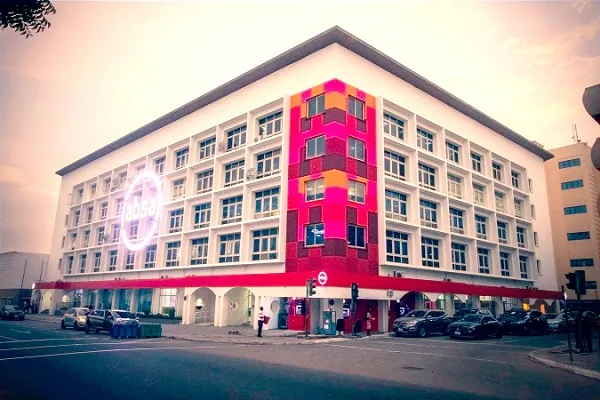
Absa Bank Ghana operates a nationwide network of branches (though specific numbers are not publicly disclosed in recent sources) and serves customers across retail, business banking, corporate, and investment banking segments. Its headquarters is located in Accra, and the bank provides services including current and savings accounts, credit and debit cards, consumer and business loans, trade finance, cash management, treasury management, and e-banking solutions .
The bank also offers private banking, wealth management solutions, and insurance products for life, education, motor, hospital cash-back plans, and travel and home protection, among others .
Business Model: The Universal Bank With an SME Focus
Absa Bank Ghana operates as a universal bank with a strategic emphasis on Retail and Business Banking—particularly the small and medium enterprise (SME) segment, which has been the primary target of its recent digital payment innovations .
Core Business Segments
The bank’s operations are structured around four primary segments :
-
Retail Banking: Personal accounts (current, savings, junior savings), credit and debit cards, consumer loans, and wealth management solutions .
-
Business Banking (SME Focus): This segment has been the primary beneficiary of Absa’s recent digital payment innovations, including the launch of Mobi Tap and Absa Pay. The bank provides business loans, trade finance, cash management, and payment acceptance solutions tailored to the needs of small and medium enterprises .
-
Corporate and Investment Banking (CIB): Serving large Ghanaian enterprises, multinationals, and public institutions. Services include structured trade finance, project finance, treasury management, fixed income and currency trading, derivatives, and market-making on foreign currency and bonds .
-
Treasury and Investment Services: Providing fixed income, currencies, derivatives trading, and market-making services, as well as wealth management and private banking for high-net-worth clients .
How They Make Money: The 2025 Financial Turnaround
Absa Bank Ghana’s 2025 financial performance represents a dramatic recovery from the impairments absorbed during the DDEP period in 2023.
Profitability Highlights:
| Metric | Q1 2025 | FY 2024 (Estimate) | Change |
|---|---|---|---|
| Profit After Tax | $36.6 million | Not disclosed | Highest in nearly a decade |
| Assets | $2.2 billion | Not disclosed | +Fueled by deposit growth |
Group-Level Context:
Absa Group’s 2025 full-year results provide the broader context for Ghana’s performance :
| Metric (Group) | 2025 | 2024 | Change |
|---|---|---|---|
| Headline Earnings | R24.76 billion ($1.5 billion) | ~R22 billion | +12% |
| Revenue | R115.7 billion ($6.3 billion) | ~R110 billion | +5% |
| Africa Regions Profit Contribution | R7.76 billion ($470 million) | ~R6.2 billion | +25% |
| Africa Regions Share of Group Earnings | ~31% | ~28% | +3pp |
| Africa Regions ROE | 16.3% | 15.1% | +1.2pp |
The Ghana-Specific Tailwinds:
Absa Group CFO Deon Raju provided specific commentary on Ghana’s recovery in mid-2025, noting that customer growth in Ghana had been “strong, alongside net interest revenue and revenue in the first half of the year” . He added:
“Ghana has been tough for us over the last few years. We are pleased to see that market turn around. They [government] have completed the debt restructure and a lot of their bilaterals. Their reserves in foreign currency are looking a lot better.”
Raju attributed the turnaround to several factors :
-
Strong gold production and high gold prices boosting foreign reserves
-
A supportive cocoa market
-
Completed sovereign debt restructuring
-
Significant appreciation of the Ghanaian cedi, which was described as “the best performing currency in the world” at certain points in 2025
Crucially, Ghana ceased to be treated as a hyperinflationary economy in Absa’s financial reporting effective January 1, 2025. This had a positive impact of approximately 633 million rand on Absa Bank Ghana’s earnings, removing a technical distortion that had previously obscured the bank’s underlying performance .
Risk Metrics:
While specific NPL and CAR figures for Absa Bank Ghana are not publicly disclosed in recent sources, Absa Group’s commentary noted that the bank’s improved NPL ratio and top-tier capital adequacy “reflect strong financial health and smart risk management . This stands in contrast to the 2023 period, when Absa Group absorbed a R2.7 billion impairment related to Ghana’s sovereign debt woes .
Digital Strategy and Innovation: The SME Payment Revolution
Absa Bank Ghana’s most distinctive strategic move in 2025-2026 has been its aggressive push into digital payment solutions for SMEs. The bank has launched two complementary products—Mobi Tap and Absa Pay—that target the massive underserved market of small merchants who have historically relied on cash due to the high cost of traditional POS devices.
Mobi Tap: Turning Smartphones into Payment Terminals
In June 2025, Absa Bank Ghana launched Mobi Tap, a mobile payment solution that turns any NFC-enabled smartphone into a secure, contactless payment terminal .
Key Features:
-
Merchants can accept contactless payments by card, mobile money, or bank transfer using only an NFC-enabled smartphone
-
No expensive POS hardware required
-
Secure and flexible, with simple integration
The Market Gap: Launching the product, Executive Director for Retail and Business Banking Kobla Nyaletey emphasised Absa’s focus on empowering entrepreneurs: “Today, we are simplifying payments for SMEs and placing the power of a secure, all-in-one payment solution right into their hands with just a mobile phone. Our promise to merchants is that Mobi Tap will make business more convenient for you through its simplicity, accessibility and security” .
Claude Agyen Asamoah, Head of Payments and Digital Commercialisation at Absa Bank Ghana, added: “With Mobi Tap, we have taken away the complexity and cost of payment acceptance and replaced it with a simple, secure and flexible solution that lives right on your smartphone” .
Visa Partnership: Fabrice Konan, Country Manager for Visa, spoke at the launch, describing the broader significance: “Mobi Tap is more than a payment solution; it is a tool for economic empowerment. It gives every entrepreneur, no matter how small, the power to grow, thrive and fully participate in a digital economy” .
Absa Pay: Tap-to-Pay Digital Wallet
In December 2025, Absa Bank Ghana, in partnership with Visa, launched Absa Pay, a new tap-to-pay digital wallet designed to make everyday payments faster, safer, and more convenient .
Key Features:
-
Fully integrated into the Absa Mobile Banking App
-
Allows customers to make contactless payments by simply tapping their NFC-enabled mobile phones at compatible payment terminals
-
Eliminates the need for cash or physical cards
-
Offers a seamless, modern payment experience
Target Audience: Speaking at the launch, Kobla Nyaletey noted: “Ghana’s young and digitally engaged population is ready for innovation that brings the ease of tap-to-pay directly to mobile devices” .
Fabrice Konan of Visa added: “Behind every transaction is a real person, and our goal is to make payments effortless, reliable and secure. The collaboration with Absa Bank Ghana demonstrates a shared focus on accelerating digital adoption” .
Expected Impact: The launch of Absa Pay is expected to accelerate the adoption of contactless payments, especially for everyday spending such as groceries, fuel, dining, and retail purchases. For merchants, the solution enables quicker checkout times, improves customer experience, and encourages wider acceptance of digital payments across different sectors of the economy .
Strategic Implications of the Payment Push
The launch of Mobi Tap and Absa Pay within six months of each other signals a deliberate strategic bet: Absa is positioning itself as the bank of choice for Ghana’s SME and retail payment ecosystem.
This is a defensive and offensive move:
-
Defensive: As mobile money operators (MTN MoMo, Telecel Cash) and fintechs capture payment volumes, traditional banks risk being disintermediated. By offering low-cost, smartphone-based payment acceptance, Absa keeps transaction flows within its ecosystem.
-
Offensive: The SME segment is underserved. Most small merchants still operate largely in cash due to the high cost of POS devices. Mobi Tap eliminates that barrier, potentially onboarding thousands of new merchants to Absa’s platform.
The Cross-Sell Opportunity: Once a merchant uses Mobi Tap to accept payments, Absa can cross-sell business loans, working capital facilities, savings accounts, and insurance products—creating a “sticky” relationship that extends far beyond payment processing.
Other Digital Capabilities
Beyond the headline payment solutions, Absa Bank Ghana offers:
-
E-banking solutions for corporate and retail customers
-
Fixed income, currencies, and derivatives trading platforms
-
Integrated mobile banking through the Absa Mobile Banking App
Market Position and Competition
Industry Standing: Turning the Corner
After several difficult years, Absa Bank Ghana has “turned the corner,” according to Absa Group CFO Deon Raju . The bank is not the largest by assets—Ecobank (GH¢46 billion) and GCB (GH¢60 billion+) hold those crowns—but it is among the most profitable on a return-on-equity basis.
In Q1 2025, the bank recorded its highest quarterly profit in nearly a decade, with after-tax earnings of 36.6millionandassetsreaching2.2 billion (approximately GH¢33 billion at prevailing exchange rates) .
Competitive Landscape
Absa competes across multiple segments against a diverse set of rivals:
| Competitor | Where Absa Wins | Where Absa Loses |
|---|---|---|
| GCB Bank | Parent-group scale, digital SME innovation (Mobi Tap), corporate banking sophistication | Branch network (GCB has 183 vs. Absa’s smaller footprint), brand heritage in Ghana |
| Ecobank Ghana | South African parent backing, SME payment solutions | Pan-African scale (Ecobank has a larger cross-border network) |
| Stanbic Bank | Comparable parent scale (Standard Bank vs. Absa Group similar size); both compete directly for corporate mandates | Stanbic leads in corporate CX rankings (88.8 vs. Absa’s undisclosed) |
| Fidelity Bank | Parent-group balance sheet, corporate lending capacity, digital payment innovation | Agency banking (Fidelity has 9,000+ agents vs. Absa’s smaller network) |
| FirstBank Ghana | Larger parent group (Absa Group R24.76bn earnings vs. FBN Holdings), stronger South African corporate relationships | FirstBank has deeper Nigerian cross-border corridors |
Competitive Advantages
-
Parent-Group Scale and Stability: As a subsidiary of Absa Group (JSE: ABG), the bank has access to a multi-billion rand balance sheet, sophisticated risk management frameworks, and a parent that is actively pivoting toward Africa as a growth driver .
-
SME Payment Innovation First-Mover: Absa was among the first banks in Ghana to launch smartphone-as-terminal payment solutions (Mobi Tap) and integrated tap-to-pay wallets (Absa Pay) . This first-mover advantage could capture significant merchant market share.
-
Post-DDEP Recovery Momentum: Ghana’s exit from hyperinflationary classification and the completion of sovereign debt restructuring have removed significant headwinds. The R633 million positive accounting impact is a one-time boost, but the underlying macroeconomic stability benefits the entire loan book .
-
Visa Partnership: The collaboration with Visa for both Mobi Tap and Absa Pay provides global payment network integration, security standards, and merchant acceptance that would be difficult to replicate independently .
-
Experienced Leadership: MD Edward Nartey Botchway brings over 20 years of experience, including MD roles at Ecobank Liberia and senior finance positions across Anglophone West Africa .
Competitive Disadvantages
-
Leaner Physical Footprint: Absa does not disclose its branch count publicly, but it is generally understood to be smaller than GCB (183 branches) and comparable to other foreign-owned banks. This limits its reach in rural and remote areas.
-
Foreign Ownership Perception: Some Ghanaian depositors and corporate clients may prefer “indigenous” banks (Fidelity, GCB) for patriotic or local procurement reasons.
-
Limited Share of Government Business: As a foreign-owned bank, Absa may not have the same access to government payroll, public sector banking, and SOE relationships that state-influenced banks (GCB, CBG, ADB) enjoy.
-
PR Legacy (Barclays/Absa Transition): The rebranding from Barclays to Absa was not without friction, and some long-standing customers may still associate the brand with the transition period rather than its current trajectory.
Parent-Group Strategic Pivot: Africa First
Understanding Absa Bank Ghana requires understanding the strategic direction of its parent, Absa Group.
The Kenny Fihla Strategy
In October 2024, Kenny Fihla took over as Chief Executive of Absa Group, succeeding interim CEO Charles Russon. Fihla’s strategy represents a shift from the previous emphasis on “purpose-led transformation and sustainability” toward a sharper focus on customer-led growth, operational resilience, and strengthening Absa’s position as a leading pan-African bank .
The Africa Regions Ambition
In March 2026, Fihla told Reuters that Absa is accelerating expansion across Africa, as the region outside South Africa becomes the bank’s top growth driver . Key points from this strategy:
-
Current Contribution: Africa Regions now contributes approximately 31% of group earnings, up from a smaller share in prior years .
-
Concentration Risk: Revenue and earnings in the rest of Africa remain heavily concentrated in Ghana and Kenya .
-
Target Markets: Absa sees significant room for growth in Uganda, Tanzania, and Zambia, with scaling to involve a mix of acquisitions and organic growth .
-
European Bank Retreat: Fihla noted that South African banks are stepping up acquisitions in East Africa as European banks retreat from the continent, creating a vacuum regional players are racing to fill .
Implications for Ghana
For Absa Bank Ghana, the parent’s Africa-first strategy means:
-
Continued investment: Ghana is a top-two market in the Africa Regions portfolio, alongside Kenya. Expect continued capital and technology investment.
-
Talent mobility: The appointment of Edward Nartey Botchway (a Ghanaian with Ecobank’s pan-African experience) reflects the group’s desire for local leadership with regional perspective.
-
Cross-border focus: As Absa strengthens its East African presence, Ghanaian businesses trading with Kenya, Tanzania, and Uganda will find a natural banking partner in Absa.
Challenges and Risks
No analysis of Absa Bank Ghana is complete without acknowledging the headwinds that persist despite the strong recovery.
Risk 1: Sovereign Relapse Risk
Ghana’s economic recovery, while impressive, is not irreversible. The country remains vulnerable to commodity price shocks (gold and cocoa are volatile), climate risks affecting agriculture, and the lingering effects of the debt restructuring on domestic credit availability. A return to macroeconomic instability would directly affect Absa Bank Ghana’s asset quality and profitability.
Risk 2: Parent-Group Concentration
Absa Group’s Africa Regions earnings are heavily concentrated in Ghana and Kenya . While this benefits the Ghana subsidiary (it is a priority market), it also means that any negative shock in Ghana would have an outsized impact on the parent’s non-South African earnings—potentially leading to stricter capital allocation or risk appetite constraints.
Risk 3: SME Payment Monetisation
Mobi Tap and Absa Pay are innovative products, but their profitability remains unproven. The merchant pays low (or no) fees for payment acceptance, and the bank’s revenue model relies on cross-selling higher-margin products (loans, accounts, insurance) to onboarded merchants. If cross-sell rates are lower than expected, the ROI on these digital investments could disappoint.
Risk 4: Competition From Telco-Led Wallets
MTN MoMo, Telecel Cash, and emerging fintechs are not standing still. These competitors have network effects, lower cost structures, and deep integration into the informal economy that traditional banks struggle to match. Absa’s payment solutions are competitive, but the telcos have scale advantages that are difficult to overcome.
Risk 5: Foreign Exchange Volatility
While the cedi was the “best performing currency in the world” in mid-2025 , currency volatility remains a feature of Ghana’s macroeconomic landscape. For a foreign-owned bank reporting to a South African parent, exchange rate fluctuations directly affect reported earnings in rand terms.
Risk 6: Margin Compression
The Bank of Ghana’s policy rate reductions (from 30% to 18% during 2025) compress net interest margins across the industry. Absa has offset this through strong customer growth and increased transaction volumes, but sustained rate reductions will test the bank’s ability to maintain profitability without aggressive cost-cutting.
Economic and Industry Impact
Employment
Absa Bank Ghana employs a substantial workforce across its branch network, headquarters, and digital operations. While specific headcount is not publicly disclosed, the bank’s presence contributes to formal-sector employment and skills development in the financial services industry.
SME Empowerment Through Digital Payments
The launch of Mobi Tap is arguably Absa’s most significant contribution to Ghana’s economic development. By eliminating the cost barrier to digital payment acceptance, the bank enables thousands of small merchants to:
-
Reduce cash handling risks (theft, counterfeit currency)
-
Access transaction data that can support credit applications
-
Serve customers who prefer digital payments
-
Expand their customer base beyond those carrying cash
Visa Country Manager Fabrice Konan captured this impact: “Mobi Tap is more than a payment solution; it is a tool for economic empowerment. It gives every entrepreneur, no matter how small, the power to grow, thrive and fully participate in a digital economy” .
Banking Sector Stability
Absa Bank Ghana’s recovery from the DDEP period, and its return to strong profitability, contributes to overall banking system stability. A healthy, well-capitalised foreign-owned bank reduces systemic risk and provides competitive pressure that benefits all market participants.
Cross-Border Trade Facilitation
As Absa Group strengthens its pan-African presence, Absa Bank Ghana is well-positioned to facilitate trade and investment flows between Ghana and other African markets. This supports the African Continental Free Trade Area (AfCFTA) agenda and reduces reliance on correspondent banking relationships with European and American banks.
Financial Inclusion
Through its digital payment solutions and mobile banking app, Absa extends financial services to customers who may not have easy access to physical branches. The tap-to-pay functionality of Absa Pay is particularly accessible to younger, digitally-native customers who prefer smartphone-based banking .
Future Outlook
As of May 2026, Absa Bank Ghana is executing a dual strategy: consolidate the gains from Ghana’s macroeconomic recovery while investing in digital SME solutions that position the bank for long-term market share growth.
The Immediate Agenda
The bank’s priorities for 2026-2027 are likely to include:
-
Scaling Mobi Tap and Absa Pay to capture significant merchant market share
-
Expanding the loan book as macroeconomic stability enables confident lending
-
Maintaining asset quality through disciplined underwriting and collections
-
Deepening corporate banking relationships with Ghanaian enterprises seeking cross-border trade finance
The Bull Case (Optimistic)
-
SME payment ecosystem scales: Mobi Tap onboard hundreds of thousands of merchants; cross-sell rates exceed expectations; transaction fee income becomes a meaningful profit centre.
-
Parent-group investment accelerates: As a top-two market in Africa Regions, Absa Bank Ghana receives additional capital for digital transformation, branch expansion, and talent acquisition.
-
Corporate banking wins mandates: Absa’s parent-group balance sheet and cross-border capabilities win corporate mandates from Ghanaian enterprises expanding into East Africa.
-
Asset quality remains strong: The improved NPL ratio holds as Ghana’s economy continues its recovery; credit impairment charges remain low.
-
Market share gains: Absa captures share from competitors still recovering from DDEP-related capital constraints.
The Bear Case (Pessimistic)
-
SME payment monetisation disappoints: Merchants use Mobi Tap but do not take up higher-margin products; the ROI on digital investments falls short of expectations.
-
Ghana’s recovery stalls: A commodity price shock, climate event, or political disruption returns Ghana to instability; NPLs rise; profitability suffers.
-
Parent-group re-prioritises: Absa Group decides to concentrate investment in East African markets (Uganda, Tanzania, Zambia) where growth prospects are higher; Ghana receives less capital.
-
Competition intensifies: Ecobank, Stanbic, or Fidelity launch competing smartphone-as-terminal products; first-mover advantage erodes.
-
Margin compression accelerates: The Bank of Ghana reduces policy rates further; net interest income declines faster than non-funded income can replace.
The Verdict
Absa Bank Ghana is no longer a bank in recovery—it is a bank in ascent. The Q1 2025 profit of $36.6 million, the R633 million tailwind from hyperinflationary accounting, and the parent group’s Africa-first strategy all point in the same direction: Absa Ghana has turned the corner and is now positioned for sustained growth .
The bank’s digital payment innovations—Mobi Tap and Absa Pay—are not gimmicks; they are strategic responses to a genuine market gap. The SME segment is vast, underserved, and historically excluded from digital payments by the cost of traditional POS hardware. By eliminating that barrier, Absa has opened a channel to millions of merchants who, once onboarded, can be served with a full suite of banking products.
The risks are real—sovereign relapse, competition, monetisation challenges—but the trajectory is unmistakably positive. Under the leadership of Edward Nartey Botchway, and with the backing of a parent group that sees Ghana as a priority market, Absa Bank Ghana has emerged from the DDEP period stronger, leaner, and more focused than it has been in years.
For corporate clients, Absa offers parent-group balance sheet strength and cross-border capabilities that few competitors can match. For SMEs, the bank’s digital payment solutions offer a path out of cash dependency. For depositors, the Absa Group backing provides stability that purely local banks cannot claim.
Absa Bank Ghana is not trying to be the biggest bank in the country. It is trying to be the smartest. And the early evidence suggests the strategy is working.
FAQ SECTION
1. Is Absa Bank Ghana a Ghanaian-owned bank?
No. Absa Bank Ghana is a wholly-owned subsidiary of Absa Group Limited, a South African banking group listed on the Johannesburg Stock Exchange (JSE: ABG). The bank was formerly known as Barclays Bank of Ghana Limited before the parent group’s rebranding to Absa .
2. Who is the Managing Director of Absa Bank Ghana?
The Managing Director is Edward Nartey Botchway, appointed substantive MD effective 10 July 2024. He previously held senior roles at Ecobank, including Managing Director of Ecobank Liberia and Regional Consumer Head for Anglophone West Africa, as well as executive positions at GCB Bank PLC and Citi Savings and Loans .
3. How did Absa Bank Ghana perform in 2025?
Absa Bank Ghana delivered its highest quarterly profit in nearly a decade in Q1 2025, with after-tax earnings of 36.6millionandassetsreaching2.2 billion . Ghana’s exit from hyperinflationary classification also contributed approximately R633 million to the bank’s earnings . The bank has “turned the corner” after absorbing significant DDEP-related impairments in 2023 .
4. What is Mobi Tap?
Mobi Tap is a mobile payment solution launched by Absa Bank Ghana in June 2025 that turns any NFC-enabled smartphone into a secure, contactless payment terminal. Merchants can accept contactless payments by card, mobile money, or bank transfer without expensive POS hardware .
5. What is Absa Pay?
Absa Pay is a tap-to-pay digital wallet launched by Absa Bank Ghana in partnership with Visa in December 2025. Integrated into the Absa Mobile Banking App, it allows customers to make contactless payments by tapping their NFC-enabled mobile phones at compatible payment terminals, eliminating the need for cash or physical cards .
6. How does Absa Bank Ghana support small businesses?
Absa supports SMEs primarily through its digital payment innovations—Mobi Tap (smartphone-as-terminal) and Absa Pay (tap-to-pay wallet)—which eliminate the cost barrier to digital payment acceptance. The bank also offers business loans, trade finance, cash management, and dedicated business banking relationship managers .
7. How does Absa Bank Ghana’s 2025 performance compare to the parent group?
Absa Group reported full-year headline earnings of R24.76 billion ($1.5 billion) for 2025, up 12% from the previous year. The Africa Regions segment (12 countries including Ghana) posted a 25% increase in profit to R7.76 billion and now contributes approximately 31% of total group earnings, with Ghana cited as a primary driver alongside Kenya .
8. What is Absa Group’s Africa strategy?
Absa Group CEO Kenny Fihla has announced an acceleration of expansion across Africa, with the Africa Regions segment now the bank’s fastest-growing business. While revenue remains concentrated in Ghana and Kenya, the group sees significant growth opportunities in Uganda, Tanzania, and Zambia. The strategy involves a mix of acquisitions and organic growth, capitalising on the retreat of European banks from the continent .
9. Is Absa Bank Ghana safe for deposits?
Yes. Absa Bank Ghana is a licensed bank under the Bank of Ghana and a member of the Ghana Deposit Protection Scheme. As a wholly-owned subsidiary of Absa Group (JSE: ABG, with R1.3 trillion+ in assets), the bank benefits from a strong parent-group balance sheet. Group commentary indicates improved NPL ratios and top-tier capital adequacy .
10. What is the difference between Absa Pay and Mobi Tap?
Absa Pay is a consumer-facing digital wallet that allows customers to tap their phones to pay at merchant terminals. Mobi Tap is a merchant-facing solution that turns the merchant’s smartphone into a payment acceptance terminal. Together, they create a complete ecosystem: consumers pay with Absa Pay, and merchants accept payments with Mobi Tap .
11. Who are Absa Bank Ghana’s key executives?
Key executives include Kobla Nyaletey (Executive Director, Retail and Business Banking), Munatsi Mkushi (CFO), Frederick Nyinah (COO), Rainer Kubuga (Chief of Staff), Kofi Agyarko-Kwarteng (Chief Risk Officer & Chief Revenue Officer), and Claude Agyen Asamoah (Head of Payments and Digital Commercialisation) .
12. How can I contact Absa Bank Ghana?
Absa Bank Ghana’s headquarters is located in Accra. Customers can reach the bank through its mobile banking app, customer service hotline, or by visiting any Absa branch. Specific contact details are available on the bank’s official website: absa.com.gh.
QUICK FACTS BOX
| Item | Details |
|---|---|
| Founded | Originally Barclays Bank Ghana (over a century); rebranded to Absa following Barclays PLC’s divestiture |
| Headquarters | Accra, Ghana |
| Industry | Banking / Financial Services |
| Services | Retail Banking, Business Banking (SME), Corporate |
Source: Accra Street Journal
Last Updated on May 4, 2026 by Samuel Kwame Boadu
Disclaimer: Some content on Accra Street Journal may be aggregated, summarized, or edited from third-party sources for informational purposes. Images and media are used under fair use or royalty-free licenses. Accra Street Journal is a subsidiary of SamBoad Publishing Hub under SamBoad Business Group Ltd, registered in Ghana since 2014.
For concerns or inquiries, please visit our Privacy Policy or Contact Page.

Samuel Kwame Boadu is a Ghanaian media entrepreneur and storyteller with a passion for amplifying urban voices and uncovering everyday truths. He is the Editor-in-Chief and Founder of Accra Street Journal, a dynamic digital platform dedicated to capturing the pulse of Ghana’s capital—its people, culture, challenges, business, sports and innovations.