








With 35% Capital Adequacy (three times the regulatory minimum), a 212% Liquidity Ratio, and a parent group actively bidding to acquire Societe Generale Ghana, this small but mighty North African-owned lender is out-executing many larger rivals.

Executive Introduction
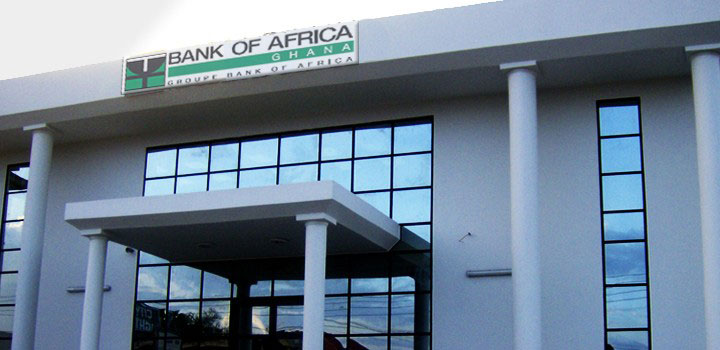
In Ghana’s banking landscape, there are loud giants and there are quiet operators. Bank of Africa (BOA) Ghana Ltd belongs firmly in the latter category—and it is precisely that quiet discipline that makes it one of the most intriguing institutions in the country.
While competitors scramble for depositor market share, chase headline-grabbing mergers, or navigate post-DDEP capital constraints, BOA Ghana has methodically built a fortress balance sheet. The 2025 Integrated Report reveals a bank that is playing a different game entirely: a Profit After Tax of GHS 123.6 million, a Capital Adequacy Ratio of 35.05% (more than triple the Bank of Ghana’s 13% minimum), and a staggering Liquidity Ratio of 211.57% that positions BOA Ghana as arguably the most liquid bank in the country .
📢 GET A DETAILED ARTICLES + JOBS
Join ASJ's WhatsApp Channel and never miss a post or opportunity.
This is not a bank chasing scale at the expense of safety. With just 23 branches across 6 regions, BOA Ghana is deliberately lean, leveraging its position as a subsidiary of the BMCE Bank of Africa Group—a pan-African conglomerate present in 17 African countries and France . The bank’s strategic focus on trade finance and SMEs, recognised with the “Best Bank in Trade Finance” award by the Innovation and Excellence Awards and the Ghana Credit Excellence Awards in 2022, has become its competitive moat .
But in 2026, BOA Ghana is also a bank in motion. It is actively seeking to acquire Societe Generale Ghana, a deal that would dramatically reshape its market position . And it is doing so under the leadership of a new Managing Director, Abderrahmane Belbachir, a seasoned Moroccan banker with over 35 years of experience who previously transformed Bank of Africa Rwanda from a microfinance institution into a full-fledged commercial bank .
For investors, corporate clients, and market observers, BOA Ghana represents a study in patient capital, Moroccan-backed discipline, and the quiet power of being extraordinarily well-capitalised in a sector where capital is king. This ASJ profile examines the bank’s unique ownership structure, its 2025 financial performance, its trade finance specialisation, the leadership transition, and whether the rumoured acquisition of Societe Generale Ghana would be a transformative leap or a distraction from its lean-and-mean philosophy.
Company Overview
The Group Story: From Bamako to Casablanca
BOA Ghana’s story begins not in Accra, but in Bamako, Mali, where the Bank of Africa Group was founded in 1982 with almost no external help. Over four decades, it has grown into a pan-African banking conglomerate with a presence in 18 countries: 8 in West Africa, 8 in East Africa and the Indian Ocean, one in the Democratic Republic of Congo, and importantly, a presence in France .
The group’s majority shareholder is BMCE Bank of Africa, Morocco’s second-largest private bank. BMCE itself is a major player on the continent, ranked as the 12th largest bank in Africa and actively involved in capital markets, asset management, stock brokerage, consumer credit, asset leasing, credit insurance, custody, and advisory services .
This Moroccan ownership is a critical differentiator. Unlike South African-owned competitors (Stanbic, Absa) or Nigerian-owned banks (UBA, Access, FirstBank), BOA Ghana brings a Francophone African perspective and deep connections to North African trade corridors—a unique advantage in a market dominated by Anglophone and South African players.
Ghana Entry: 2011 and the Slow-Build Strategy
BOA Ghana obtained its banking license from the Bank of Ghana on 11th November 2011 . This makes it a relatively young bank compared to century-old institutions like Barclays/Absa or Standard Chartered, but its parentage provides institutional heritage dating to 1982.
The bank’s growth strategy has been deliberately measured:
-
Current branch network: 23–26 branches across 6 regions of Ghana
-
Employee count: 1,001–5,000 people (LinkedIn estimate)
-
Headquarters: 1st Floor, The Octagon, Independence Avenue, Accra
The bank operates four key channels: physical branches, the Bmobile mobile banking platform, BOAWeb internet banking, and a Business Centre launched in 2012 to provide one-stop-shop solutions for corporate and high-end SME clients .
Ownership Structure: The Pan-African Chain
BOA Ghana is a wholly-owned subsidiary of the Bank of Africa Group, which is itself majority-owned by BMCE Bank of Morocco . This makes it a foreign-owned bank, similar to Stanbic (South Africa), Absa (South Africa), and Ecobank (pan-African), but with a distinctly Moroccan and Francophone identity.
The ownership chain matters for several reasons:
| Level | Entity | Role |
|---|---|---|
| 1 | BMCE Bank of Morocco | Majority shareholder of BOA Group; Morocco’s 2nd largest private bank |
| 2 | Bank of Africa Group | Pan-African parent; present in 18 countries, founded 1982 in Mali |
| 3 | BOA Ghana Ltd | Ghana operating subsidiary; licensed 2011 |
This structure provides BOA Ghana with:
-
Parent-group capital support when needed
-
Cross-border trade finance capabilities across 18 African countries and France
-
Shared technology platforms and risk management frameworks
-
A captive network for correspondent banking
However, it also means that strategic decisions—including the rumoured acquisition of Societe Generale Ghana—must align with the group’s pan-African priorities.
Leadership: Abderrahmane Belbachir and the Executive Team
Abderrahmane Belbachir – Managing Director (Appointed January 2024)
In January 2024, the Board of Directors of Bank of Africa Ghana appointed Abderrahmane Belbachir as its new Managing Director, succeeding Kobby Andah (who was promoted to Regional Director for East Africa and Ghana within the BOA Group) .
Belbachir brings over 35 years of banking experience and a track record of transformative leadership . Before taking the helm in Ghana, he served as Managing Director of Bank of Africa Rwanda for seven years, during which he spearheaded the transformation of Agaseke Micro Finance into a fully-fledged commercial bank. He was also instrumental in championing the establishment of a banking college in Rwanda and served as the vice-chair of the Rwandan Bankers Association .
His professional journey began at WAFA Bank in Morocco, where he rose from Branch Manager to Regional Manager. He later served as Network Director for Attijariwafa Bank, overseeing operations in both Casablanca and France. His experience also includes a three-year tenure as North Africa Regional Director for Western Union, as well as roles such as Head of Retail Banking at Sahara Bank in Tripoli and Managing Partner of Ikbal Finance .
Strategic Vision for Ghana
Upon his appointment, Belbachir indicated he would continue the legacy of his predecessor by placing a strong emphasis on supporting Small and Medium-sized Enterprises (SMEs), acknowledging their vital role in the economy. His vision includes creating tailored financial solutions to empower SMEs, enabling them to thrive and contribute significantly to the nation’s economic growth .
William Boateng – Executive Director of Business Development
Boateng has been a key public face of BOA Ghana’s trade finance strategy, emphasising the bank’s deliberate efforts to leverage its parent group’s presence across 20 African countries to position itself as a lead trade finance institution .
Musah Abdul-Rahman – Head of Cross-Border Trade & Business Synergy
Abdul-Rahman has articulated the bank’s customer feedback-driven approach to product development, noting that “the bank’s inability to meet certain needs of our customers is considered an assignment to go back to the drawing board to find solutions” .
Business Model: The Trade Finance Specialist
BOA Ghana operates as a universal bank but with a deliberate and well-articulated strategic specialisation in Trade Finance and SME Banking.
The Trade Finance Mandate
In 2022, BOA Ghana was named Trade Finance Bank of the Year by two separate institutions: the Innovation and Excellence Awards (organised by the International Center for Strategic Alliances) and the Ghana Credit Excellence Awards (by the Chartered Institute of Credit Management) .
The bank had also won “Trade Finance Bank of the Year” at the 2021 Ghana Accountancy and Finance Award, indicating sustained excellence in this segment .
The Strategy Behind the Award
Executive Director of Business Development William Boateng articulated the bank’s approach:
“What has enabled these successes chalked over the past few years is that we realised our capacity in terms of our group network on the African continent, Asia and America and then decided to leverage it to make trade a key pillar of the bank’s strategy. The basic infrastructures were present, and the foundation was solid, hence the important task then was to bring on board the necessary skills and expertise to harmonise all the competitive advantages which was done competently.
Head of Cross-Border Trade Musah Abdul-Rahman added that a key factor in the bank’s success is the keen interest in receiving feedback from customers:
“We use these feedbacks to analyse the impact and value of our products and services. The bank’s inability to meet certain needs of our customers is considered an assignment to go back to the drawing board to find solutions which later feed into the bank’s strategic development.”
SME Banking: The “Journey, Not a One-Off Event”
BOA Ghana has made SME financing a strategic priority. According to Boateng, SMEs form the majority of businesses in the Ghanaian economy and tend to bear the brunt of any economic crisis, making them a priority for support .
SME-Friendly Initiatives:
In 2023, the bank announced plans to restructure some of its branches to be SMEs-friendly, with special attention to:
-
Trade finance support walk-ins
-
Business advisory assistance
-
Technical support for SME operators
Abdul-Rahman framed the bank’s commitment as long-term:
“We want every SME customer that visits us to be satisfied with our services and become our ambassador to tell other businesses about how supportive and tailor-made our services are. So, we have deliberate plans in the coming year dedicated to anchoring SME businesses.”
The Customer First Model
To further carve its niche as a customer-focused retail bank, BOA adopted the Customer First Model, where customers have the advantage of a one-stop-shop service in the banking halls. The bank has launched five bespoke products, dubbed “customer-first,” which are unique to the Ghanaian market and specially designed for retail customers .
Corporate and Business Banking
BOA Ghana launched its Business Centre in 2012 to provide banking solutions to corporate and high-end SME clients at a one-stop-shop. The centre is designed and staffed to serve clients operating in the bank’s chosen sectors .
Transactional and Digital Banking
The bank operates the Bmobile mobile banking platform and BOAWeb internet banking channel, which continue to bring banking closer to clients .
How They Make Money: The 2025 Financials
BOA Ghana’s 2025 Integrated Report provides the clearest picture of the bank’s financial health and strategic positioning .
Profitability
| Metric | 2025 | Change vs. Prior Period |
|---|---|---|
| Profit After Tax | GHS 123.6 million | +8.7% |
The GHS 123.6 million profit reflects “disciplined risk-adjusted returns,” according to the Integrated Report. In a year when many Ghanaian banks were still recovering from DDEP-related impairments, BOA Ghana delivered steady, single-digit growth—modest but reliable.
Balance Sheet Strength
| Metric | 2025 | 2024 | Growth |
|---|---|---|---|
| Total Assets | GHS 4.03 billion | ~GHS 3.8 billion (est.) | ~6% |
| Total Liabilities | GHS 2.99 billion | ~GHS 2.8 billion (est.) | ~7% |
| Total Equity (implied) | GHS 1.04 billion | ~GHS 1.0 billion | Stable |
The bank’s total assets have grown consistently from GHS 3.16 billion in 2021 to GHS 4.03 billion in 2025—a compound annual growth rate of approximately 6% . This is not explosive growth, but disciplined, consistent expansion.
The Standout Metrics: Capital and Liquidity
Two metrics distinguish BOA Ghana from virtually every other bank in the country:
| Metric | BOA Ghana (2025) | Regulatory Minimum | Industry Context |
|---|---|---|---|
| Capital Adequacy Ratio (CAR) | 35.05% | 13% | More than 3x minimum; among highest in Ghana |
| Liquidity Ratio | 211.57% | N/A | Exceptionally strong; among most liquid banks |
The CAR Advantage:
A CAR of 35.05% is extraordinary. For context:
-
Most well-capitalised banks operate in the 17-22% range
-
The Bank of Ghana’s minimum is 13%, and many banks hover just above that level
-
BOA Ghana’s CAR is more than double the industry average for well-capitalised banks
This provides BOA Ghana with:
-
A massive buffer against unexpected loan losses
-
Capacity to expand the loan book without raising additional capital
-
Credibility with corporate clients who prioritise counterparty stability
-
Regulatory goodwill, reducing the risk of intervention or restrictions
The Liquidity Advantage:
A liquidity ratio of 211.57% means BOA Ghana holds more than twice the amount of liquid assets (cash, government securities, short-term deposits) than it needs to meet its short-term obligations. This is exceptionally conservative and suggests:
-
The bank is prioritising safety over yield
-
It has capacity to deploy cash into higher-yielding loans if opportunities arise
-
It is well-positioned to withstand deposit outflows or economic shocks
Operational Metrics
| Metric | Value |
|---|---|
| Branches | 23 (across 6 regions) |
| Group Presence | 17 African countries + France |
| Founded (BOA Group) | 1982 |
| Licensed in Ghana | 11 November 2011 |
Five-Year Asset Growth Trajectory
| Year | Total Assets (GHS Billions) |
|---|---|
| 2021 | 3.16 |
| 2022 | ~3.4 (est.) |
| 2023 | ~3.6 (est.) |
| 2024 | ~3.8 (est.) |
| 2025 | 4.03 |
The consistent upward trend, combined with the bank’s refusal to take excessive risks, suggests a management philosophy that values durability over drama.
Market Position and Competition
Industry Standing: The Small but Mighty Foreign Bank
BOA Ghana is not a Tier-1 bank by asset size. With GHS 4.03 billion in total assets, it is considerably smaller than industry leaders like Ecobank (GHS 46 billion), GCB (GHS 60 billion+), and even mid-tier players like OmniBSIC (GHS 21.6 billion). It is roughly comparable in size to FirstBank Ghana (GHS 6.24 billion), though smaller.
However, on capital adequacy and liquidity, BOA Ghana is a leader. Its 35% CAR and 212% liquidity ratio place it among the best-capitalised and most liquid banks in the country—a fact that matters immensely to corporate clients, institutional depositors, and regulators.
Awards and Recognition
BOA Ghana has accumulated external validation for its trade finance specialisation:
| Award | Year | Issuing Body |
|---|---|---|
| Trade Finance Bank of the Year | 2022 | Innovation and Excellence Awards (ICSA) |
| Trade Finance Bank of the Year | 2022 | Ghana Credit Excellence Awards (CICM) |
| Trade Finance Bank of the Year | 2021 | Ghana Accountancy and Finance Award |
Competitive Landscape
BOA Ghana competes across multiple segments against a diverse set of rivals:
| Competitor | Where BOA Wins | Where BOA Loses |
|---|---|---|
| Ecobank Ghana | CAR (35% vs. ~19%), liquidity (212% vs. lower), trade finance specialisation (award-winning) | Asset size (GHS 4B vs. GHS 46B), pan-African scale, branch network |
| GCB Bank | Foreign parent backing, CAR (35% vs. ~18%), trade finance focus | Branch network (23 vs. 183), brand heritage, government relationships |
| Stanbic Bank | Capital adequacy, aggressive trade finance specialisation | Corporate CX rankings, investment banking scale, South African parent (Standard Bank) |
| Absa Bank Ghana | CAR (35% vs. undisclosed but likely lower), leaner cost structure | Asset size, parent-group scale (Absa Group R24.76bn earnings) |
| FirstBank Ghana | CAR (35% vs. 40%—comparable), trade finance awards | Asset size (GHS 4B vs. GHS 6.24B), Nigerian parent network |
Competitive Advantages
-
Extraordinary Capital and Liquidity: The 35% CAR and 212% liquidity ratio are unparalleled among mid-tier banks. This provides a fortress balance sheet that can absorb shocks and fund expansion.
-
Trade Finance Specialisation: The bank’s status as a multiple award-winning trade finance institution is a genuine differentiator. For importers, exporters, and businesses involved in cross-border trade, BOA Ghana offers expertise and group network support that generalist banks cannot match.
-
Parent-Group Network: The Bank of Africa Group’s presence in 18 countries, including Francophone West Africa and East Africa, provides trade finance corridors that competitors lack. This is particularly valuable as the African Continental Free Trade Area (AfCFTA) implementation accelerates.
-
Moroccan/Francophone Connectivity: BOA Ghana’s Moroccan ownership provides unique access to North African trade partners and Francophone African markets—a differentiation that no South African or Nigerian-owned bank can replicate.
-
Lean Operating Model: With only 23 branches, BOA Ghana keeps fixed costs low, allowing it to remain profitable even with a smaller asset base.
Competitive Disadvantages
-
Limited Physical Footprint: 23 branches across 6 regions is a small network. While the bank has invested in digital channels (Bmobile, BOAWeb), it cannot match the physical reach of GCB (183 branches) or even Fidelity (40+).
-
Smaller Asset Base: At GHS 4.03 billion, BOA Ghana cannot compete for the largest corporate loans or infrastructure financing mandates that require multi-billion cedi commitments.
-
Lower Brand Visibility: Outside trade finance circles, BOA Ghana has lower brand recognition than Ecobank, Stanbic, GCB, or Absa. This affects retail deposit growth and consumer lending.
-
Dependency on Parent Group: While the group provides strength, it also imposes constraints. Strategic decisions—including the rumoured acquisition of Societe Generale Ghana—must be approved at the Casablanca level, potentially slowing decision-making.
Digital Strategy and Innovation
BOA Ghana’s digital strategy is understated but deliberate. The bank operates two primary digital channels:
1. Bmobile: The bank’s mobile banking platform, designed to bring banking closer to clients without requiring branch visits .
2. BOAWeb: The bank’s internet banking channel for corporate and retail customers .
The Marketing-First Approach
Rather than chasing flashy AI or blockchain solutions, BOA Ghana has focused on making its digital presence discoverable. The bank has invested in “digital-first publications” of its Integrated Report, making it the first point of contact for prospective customers searching online . This reflects a sophisticated understanding that in 2026, a bank’s website and digital presence are its most important “branches” for customer acquisition.
Areas for Future Investment
Based on industry standards and the bank’s current position, potential digital priorities include:
-
Enhanced mobile app features beyond basic transactions
-
USSD banking for customers without smartphones
-
API banking for corporate clients and fintech partners
-
Agent banking partnerships to extend geographic reach without building branches
However, the bank’s lean, capital-efficient philosophy suggests it will invest in digital gradually and deliberately rather than through expensive, transformative overhauls.
The Rumble in the Jungle: Societe Generale Ghana Acquisition Bid
Perhaps the most significant development surrounding BOA Ghana in 2026 is not in its own financial statements but in the acquisition battle for Societe Generale Ghana (SG Ghana).
The Deal
In early 2026, policy analyst Bright Simons disclosed that a significant acquisition battle was taking shape in Ghana’s financial sector as two major African banks—Bank of Africa of Morocco and Nigeria’s Access Bank—competed to acquire Societe Generale Ghana .
SG Ghana was originally established in 1975 as SSB Bank by the Social Security and National Insurance Trust (SSNIT) and was initially aimed at broadening financial inclusion. Over time, the bank shifted from its foundational mission and evolved into a conventional tier-one institution serving predominantly high-end clients. Today, French banking group Societe Generale holds a majority stake of over 60%, while SSNIT retains roughly 19% .
The Strategic Rationale
According to Simons, the French parent is looking to exit the Ghanaian market—part of a broader trend of European banks retreating from Africa due to complex risks and regulatory challenges. This creates an opportunity for African banking giants to expand regionally .
Neither SSNIT nor the Ghanaian government has shown a strong preference for either bidder. The Bank of Ghana is expected to perform a routine “fit-and-proper” check, as both institutions already operate within the country .
The BOA Advantage (If Successful)
If BOA Ghana were to acquire SG Ghana, the implications would be transformative:
| Current BOA Ghana | Post-Acquisition (Pro Forma) |
|---|---|
| ~GHS 4.03 billion assets | ~GHS 10+ billion assets (estimated) |
| 23 branches | 30+ branches (SG Ghana has additional locations) |
| Tier-2 player | Tier-1/Tier-2 threshold |
| Limited retail presence | Significantly expanded retail customer base |
The acquisition would also bring:
-
Access to SG Ghana’s high-net-worth client base
-
Additional trade finance corridors leveraging Societe Generale’s European network
-
Economies of scale in technology and operations
The Risk: Overstretching the Lean Model
The acquisition also carries risks. BOA Ghana’s success has been built on a lean, disciplined, high-capital model. Integrating a larger bank with potentially different underwriting standards, legacy technology, and corporate culture would be a significant test of management’s capabilities. The bank would need to raise additional capital to maintain its 35% CAR post-acquisition, potentially diluting the very strength that defines its competitive advantage.
The Verdict on the Bid
As of May 2026, the outcome of the acquisition battle remains uncertain. Neither Bank of Africa nor Access Bank has been declared the winner. However, BOA Ghana’s active pursuit of the deal signals that the bank’s leadership—and its Moroccan parent—see Ghana as a growth market worthy of significant investment. This contradicts the “small, quiet player” narrative and suggests ambitions that extend well beyond the bank’s current footprint .
Challenges and Risks
No analysis of BOA Ghana is complete without acknowledging the headwinds that accompany its disciplined but modest position.
Risk 1: Asset Size Constraints
With GHS 4.03 billion in total assets, BOA Ghana cannot compete for the largest corporate mandates. Major infrastructure projects, large-scale trade finance deals, and government-related financing often require commitments that exceed the bank’s single-obligor limits. This forces BOA Ghana to either syndicate loans (reducing margins) or remain on the sidelines.
Risk 2: Parent-Group Dependency
As a wholly-owned subsidiary, BOA Ghana’s strategic direction is determined in Casablanca. If the Moroccan parent faces its own challenges—currency volatility, political shifts, or competitive pressures—the Ghana subsidiary could be starved of capital or strategic attention.
Risk 3: Acquisition Execution Risk
If BOA Ghana successfully acquires Societe Generale Ghana, it will face the classic post-merger integration challenges: systems integration, cultural alignment, legacy asset quality management, and customer retention. Many banks have stumbled not in the acquisition itself but in the integration that follows.
Risk 4: Limited Pricing Power in Retail
With only 23 branches, BOA Ghana lacks the retail deposit-gathering scale of larger competitors. This may force it to rely on more expensive wholesale funding or interbank borrowing, compressing net interest margins.
Risk 5: Trade Finance Cyclicality
Trade finance volumes are sensitive to economic cycles. A slowdown in Ghana’s import/export activity, or disruptions to global supply chains, would directly affect BOA Ghana’s core revenue stream. The bank’s heavy specialisation in trade finance means it has less diversification than universal banks with stronger retail or consumer lending books.
Risk 6: The Fintech Disruption
Fintechs and mobile money operators are increasingly offering trade finance alternatives—particularly for smaller cross-border transactions. While BOA Ghana’s group network provides a moat, the trend toward disintermediation in trade finance is real and accelerating.
Economic and Industry Impact
Trade Facilitation
BOA Ghana’s core contribution to the Ghanaian economy is trade facilitation. By providing letters of credit, trade guarantees, foreign exchange, and cross-border payment services, the bank enables Ghanaian importers and exporters to conduct international commerce. The bank’s multiple “Trade Finance Bank of the Year” awards suggest it is doing this more effectively than larger competitors .
SME Support
SMEs form the majority of businesses in Ghana, and BOA Ghana has made them a strategic priority. The bank’s commitment to restructuring branches to be SME-friendly, providing business advisory services, and offering trade finance support directly addresses the financing gap that many small businesses face .
Financial Inclusion
Through its Bmobile platform and 23 branches, BOA Ghana extends banking services to customers across 6 regions . While its physical footprint is smaller than larger banks, its digital channels provide access to customers who cannot easily visit branches.
Parent-Group Integration
As a subsidiary of a pan-African group, BOA Ghana contributes to the continent’s banking integration. The group’s presence in 18 countries supports the African Continental Free Trade Area (AfCFTA) agenda by providing correspondent banking and trade finance corridors that reduce reliance on European and American intermediaries.
Employment
BOA Ghana employs between 1,001 and 5,000 people (LinkedIn estimate), providing stable formal-sector jobs in Ghana’s financial services industry .
Future Outlook
As of May 2026, BOA Ghana stands at an inflection point. The bank has two possible futures, and which one materialises depends on the outcome of the Societe Generale Ghana acquisition.
Scenario 1: The Acquisition Succeeds
If BOA Ghana acquires SG Ghana, the combined entity would have:
-
Estimated total assets of GHS 10-12 billion
-
A significantly expanded branch network (30-40 branches)
-
Access to SG Ghana’s high-net-worth retail and corporate clients
-
A stronger competitive position in the tier-one/two threshold
This would transform BOA Ghana from a lean specialist into a substantial mid-tier universal bank. The key questions would then become:
-
Can management integrate the two institutions without losing BOA Ghana’s capital discipline?
-
Can the bank maintain its 35% CAR post-acquisition?
-
Will the Moroccan parent provide the necessary capital to support the expanded balance sheet?
Scenario 2: The Acquisition Fails (or is Withdrawn)
If BOA Ghana does not acquire SG Ghana, the bank will likely continue its current trajectory:
-
Slow but steady asset growth (6-8% annually)
-
Continued specialisation in trade finance and SME banking
-
Maintenance of the extremely high CAR and liquidity ratios
-
Gradual expansion of digital channels (Bmobile, BOAWeb)
-
Potential organic branch expansion (from 23 to perhaps 30 branches over 3-5 years)
This scenario is less dramatic but also less risky. The bank would maintain its identity as a well-capitalised, disciplined specialist—a niche that is both defensible and profitable.
The Bull Case (Optimistic)
-
Successful acquisition: BOA Ghana acquires SG Ghana, integrates it cleanly, and emerges as a substantially larger, more competitive institution without sacrificing capital discipline.
-
Trade finance leadership deepens: The bank leverages its award-winning trade finance platform to capture market share as AfCFTA implementation accelerates cross-border trade.
-
Digital channels scale: Bmobile and BOAWeb reach a larger share of Ghana’s growing digital-first population, reducing the bank’s reliance on its limited physical footprint.
-
Parent-group support intensifies: BMCE Bank of Morocco sees Ghana as a strategic market and provides additional capital and technology support.
-
SME lending grows: The bank’s SME-friendly branch restructuring drives loan growth without deteriorating asset quality.
The Bear Case (Pessimistic)
-
Acquisition integration fails: BOA Ghana wins the bid but stumbles in integration; costs rise, customer attrition follows, and the bank’s CAR falls as it absorbs SG Ghana’s legacy assets.
-
Trade finance competition intensifies: Larger competitors copy BOA Ghana’s trade finance model, eroding its differentiation and pricing power.
-
Parent-group re-prioritises: BMCE Bank reallocates capital to other markets (East Africa, Francophone Africa), starving BOA Ghana of investment.
-
Economic downturn: Ghana’s trade volumes contract; BOA Ghana’s loan book deteriorates; the high CAR provides a buffer, but profitability suffers.
-
Acquisition bid fails: Access Bank wins SG Ghana; BOA Ghana remains a small player; management loses credibility, and talent departs.
The Verdict
Bank of Africa Ghana is a study in disciplined, patient capital. The bank has built a fortress balance sheet—35% CAR, 212% liquidity—that most competitors can only envy. It has carved out a defensible niche as a trade finance specialist, validated by multiple industry awards. And it has a leadership team, under Abderrahmane Belbachir, with a demonstrated track record of transforming institutions.
But the bank is also at a crossroads. The rumoured acquisition of Societe Generale Ghana represents a potential transformation—one that could lift BOA Ghana from a small, specialised player into a substantial mid-tier universal bank. Or it could distract from what the bank does best: disciplined, high-capital, trade-focused banking.
For corporate clients, BOA Ghana offers unique value: extraordinary capital strength, trade finance expertise, and Moroccan/Francophone connectivity that competitors cannot replicate. For SMEs, the bank has demonstrated commitment through branch restructuring and advisory services. For depositors, the 212% liquidity ratio provides safety that few banks can match.
The next 12-18 months will determine whether BOA Ghana remains a quiet, disciplined specialist or emerges as a transformed, larger competitor. Either path has merits. But given the bank’s track record of deliberate, capital-efficient execution, there is reason to believe that whatever BoA Ghana chooses to do, it will do with discipline.
FAQ SECTION
1. What is Bank of Africa (BOA) Ghana?
Bank of Africa Ghana Ltd is a wholly-owned subsidiary of the pan-African Bank of Africa Group, which is majority-owned by BMCE Bank of Morocco. BOA Ghana is a commercial bank licensed by the Bank of Ghana, specialising in trade finance and SME lending, and operating 23 branches across 6 regions .
2. Who owns Bank of Africa Ghana?
BOA Ghana is owned by the Bank of Africa Group (pan-African, founded in Mali in 1982), which is majority-owned by BMCE Bank of Morocco, Morocco’s second-largest private bank .
3. Who is the Managing Director of Bank of Africa Ghana?
The Managing Director is Abderrahmane Belbachir, appointed in January 2024. He brings over 35 years of banking experience and previously transformed Bank of Africa Rwanda from a microfinance institution into a full-fledged commercial bank .
4. How did BOA Ghana perform in 2025?
BOA Ghana reported a Profit After Tax of GHS 123.6 million (+8.7% year-on-year), total assets of GHS 4.03 billion, a Capital Adequacy Ratio of 35.05%, and a liquidity ratio of 211.57% .
5. What is BOA Ghana’s Capital Adequacy Ratio?
BOA Ghana’s Capital Adequacy Ratio stands at 35.05% as of 2025—more than triple the Bank of Ghana’s regulatory minimum of 13%. This positions the bank as one of the best-capitalised in the country .
6. Is BOA Ghana trying to acquire Societe Generale Ghana?
Yes. In early 2026, policy analyst Bright Simons disclosed that BOA Ghana (as part of the Bank of Africa Group) is competing with Access Bank of Nigeria to acquire Societe Generale Ghana, as the French parent looks to exit the market .
7. What awards has BOA Ghana won?
BOA Ghana was named Trade Finance Bank of the Year in 2022 by both the Innovation and Excellence Awards (ICSA) and the Ghana Credit Excellence Awards (CICM). The bank also won the same award in 2021 from the Ghana Accountancy and Finance Award .
8. How many branches does BOA Ghana have?
BOA Ghana operates 23–26 branches across 6 regions of Ghana .
9. How does BOA Ghana support small businesses?
BOA Ghana has made SME financing a strategic priority. The bank restructured some of its branches to be SME-friendly, provides trade finance support, business advisory assistance, and technical support for SMEs. The bank’s philosophy is that supporting SMEs is “a journey, not a one-off event” .
10. What is BOA Ghana’s liquidity ratio?
BOA Ghana’s liquidity ratio is 211.57% as of 2025, meaning the bank holds more than twice the amount of liquid assets needed to meet its short-term obligations—one of the highest in the sector
Source: Accra Street Journal
Last Updated on May 4, 2026 by Samuel Kwame Boadu
Disclaimer: Some content on Accra Street Journal may be aggregated, summarized, or edited from third-party sources for informational purposes. Images and media are used under fair use or royalty-free licenses. Accra Street Journal is a subsidiary of SamBoad Publishing Hub under SamBoad Business Group Ltd, registered in Ghana since 2014.
For concerns or inquiries, please visit our Privacy Policy or Contact Page.

Samuel Kwame Boadu is a Ghanaian media entrepreneur and storyteller with a passion for amplifying urban voices and uncovering everyday truths. He is the Editor-in-Chief and Founder of Accra Street Journal, a dynamic digital platform dedicated to capturing the pulse of Ghana’s capital—its people, culture, challenges, business, sports and innovations.